
Beginner’s Guide to Investing in Cryptocurrency Safely in 2026
If you are reading this in 2026, you are entering a market that looks vastly different from the "Wild West" days of 2021 or 2022. We aren’t just looking at digital coins anymore; we are looking at a mature financial asset class. Governments have stepped in, banks are involved, and the technology has become smoother. But here is the catch—sophisticated technology also means sophisticated risks.
"So, how do I actually protect my money?" you might ask.
That is exactly what we are going to cover. This isn’t just about picking the right coin; it is about survival. Let's walk through the essential steps to building your portfolio without losing your shirt.
The 2026 Landscape: What Changed?
Before we dive into the "how-to," you need to understand the "where-we-are." By 2026, regulations like the GENIUS Act in the US and MiCA in Europe have forced exchanges to clean up their act. This is good news for you. It means the platforms you use are likely audited and safer than they were five years ago.
However, safety from the government doesn't mean safety from hackers. The threats have evolved. We now deal with AI-driven scams and deepfakes that look terrifyingly real. Investing in 2026 requires a mix of old-school caution and modern tech savvy.
Step 1: Choosing a Platform for Investing in Cryptocurrency Safely

"Where do I buy Bitcoin?" is usually the first thing beginners ask me.
In 2026, you have more choices than ever, but not all of them are your friends. The most critical decision you will make is selecting your entry point. You want a platform that prioritizes compliance over hype.
When you are looking for a place to put your money, ignore the flashy ads promising 100x returns. Look for the boring stuff. Does the exchange have "Proof of Reserves"? Are they licensed in your country?
Stick to the heavy hitters. Platforms like Kraken, Coinbase, and regulated regional exchanges are your safest bets. In 2026, these platforms operate much like traditional stockbrokers. They have insurance policies (to an extent) and strict identity verification processes.
"But I want to remain anonymous," you might say. I get that. But as a beginner, anonymity is often the enemy of security. Regulated platforms offer a safety net. If you lose your password on a decentralized exchange, your money is gone. On a regulated centralized exchange, you have customer support. For your first year, stick to the beaten path. Investing in cryptocurrency safely starts with using a platform that follows the law.
Step 2: The "Not Your Keys, Not Your Coins" Rule

You have bought your first fraction of a Bitcoin or Ethereum. Congratulations! Now, get it off the exchange.
"Wait, didn't you just say the exchanges are safer now?"
Yes, they are. But leaving your assets on an exchange is like leaving your cash on the counter at a bank rather than in the vault. If the exchange goes down or gets hacked, your funds are at risk.
In 2026, wallet technology is incredibly user-friendly. You have two main choices:
Hot Wallets (Software): These are apps on your phone. They are convenient for spending or trading but are connected to the internet, meaning they have a slight risk of being hacked.
Cold Wallets (Hardware): This looks like a USB drive. It stores your "keys" (passwords) offline.
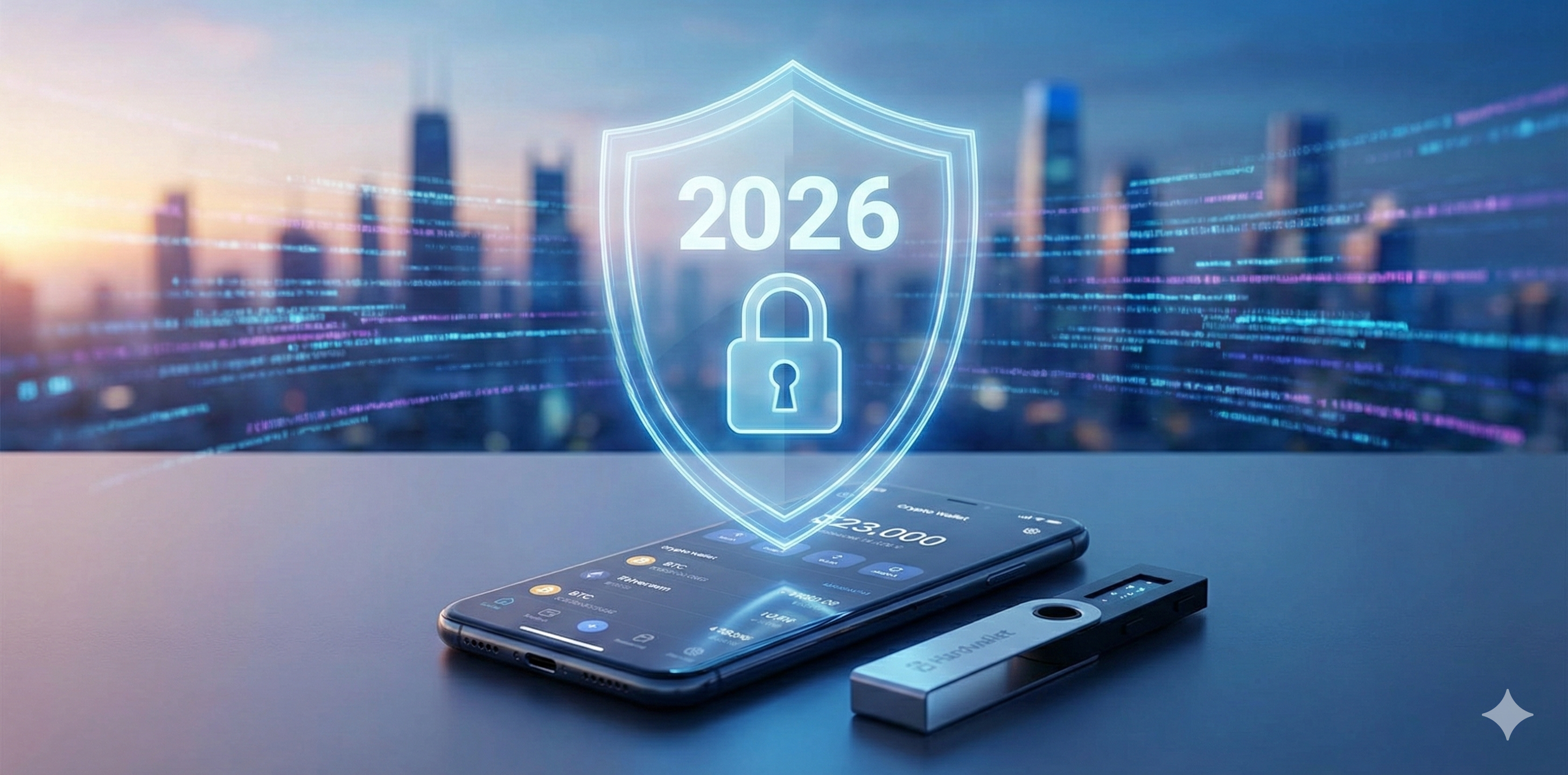
"Which one should I get?" If you have invested more than $500, buy a hardware wallet. It is the gold standard. Devices from brands like Ledger or Trezor have updated their models in 2026 to be easier to use, often connecting via Bluetooth to your phone while keeping your keys offline. It acts as a physical barrier between your money and the internet.
Step 3: Dodging the "AI" Scammers

Here is where 2026 gets tricky. Scammers are using Artificial Intelligence to trick investors.
Imagine getting a video call from a famous billionaire or a trusted crypto influencer. They look like them, sound like them, and they are telling you about a "secret giveaway."
"Send 1 ETH, and I'll send you 2 ETH back," the avatar says.
Stop. It’s a deepfake.
AI has made phishing scams incredibly sophisticated. You might receive emails that look exactly like they come from your exchange, perfectly mimicking the design and tone.
My golden rule: Never click links in emails regarding your crypto account. If you get an email saying "Account Compromised," close the email, open your browser, and type in the exchange’s URL manually.
Also, be wary of "Pig Butchering" scams. This is a gruesome name for a romance scam where someone befriends you online (often on dating apps or WhatsApp), builds trust over months, and then casually mentions a "great crypto investment platform."
"I made $50,000 last week, let me show you how," they will say. This is a trap. The platform is fake. The profits are fake. Once you deposit money, you will never see it again.
Best Practices for Investing in Cryptocurrency Safely

Now that you have the right platform and the right security mindset, let's talk about strategy. Safety isn't just about avoiding hackers; it's about avoiding bad financial decisions.
1. Dollar-Cost Averaging (DCA) "When is the best time to buy?" The answer is: repeatedly. Don't try to time the market. Instead, commit to buying a small amount every week or month, regardless of the price. This smooths out the volatility.
2. Diversify, but don't overdo it In 2026, we have "Real World Asset" (RWA) tokens—things like tokenized real estate or gold. These can be great for stability. A safe beginner portfolio might look like 50% Bitcoin (the anchor), 30% Ethereum (the utility), and 20% in stablecoins or broader projects. Don't dump your life savings into a "meme coin" because a cartoon dog looks cute.
3. Use a Passphrase Manager You cannot rely on your brain to remember a 24-word seed phrase or a complex alphanumeric password. And please, do not save your passwords in a "Notes" app on your phone. Use a dedicated, encrypted password manager, or go analog and write your seed phrase on paper, storing it in a fireproof safe.
4. Two-Factor Authentication (2FA) This is non-negotiable. Enable 2FA on every single account you have. But do not use SMS (text message) verification. Sim-swapping—where a hacker steals your phone number—is still a threat in 2026. Use an authenticator app like Google Authenticator or a hardware key like YubiKey.
Conclusion: Slow and Steady Wins

The crypto market in 2026 is exciting. We are seeing banks offering crypto custody and nations adopting blockchain tech. But for you, the individual investor, the basics remain the same.
Don't chase green candles. Don't trust strangers on the internet. And always prioritize security over convenience.
"Is it worth the hassle?" you might wonder after reading all these safety steps. Absolutely. Financial sovereignty is a powerful thing. But it comes with the responsibility of being your own bank.
Start small. Use a regulated exchange. Buy a hardware wallet. If you follow these steps, you will be miles ahead of the crowd. You won't just be investing; you will be investing in cryptocurrency safely, ensuring that your digital future stays in your hands—and no one else's.
Welcome to the future of finance. Stay safe out there.
The great article, I could use it for my reference as a way forward 2026 plan.