

The lesson is to become more deliberate about where I place my mental energy.
Some seasons of life become noisy not because the world is exceptionally loud, but because my mind refuses to stop carrying everything at once. Unfinished conversations, future worries, regrets, expectations, comparisons, and ambitions can all compete for attention until even a quiet room feels crowded.
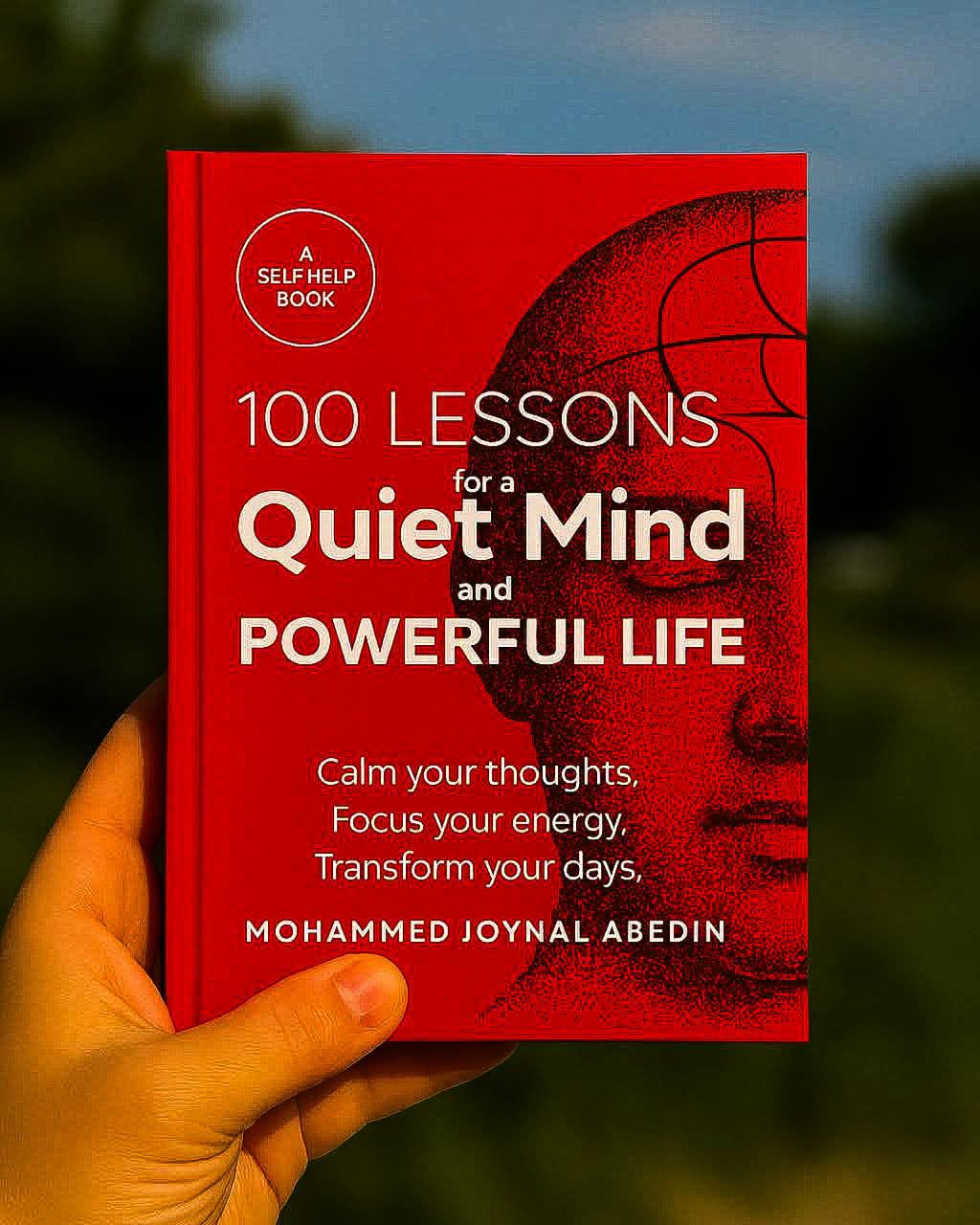
100 Lessons for a Quiet Mind and Powerful Life by Mohammed Joynal Abedin invites a different way of living—one where inner calm is not mistaken for weakness and a powerful life is not measured only by how much I accomplish. Its lessons point toward mindfulness, emotional discipline, self-awareness, resilience, and intentional living.
1. A quiet mind gives you better control over your life.
I don't always need more information, more advice, or more activity. Sometimes I need less noise.
When my mind is constantly occupied, even simple decisions can become overwhelming. I react instead of responding, worry about things that haven't happened, and give too much attention to circumstances that deserve very little of it.
Cultivating mental quiet allows me to create space between what happens and how I respond. That space is where better judgment lives.
A quiet mind doesn't mean having no problems. It means refusing to let every problem occupy the entire mind.
2. Learn to control what deserves your attention.
Attention is one of the most valuable resources I possess, yet it is remarkably easy to give it away.
I can spend an entire day thinking about someone's opinion, comparing my progress with another person's, replaying an argument, or worrying about something completely outside my control.
Not everything deserves a reaction. Not every criticism requires an explanation. Not every opportunity deserves a yes. Not every problem is mine to solve.
A powerful life begins with becoming selective about what gets access to my attention.
3. Strength is built through discipline, not constant motivation.
Motivation feels wonderful when it is present, but it is unreliable. Some mornings I will feel inspired; other mornings I won't want to do anything at all.
That is where discipline becomes important.
A meaningful life is built through small actions repeated even when enthusiasm disappears—keeping promises to myself, completing important tasks, maintaining healthy routines, learning continuously, and refusing to let temporary emotions dictate permanent decisions.
The powerful person isn't necessarily the person who always feels motivated. It is often the person who has learned to keep moving even when motivation is absent.
4. Peace comes from accepting what you cannot control.
A considerable amount of suffering comes from trying to control things that were never ours to control in the first place.
I cannot control how everyone sees me. I cannot control another person's choices. I cannot rewrite yesterday. I cannot guarantee what tomorrow will bring.
But I can control how I respond, what I learn, what boundaries I establish, where I direct my attention, and what I choose to do next.
Acceptance isn't giving up. It is recognizing reality clearly enough to stop wasting energy fighting what cannot be changed.
Final Reflection:
The idea I find most powerful is that a quiet mind and a powerful life are not opposites. In fact, they can strengthen each other.
The quieter my mind becomes, the more clearly I can recognize what matters. The clearer I become about what matters, the easier it becomes to act with intention.
Perhaps real power isn't being able to control everything around me. Perhaps it is developing enough inner discipline that everything around me doesn't get to control me.
100 Lessons for a Quiet Mind and Powerful Life by Mohammed Joynal Abedin invites a different way of living—one where inner calm is not mistaken for weakness and a powerful life is not measured only by how much I accomplish. Its lessons point toward mindfulness, emotional discipline, self-awareness, resilience, and intentional living.
1. A quiet mind gives you better control over your life.
I don't always need more information, more advice, or more activity. Sometimes I need less noise.
When my mind is constantly occupied, even simple decisions can become overwhelming. I react instead of responding, worry about things that haven't happened, and give too much attention to circumstances that deserve very little of it.
Cultivating mental quiet allows me to create space between what happens and how I respond. That space is where better judgment lives.
A quiet mind doesn't mean having no problems. It means refusing to let every problem occupy the entire mind.
2. Learn to control what deserves your attention.
Attention is one of the most valuable resources I possess, yet it is remarkably easy to give it away.
I can spend an entire day thinking about someone's opinion, comparing my progress with another person's, replaying an argument, or worrying about something completely outside my control.
Not everything deserves a reaction. Not every criticism requires an explanation. Not every opportunity deserves a yes. Not every problem is mine to solve.
A powerful life begins with becoming selective about what gets access to my attention.
3. Strength is built through discipline, not constant motivation.
Motivation feels wonderful when it is present, but it is unreliable. Some mornings I will feel inspired; other mornings I won't want to do anything at all.
That is where discipline becomes important.
A meaningful life is built through small actions repeated even when enthusiasm disappears—keeping promises to myself, completing important tasks, maintaining healthy routines, learning continuously, and refusing to let temporary emotions dictate permanent decisions.
The powerful person isn't necessarily the person who always feels motivated. It is often the person who has learned to keep moving even when motivation is absent.
4. Peace comes from accepting what you cannot control.
A considerable amount of suffering comes from trying to control things that were never ours to control in the first place.
I cannot control how everyone sees me. I cannot control another person's choices. I cannot rewrite yesterday. I cannot guarantee what tomorrow will bring.
But I can control how I respond, what I learn, what boundaries I establish, where I direct my attention, and what I choose to do next.
Acceptance isn't giving up. It is recognizing reality clearly enough to stop wasting energy fighting what cannot be changed.
Final Reflection:
The idea I find most powerful is that a quiet mind and a powerful life are not opposites. In fact, they can strengthen each other.
The quieter my mind becomes, the more clearly I can recognize what matters. The clearer I become about what matters, the easier it becomes to act with intention.
Perhaps real power isn't being able to control everything around me. Perhaps it is developing enough inner discipline that everything around me doesn't get to control me.
No comments yet — be the first!