

I think one of the most expensive habits we have is allowing people and situations
I think one of the most expensive habits we have is allowing people and situations to occupy our minds long after they've passed.
Someone makes a rude comment in the morning, and by evening, you're still arguing with them in your head. You see an old friend's success on social media, and suddenly your own achievements feel insignificant. A colleague disagrees with you, and you spend hours wondering whether they secretly dislike you.
The actual incident might have lasted thirty seconds. Yet we've given it the power to ruin an entire day.
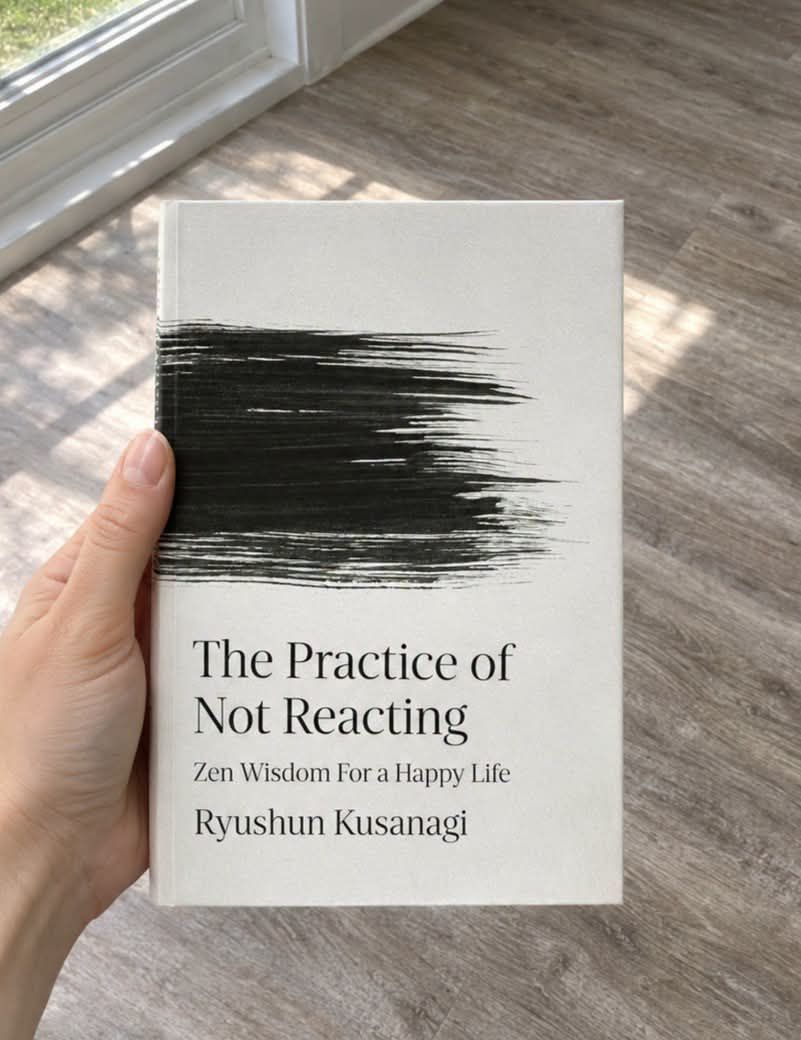
This is the problem Ryushun Kusanagi addresses in The Practice of Not Reacting, a Japanese bestseller rooted in Buddhist teachings. Kusanagi, a Buddhist monk, offers a simple but challenging idea: we don't have to respond emotionally to everything our minds notice.
He draws on the teachings of the Buddha to explain how judgment, craving, comparison, and attachment can create unnecessary suffering. Much of our distress, he argues, comes from the meanings we attach to experiences and our habit of becoming caught up in those interpretations.
What makes the book appealing to me is its practicality. Kusanagi encourages us to recognize emotions as they arise, examine our thoughts more carefully, and stop treating every feeling as a command to act.
I particularly liked his discussion of comparison. There's something sad about allowing another person's happiness to become evidence of our own failure. Someone buys a house, gets promoted, or enjoys a beautiful holiday, and instead of appreciating their good fortune, we begin questioning our lives.
Kusanagi reminds us that constantly measuring ourselves against others can make contentment almost impossible. His approach to anger is equally useful. Feeling irritated doesn't mean we must immediately argue, criticize, or defend ourselves. We can recognize that anger is present without allowing it to decide what happens next.
5 lessons from the book:
1. You don't have to respond to every provocation.
Someone else's rude behaviour doesn't automatically deserve your time or energy. Sometimes choosing not to engage is the most sensible response.
2. Stop turning other people's success into your failure.
Comparison can make even a good life feel disappointing. Focus on your own circumstances, values, and progress rather than constantly measuring yourself against someone else's achievements.
3. Recognize your emotions before acting on them.
Anger, jealousy, fear, and disappointment are natural experiences. Acknowledging them gives you an opportunity to decide how you want to respond.
4. Not every thought deserves your agreement.
Our minds make assumptions, exaggerate problems, and form judgments with limited information. Learning to question these reactions can prevent unnecessary distress.
5. Peace grows when you stop trying to control everything.
People will disagree with you. Plans will change. Some situations won't turn out as expected. Accepting uncertainty can help you direct your energy toward what you can actually influence.
The part of Kusanagi's message I find most useful is the distinction between having emotions and being ruled by them. You can feel insulted without insulting someone back. You can experience disappointment without deciding your life is a failure. You can disagree with another person without turning that disagreement into a personal battle.
Of course, the book's Buddhist perspective can sometimes make complicated emotional experiences seem easier to manage than they are. Deep grief, trauma, and serious anxiety often require more support than a change in thinking habits.
But for the ordinary frustrations we encounter daily, his advice is worth considering. There are enough difficulties in life without mentally replaying every unpleasant conversation, comparing ourselves with everyone around us, or demanding that everything happen according to our expectations.
The Practice of Not Reacting encourages us to become more thoughtful about where we place our attention.
Perhaps one of the greatest forms of freedom is learning that something can upset you without having to control the rest of your day.
No comments yet — be the first!