

The Software Development Life Cycle or SDLC - 2026
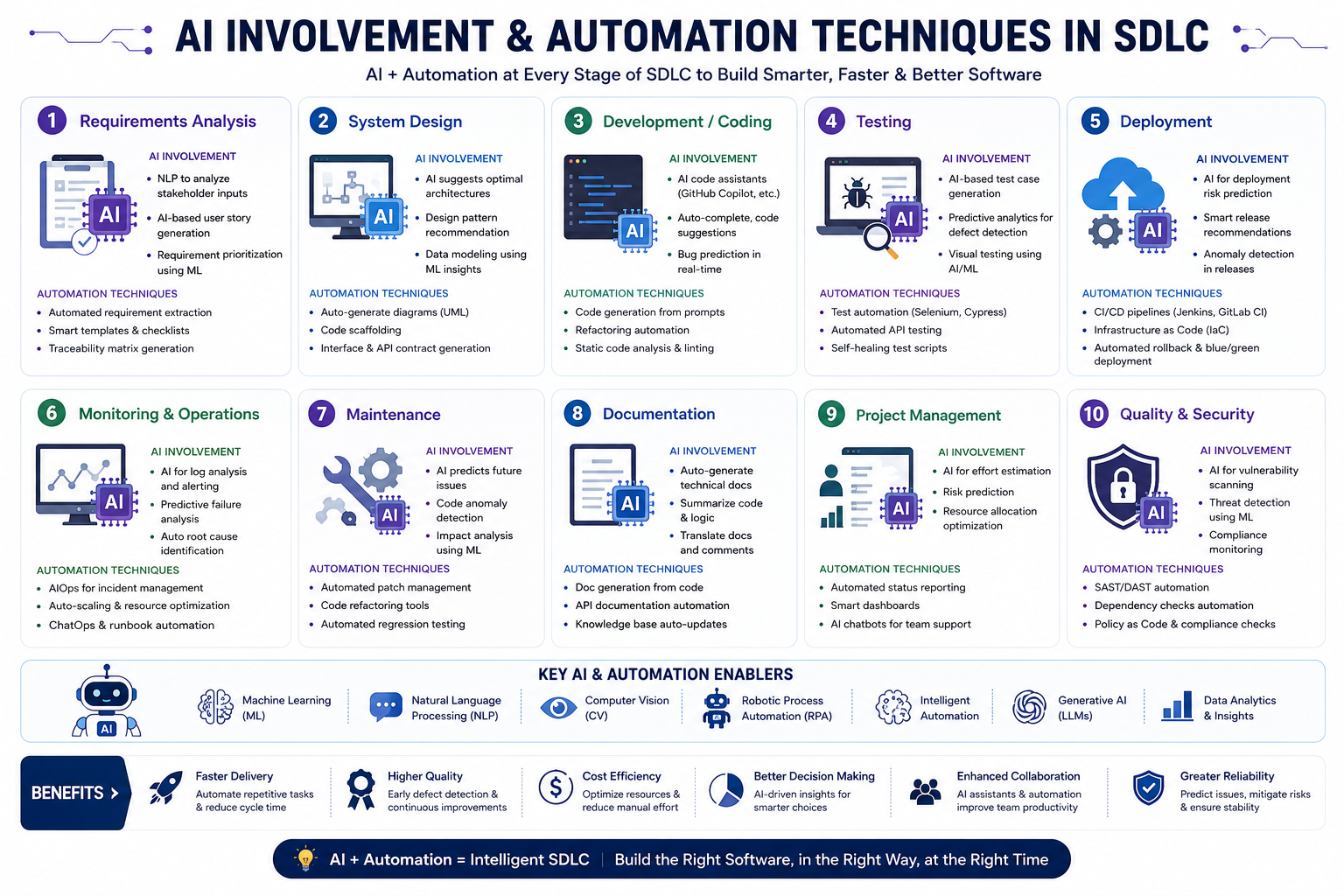
The Software Development Life Cycle or SDLC is a structured framework used by engineering teams to design, build, test, and maintain software. It serves as a blueprint to guide a project from an initial concept to a functioning production application.
Here are the six main phases of the SDLC:
Phase 1. Requirements and Analysis
Stakeholders and product managers gather business needs to define what the software must solve. This details the scope and expectations of the project.
Phase 2. Architecture and Design
System architects choose the technology stack, design database schemas, plan API structures, and define the overall system layout.
Phase 3. Coding and Development
Software engineers write the actual code based on the design specifications, following team standards and committing work to version control systems.
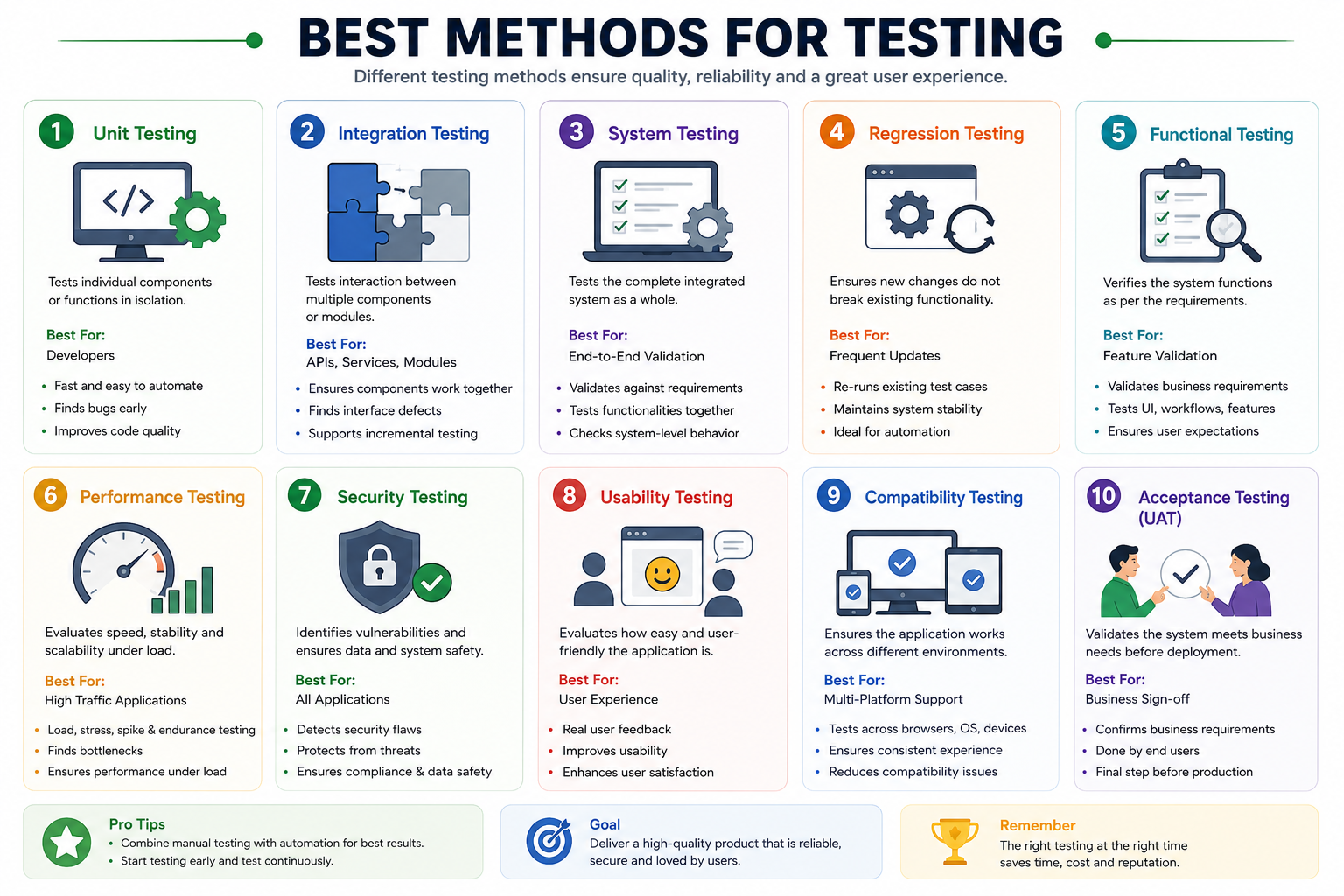
Phase 4. Testing and Quality Assurance
The application is checked for bugs, security vulnerabilities, and functional errors. This includes testing individual units, combined modules, and user acceptance.
Phase 5. Deployment
The software is pushed to production. Modern workflows automate this process to move code through staging environments before releasing it to the public.
Phase 6. Maintenance and Operations
Once live, teams monitor application performance, track errors, and roll out patches or updates based on user feedback and real world use.
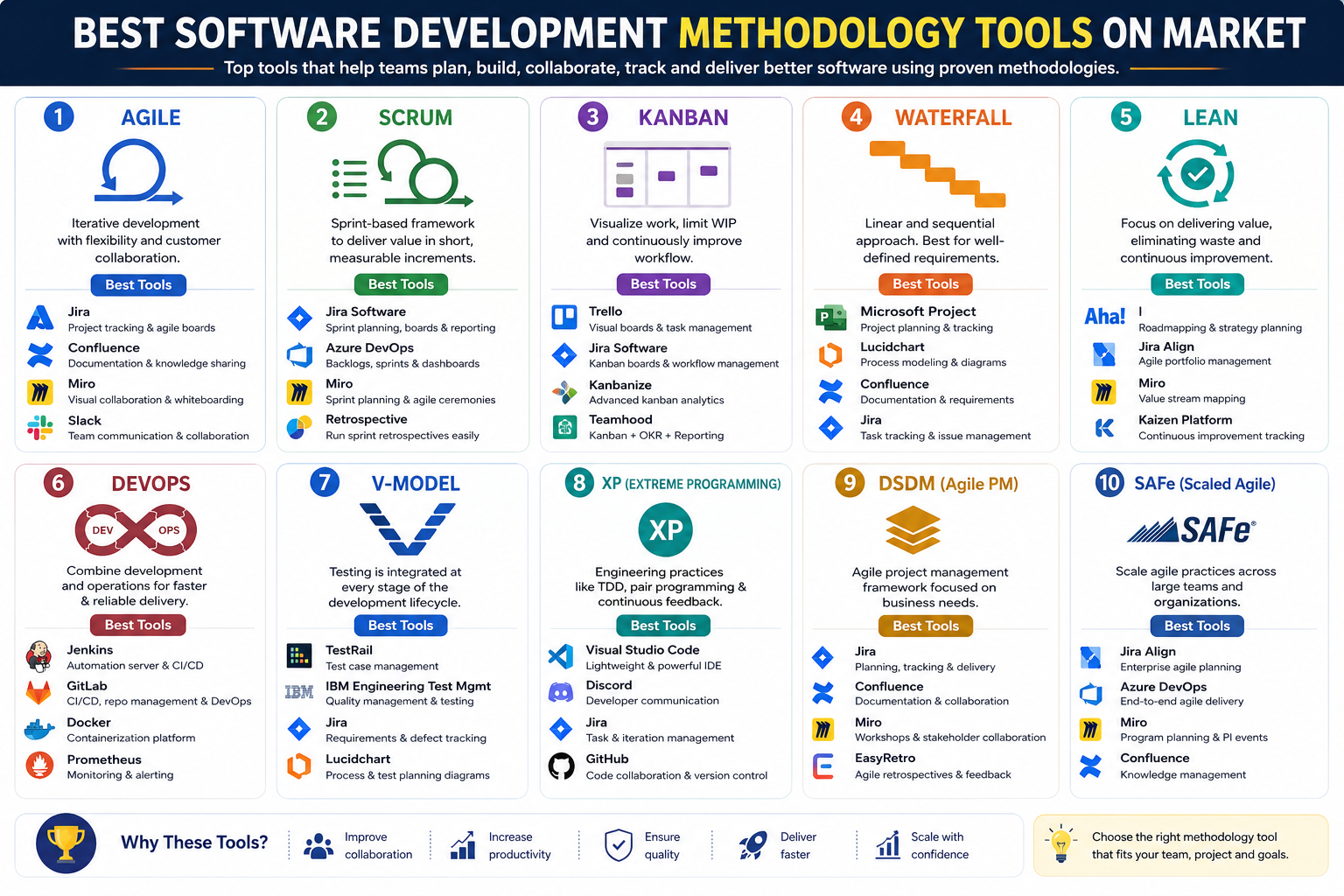
Two common approaches to managing this cycle are Agile, which focuses on fast, continuous, and flexible iterations, and Waterfall, which follows a strict, sequential step by step path. Modern software teams often combine these steps with automation practices to create a continuous loop of development and deployment.
Follow @codingtips for more details.
Here are the six main phases of the SDLC:
Phase 1. Requirements and Analysis
Stakeholders and product managers gather business needs to define what the software must solve. This details the scope and expectations of the project.
Phase 2. Architecture and Design
System architects choose the technology stack, design database schemas, plan API structures, and define the overall system layout.
Phase 3. Coding and Development
Software engineers write the actual code based on the design specifications, following team standards and committing work to version control systems.
Phase 4. Testing and Quality Assurance
The application is checked for bugs, security vulnerabilities, and functional errors. This includes testing individual units, combined modules, and user acceptance.
Phase 5. Deployment
The software is pushed to production. Modern workflows automate this process to move code through staging environments before releasing it to the public.
Phase 6. Maintenance and Operations
Once live, teams monitor application performance, track errors, and roll out patches or updates based on user feedback and real world use.
Two common approaches to managing this cycle are Agile, which focuses on fast, continuous, and flexible iterations, and Waterfall, which follows a strict, sequential step by step path. Modern software teams often combine these steps with automation practices to create a continuous loop of development and deployment.
Follow @codingtips for more details.
1/5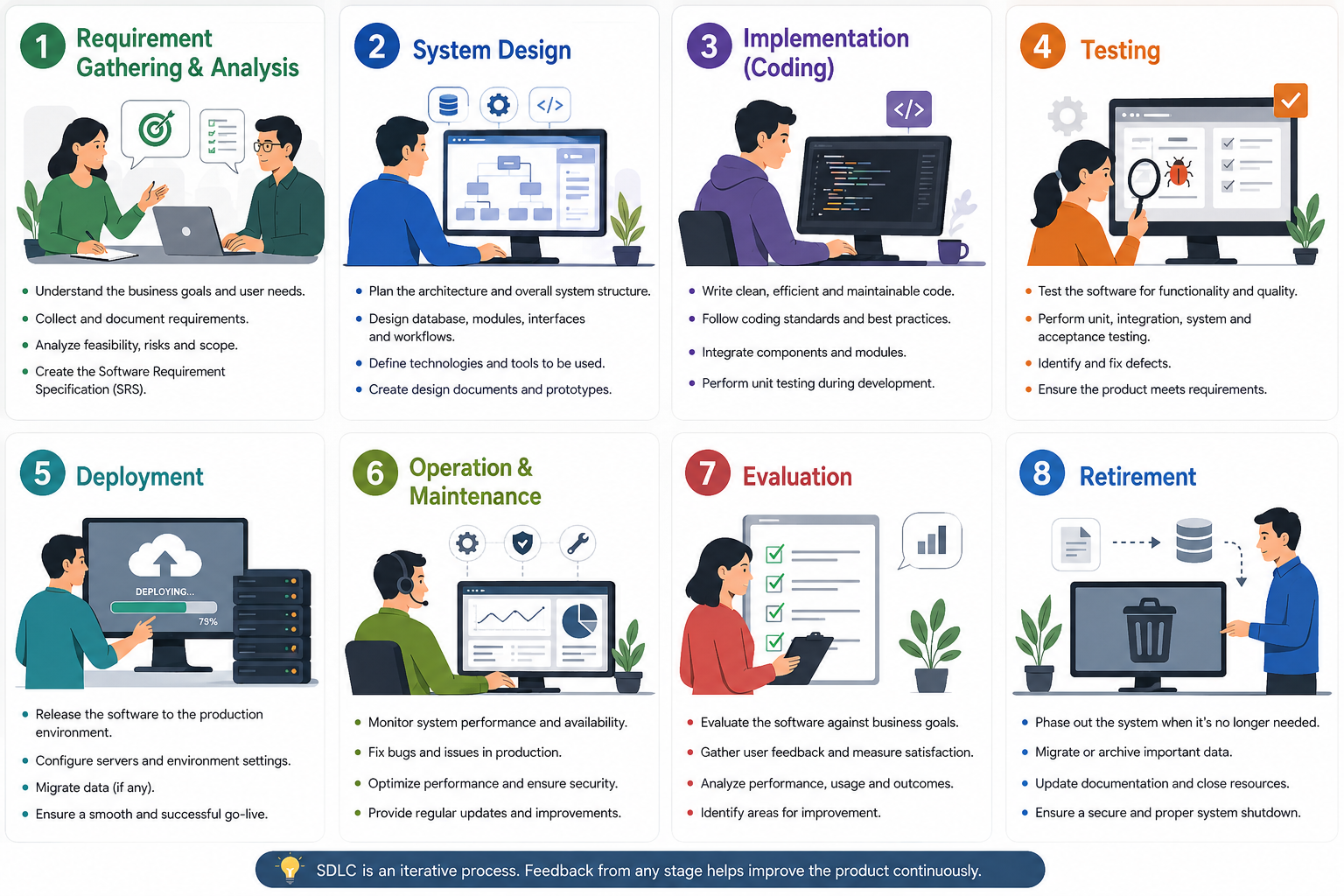
No comments yet — be the first!