
Major Data Leaks in 2025: What Every Student and Internet User Must Know
Every time you sign up for an app, shop online, or fill a form at school, your personal details travel through servers you never see. Most of the time this system works quietly and safely. But sometimes, companies fail to protect that information, and it ends up exposed to the public or sold to criminals. This is exactly what happens during major data leaks, and understanding them is now as important as knowing basic internet safety rules.

What Are Major Data Leaks?
A data leak happens when private or confidential information is exposed without permission, often because of a technical mistake rather than a planned attack. Major data leaks occur when the exposed data involves millions of users, sensitive categories like health or banking records, or well-known global organisations. Think of it like leaving the front door of a bank unlocked overnight — no one broke in, but anyone walking by could still get inside. This is why teachers, IT trainers, and security experts treat leaks as seriously as direct hacking attacks.
How Data Leaks Differ From Data Breaches
A breach is usually caused by an attacker who actively forces their way into a system, similar to someone picking a lock. A leak, on the other hand, is often accidental exposure caused by misconfigured servers or careless staff. Both result in the same outcome: private data becomes visible to people who should never have access to it.
Why Major Data Leaks Keep Happening
Companies today store enormous amounts of information in cloud databases, and even one small configuration mistake can expose everything. Many organisations also grow faster than their security teams can manage, leaving gaps that go unnoticed for months. Add outdated software and human error into the mix, and repeated incidents become almost inevitable.
Major Data Leaks Recently Reported
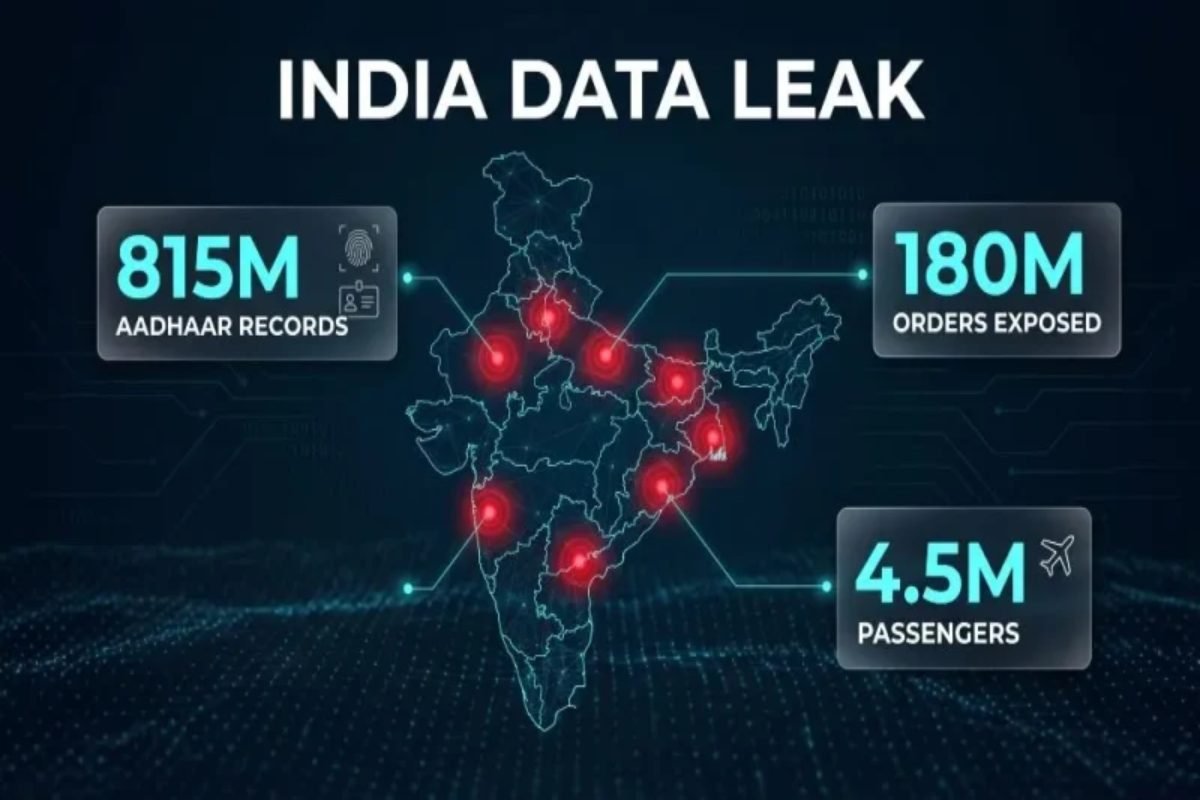
Cybersecurity researchers and news outlets have tracked several major data leaks recently, involving healthcare providers, telecom companies, and social media platforms. In many of these cases, exposed information included email addresses, phone numbers, and even government identification numbers. These incidents were discovered not by the companies themselves but by independent security researchers scanning the internet for unprotected databases. This pattern shows how important outside monitoring has become in today's digital world.
Real-World Example: A Classroom-Style Case Study
Imagine a fictional online store called "ShopEase" that stores customer addresses and payment details in a cloud database. A junior developer forgets to set a password on that database, and within days, security researchers find it publicly accessible online.
Timeline of a Major Data Leak Today
A major data leak today typically follows a similar timeline: unsafe storage, silent exposure, discovery by researchers, public disclosure, and finally, a rushed company response. Understanding this timeline helps students see leaks are rarely instant; they usually build up slowly, unnoticed for weeks or even years.
Major Data Leaks 2025: Key Trends
Security reports covering major data leaks 2025 highlight a sharp rise in cloud misconfiguration incidents compared to previous years. Attackers are also increasingly targeting third-party vendors instead of large companies directly, since smaller partners often have weaker security controls. Artificial intelligence tools are now being used both to detect leaks faster and, unfortunately, to exploit them more efficiently. These trends suggest that data exposure incidents will remain a major global concern for the rest of the decade.
Industries Most Affected
Certain sectors consistently appear in leak reports because they store highly sensitive personal information. Below are the industries facing the highest exposure risk this year:
- Healthcare and medical record providers
- Banking, fintech, and payment processing companies
- Telecommunication and internet service providers
- E-commerce and retail platforms
- Educational institutions handling student records
How Data Leaks Happen: Common Causes
Understanding the root causes helps students and professionals prevent similar mistakes in their own future careers. Most incidents trace back to simple, avoidable errors rather than sophisticated hacking techniques. This is good news, because it means basic awareness training can prevent a large percentage of cases. Let's break down the two biggest contributing factors below.
Human Error
Employees sometimes email sensitive files to the wrong recipient or upload confidential spreadsheets to public folders by mistake. Weak or reused passwords also make it easy for outsiders to access internal systems without needing advanced skills. Regular staff training remains one of the most effective and affordable defences against this problem.
Cyberattacks and Malware
Phishing emails trick employees into revealing login credentials, which attackers then use to access internal databases. Malware and ransomware can silently copy files before encrypting systems, ensuring data theft even if a company refuses to pay a ransom. These digital risks continue evolving faster than many small businesses can keep up with.
Impact on Individuals and Businesses
The consequences of exposed personal data extend far beyond a simple inconvenience for the people affected. Victims may face identity theft, unauthorised bank transactions, or years of unwanted spam and scam attempts. Businesses, meanwhile, suffer regulatory fines, lawsuits, and a permanent dent in customer confidence. This dual impact is why prevention is always cheaper than recovery.
Financial Impact
Recovering from a large-scale exposure often costs organisations millions in legal fees, technical repairs, and customer compensation. Smaller businesses sometimes never fully recover, especially if trust with their existing customer base collapses. This financial pressure pushes companies to invest more seriously in prevention rather than reaction.

Reputational Damage
Even after technical issues are fixed, public trust takes much longer to rebuild than any system does. Customers often switch to competitors simply because they feel safer, regardless of how quickly the original company responded. Reputation, once damaged, becomes one of the hardest business assets to restore.
Digital Risk Protection: How to Stay Safe
Digital risk protection refers to the combined strategies, tools, and habits that reduce the chances of sensitive data being exposed or misused. It covers everything from personal password habits to enterprise-level monitoring systems that scan the internet for leaked company data. Schools and workplaces are now teaching these basics as essential digital literacy skills. Just like locking your house at night, digital protection has become a non-negotiable daily habit.
Personal Safety Tips
Anyone can reduce their personal risk by following a few consistent daily habits. Here are simple steps every student and professional should apply immediately:
- Use unique, strong passwords for every account
- Enable two-factor authentication wherever possible
- Avoid clicking links from unknown or suspicious emails
- Regularly check accounts using breach-monitoring websites
- Update apps and software as soon as updates are released
Business-Level Digital Risk Protection Strategies
Organisations benefit from continuous monitoring services that alert them the moment company data appears on suspicious websites. Encrypting stored data and limiting employee access to only what is necessary also significantly reduces exposure risk. Combined with regular staff training, digital risk protection becomes a proactive shield rather than a reactive cleanup process.
Expert Recommendations and Authoritative Sources
Cybersecurity organisations such as IBM, through its annual Cost of a Data Breach Report, consistently show that faster detection significantly reduces overall financial damage. Government bodies like the National Institute of Standards and Technology (NIST) also publish detailed frameworks that guide organisations on secure data handling. Following such authoritative, research-backed guidance rather than guesswork is what separates well-prepared companies from vulnerable ones. Students studying cybersecurity are strongly encouraged to review these public reports as part of their learning process.
Conclusion
Data exposure incidents are no longer rare technical footnotes; they are a regular part of modern digital life that affects students, professionals, and businesses alike. Learning how major data leaks happen, why they keep repeating, and how proper digital risk protection prevents them equips readers with practical, real-world knowledge. Small daily habits, combined with stronger organisational policies, remain the most reliable defence available today. Staying informed is not optional anymore — it is a basic requirement of living safely online.
Frequently Asked Questions (FAQ)

What should I do immediately if my personal information is exposed online?
Change your passwords right away, enable two-factor authentication, and monitor your bank statements closely for a few weeks.
How can I check if my email has been exposed in a past incident?
Several free, trusted breach-checking websites allow you to enter your email address and instantly see if it appeared in any known exposure.
Are small businesses also at risk, or only large companies?
Small businesses are frequently targeted precisely because they usually have weaker security systems compared to large corporations.
Does using a strong password alone guarantee full safety?
A strong password greatly helps, but pairing it with two-factor authentication and safe browsing habits provides much stronger overall protection.
How often should companies audit their data storage systems?
Most cybersecurity experts recommend quarterly audits, along with immediate reviews whenever new software or cloud services are introduced.
Comments
0