
Rooibos Chai: The Complete Guide to a Naturally Comforting Blend
Rooibos chai is a caffeine-free tea made by combining South African red bush leaves with warming spices such as cinnamon, cardamom, and ginger. It delivers the cozy, spiced comfort of a classic chai without any of the jitters that come from black tea or coffee. Singers, teachers, and anyone who talks for a living often reach for it because it is gentle on the throat and easy to drink at any hour. This guide walks through where it comes from, what it does for the body, and how to brew a cup worth returning to, all through a loose leaf tea lens rather than a bagged one.

What Is This Spiced Rooibos Blend?
At its core, this drink is simply rooibos, a red herbal plant grown almost exclusively in South Africa, blended with a mix of traditional chai spices. The base plant itself contains no caffeine and no tannins in the way black tea does, which is why it never turns bitter even after a long steep. Spice blends typically include cinnamon bark, cardamom pods, ginger root, and a touch of clove, all chosen because they warm the body and support digestion. Because the base is naturally sweet and woody, the spices layer on top of it instead of fighting against it, producing a rounded cup that tastes finished rather than sharp.
Where the Red Bush Plant Grows
The rooibos plant, known botanically as Aspalathus linearis, grows almost exclusively in the Cederberg region of South Africa's Western Cape. Farmers there have cultivated it for generations, harvesting the fine green needles and oxidizing them until they turn the deep red color the plant is named for. That single-origin growing region is part of why quality and flavor can vary so much between suppliers, since climate and soil directly shape the final cup.
How the Chai Spices Round Out the Cup
Traditional chai spices exist to add warmth, depth, and a gentle bite that plain herbal tea does not have on its own. Cinnamon brings sweetness, cardamom adds a floral lift, and ginger contributes a mild, pleasant heat that lingers after each sip. Combined with the naturally honeyed base of rooibos, these spices create a drink that feels indulgent while still being simple and caffeine-free.
Health Benefits Worth Knowing About
Interest in this blend has grown alongside broader research into antioxidant-rich herbal drinks, and much of that attention is well earned. The plant is naturally rich in aspalathin and quercetin, two antioxidant compounds that researchers at institutions including the South African Medical Research Council have studied for their role in supporting healthy inflammation levels. A daily cup of rooibos chai tea is also naturally low in tannins, which means it will not interfere with iron absorption the way strong black tea can. Because it contains no caffeine, it fits neatly into a wind-down routine, an afternoon break, or even a bedtime ritual without disrupting sleep.
Antioxidants and Everyday Wellness
Antioxidants work by helping the body manage everyday oxidative stress that builds up from normal activity, pollution, and diet. Rooibos has been studied specifically for its unique antioxidant profile, which differs from the catechins found in green tea. For someone who already eats well but wants one more small, consistent habit, a daily cup is an easy addition.
Caffeine-Free Comfort for Any Time of Day
Because there is no caffeine involved, this tea works just as well at nine in the morning as it does at nine at night. Many people who are sensitive to caffeine still want something warm and flavorful in the afternoon, and this blend fills that gap perfectly. It also makes a practical alternative for anyone trying to reduce coffee intake without giving up a comforting ritual.
A few reasons people specifically reach for this blend include:
- Naturally caffeine-free, so it will not affect sleep or heart rate
- Low in tannins, making it gentler on the stomach than black tea
- Naturally sweet base that needs little or no added sugar
- Warming spices that make it satisfying in cold weather
- Simple to brew hot or cold with no special equipment
Whole Leaf vs Tea Bags: What's the Difference?
Choosing whole leaves over pre-packed bags makes a noticeable difference in both flavor and value for this particular blend. Tea bags are typically filled with fannings and dust, the smallest and often stalest leftover pieces from processing. Loose leaf rooibos tea allows the full leaf and spice pieces to unfurl completely during steeping, releasing far more of the natural oils and flavor compounds. The result is a fuller-bodied, more fragrant cup that also tends to hold up better to a second steep.
Why Loose Leaf Wins on Flavor
Whole leaves have more surface area exposed to water once they expand, which is the main reason the flavor comes through so much stronger. Tea bags restrict that expansion, trapping the leaves in a small paper or mesh pouch that limits water flow. Anyone who has tried both side by side usually notices the difference within the first sip.
Brewing Tips for Best Results
A good starting point is one heaping teaspoon of loose leaf blend per eight-ounce cup, steeped for five to seven minutes in freshly boiled water. Because rooibos will not turn bitter with extra time, it is nearly impossible to oversteep compared to black or green tea. Adjusting the amount of leaf up or down is the easiest way to control strength without changing the steep time at all.
Why Sourcing and Certification Matter
Sourcing matters more with herbal blends than many people realize, since the whole plant, not just processed leaves, ends up in the cup. Choosing organic rooibos tea means the plant was grown without synthetic pesticides or fertilizers, which matters given how the leaves are consumed as a full infusion. Certification bodies require documented farming practices, third-party testing, and traceability back to the growing region before a product can carry an organic label. That paper trail gives buyers a way to verify quality claims instead of relying on marketing language alone.
Certification and Quality Standards
Organic certification in the United States is overseen by the USDA, which sets specific rules for how crops can be grown, harvested, and processed. For imported herbal ingredients like rooibos, that also means verifying the growing region and supply chain back to South Africa. A visible certification mark on the packaging is the simplest way for a shopper to confirm those standards were actually met.

A Real Morning Ritual Worth Copying
Voice teachers who run back-to-back lessons often describe reaching for a spiced, caffeine-free tea between sessions instead of another cup of coffee. One common routine is brewing a full pot before the first student arrives, then sipping it warm throughout the morning between vocal warm-ups. That small, repeatable habit is a good example of how a simple tea choice can support a demanding daily schedule without adding any jitters.
Why Voice Professionals Reach for This Blend
Anyone who uses their voice professionally has good reason to be selective about what they drink throughout the day. Caffeine and dairy are both known to dry out or thicken mucus around the vocal cords, which is exactly what a spiced, caffeine-free tea helps avoid. Warm liquids in general support hydration of the throat lining, and the natural sweetness of this blend means it rarely needs added sugar or milk. That combination makes rooibos chai tea a practical staple for singers, podcasters, teachers, and anyone else who talks for a living.
Supporting Vocal Health Naturally
Staying hydrated is one of the simplest things a voice professional can do, and warm herbal tea is an easy way to build that habit into the day. Because this blend has no caffeine, it will not act as a diuretic the way coffee or black tea can. That means the hydration actually stays with the body instead of being flushed out shortly after drinking it.
A Simple Daily Ritual
Many performers keep a thermos of this tea nearby during rehearsals or classes so it is always within reach. Sipping small amounts steadily throughout a long session tends to work better than drinking a large cup all at once. Over time, that small ritual becomes as automatic as warming up scales before a performance.
A simple routine for building this habit looks like this:
- Brew a full pot in the morning using loose leaves and a proper steep time
- Pour it into an insulated thermos to keep it warm through the day
- Sip small amounts between classes, calls, or rehearsals
- Avoid adding milk, which can thicken mucus around the throat
- Finish the last cup a few hours before bedtime for better sleep
How to Brew the Perfect Cup of Rooibos Chai
Getting a great cup starts with using enough leaf, since underfilling the infuser is the most common mistake people make. Water should be brought to a full rolling boil, since rooibos can handle higher temperatures without turning bitter the way delicate green teas do. A steep time of five to seven minutes is standard, though letting it go a little longer only deepens the flavor rather than ruining it. Once it reaches the color and strength you like, straining out the leaves keeps the finished cup smooth and clear.
Water Temperature and Steep Time
Because this blend is naturally low in tannins, there is far more room for error than with green or white tea. Boiling water, right around 212 degrees Fahrenheit, extracts the fullest flavor from both the rooibos base and the spices. Even a ten-minute steep will not produce the bitterness that the same steep time would cause in black tea.
Sweeteners and Serving Ideas
A small amount of honey or a splash of milk pairs naturally with the existing spice notes without overwhelming them. For a cold-weather version, warming a splash of milk separately and pouring it in at the end creates something close to a spiced chai latte. In warmer months, the same brewed tea can be cooled and served over ice for a refreshing, caffeine-free alternative.
Choosing the Right Brand for Your Daily Cup
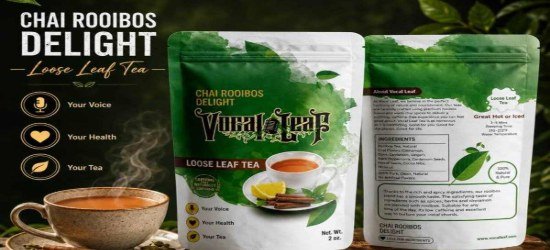
Not every tea brand pays attention to the details that actually matter for flavor and freshness, from leaf size to sourcing to spice ratios. Vocal Leaf built its Chai-Spiced Rooibos Blend as true loose leaf rooibos tea rather than bagged fannings, so the spice blend stays balanced and vibrant. The tea is sourced with organic standards in mind and blended in small batches to keep the cinnamon, cardamom, and ginger notes consistent from one order to the next. For anyone building a daily tea habit around vocal health or simple caffeine-free comfort, that attention to detail shows up clearly in the cup.

What Makes This Blend Different
The spice ratio is balanced so no single note, whether cinnamon or ginger, overwhelms the natural sweetness of the rooibos base. Because it ships as loose leaf rather than pre-bagged, the leaves and spice pieces stay fresher for longer once opened. That freshness is the difference most people notice first when they switch from a mass-market tea bag to a properly stored loose blend.
Frequently Asked Questions (FAQ)
Is this type of tea caffeine-free?
Yes, the red bush plant itself contains zero caffeine, and the spices added to it do not introduce any either. That makes it safe to drink in the evening without affecting sleep the way coffee or black tea can. It is one of the main reasons people choose it as an all-day, any-time beverage.
What does the flavor actually taste like?
Expect a naturally sweet, slightly woody base layered with warm cinnamon, floral cardamom, and a mild ginger bite. It is often compared to a lighter, caffeine-free version of a traditional spiced chai latte. Most people describe it as cozy and comforting rather than sharp or bitter.
Is it safe for children to drink?
Because it contains no caffeine, many parents consider it a suitable warm drink option for children in moderation. As with any herbal product, it is worth checking with a pediatrician first, especially for very young children. Diluting it with a bit of warm water or milk can also make it milder for smaller palates.
How many cups is reasonable to drink in a day?
Most healthy adults can comfortably enjoy three to four cups a day without any issue, since there is no caffeine limit to worry about. As with anything, moderation and listening to your own body are the best guides. Herbal teas like this one are generally considered gentle enough for regular daily use.
Final Thoughts
A well-made spiced rooibos blend offers something increasingly rare: real flavor, zero caffeine, and a comforting ritual that fits any time of day. Whether the goal is supporting a busy speaking schedule, cutting back on coffee, or simply enjoying a better cup, sourcing loose leaves from a trusted, organic rooibos tea supplier makes a measurable difference. Vocal Leaf built its blend around exactly that standard, using whole leaves and real spices instead of bagged dust. For anyone ready to try it, browsing the full loose leaf tea selection is the easiest place to start.
Comments
0