
Chopsticks Seize the Orbit: Why SpaceX’s First Ship Catch After 14 Orbits Accelerates Fully Reusable Spaceflight
On November 14, 2026, SpaceX achieved a milestone that had eluded every previous rocket program: the first successful tower catch of a Starship upper stage returning from orbit. Ship 42, after more than 22 hours and roughly 14 orbits, eased itself between the mechanical arms of Mechazilla at Starbase, Texas. The booster, Super Heavy Booster 22, was lost to the Gulf after an automated abort, yet the ship recovery alone rewrites the practical timeline for rapid reusability. This is not merely another test success; it is the moment when the upper stage of an orbital-class vehicle demonstrated it can come home intact to the same pad it left, ready in principle for inspection, refurbishment, and another flight.
The Flight That Changed the Timeline
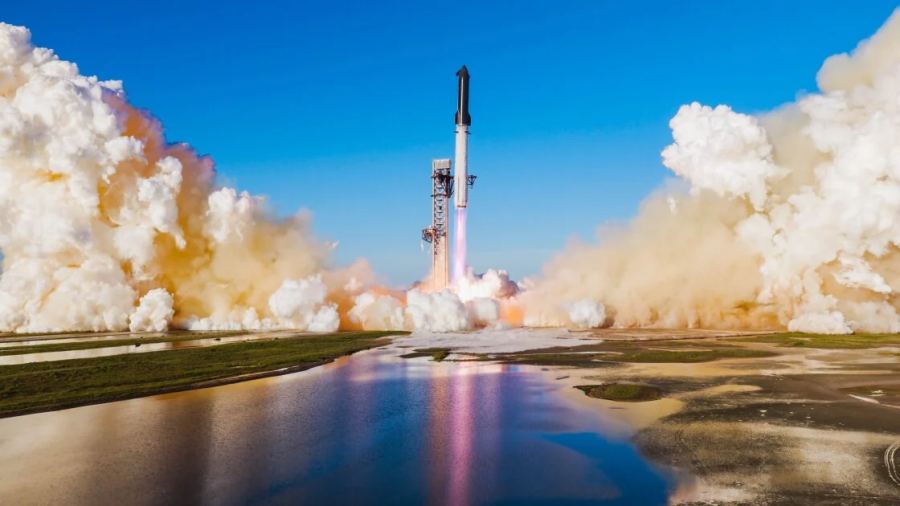
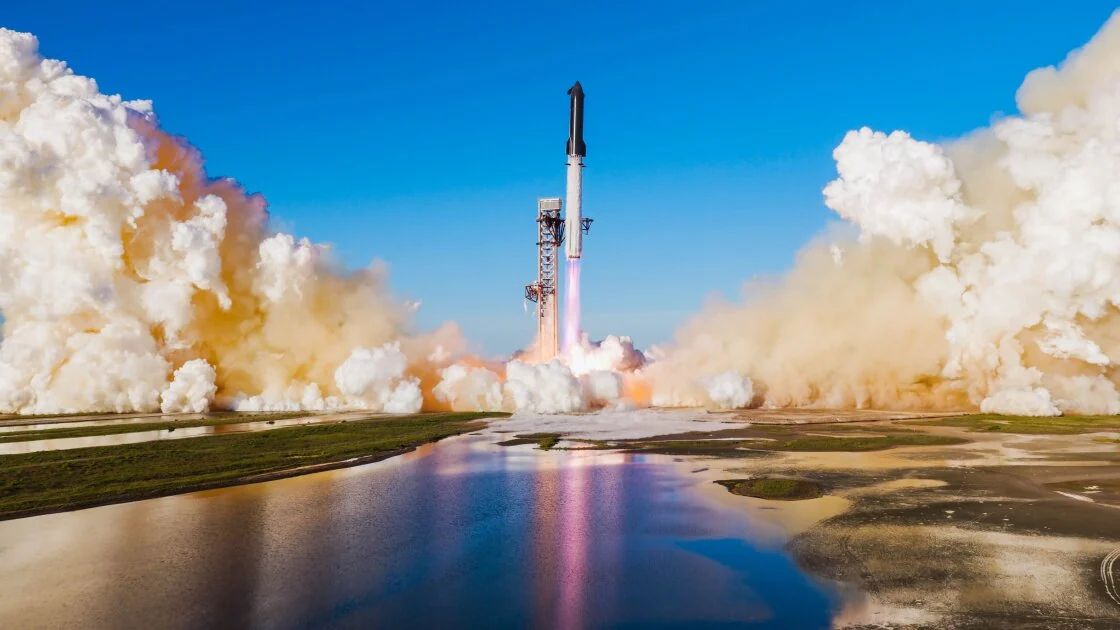
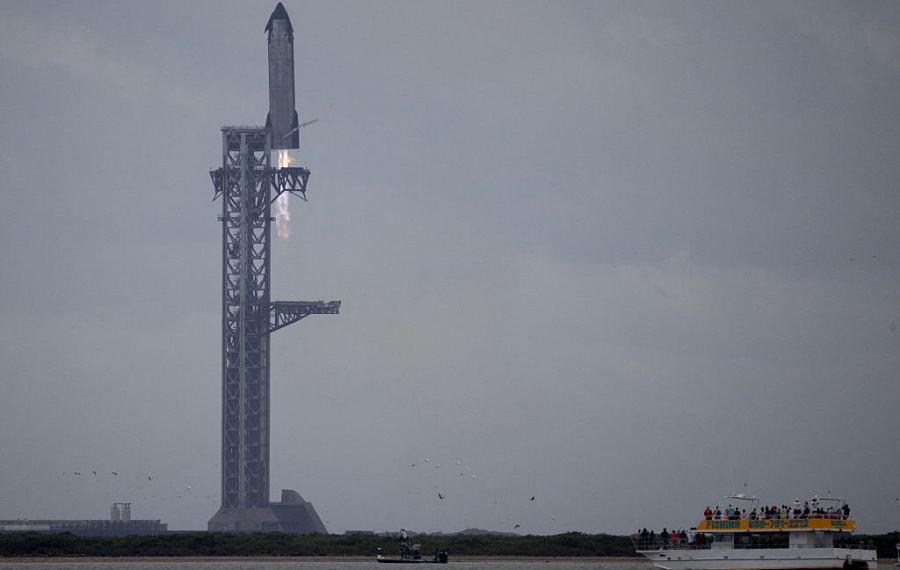
Flight 15 lifted off from Orbital Launch Pad 2 at Starbase on November 13 at approximately 4:47 p.m. Central Standard Time. All 33 Raptor engines on the Super Heavy booster ignited cleanly. Hot-staging occurred on schedule, sending Ship 42 toward orbit while the booster began its boostback burn. That burn ended early because of low fuel mass; the guidance system then aborted the tower catch and diverted the booster to an offshore splashdown. Upon landing-burn shutdown over the Gulf, the flight termination system triggered. SpaceX is investigating the root cause.
Ship 42, by contrast, executed a nominal ascent, performed its orbital insertion burn, and entered a low Earth orbit near 275 kilometers. It then deployed all 26 Starlink V3 satellites over roughly 42 minutes. Contact was established with every satellite, which began raising their orbits to join the constellation. The ship coasted for more than 20 hours while controllers monitored systems. After a deorbit burn, reentry, and a final approach, three Raptors ignited for the landing flip. The arms closed around the vehicle at roughly 3:20 p.m. CST on November 14—the first time any Starship upper stage has been recovered from orbit.
Previous flights had seen boosters caught on three earlier occasions and ships either splash down or disintegrate. Flight 14 had reached orbit and deployed satellites but ended in the Pacific. Flight 15 combined the longest mission yet with the first orbital ship recovery. Official details appear on SpaceX’s Flight 15 page.
Why the Ship Catch Matters More Than the Booster Loss
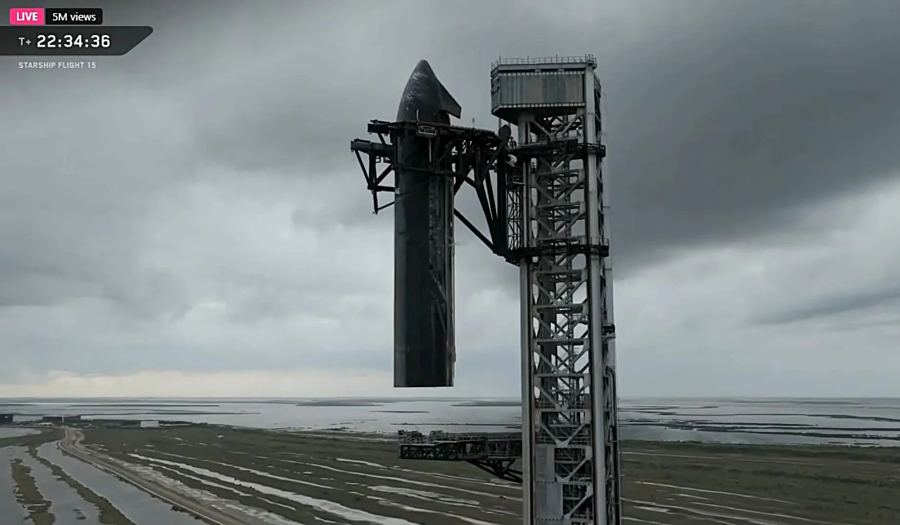
Catching the booster is valuable for cadence, but catching the ship is transformative. The upper stage is the vehicle that reaches orbit, deploys payloads, and must survive reentry heating. Demonstrating that it can return to the tower after orbital velocity means the thermal protection, guidance, and landing systems worked under the harshest conditions Starship has yet faced. The booster loss is a setback for full dual recovery, yet it does not erase the ship’s achievement. SpaceX has already shown it can catch boosters; the new capability is the ability to bring the payload-carrying stage home intact.
This distinction matters for economics. A fully expendable upper stage dominates cost on most launch systems. If Starship can fly, land, and fly again with limited refurbishment, the cost per kilogram to orbit can fall dramatically. The 22.5-hour flight also proved long-duration coast capability and reliable satellite deployment of the higher-capacity V3 satellites. Those satellites are designed to deliver substantially more bandwidth than earlier versions, accelerating Starlink’s growth.
Related coverage on TechMash has examined how SpaceX is building the ground segment for hybrid satellite-terrestrial service in The Ground Game Begins and how orbital compute prototypes are already flying in Tokens from the Thermosphere. Both developments become more realistic once heavy lift is no longer the bottleneck.
Implications for Starlink, Artemis, and Beyond
For Starlink, the ability to launch and recover the ship that carries dozens of V3 satellites per flight is the key to scaling the constellation rapidly. Each successful recovery reduces the need to build new ships for every mission. The same architecture supports other high-mass payloads, including the orbital data centers and compute platforms that laboratories are beginning to explore. Google’s recent on-orbit inference demonstration already showed that commercial accelerators can operate in space; Starship-class capacity would let those experiments grow from single servers to meaningful clusters.
NASA’s Artemis program has contracted SpaceX for a Human Landing System variant of Starship. Current estimates suggest multiple tanker flights will be required to fill the lunar lander in orbit. Rapid reuse of both stages is essential if that architecture is to meet schedule. The ship catch on Flight 15 is the first concrete evidence that the upper stage can return from orbit and be caught, which is a prerequisite for the high flight rate the lunar architecture demands. Blue Origin’s competing lander provides an alternative path, yet SpaceX’s demonstrated recovery now gives the agency a clearer data point on one of the two systems.
Broader industry effects are already visible. Discussions of space-based solar power, large-scale orbital manufacturing, and dedicated AI compute constellations all assume affordable heavy lift. TechMash has tracked parallel hardware advances such as Fractile’s memory-centric inference architecture in Memory First and the shifting valuation environment around frontier labs in The First Crack in the AI Valuation Wall. Lower launch costs would change the capital requirements for every one of those efforts.
What to Watch in the Coming Flights
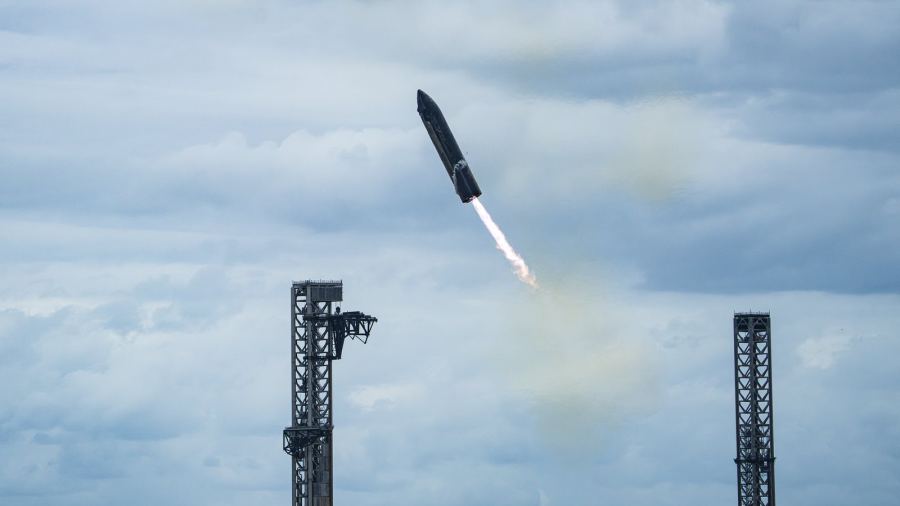
The immediate next steps are inspection of Ship 42 and analysis of the booster abort. SpaceX will examine the thermal protection system, the Raptor engines that performed the landing flip, and any damage from reentry or catch. If the ship can be returned to flight with modest work, the path to rapid reuse becomes clearer. The booster investigation will focus on fuel margins and engine performance; solving that issue is required before dual catches become routine.
Subsequent flights will test higher payload masses, longer coast times, and eventually ship reuse. Flight 16 and beyond will also continue deploying Starlink V3 satellites while refining the catch sequence. Regulatory and range constraints at Starbase, plus planned operations from Florida, will determine how quickly cadence can rise. External observers should monitor both the hardware recovery timeline and any updates to the Artemis propellant-transfer demonstrations.
Further context on infrastructure demands appears in TechMash coverage of Anthropic’s power-generation commitments in Owning the Queue. Energy and launch capacity are becoming the dual constraints on frontier AI; progress on one changes the equation for the other.
Conclusion: A New Baseline for Orbital Operations
SpaceX’s first orbital Starship catch does not complete the reusability story. The booster was lost, dual recovery remains unproven on a single flight, and operational turnaround times are still unknown. Yet the achievement resets the baseline. For the first time, an upper stage that reached orbit, deployed a useful payload, and survived reentry has been caught intact at the launch site. That capability, once refined, removes one of the largest remaining barriers to high-cadence, low-cost access to space.
The implications extend beyond SpaceX. Starlink expansion, lunar lander architectures, and any future orbital compute or manufacturing efforts all become more credible when the vehicle that delivers them can return. The next months will reveal how quickly Ship 42 can fly again and whether the booster issue is solved. Until then, Flight 15 stands as the clearest demonstration yet that fully reusable orbital flight is moving from aspiration to engineering reality. Official flight documentation remains available at SpaceX and is summarized in public reporting such as the Starship flight 15 entry.
Comments
0