
HomeView’s Quiet Debut: What Apple’s First Smart Display Reveals About Siri AI and the Post-Cook Era
Apple is about to put a screen in the middle of the living room that knows who is looking at it. On Friday, November 13, the company begins selling HomeView, its first dedicated smart-home display, at $299 for both the tabletop and wall-mounted versions. The device was announced in mid-October and has been on pre-order ever since. Its arrival is not a splashy iPhone-style launch, yet it may tell us more about the direction of Apple under CEO John Ternus than the foldable phone that dominated September headlines.
What HomeView Actually Is
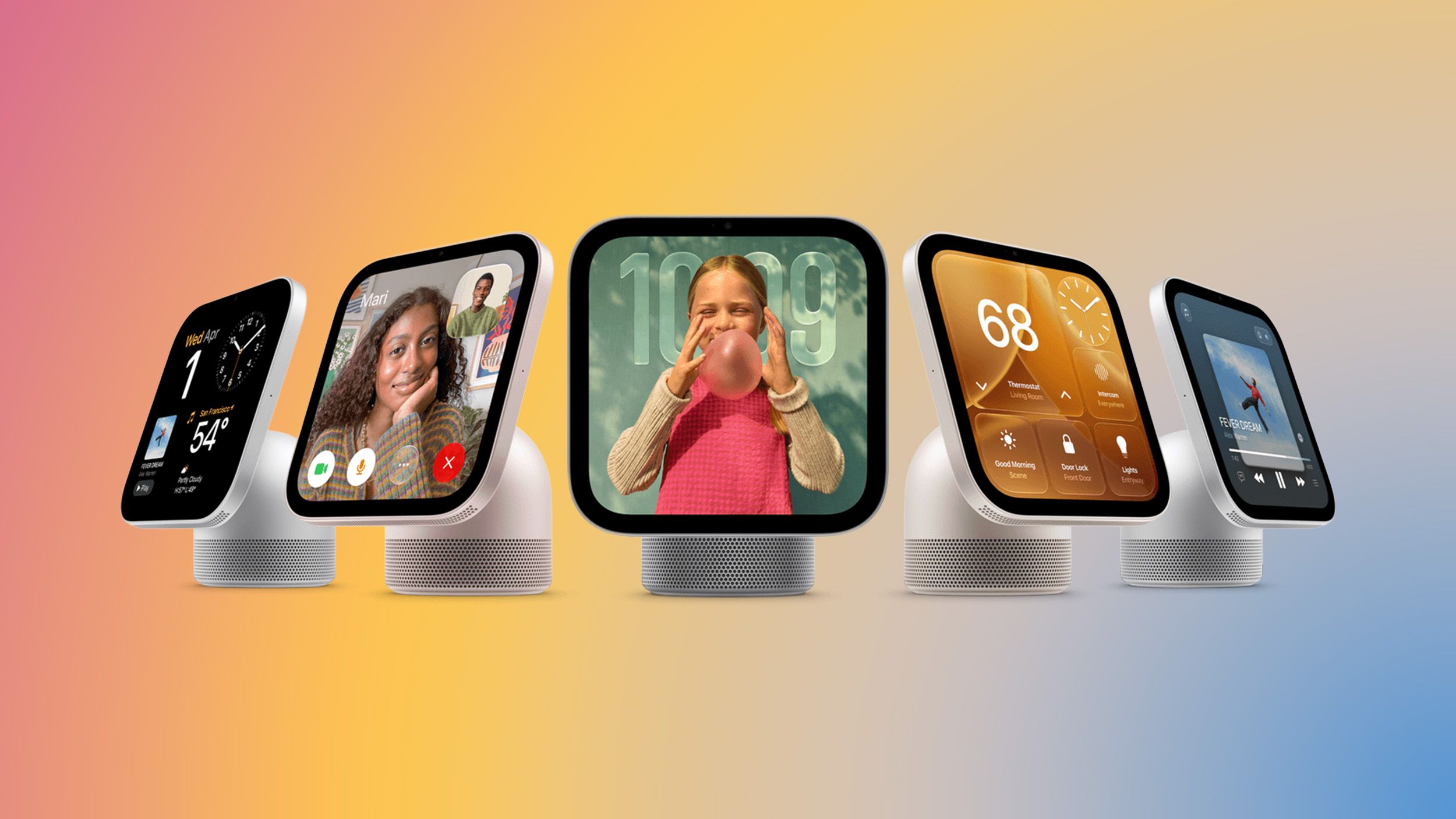
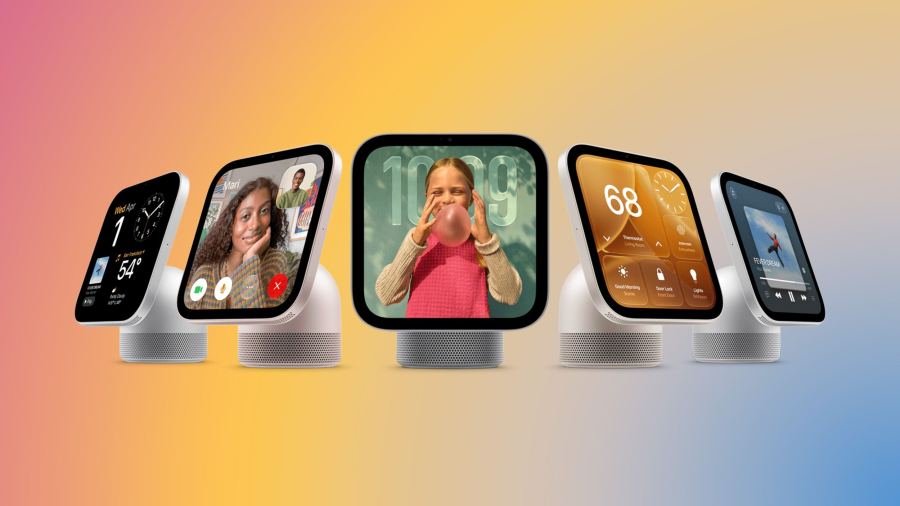
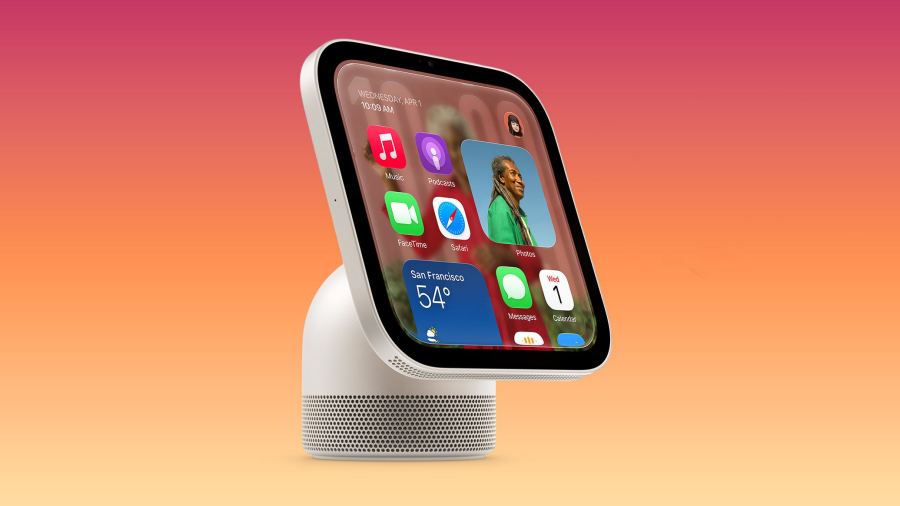
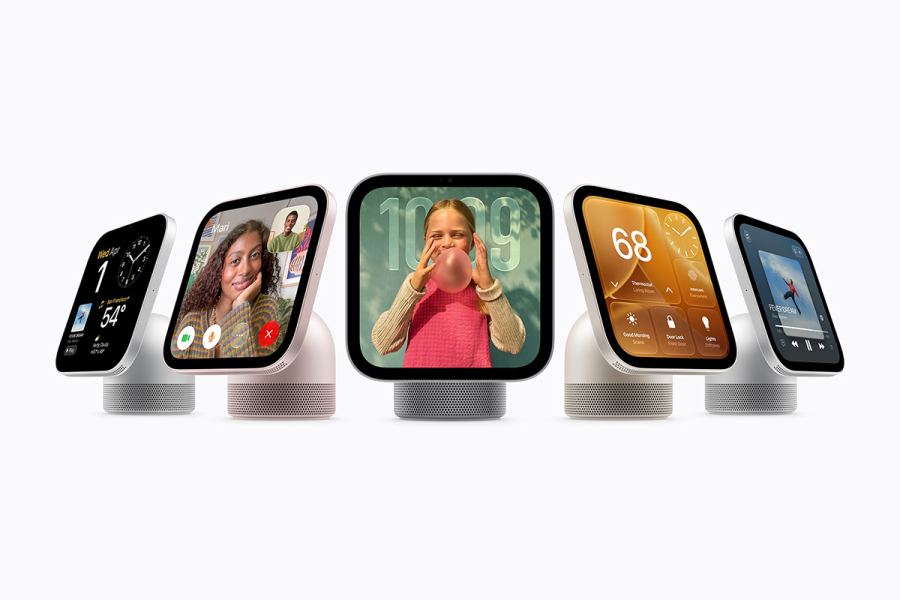
HomeView is a 7-inch Liquid Retina touchscreen mounted on a domed speaker base with a stainless-steel tilt hinge. It runs on an A18 chip and is built around Siri AI, Apple’s conversational, Apple Intelligence-powered assistant. The device can recognize up to six people by face and switch to a personalized Home Screen for each of them. It handles music and video playback, FaceTime calls with Center Stage, home monitoring, and hands-free automations. Apple positions it as a shared household object that still feels personal.
There are two physical forms. The tabletop model comes in silver, starlight, rose pink, and space gray. The wall-mounted version is limited to silver and space gray and requires a separate Schneider Home power mount that starts at about $60. Both list at $299 in the United States. Availability begins November 13 in the US, UK, Canada, Australia, New Zealand, India, Singapore, and South Africa. Notably, the device is not for sale in the European Union because Siri AI is currently unavailable on iOS in that region. Apple has said it is working with EU regulators to find a path forward.
Why the Timing and the Price Matter
The $299 price point is deliberate. It undercuts many competing smart displays while sitting comfortably above a basic HomePod. Apple is not trying to win the lowest-price segment; it is trying to make the screen feel like a natural extension of the devices people already own. Facial recognition that personalizes the interface without requiring a separate login is the kind of privacy-conscious feature Apple has long emphasized. The same approach appears in the way HomeView pulls personal context from a paired iPhone for Siri AI while keeping data on-device where possible.
Launching the same day as the fourth-generation Apple TV 4K (also $299) creates a small living-room cluster. Customers who want a better streaming box and a shared family display can buy both in one trip. That pairing is classic Apple ecosystem strategy: one purchase makes the next one more useful. Under Ternus, who took over from Tim Cook on September 1, the company has continued the product-focused cadence rather than a sudden pivot. HomeView is one more piece of that continuity.
Siri AI as the Real Product
The hardware is straightforward. The software is where the bet sits. Siri AI is the next generation of Apple Intelligence, designed to be more conversational, aware of on-screen content, and able to take actions across apps. On HomeView it is the primary interface. Users can ask it to play music, adjust lights, start a FaceTime call, or surface a calendar event without touching the screen. Apple has been careful to note that some of the more advanced personal-context features still require a compatible Apple Intelligence-enabled iPhone nearby.
This is the same Siri AI that arrived on iPhone with iOS 27 in September and has been expanding in subsequent updates. The HomeView launch is effectively a stress test in a new form factor. If people are willing to leave a screen on the counter and talk to it, the company gains another surface for the assistant. If they treat it mainly as a photo frame and music player, the AI investment looks less central. Early software discoveries have already shown additional capabilities in the pipeline, including the ability for HomeView itself to act as a HomeKit Secure Video camera in certain modes. Those features are not enabled at launch, but the code is present.
The EU Gap and Regulatory Reality
Leaving the European Union out of the initial launch is the clearest external constraint. Apple has stated that HomeView is not available in the EU because Siri AI is not currently offered in iOS there. This is not a minor regional delay; it is a structural one tied to the regulatory environment around AI and data. The company has said it is engaging constructively with EU authorities. Until that is resolved, a significant market is simply absent. Competitors that do not rely on the same on-device and private-cloud model can ship more freely. For Apple, the decision is consistent with its privacy stance, but it also means the first real-world data on HomeView adoption will come from markets where Siri AI is already live.
Context from the Rest of the Lineup
HomeView arrives while the iPhone 18 Pro and Pro Max are still in their early sales window and the foldable iPhone Duo remains constrained. The Duo, which started shipping in late October, has seen strong initial demand in China even as supply has been tight and some deliveries have slipped into early 2027. Ternus has described the Duo as the most transformational iPhone since the original. HomeView does not carry that kind of weight, yet it extends the same Apple Intelligence story into the home. The recent decision to begin charging for additional AI usage in Logic Pro—via $49.99 one-time Intelligence Usage Packs for Creator Studio subscribers—shows that Apple is also testing where the free tier ends. HomeView itself is sold as a hardware product with Siri AI included; the paid-AI experiment is still limited to professional apps. That distinction may not last forever.
Software updates continue in parallel. iOS 27.2.1 and related patches have addressed security issues, while iOS 27.3 betas have expanded Siri AI capabilities and brought more Apple Intelligence features to additional markets, including early steps in China. The Support Community forums, which have existed in one form or another since 1998, are being shut down on November 20 after going read-only this week. Apple has pointed users toward its official support site and app. The move removes a long-standing public venue for peer troubleshooting at the same time the company is asking people to rely more on Siri AI and official channels.

What to Watch Next
The first weeks of HomeView availability will show whether the $299 price and the facial-recognition personalization are enough to move units beyond early adopters. Watch for reports on how well the multi-user switching works in real households and whether people leave the device on and interactive or treat it more like a digital picture frame. Software updates will matter quickly; any delay in enabling the camera features or expanding Siri AI actions will be noticed. The EU timeline remains the largest open question. If Apple can resolve the regulatory issues and ship HomeView there later, the addressable market expands meaningfully. If the gap persists, it becomes a standing reminder of the limits on Apple Intelligence outside certain jurisdictions.
On the broader product side, Ternus’ first earnings call in early November already showed the tension between strong iPhone demand and rising memory costs that are pressuring margins. HomeView is not large enough to move those numbers, but it is part of the same product-and-services mix. The company is still launching hardware on a regular cadence while gradually introducing paid tiers for certain AI features. How those two approaches coexist will shape the next year. For now, HomeView is the most visible new surface for Siri AI outside the iPhone, and its quiet Friday launch is worth watching more closely than the modest marketing might suggest.
Apple has spent years preparing customers for a more capable Siri. HomeView is the first device that makes that assistant the default way to interact with a shared screen. Whether people accept the invitation will be clearer once the devices are actually in homes.
Comments
0