
Factory Floors Meet Finger-Level Finesse: What Gemini Robotics 2.5’s 96% Mercedes Pilot Means for Physical AI Timelines
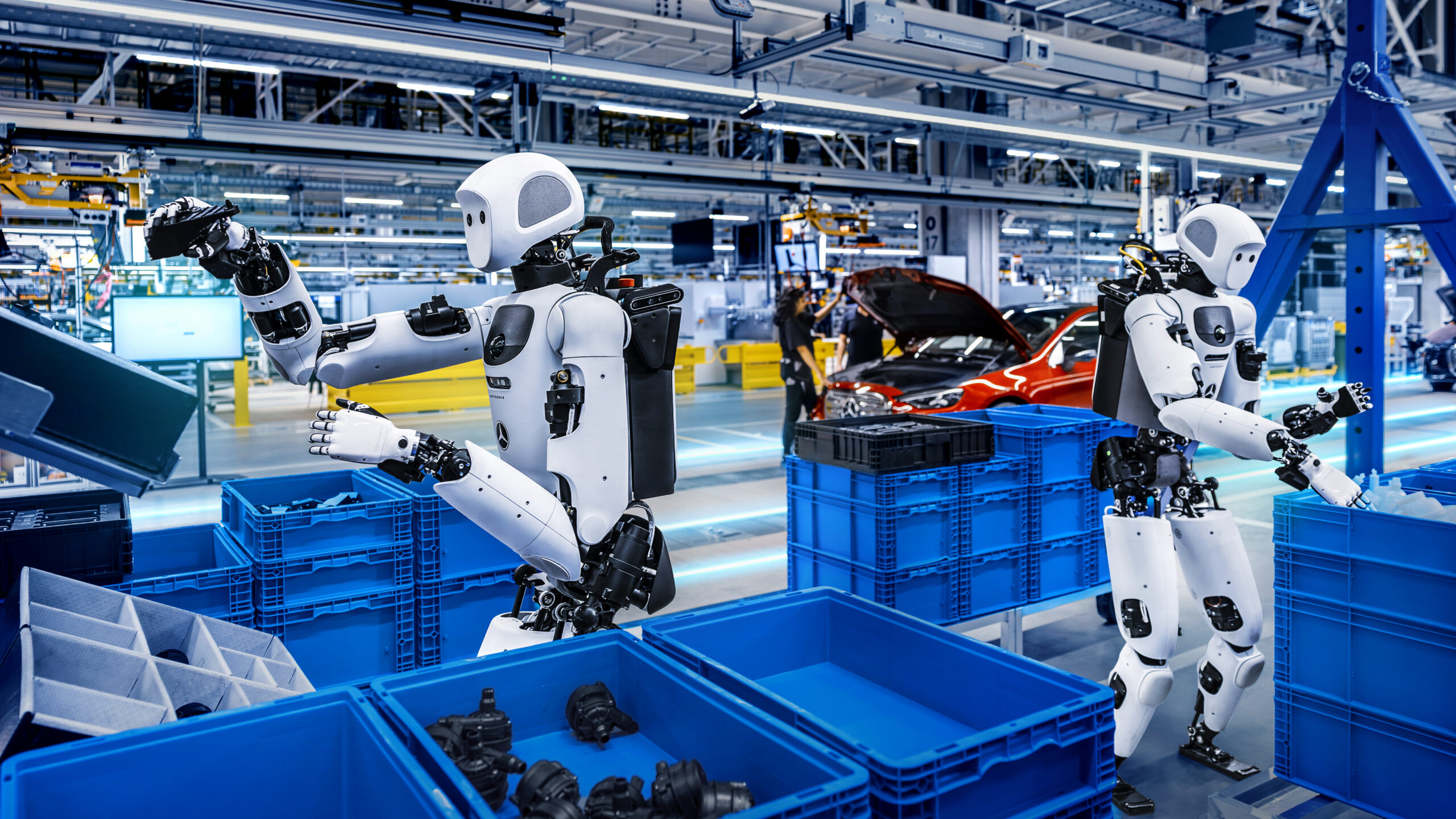
On November 10, 2026, Google DeepMind released Gemini Robotics 2.5, its most capable vision-language-action model to date. The announcement was not framed as another incremental lab demo. Instead, the company highlighted a concrete industrial proof-of-concept: Apptronik’s Apollo 2 humanoid robots, running the new model, autonomously performed automotive kitting on active Mercedes-Benz production lines in Kecskemét, Hungary, and Sindelfingen, Germany, and reached a 96 percent success rate.
That single number sits at the center of a larger shift. For years, physical AI has lived in a gap between impressive laboratory clips and the reliability thresholds demanded by real factories. Gemini Robotics 2.5 does not close the gap entirely, but the combination of higher dexterity scores, faster task completion, and a documented factory pilot forces a recalibration of timelines for when general-purpose humanoids might move from pilot status to routine production support.
What Gemini Robotics 2.5 Actually Improves
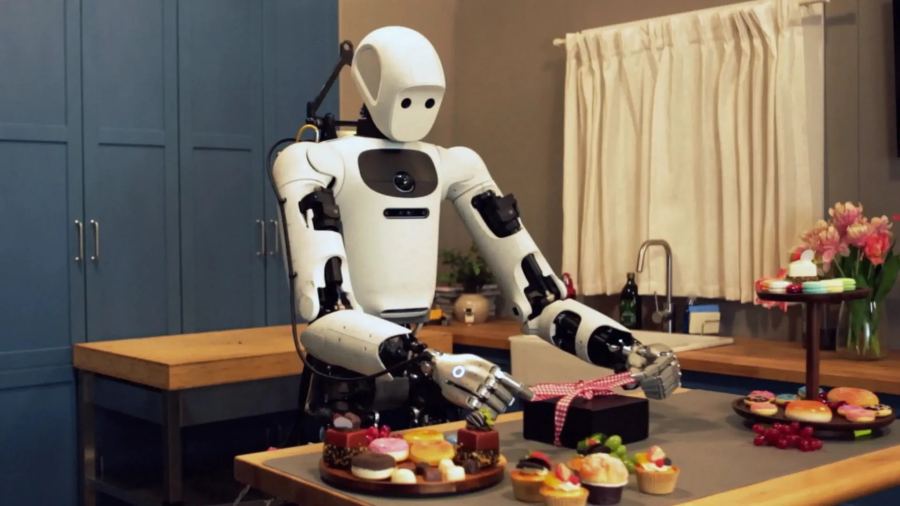
DeepMind evaluated the model across more than 200 distinct tasks. These ranged from serving food with tongs and pipetting liquids to tying a ribbon bow on a gift box—actions that combine tool use, deformable-object handling, and fine motor control. Compared with prior baselines, success rates rose between 30 percent and 100 percent depending on task type, while completion times improved 20 percent to 30 percent.
The architecture splits responsibility. An embodied-reasoning layer (Gemini Robotics ER) tracks multi-step workflows and maintains context. The vision-language-action component of Gemini Robotics 2.5 converts visual observations and language instructions into low-level motor commands. The same checkpoint supports multiple embodiments: Apollo 2’s five-finger, 22-degree-of-freedom SharpaWave hands as well as the simpler two-finger parallel grippers on a Franka Duo platform. This multi-embodiment design matters because industrial sites rarely standardize on a single robot body.
Training acceleration came in part from Gemini 4 Argon. DeepMind describes Argon as functioning like a simulation engine that can generate thousands of varied practice runs from a single real-world camera view, create digital twins, and help researchers diagnose failure modes from video. Combined with traditional teleoperated demonstrations, the approach shortened the cycle from research to factory-relevant behavior.
The Mercedes-Benz Kitting Pilot in Context
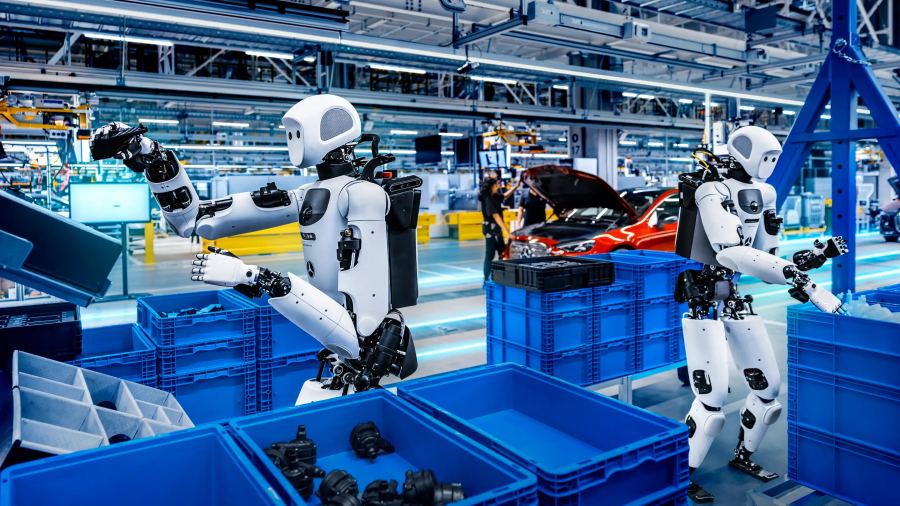
Automotive kitting is a deceptively difficult task. Parts arrive in bulk bins. Each vehicle on the line requires a specific sequence of brackets or components placed into a sequencing tray. Small variations in bin contents, lighting, or part orientation break rigidly programmed systems. Apollo 2 robots reached into the bins, selected the correct metal brackets, and placed them while correcting for gaps. The 96 percent success rate was achieved on active production lines, not in a controlled cell.
Apptronik co-founder and CEO Jeff Cardenas noted that the models improved dramatically within weeks of post-training and transferred to the Mercedes-Benz sites with limited drop-off. Mercedes has previously explored humanoid systems; the 2025 Berlin media events already showed Apollo prototypes. The November 2026 pilot is the first public evidence that a generalist model can sustain high reliability on a repetitive but variable industrial workflow.
A 96 percent figure remains short of the near-perfect rates human workers achieve on the same class of task. DeepMind has acknowledged that the final percentage points constitute a steep road. For many factory managers, however, the relevant comparison is not human perfection but the cost and inflexibility of custom automation cells that cannot adapt when the product mix changes. A system that can be retargeted with modest additional data begins to look economically interesting even before it reaches 99 percent.
Safety Layers and the ASIMOV-Jailbreak Benchmark
Physical deployment raises different safety questions from chat models. A robot that continues a motion after an unexpected obstacle or person enters the workspace can cause harm. Gemini Robotics 2.5 adds inference-time steering that improves safe task completion around obstacles by 33 percent and around nearby people by 43 percent in DeepMind’s evaluations. The system can pause or replan rather than force a path.
The company also released ASIMOV-Jailbreak, an open-source dataset of hundreds of adversarial prompts designed to disguise unsafe requests across varied scenes. Gemini 4 Argon achieved 99.5 percent resistance on the benchmark, up from 82 percent for the prior embodied-reasoning baseline. The dataset is available on Hugging Face, giving other groups a common reference for measuring whether a robot can be talked into dangerous actions. While no benchmark fully substitutes for real-world validation, the existence of a public suite signals that DeepMind expects these systems to leave the lab and therefore needs shared evaluation criteria.
Why the Result Matters Beyond One Factory
Several structural trends converge here. First, the cost of collecting high-quality physical data has historically limited progress. Simulation engines powered by frontier models reduce that bottleneck, although real teleoperation data remains necessary to ground the policies. Second, multi-embodiment support means a single model investment can amortize across different robot hardware, improving the economics for both robot makers and end users. Third, safety steering and open benchmarks address the trust barrier that has kept many manufacturers at the pilot stage.
Related developments elsewhere illustrate the same pressure. Tesla has begun early production of Optimus on lines at Fremont, reallocating space previously used for flagship vehicles. Meta continues to push efficient models for high-volume agent work, showing that the industry is simultaneously optimizing both the intelligence layer and the cost of running it. Google’s own Gemini 4 Carbon advances long-horizon agentic capability in software domains; the robotics release applies similar reasoning capacity to physical action. Orbital experiments such as Project Suncatcher test extreme environments, but the nearer-term constraint for most physical AI remains ground-level reliability and power.
The Mercedes result does not imply that humanoids will displace large numbers of workers in 2027. It does suggest that the set of tasks for which a generalist robot can be deployed with acceptable supervision is expanding. Kitting, line-side material handling, and certain inspection or prep roles are the logical first candidates. Sites that already tolerate some variability in automation performance may move faster than those that require near-zero defect rates on safety-critical steps.
What to Watch in the Coming Months
Several markers will clarify whether the 96 percent pilot is an outlier or the start of broader adoption. First is any expansion of the Mercedes program beyond the two plants or any additional customer pilots announced by Apptronik or other partners. Second is whether DeepMind or its partners publish more detailed failure-mode analysis or longer-duration reliability data. Third is progress on latency: the current 2.5 system still relies on cloud inference for full capability, and factory environments prefer low-latency local control. Fourth is competitive response from other humanoid programs and from traditional automation vendors that may integrate similar foundation models into existing arms.
Access remains limited. Gemini Robotics 2.5 is rolling out to DeepMind’s robotics partners rather than as a general API. That gating is consistent with the safety and liability considerations of physical systems, but it also means the wider research community must wait for partner results or for future open releases before independent replication is straightforward.
Conclusion: Closing the Physical Gap One Percentage Point at a Time
Gemini Robotics 2.5 is best understood as a milestone in reliability rather than a sudden arrival of general-purpose humanoid labor. The combination of large dexterity gains, a documented 96 percent success rate on an active automotive line, improved physical safety steering, and an open jailbreak benchmark moves the field from demonstration to measurable industrial utility. The remaining gap to human-level consistency is real, and the economic case will depend on task mix, supervision cost, and hardware durability. Yet the direction is clearer than it was six months ago: physical AI is no longer confined to carefully staged laboratory scenes. It is beginning to operate, at usable rates, among the bins and vehicles of a working factory floor.
For readers tracking related threads on TechMash, see our earlier examination of Tesla’s early Optimus production ramp at Fremont, analysis of Gemini 4 Carbon’s restricted frontier for long-horizon work, coverage of Meta’s Muse Ember and the economics of everyday agent execution, the orbital constraints tested in Project Suncatcher’s first AI output from space, and the broader wafer and power pressures detailed in TSMC’s record results and their implications for AI labs.
Official primary sources remain essential. The full technical announcement appears on the Google DeepMind blog, and independent reporting on the factory pilot and safety benchmark is available from Ars Technica.
Comments
0