
Tokens from the Thermosphere: What Google’s First Orbiting AI Output Reveals About the Real Constraints of Space Compute
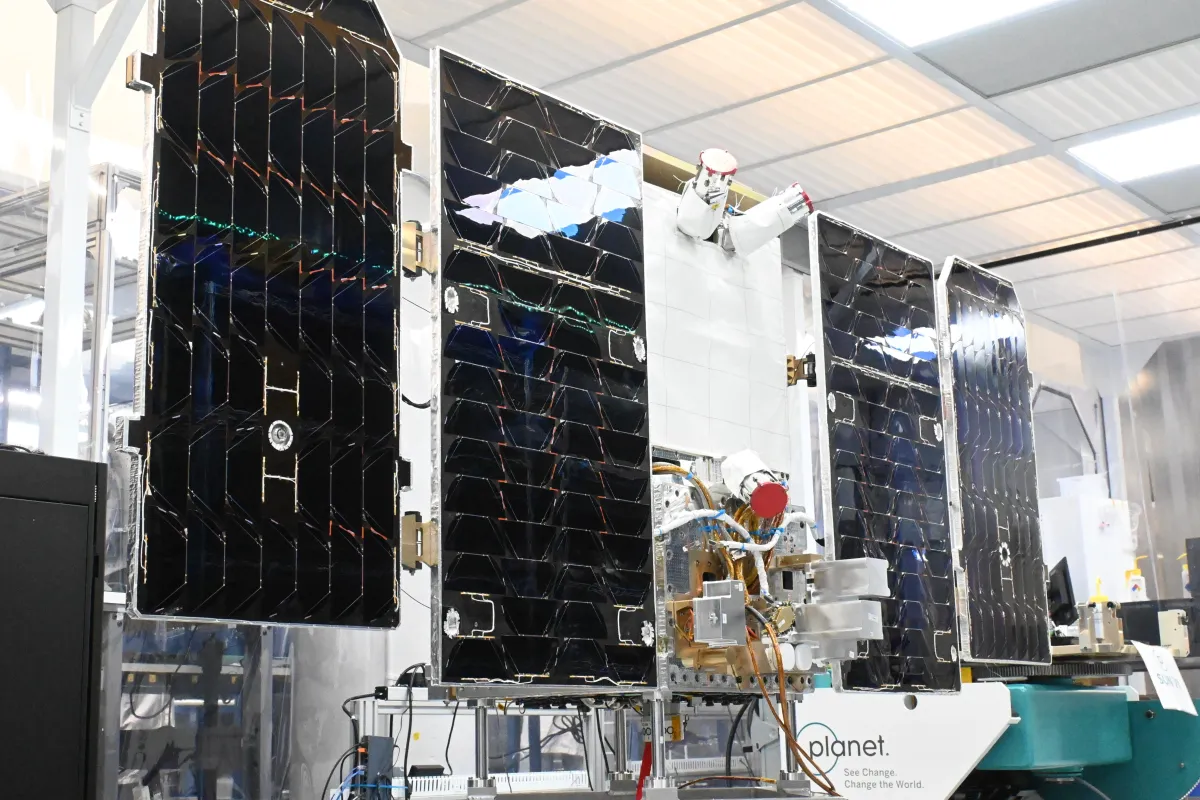
On October 30, 2026, Google confirmed that its Project Suncatcher prototype satellite had generated and returned its first complete AI response from low Earth orbit. The output was a short haiku produced by an onboard Gemma 4 open model running on data-center-class Tensor Processing Units. The poem itself is modest. The engineering context is not. Four TPUs, roughly one kilowatt of solar power, and a spacecraft bus supplied by Planet Labs had just demonstrated that a commercial AI accelerator can receive a prompt, execute inference, and downlink a result while circling Earth at roughly 650 kilometers altitude.
The milestone arrives three weeks after the October 1 launch on SpaceX’s Transporter-18 rideshare. Commissioning included powering the host systems and TPU trays, running early machine-learning tests, and confirming reliable radio contact. During a ground-station pass over Svalbard, Norway, engineers uplinked a prompt asking the model to write a haiku about being in space. The downlinked result read: “Blue marble below / Data streams in silent grace / Starlight feeds my core.” Additional tests covered space-themed limericks and telemetry prompts that reported payload status. Google described the event as the mission’s “Hello World” moment and the first AI response generated by a data-center-class TPU in orbit.
What Actually Reached Orbit and What It Did Not
The spacecraft is a minimum-viable prototype, not an operational data center. It carries four TPUs—compute capacity comparable to a single ground-based server rather than a training cluster. Solar arrays supply on the order of one kilowatt. That budget must cover computation, radios, and thermal control. Because heat rejection in vacuum is limited by the size and efficiency of radiators, the TPUs can operate only in short bursts of roughly 15 to 20 minutes before the system must shut down and cool. Earlier TechMash coverage of the launch, A Kilowatt in Orbit, emphasized this distinction: the useful product is engineering data on radiation tolerance, thermal cycling, and launch survival, not a new public Gemini endpoint in the sky.
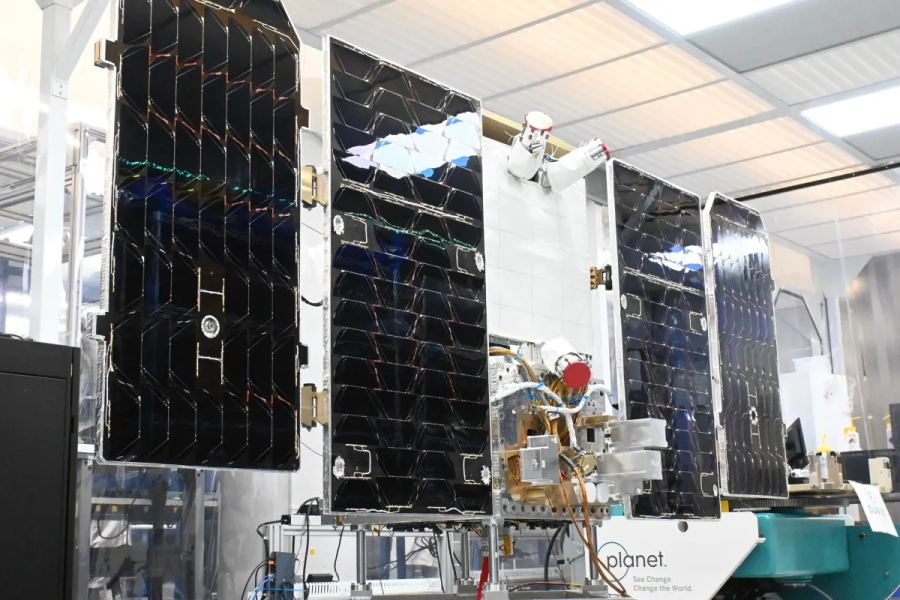
Planet Labs supplied the satellite bus; Google supplied the accelerators. The partnership allowed an accelerated timeline. Google had originally planned custom satellites for 2027. By integrating TPUs into an existing Planet design, the company obtained orbital data months earlier. The peer-reviewed paper published in Joule at launch time outlines the research rationale: ground-based power and cooling constraints are already binding for frontier AI, and space offers continuous solar illumination in certain orbits plus a cold sink for waste heat. Whether those advantages can be realized at useful scale remains the open question the prototype is designed to inform.
The Haiku and the Constraints It Exposes
A haiku is an efficient first test. It requires the model to accept a prompt, generate coherent tokens, and return them through a constrained radio link. Success confirms the end-to-end pipeline: uplink, TPU inference on Gemma 4, downlink, and ground reception. It does not demonstrate high throughput, multi-user serving, or continuous operation. Power and thermal limits still force duty cycles measured in minutes rather than hours. Radiation effects on the chips—single-event upsets, cumulative dose, and thermal stress during eclipse periods—will be measured in the coming weeks. Google has previously tested TPUs in particle accelerators on the ground; orbit provides the real environment of trapped particles and solar events.
These constraints matter because the economics of orbital compute differ sharply from terrestrial data centers. On the ground, the binding limits are often grid interconnection queues and local electricity prices. Microsoft’s withdrawal from the Nscale campus in Essex, examined in The Energy Wall No Chip Can Bypass, illustrated how even well-funded projects can stall when electrons are not available on the required schedule. In orbit the constraints shift to launch mass, radiator area, solar-array efficiency, and radiation hardening. A one-kilowatt prototype cannot host the inference volumes already served by production stacks such as DeepSeek’s DeepInfer, which TechMash analyzed in DeepSeek Opens the Production Engine. The orbital experiment tests whether specialized accelerators can function at all under extreme thermal and power limits; ground-based serving engines remain the nearer-term path for high-volume token delivery.
Why the Milestone Matters for Frontier Models and Infrastructure
Google continues to advance its terrestrial models in parallel. Gemini 4 Carbon, covered in Carbon’s Restricted Frontier, currently leads certain cybersecurity benchmarks and is being made available first to trusted defenders. Carbon runs in conventional data centers. The Suncatcher work does not replace that infrastructure; it explores whether a future subset of inference or specialized workloads could eventually move off Earth. The wafer economics that determine the cost of those TPUs were quantified in TSMC’s most recent record quarter, analyzed in Wafer Economics in the Age of Agents. Every additional process-node improvement that raises performance per watt also improves the feasibility of radiation-hardened or thermally constrained variants.
Open-weight models such as Gemma 4 are particularly suitable for the prototype. They can be loaded once and run without continuous large-parameter downloads. The same property appears in other local-inference efforts, including Meta’s Muse Spark Open optimized for Apple Silicon and Block’s speech-only Dessa model. Placing a compact open model on an orbital TPU simply extends that logic to an extreme environment. The next planned step—twin interconnected satellites in 2027—would test laser cross-links and higher aggregate power. Even then, the architecture would remain a research constellation rather than a commercial offering.
What to Watch in the Coming Months
Google has stated that the immediate campaign will evaluate TPU behavior under thermal stress and radiation exposure. Public updates will likely include quantitative measurements of error rates, power draw during inference, and thermal recovery times. Any demonstration of sustained multi-minute workloads beyond the initial haiku will be more informative than the poem itself. Observers should also track whether the company releases additional telemetry or whether the 2027 dual-satellite milestone remains on the published schedule.

Broader industry context includes continued pressure on terrestrial power. Hyperscalers have committed hundreds of billions of dollars to data-center expansion, yet grid delays and community opposition remain common. Orbital concepts do not solve the near-term problem; they test whether a different physical regime could eventually absorb a fraction of growth. Radiation hardening, launch costs, and end-of-life disposal remain open engineering and regulatory issues. The current prototype, with its one-kilowatt budget and duty-cycle limits, makes those trade-offs concrete rather than abstract.
The haiku is memorable because it is unexpected. The substantive result is the confirmation that commercial AI silicon can complete an inference cycle in orbit and return the tokens. That fact narrows the uncertainty around one set of physical constraints. It does not yet alter the economics that keep the large majority of AI inference on the ground. Subsequent tests of thermal recovery, radiation tolerance, and inter-satellite links will determine whether the gap between prototype and useful orbital capacity can be closed on a timeline that matters to the industry.
Official details of the first response appear in Google’s research blog post of 30 October 2026. The launch announcement and the accompanying Joule paper provide the prior technical framing. Together they describe a measured research program rather than an imminent shift of AI infrastructure into space. The tokens returned from the thermosphere are real. The constraints that still govern their generation remain the central story.
Comments
0