
Heavy Lift for the Sun Catchers: Why Google’s Blue Origin Pact Marks the Shift from Prototype to Constellation-Scale AI Compute
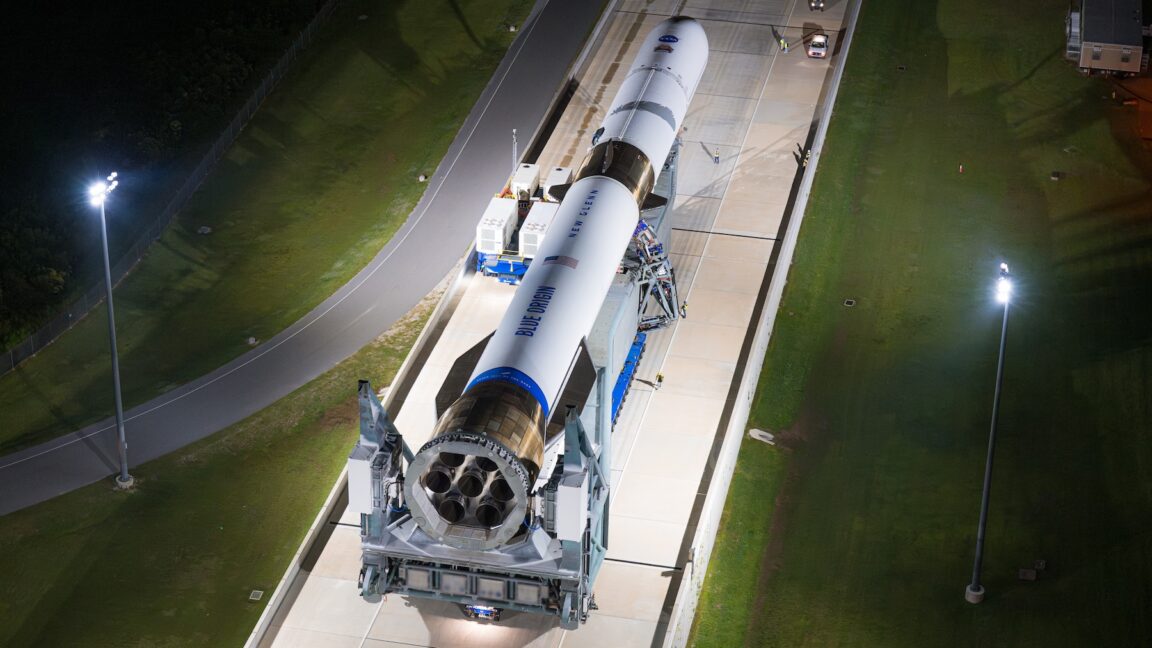
On November 19, 2026, Google and Blue Origin announced a launch services agreement that moves Project Suncatcher from a single refrigerator-sized prototype into the realm of dedicated heavy-lift missions. Blue Origin’s New Glenn rocket is now booked to carry satellites—each carrying roughly the computing capacity of a data-center rack—into sun-synchronous orbit in the first quarter of 2029. The deal is the clearest signal yet that Google intends to treat orbital AI infrastructure as a multi-year engineering program rather than a pure research curiosity.
The announcement builds directly on the October 1, 2026, prototype flight that rode a SpaceX Transporter-18 rideshare and later returned the first AI-generated response from a data-center-class Tensor Processing Unit in orbit. That earlier mission, covered in our pieces A Kilowatt in Orbit and Tokens from the Thermosphere, proved that TPUs can survive launch, radiation, and vacuum thermal conditions long enough to run a short inference workload. The Blue Origin flight is designed to answer the next set of questions: how multiple such satellites can be deployed together, networked, and operated at a scale that begins to resemble a distributed data center.
From One Kilowatt to Rack-Scale Clusters
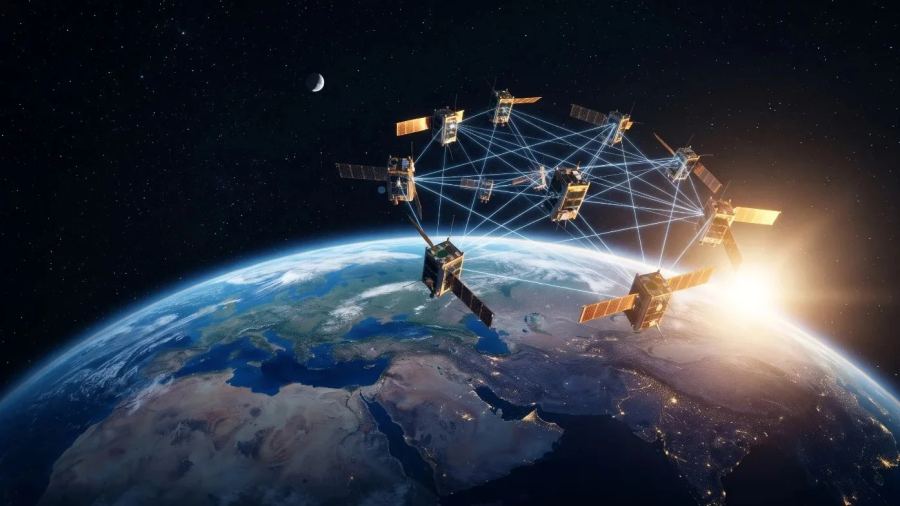
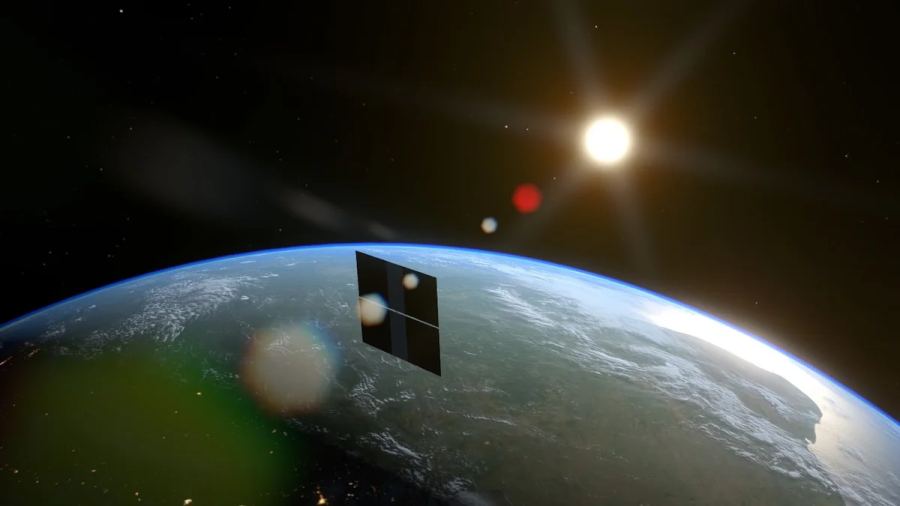
The prototype that launched in October carried four TPUs and drew roughly one kilowatt from its solar arrays—comparable to a hair dryer. Cooling constraints limited continuous operation to short bursts. Google has repeatedly described the long-term vision as compact constellations of solar-powered satellites linked by free-space optical communications, each contributing the equivalent of a ground-based server rack. Placing that capacity into dawn-dusk sun-synchronous orbit maximizes solar exposure; in the right orbit a panel can generate up to eight times more power than the same panel on Earth and can do so nearly continuously, sharply reducing the mass that must be allocated to batteries.
The 2029 New Glenn mission is the first dedicated heavy-lift step on that roadmap. Public statements from both companies emphasize that the satellites will each carry computing capacity at roughly the scale of a data-center rack and will be placed into sun-synchronous orbit. Exact satellite count has not been disclosed, but the choice of a dedicated heavy-lift vehicle rather than another rideshare indicates that Google is ready to test multi-satellite formations and inter-satellite networking rather than another solitary hardware survival experiment.
Why Launch Capacity Now Matters as Much as Chip Survival
Earlier radiation testing showed that Google’s Trillium TPUs can tolerate total ionizing doses well above what a five-year low-Earth-orbit mission would deliver. The October flight added real-world data on thermal control and short-burst inference. Those results remove the most basic hardware objections. What remains is the practical problem of getting enough mass to orbit cheaply and repeatedly.
Google has previously noted that meaningful constellation-scale deployment becomes economically interesting only when launch costs fall toward the $200-per-kilogram range projected for the mid-2030s. SpaceX’s Starship is the vehicle most often cited for that cost curve, yet recent months have underscored that Starship capacity will be heavily contested by SpaceX’s own payloads, including any future orbital compute platforms. Booking New Glenn for a dedicated 2029 flight gives Google an independent heavy-lift path while Starship’s flight rate continues to ramp. Our recent analysis of SpaceX’s first orbital ship catch shows how quickly fully reusable architectures can change the economics; Blue Origin’s parallel progress on New Glenn recovery provides a second commercial option for customers who prefer not to rely solely on one provider.
The energy constraint that orbital concepts are meant to escape is already visible on the ground. Terrestrial data-center projects continue to collide with grid interconnection timelines measured in years. Coverage of Microsoft’s withdrawal from a planned UK site and the broader “energy wall” facing AI build-outs illustrates the same pressure that makes continuous solar power in orbit attractive. Export-control rules that now treat large-scale remote access to advanced chips as a licensable activity further complicate purely terrestrial global capacity. An orbital cluster under U.S. company control does not automatically solve jurisdiction questions, but it does change the physical location of the compute relative to national power grids and certain remote-access thresholds.

Networking, Formation Flying, and the 81-Satellite Sketch
Google’s earlier research papers and blog posts sketched a long-term architecture of roughly 81 satellites flying in a tight formation spanning about a kilometer at roughly 650 km altitude, connected by free-space optical links. The 2029 mission is not expected to fly that full constellation; it is expected to begin validating the deployment, station-keeping, and inter-satellite communication techniques that such a formation would require. Free-space optical links promise high bandwidth without the mass and power penalty of traditional radio, but they demand precise pointing and formation control—exactly the class of problem that benefits from having multiple vehicles on the same dedicated launch rather than scattered across multiple rideshares.
Thermal management remains the harder continuous constraint. In vacuum there is no convective cooling. Heat must be rejected by radiation. The prototype limited itself to short runs precisely because radiator area and thermal mass were modest. Scaling to rack-level sustained compute will require larger radiator surfaces, more sophisticated heat pipes or fluid loops, and careful orbit and attitude choices so that solar arrays and radiators do not fight each other. Sun-synchronous dawn-dusk orbits help on the power side; they do not automatically solve the radiator pointing problem. Engineers will use the 2029 flight data to refine those trade-offs before committing to still larger numbers of vehicles.
Competitive Landscape and What to Watch Through 2029
Project Suncatcher is no longer the only orbital-compute concept under discussion. Other laboratories and companies have floated similar ideas, and launch providers have begun to treat data-center-class payloads as a potential future market rather than a novelty. Google’s decision to lock in a dedicated New Glenn slot two-plus years in advance is both a technical milestone and a market signal: the company is willing to pay for assured capacity rather than remain entirely dependent on opportunistic rideshares.
Between now and the first quarter of 2029 several intermediate milestones are already public. Google has spoken of twin interconnected satellites as a nearer-term goal (previously targeted around 2027). Continued radiation and thermal characterization of the October prototype will inform hardware revisions. Blue Origin must continue to raise New Glenn’s flight rate and demonstrate reliable recovery so that the 2029 window remains realistic. On the ground, the same power and interconnection constraints that make orbital options interesting will continue to shape where large terrestrial clusters can actually be built.
Related coverage on TechMash has examined how hybrid satellite-terrestrial architectures are already being assembled for mobile service in The Ground Game Begins and how remote-access export rules are redrawing the map for superintelligence-scale compute in Closing the Cloud Gap. Both threads intersect with the orbital-compute question: once you can place meaningful TPU capacity in a sun-synchronous orbit and link it optically, the remaining problems become latency, regulatory jurisdiction, and the cost of getting the next batch of mass to orbit.
What It Means
The Blue Origin agreement does not deliver a working orbital data center in 2029. It delivers a dedicated heavy-lift flight that can test multi-satellite deployment, networking, and sustained solar-powered compute at a scale an order of magnitude beyond the single-kilowatt prototype. That is the necessary intermediate step between “TPUs can survive in space” and “constellations of TPUs can deliver useful capacity.”
For the broader AI infrastructure race the implication is straightforward. Terrestrial power, grid interconnection, and export-control geography are already binding constraints. Any credible path that moves a meaningful fraction of inference or even certain training workloads into continuous sunlight changes the planning assumptions for the 2030s. Google has now placed a firm date and a second launch provider on that path. The October prototype answered the first survival question. The 2029 New Glenn mission is scheduled to answer the next one: whether rack-scale solar-powered clusters can be launched, networked, and operated as a system.
Official announcements: Google Research blog and Blue Origin news release.
Comments
0