
The Compact Supercomputer Lands: How Nvidia’s RTX Spark Mini PCs Recast the Economics of Local AI Agents
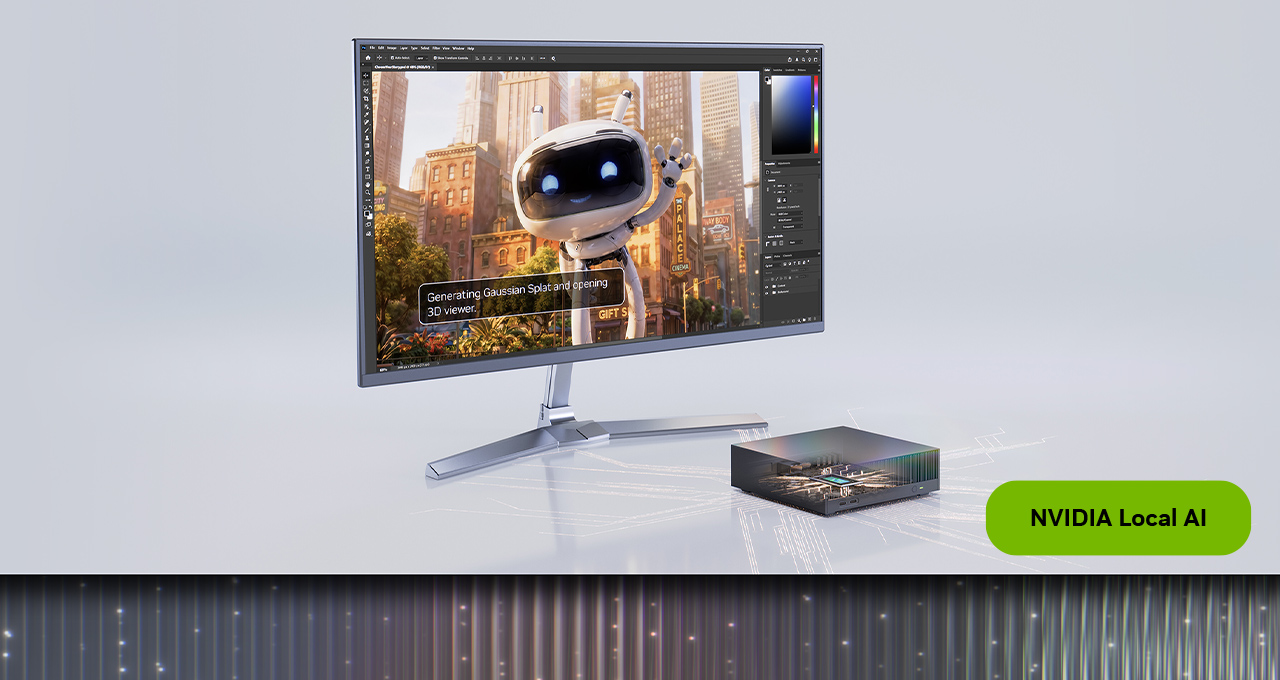
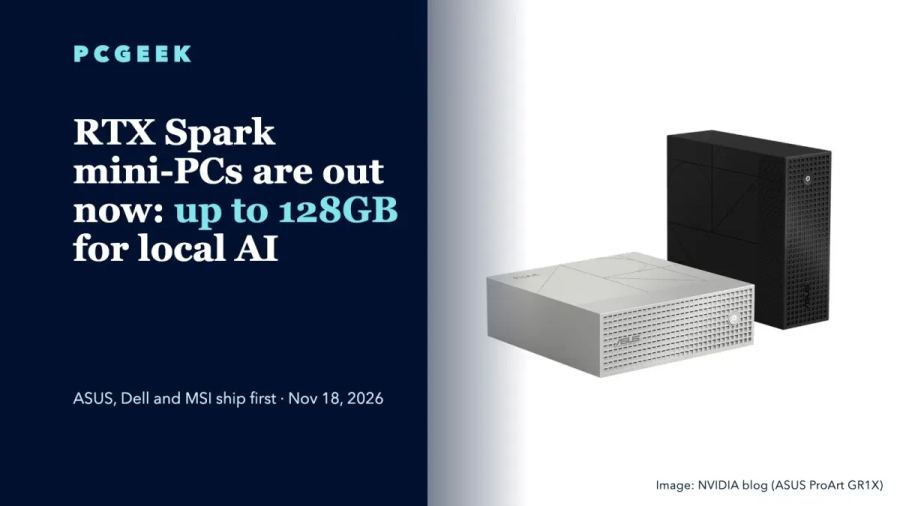
On November 18, 2026, Nvidia quietly moved a class of machine that previously lived only in research labs and high-end developer kits onto ordinary desks. Compact desktops powered by the RTX Spark N1X platform are now shipping from ASUS, Dell, and MSI. These systems pair a 20-core Grace CPU with a 6,144-core Blackwell RTX GPU, support up to 128 GB of unified LPDDR5X memory, and are rated for up to 1 petaflop of AI performance. For developers, creators, and anyone running always-on agents, the launch is less about raw flops and more about ownership of the compute that keeps those agents running without a perpetual cloud invoice.
The timing matters. Cloud inference costs have become a visible line item for teams that run agents for coding assistance, document processing, creative pipelines, or scheduled research tasks. At the same time, open-weight models capable of useful agentic work have grown large enough that fitting them into consumer or prosumer machines is no longer trivial. RTX Spark compact desktops sit in the middle of that tension: expensive relative to ordinary mini PCs, yet far cheaper over months of continuous use than paying per-token rates for equivalent volume on frontier cloud APIs.
What Actually Ships Today
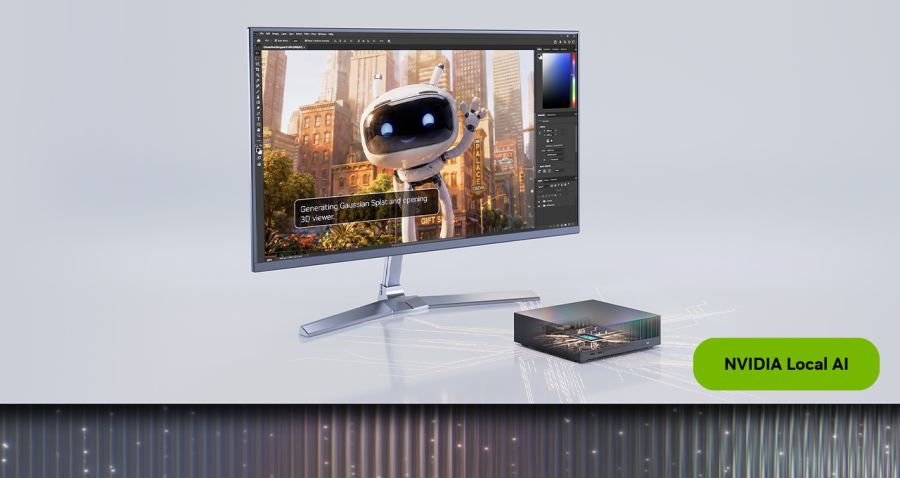
The first systems available for purchase are the ASUS ProArt GR1X, Dell configurations, and the MSI EdgeMesa N AI+ series. All rest on the same N1X superchip architecture that first appeared in RTX Spark laptops earlier in 2026. The desktop variants run at higher sustained power (around 140 W) than the thin-and-light laptops, unlocking the full 20 CPU cores and 6,144 CUDA cores along with the maximum 128 GB memory option.
Nvidia lists concrete capabilities that go beyond marketing language: running 120-billion-parameter models locally, rendering 90 GB+ 3D scenes in real time, and editing 4:2:2 video without stuttering. Ten-gigabit Ethernet is standard, useful when moving large model checkpoints or datasets between machines. Native CUDA support and Windows Subsystem for Linux access give developers the familiar toolchains they already use on data-center hardware, while the Windows desktop environment keeps creative applications (Adobe Premiere, Photoshop, Substance 3D Painter, Blender) running without dual-boot friction.
Pricing starts in the mid-$4,000 range. The ASUS ProArt GR1X begins at $4,499 for 64 GB and 1 TB of storage. MSI’s EdgeMesa N AI+ is listed near $4,699 for a comparable 64 GB configuration and climbs toward $7,500–$8,000 for the 128 GB models, depending on exact retailer pricing and stock. These are not impulse purchases. They are positioned as dedicated agent machines that sit alongside a primary laptop rather than replacing it.
Why the Economics Shift
The core argument Nvidia makes, and that independent reporting has echoed, is that a single always-on desktop can generate tens of millions of output tokens per month for roughly the cost of electricity. One widely circulated comparison puts 61 million output tokens at approximately $20 in power versus roughly $1,200 through a cloud API at typical mid-tier rates. Even if real-world numbers vary with model size, quantization, and utilization, the direction is clear: once the capital cost is paid, marginal inference becomes dramatically cheaper than renting the same capacity from a provider that must cover its own margins, power, and cooling at data-center scale.
This changes the calculus for several kinds of work. Agents that poll repositories, summarize overnight data, generate assets on a schedule, or keep a fine-tuned model warm for a small team no longer need to justify their token budget every month. Privacy-sensitive workflows (internal code, unpublished research, client documents) can stay on the premises. Latency drops to local network speeds rather than round-trips to a distant region. And the same machine continues to serve as a capable creative workstation when the agent is idle.
Previous local efforts have pointed in this direction without fully landing it. Meta’s Muse Spark Open demonstrated that carefully engineered open-weight models can run on high-end Apple Silicon desktops; TechMash covered that shift in The Quiet Migration: Why Meta’s Muse Spark Open on Apple Silicon Signals a New Era for Local Frontier Models. Block’s Dessa speech model showed consumer laptops could handle full-duplex voice. DeepSeek’s open inference stack, examined in DeepSeek Opens the Production Engine, lowered the software barrier on existing NVIDIA and Ascend hardware. RTX Spark combines the silicon density, unified memory, and Windows-native software stack in a form factor explicitly marketed for continuous agent use rather than occasional local inference.
Software That Makes the Hardware Useful
Hardware alone does not keep agents running. Nvidia has paired the launch with software updates that matter for day-to-day use. Hermes Agent and NVIDIA NemoClaw blueprints provide starting points for agent construction. Unsloth supports fine-tuning of compatible models on the device. NVIDIA Switchyard, available inside Hermes, can route routine tasks locally while escalating heavier reasoning to the cloud, giving teams a practical way to manage residual cloud spend. Creative pipelines now connect Photoshop and ComfyUI through the same agent layer so that natural-language instructions can turn sketches into rendered assets or animate stills entirely on-device.
Adobe has expanded native Windows on Arm and RTX acceleration across Premiere, Photoshop, Substance 3D Painter, Illustrator, and InDesign. Blender 5.3 brings DLSS Ray Reconstruction into the viewport so artists can evaluate lighting and materials at near-final quality while they work. Windows ML updates announced around the same period let developers load GGUF models through llama.cpp and experiment with DirectX 12 paths for game-adjacent AI. Together these pieces reduce the amount of custom glue required to keep a local agent useful.
Memory architecture remains a binding constraint even on these machines. Fractile’s recent raise, covered in Memory First: Fractile’s $7 Billion Raise, underscores how much of modern inference is limited by moving data rather than pure compute. RTX Spark’s unified 128 GB pool helps, but the largest frontier models still require quantization, expert parallelism, or multi-machine setups. The practical win is for models in the 70–120 billion parameter range that already deliver strong agent performance once optimized.
Constraints and Open Questions
Several limits are already visible. Stock is thin on the higher-memory configurations. Pricing places these systems firmly in prosumer and small-team territory rather than mass-market. Windows on Arm still carries occasional compatibility friction even as native application support improves. Power and thermals, while efficient for the performance class, are higher than a typical office mini PC; continuous 140 W draws need adequate ventilation. And the software ecosystem, while advancing quickly, is not yet as turnkey as a well-supported cloud agent platform for every workflow.
Export and remote-access rules add another layer. Recent BIS guidance on remote access to advanced semiconductors, analyzed in Closing the Cloud Gap, continues to shape where high-performance silicon can be sold and how it can be accessed. Local ownership of an RTX Spark desktop sidesteps some of those cloud-access questions for the buyer, but it does not eliminate them for the supply chain that builds the chips.
Competition is not standing still. Apple continues to push high-memory Mac Studio configurations optimized for MLX. Custom inference silicon from OpenAI, Google, and others targets different points on the cost-performance curve. Open-weight progress from labs such as DeepSeek and Moonshot keeps expanding what can run on whatever hardware is available. The advantage for RTX Spark is the combination of CUDA continuity, unified memory scale, and a Windows desktop that already runs the creative and productivity applications most teams already use.
What to Watch Next
Three signals will determine how quickly these machines move from early-adopter hardware to ordinary infrastructure. First is software maturity: how many agent frameworks, fine-tuning tools, and creative pipelines ship native support and measured performance numbers rather than workarounds. Second is price and availability as Acer, Gigabyte, HP, and Microsoft’s Surface RTX Spark Dev Box join the lineup. Volume usually brings lower entry points or more aggressive configurations. Third is real utilization data from the first wave of buyers. If teams report that a $4,500–$7,500 box reliably displaces hundreds of dollars per month in cloud spend while remaining simple enough to maintain, the category expands. If the machines mostly sit idle because of software friction or model-fit issues, the pitch remains aspirational.
Broader industry trends reinforce the direction. Agent workloads continue to grow in volume even when frontier reasoning stays in the cloud. Energy and cooling constraints at data-center scale make local or edge execution more attractive for non-latency-critical tasks. And regulatory pressure on remote access to advanced compute keeps reminding organizations that ownership of the silicon has strategic value. RTX Spark does not solve every constraint, but it moves a meaningful slice of agent capacity onto hardware the buyer controls.
Conclusion
Nvidia’s RTX Spark compact desktops do not invent local AI. They industrialize a specific form of it: a Windows machine with enough unified memory, CUDA performance, and software integration to keep agents running continuously without treating every token as a billable event. For teams that already understand the difference between occasional local experiments and always-on production agents, the machines offer a concrete alternative to renting the same capacity indefinitely.
The capital cost is real and the ecosystem is still maturing. Yet the combination of 128 GB unified memory, 1 petaflop-class performance, native creative tools, and agent frameworks that can stay on the desk changes the default assumption. Cloud remains essential for the largest models and the heaviest training. For the growing class of work that can live inside a 70-to-120-billion-parameter envelope and run on a schedule, the desk is becoming a viable data center of one. The first systems from ASUS, Dell, and MSI are the opening move in that shift.
Official details are available in the NVIDIA blog announcement and early coverage from The Verge. Related TechMash analysis of local and open inference paths appears in the pieces linked above, including coverage of speech-only local models in Beyond the Transcript.
Comments
0