
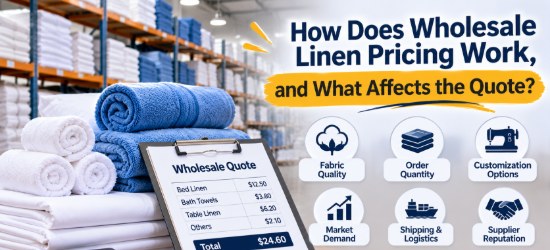
How Does Wholesale Linen Pricing Work, and What Affects the Quote?
Two quotes for what looks like the same towel or tablecloth can differ by a large margin, and the reason is rarely just profit. Fabric, weight, size, quantity, customization, packaging, and delivery all feed into a price. Buyers researching wholesale linen pricing want to understand what drives the figure so they can compare quotes fairly and negotiate sensibly. This guide explains the main cost factors, how quantity and customization change the price, what to ask for in writing, and how to compare offers for bed linen, bath linen, and table linen. It describes general market practice, and each supplier sets its own terms.
What Makes Up a Wholesale Price
A quote usually reflects several layers:
- Raw material, such as the type and grade of cotton or polyester
- Yarn and fabric production, including spinning, weaving, and finishing
- Dyeing and treatment, which add cost, especially for colors or special finishes
- Cutting, sewing, and quality control
- Packaging and labeling
- Shipping, import duties, and handling, where relevant
- Supplier margin and overheads
Changes in any layer, such as cotton prices or freight costs, can move the final number.
Fabric and Specification
Specification is the biggest driver of price. Heavier fabric uses more material. Longer-staple fibers and combed yarn cost more than short-staple, carded alternatives. A towel at higher GSM costs more than a lighter one. Higher-quality stitching, reinforced hems, and better elastic add cost. When comparing quotes, make sure the specifications match: composition, weight, size, construction, and color. A lower price may simply reflect a lighter or lower-grade product.
Quantity and Minimum Order
Larger orders usually bring a lower price per piece, since production runs are more efficient and fixed costs are spread across more units. Suppliers often set minimum order quantities per item, size, or color, and may offer price breaks at higher quantities. Ask for the price at several quantity levels, and check whether minimums apply to each color or size separately. A small order may cost more per piece, so consolidating similar items can help.
Customization
Custom work adds cost and time:
- Custom sizes, since cutting and production lines change
- Custom colors, which may require dye-lot minimums
- Embroidery or woven logos, which add digitizing, setup, and per-piece costs
- Special packaging or labels
Ask which charges are one-time, such as digitizing a logo, and which are per piece. Confirm whether sample approval is included and whether reorders need new setup fees.
Quality Control and Samples
Samples may be free, charged, or credited against the order, depending on the supplier. Quality control steps such as inspection and testing add cost but help avoid defects. Ask what inspection is included. Requesting test information for key properties, such as shrinkage or colorfastness, may affect price or timing.
Payment Terms, Delivery, and Taxes
Quotes should state payment terms, such as deposits and balance timing. Delivery costs depend on distance, volume, and speed. Ask whether the price includes delivery to your site, and who handles unloading. Taxes and duties may apply depending on the transaction, so confirm what the quote includes and check with your accountant. Clear terms prevent surprises.
Lead Time and Price
Faster delivery can raise the price, since it may require air freight, priority production, or stock reallocation. Standard lead times usually cost less. If you need stock for a fixed date, order early and ask for a delivery schedule. Local stock may carry a slightly different price than made-to-order goods, but it can save time.
What to Ask For in Writing
To compare quotes fairly, ask each supplier for:
- A full specification for each item, including size, weight, composition, and color
- Price per piece at several quantities
- Minimum order quantities
- Costs for customization and any setup fees
- Sample policy and cost
- Delivery terms and costs
- Payment terms
- Lead time and what happens if it slips
- Defect and replacement policy
Put these in a simple table so that gaps are visible.
Compare on Cost Per Use
The lowest price per piece is not always the lowest total cost. Compare cost per wash cycle, including purchase price, laundry, replacement, and loss, using lifespan from sample testing. A supplier of bath linen or table linen wholesale that provides clear specifications and test information makes this comparison easier.
Negotiating Sensibly
Negotiation works best when you are clear on specification and volume. Ask about volume breaks, combined orders across product lines, and repeat-order terms. Avoid pushing for a price so low that quality drops. A fair relationship usually gives better consistency over time than a one-off bargain.
Frequently Asked Questions
1. Why do wholesale linen quotes differ so much? Specification, quantity, customization, packaging, delivery, and supplier margin all differ. Comparing identical specifications is the first step in a fair comparison.
2. Does ordering more always lower the price per piece? Often yes, since production runs are more efficient, but minimums and price breaks vary by supplier and item.
3. What extra costs come with custom embroidery? Typically a one-time digitizing or setup fee and a per-piece charge, plus possible minimum quantities and longer lead times.
4. Should I compare quotes using unit price alone? No. Compare cost per wash cycle, including laundry, replacement, and loss, using tested or recorded lifespan.
5. What should a good quote include? Full specifications, price at several quantities, minimums, customization costs, sample policy, delivery and payment terms, lead time, and defect policy.
6. Can a faster delivery change the price? Yes, since it may need priority production or faster transport. Ordering early usually avoids premium charges.
Final Thoughts
Wholesale linen pricing reflects specification, quantity, customization, quality control, delivery, and the supplier's terms. Buyers who define specifications clearly, ask for prices at several quantities, request written terms, and compare cost per use are better placed to judge quotes fairly. A clear, fair relationship with a supplier also helps keep quality and pricing consistent over time.
Comments
0