
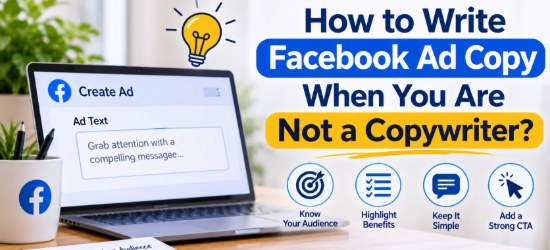
How to Write Facebook Ad Copy When You Are Not a Copywriter
Plenty of business owners write their own ads. They know the product better than anyone, but the moment they open a blank text box, the words stop coming. What comes out is either a stiff announcement or a long paragraph nobody finishes.
The good news is that effective ad copy does not need fancy writing. It needs clarity, a little structure and a habit of listening to customers. Here is a simple way to write ads that sound human and get read.
Start With a Conversation, Not a Blank Page
Before typing a single line, imagine you are explaining your product to a friend who has the problem it solves. What would you say? That natural, slightly messy explanation is usually better raw material than anything polished.
Even better, borrow the words your customers already use. Read your reviews, emails and social comments, and highlight phrases that describe a frustration or a result. A line like “I finally stopped dreading Monday mornings” carries more feeling than any slogan you could invent.
Know the Parts of a Facebook Ad
A typical Facebook ad has three pieces of text working together. The primary text sits above the image and does most of the talking. The headline appears beside or below the visual and acts like a label. The call-to-action button tells people what to do next.
It helps to remember that the image and the words are one message split across two places. The visual grabs attention, and the copy explains why it matters. Neither should repeat the other.
A Simple Structure You Can Reuse
Open With What the Reader Cares About
The first line decides whether anyone keeps reading, because longer primary text is cut off behind a see-more link. Lead with a problem, a result or a situation your reader recognizes. Skip introductions about your company.
Add One Clear Benefit
Pick the main reason someone should care and explain it in plain language. Resist the urge to list every feature. A single clear idea is easier to remember than five competing ones.
Give a Reason to Believe It
Claims are easy to ignore. A short piece of proof, such as a real customer line, a specific detail or a simple guarantee, makes the benefit feel believable.
Finish With One Next Step
Tell people exactly what to do, whether that is to shop, learn more or book a call. Match the instruction to the button so nothing feels confusing.
Write the Way People Actually Talk
Read your draft out loud. If you would never say a sentence to another person, change it. Short sentences, everyday words and a friendly tone almost always beat formal language.
Speak to one person using the word you, not to an audience. It sounds more personal, and it keeps you focused on what the reader wants rather than on what you want to say.
Keep Meta's Advertising Rules in Mind
Meta reviews ads against its advertising standards, and copy that makes exaggerated promises or implies things about someone's personal traits or situation can be rejected. Avoid guaranteeing results and avoid wording that assumes something personal about the viewer. Check the current policies on Meta's site before launching, since they change from time to time.
Match Your Copy to Where the Ad Appears
The same words can feel right in one placement and awkward in another. Vertical placements leave little room, so the copy needs to be shorter and the key message needs to appear on the visual. This matters especially for Instagram ads, where people move fast and often watch with the sound off.
Test Your Copy Like a Scientist
Even experienced writers cannot predict which version will win. Write a few different openings for the same ad and let the results decide. Change one thing at a time, such as the first line, so you can see what made the difference.
Over time, patterns appear. You may notice that problem-first openings beat result-first ones, or that shorter text earns more clicks. Keep notes so each new ad starts from what you learned. This kind of research and testing is exactly what a creative strategist builds into an ad account, so copy improves through evidence instead of guesswork.
Common Mistakes to Avoid
The most common mistake is writing about yourself instead of the reader. Announcements about your brand rarely matter to someone scrolling past. Another is trying to say everything, which leaves the reader with nothing. A third is vague language, such as promising to transform or elevate something without saying how.
Finally, do not forget the page after the click. If the ad promises one thing and the landing page says another, even excellent copy will lose sales.
Frequently Asked Questions
How long should Facebook ad copy be?
There is no fixed length. Short copy often works for simple offers and warm audiences, while longer copy can help when a product needs explaining. Test both and see what your audience responds to.
Do I need to hire a copywriter?
Not necessarily. Many small businesses write effective ads using customer language and a simple structure. A copywriter can help when you need volume or fresh angles.
Should I use emojis in ad copy?
They can help break up text and add personality, but use them sparingly and make sure they suit your brand and audience.
How do I know if my copy is working?
Compare click-through rate, cost per result and conversions against your other ads in similar conditions. A good ad earns attention and leads to action.
Final Thoughts
You do not need to be a professional writer to write ads that work. Listen to your customers, use a simple structure, write the way people talk and test different openings. With a little practice, ad copy stops being a blank-page problem and becomes a repeatable routine.
Comments
0