
The Formalization Threshold: What a Claude-Assisted Lean Proof of the Riemann Hypothesis Reveals About AI-Driven Discovery
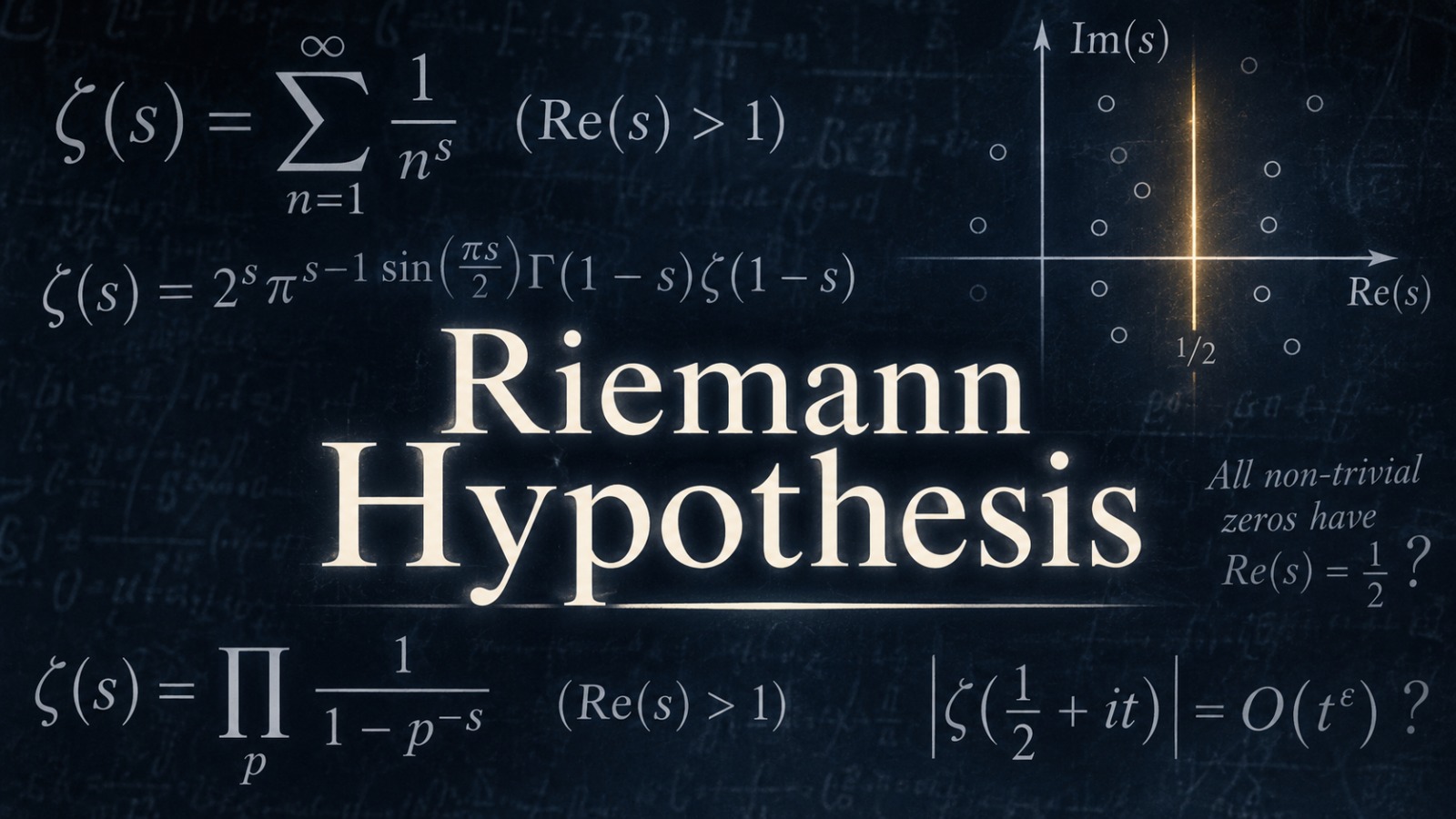
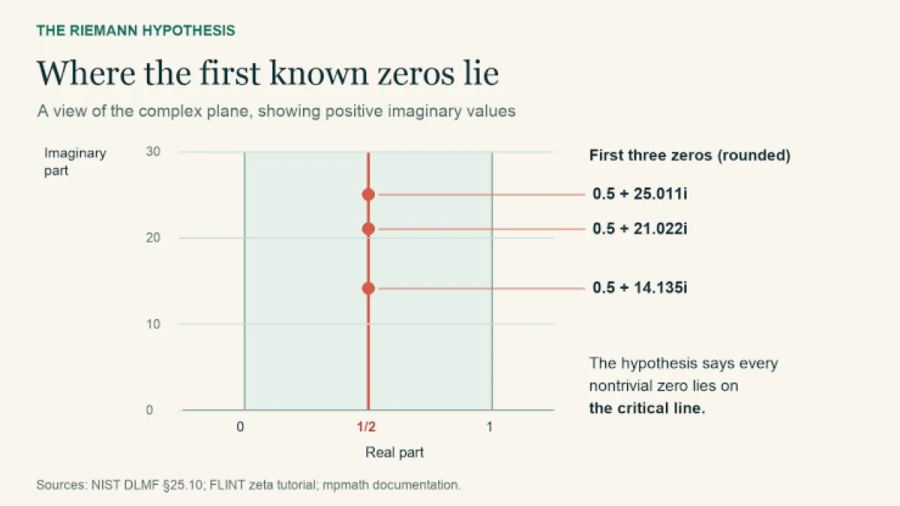
On November 20, 2026, mathematician Levent Alpöge, working at Anthropic, posted a four-page note and a massive Lean formalization claiming a proof of the Riemann Hypothesis. The hypothesis, first stated by Bernhard Riemann in 1859, asserts that all non-trivial zeros of the Riemann zeta function lie on the critical line where the real part equals one-half. It is one of the seven Millennium Prize Problems, and a verified solution would reshape analytic number theory, cryptography assumptions, and our understanding of the distribution of prime numbers.
What distinguishes this claim is not merely the speed or the involvement of Claude, Anthropic’s flagship model, but the artifact itself: a roughly 17-million-line Lean library that independent checkers have already confirmed compiles and states the correct theorem. Mathematicians on Zulip and elsewhere have begun dissecting the argument, which appears to draw on modern tools from the Langlands program, automorphic forms, and arithmetic geometry. At the same moment, a purely human proof of a related general Riemann hypothesis was also released by Stanford postdoc Alessandro Masullo, underscoring that the frontier is being approached from multiple directions.
Why the Riemann Hypothesis Matters Beyond Pure Mathematics
The prime number theorem already gives the asymptotic density of primes, but the Riemann Hypothesis supplies the sharpest known error term. If true, it implies that the primes are distributed as regularly as possible given the constraints of analytic number theory. Consequences cascade into cryptography (certain algorithms rely on the hardness of factoring, which is tied to prime distribution), the design of pseudorandom generators, and even some results in quantum computing complexity. The Clay Mathematics Institute lists it among the problems whose resolution would mark a genuine turning point in the subject; the official statement and prize criteria remain available at the Clay Mathematics Institute site.
For decades the problem resisted both classical attacks and early computer-assisted searches. Billions of zeros have been verified computationally to lie on the critical line, yet computational evidence is not a proof. The new Lean formalization changes the epistemic status: a machine-checked proof, once fully digested by the community, is as certain as the correctness of the Lean kernel itself.
How the Proof Was Constructed
Alpöge has described the process as a stream-of-consciousness collaboration with Claude. Key ingredients include an adaptation of the Stepanov method (originally used for the function-field analogue of the hypothesis) combined with theta lifts to transfer multiplicity ideas into the number-field setting. Claude is credited with proposing the critical chain-length parameter of square-root of X in a von Mangoldt sum, after which the model “flew, and danced, and sparkled near that finish line.” The resulting proof extends at least to the Generalized Riemann Hypothesis for Dirichlet L-functions.
The formalization is enormous—reports place the merged archive near 17.4 million lines across more than 175,000 Lean files. This scale is unprecedented for a single theorem, yet Lean’s design makes verification feasible: the kernel is small, the type theory is expressive, and the Mathlib library already contains the standard statement of the Riemann Hypothesis. Independent checks by mathematicians including Andrew Sutherland confirmed that the exported proof matches Mathlib’s definition and passes multiple proof checkers. The Lean FRO and Mathlib Initiative later issued a joint statement expressing full confidence in the correctness of both the statement and the proof.
This development sits in a broader pattern of AI-assisted formalization. Earlier in 2026, OpenAI’s Astra model produced Lean certificates for ten long-standing problems; TechMash covered that milestone in detail. The Riemann case is larger in scope and carries higher symbolic weight because of the hypothesis’s cultural status.
What “Verified in Lean” Actually Means
Lean is an interactive theorem prover and programming language based on dependent type theory. A proof that compiles in Lean is a certificate that every logical step follows from the axioms and previously accepted theorems. The official Lean language site and documentation are maintained at lean-lang.org. Because the kernel is small and has been scrutinized for years, the residual risk is not “did the computer make a calculation error?” but “did the formal statement match the informal mathematical claim?”
In this instance, the community has already performed that check: the headline theorem is exactly Mathlib’s definition of the Riemann Hypothesis. The remaining work is human understanding. Alpöge has acknowledged that the current artifact is not yet a human-intelligible paper and has committed to producing one. Until that happens, the mathematical community can treat the result as machine-verified while still needing to absorb the conceptual novelty—particularly the use of automorphy-lifting techniques and Galois representations that appear in the intermediate steps.
A parallel human-only claim by Alessandro Masullo, announced by Stanford’s Ravi Vakil, lacks a Lean formalization. Its fate will therefore depend on traditional refereeing. The simultaneous appearance of both claims is a reminder that AI does not replace human insight; it multiplies the rate at which candidates can be generated and checked.
Implications for AI Research and the Future of Mathematics
The episode arrives while Anthropic is navigating its path to public markets. The company’s S-1 filing and the structure of its dual-class shares have been analyzed on TechMash; the same models that are being commercialized are now producing results that would have been considered pure-research triumphs a few years ago. Internally, Anthropic has already reported that directed AI agents log roughly six times as many working hours as human employees on certain tasks. The Riemann formalization is an extreme case of that shift: a single mathematician plus a frontier model produced an artifact that would previously have required a large collaborative effort over years.
METR’s recent time-horizon data show frontier agents reaching multi-day reliability on complex tasks. Formal mathematics is a domain where success is binary and verification is cheap once the proof is written. This combination makes number theory and related fields unusually fertile ground for AI-assisted breakthroughs. The risk is that the community’s ability to understand and teach the new results may lag behind the rate at which they appear. If 17-million-line proofs become common, the bottleneck moves from discovery to pedagogy and conceptual compression.
Related work at Anthropic has already shown models surfacing unexpected biological insights in a wet-lab setting; TechMash examined the phage-enzyme discovery in an earlier piece. Mathematics may prove even more amenable because the ground truth is absolute rather than experimental.
What to Watch in the Coming Weeks
Several concrete milestones will determine how this claim settles into the mathematical record. First is the production of a human-readable exposition that extracts the conceptual core from the Lean library. Second is the community’s assessment of novelty: does the argument contain genuinely new ideas that can be applied to other problems, or is it primarily a sophisticated assembly of existing techniques? Third is the fate of Masullo’s parallel claim and any other emerging candidates. Fourth is the response of the Clay Mathematics Institute and the broader prize ecosystem; formal verification does not automatically trigger the prize, but it removes the traditional risk that a claimed proof contains a subtle gap.
On the AI side, observers will watch whether other labs replicate or extend the approach with different models, and whether the cost and scale of the Lean formalization decrease rapidly. The existence of a verified proof also creates a new training signal: future models can be fine-tuned or evaluated on their ability to navigate or compress such large formal libraries.
Conclusion: A New Epistemic Regime
The Claude-assisted Lean proof of the Riemann Hypothesis does not end mathematics; it changes the economics and epistemology of certain kinds of results. Machine-checkable certificates can now be produced at a scale and speed that outpace traditional writing and refereeing. The human role shifts toward framing the right questions, recognizing conceptual breakthroughs, and translating verified formalisms back into the shared language of the field. For AI researchers, the episode is further evidence that frontier models are already useful collaborators on problems once considered the exclusive domain of specialist human experts.
Readers interested in the broader trajectory of agentic systems can find related analysis in TechMash’s coverage of OpenAI’s Astra solving ten open problems, Claude’s phage-enzyme discovery, Anthropic’s path to public ownership, the 6-to-1 agent-to-human work ratio, and METR’s multi-day autonomy data. The formalization threshold has been crossed; the next chapter will be written in both Lean and ordinary mathematical prose.
Comments
0