

Retail on the Frontier: Anthropic’s 20 Percent Public Allocation and $70–$78 Range Test the Durability of AI Capital Demand
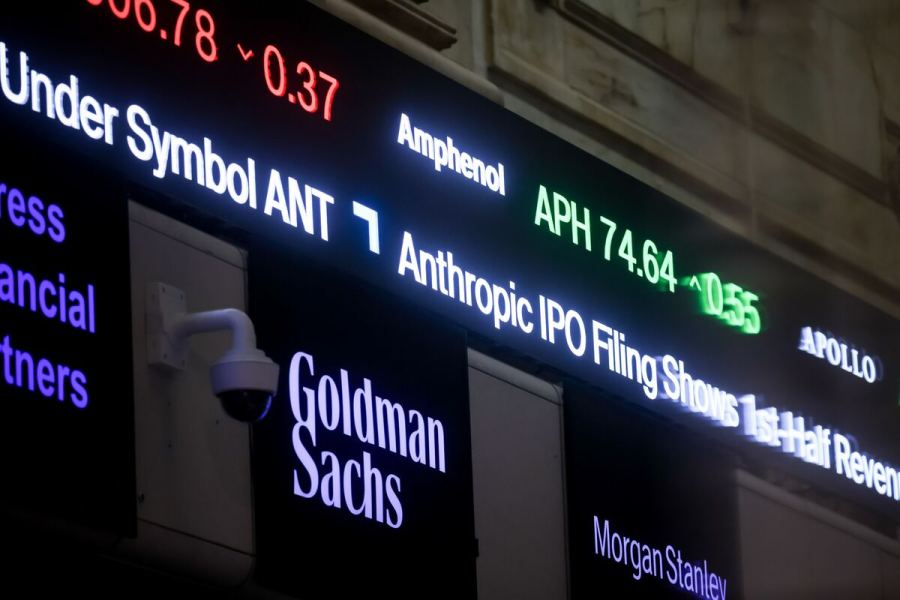
On November 10, 2026, Anthropic filed an amended registration statement that fixed the terms of its long-awaited Nasdaq debut. The public-benefit corporation behind Claude will offer 825 million Class A shares at an expected price range of $70 to $78. At the top of that range the offering could raise roughly $64.35 billion and value the company at approximately $1.404 trillion on a fully diluted basis. More unusually, the company expects to allocate up to 20 percent of the shares to retail investors—roughly double the typical 5–10 percent slice in large technology IPOs. Trading is widely expected to begin around November 19 under the ticker ANT, subject to final pricing on November 18 and regulatory clearance.
These numbers arrive at a moment when the broader AI trade is under pressure. Nvidia’s leadership transition, residual effects from a major Microsoft 365 outage, and selective pullbacks in high-multiple growth names have already forced earlier recalibrations of Anthropic’s own valuation expectations. What began the year with private discussions above $1.5 trillion has settled into a range that still represents a substantial step-up from the $965 billion May private round, yet remains well below the loftiest projections of only a few months earlier. The combination of a high retail allocation, a concurrent $26 billion non-voting private placement to major chip and cloud suppliers, and an aggressive capital-raise target makes this listing more than another large technology IPO. It is a live test of whether public markets are prepared to underwrite the multi-year compute and power build-out that frontier AI now requires.
Key Facts from the Amended Filing and Roadshow
Anthropic is selling the majority of the 825 million Class A shares itself (approximately 801.35 million), with existing stockholders offering a smaller secondary tranche. Underwriters hold a 30-day option to purchase up to an additional 123.75 million shares. Net proceeds to the company are expected to fund general corporate purposes, with the bulk directed toward compute and infrastructure capacity. A separate concurrent private placement will see AMD, Broadcom, Google, Micron, Microsoft, Nvidia, and TSMC collectively purchase $26 billion of non-voting Class N stock at the same IPO price. Google and Nvidia are each reported to be contributing on the order of $10 billion. Because these Class N shares sit outside the registered offering and are not subject to the standard underwriter lock-up, they create an immediate alignment of interests between the lab and its most critical suppliers.
The public-benefit corporation structure and the Long-Term Benefit Trust remain intact. Class A public shares carry one vote each, while an LLC controlled by the seven co-founders retains effective voting control through Class F shares. Retail allocation is explicitly targeted at up to 20 percent across the United States and selected international markets, with named brokers including Charles Schwab, Fidelity, Robinhood, SoFi, and E*TRADE expected to facilitate access. Official timelines and participation details are available on Anthropic’s dedicated IPO site and in the company’s roadshow announcement.
Why the Retail Slice and Supplier Placement Matter
A 20 percent retail allocation is a deliberate choice that broadens the ownership base beyond traditional institutional buyers. In prior mega-IPOs, retail participation has sometimes amplified first-day volatility and long-term holding patterns. For Anthropic the move also serves a signaling function: it invites a wider set of stakeholders into a company whose stated mission centers on securing the benefits of advanced AI while mitigating catastrophic risks. Whether that broader base proves stabilizing or merely adds another layer of price discovery will be visible in the weeks after trading begins.
The $26 billion Class N placement is equally consequential. By locking in capital from the very companies that supply its GPUs, custom silicon, memory, and cloud capacity, Anthropic reduces pure execution risk on the supply side while converting suppliers into financial stakeholders. This structure echoes patterns already visible in the sector, where labs have moved from pure software businesses into direct ownership or long-term control of power generation assets. TechMash previously examined one such step in Owning the Queue, where Anthropic assumed commitments covering 1.7 gigawatts of gas-fired generation capacity. The IPO capital raise extends that logic into the public markets.
Governance remains founder-centric. Public investors receive economic exposure and limited voting rights, while the Long-Term Benefit Trust continues to elect a board majority. Earlier analysis on TechMash of the S-1 structure in Founders Hold the Vote While Markets Fund the Compute highlighted precisely this separation of economic claims from control. The pricing window now makes that architecture concrete for the first time.
Valuation Context and Market Backdrop
The $70–$78 range implies a fully diluted valuation near $1.4 trillion at the high end—still a large premium to the May private mark, yet a clear step down from the $2 trillion figures that circulated earlier in the year. TechMash tracked the downward recalibration in The First Crack in the AI Valuation Wall. That piece noted how prospective buyers were already anchoring closer to $1.1–$1.3 trillion amid broader technology weakness. The formal range now crystallizes that shift while still leaving room for upside if demand is strong enough to price above the midpoint or to exercise the greenshoe.
Revenue momentum remains extraordinary. First-half 2026 revenue reached $16.3 billion, and later updates have pointed to even higher run-rate figures. Customer concentration in the enterprise segment, net-revenue retention above 900 percent in certain cohorts, and rapid expansion of high-value contracts have underpinned the growth story. At the same time, the capital intensity is unprecedented. Multi-hundred-billion-dollar compute and infrastructure obligations, combined with the newly secured generation capacity, mean that a substantial fraction of the IPO proceeds will be consumed by physical build-out rather than by pure software margin expansion. Investors are effectively underwriting both the intelligence layer and the energy-and-chip layer that supports it.
Internal productivity data previously reported by Anthropic itself adds another dimension. By August 2026 interactive agents directed by individual employees were logging six times as many working hours as the human workforce, while junior technical hiring declined sharply. That shift, analyzed in The 6-to-1 Ratio, suggests that the company’s own operating leverage may already be improving even before public-market scrutiny intensifies. Whether those efficiency gains translate into sustained margin expansion once the company is public remains one of the central open questions.
What to Watch Through Pricing and the First Trading Sessions
Three near-term variables will shape the outcome. First is final demand during the roadshow and the book-building process. Reports of strong oversubscription have already circulated, yet the broader technology tape remains sensitive to leadership changes at major chip suppliers and to residual operational disruptions at large cloud platforms. Second is the retail allocation mechanics. How smoothly the designated brokers handle indications of interest, and whether the 20 percent target is fully absorbed without creating excess first-day volatility, will be visible in the opening sessions. Third is the interaction between the Class A public float and the Class N supplier placement. Because the latter is priced at the IPO price and sits outside the lock-up, any significant post-listing movement will affect both public and strategic holders simultaneously.
Longer-term, the listing will be judged by whether Anthropic can continue scaling frontier models while maintaining the safety and public-benefit commitments that distinguish its structure. Competitive pressure from lower-cost open and proprietary models continues to intensify, a dynamic examined in earlier TechMash coverage of Chinese inference economics. At the same time, specialized inference hardware efforts such as Fractile’s memory-centric architecture—covered in Memory First—illustrate the parallel race to improve the cost and latency of running large models. Anthropic’s ability to remain a preferred customer and partner for both traditional and emerging silicon suppliers will matter as much as its model quality.
Official primary sources for the terms remain Anthropic’s IPO portal and the roadshow launch announcement. Investors and observers should also track the final prospectus once the registration statement becomes effective, along with any updates to use-of-proceeds language or risk-factor disclosures that address power availability, chip supply, or regulatory developments.
Conclusion: A Capital-Markets Stress Test for Frontier AI
Anthropic’s mid-November pricing window is more than a financing event. It is the first large-scale public test of whether markets will continue to fund the physical and organizational infrastructure required for frontier AI at the scale now visible in power contracts, supplier equity placements, and multi-hundred-billion-dollar compute obligations. The $70–$78 range, the elevated retail allocation, and the concurrent Class N placement together create a structure that distributes both economic upside and residual execution risk more widely than a conventional institutional-only IPO. Whether that structure proves durable will depend on execution against capacity plans, competitive model performance, and the broader macro environment for technology capital.
For readers following the longer arc, the listing also closes one chapter of the private-market phase that began with the confidential filing earlier in 2026 and opens a public one in which quarterly disclosures, analyst coverage, and retail ownership will all exert new influences. The next several trading sessions will supply the first empirical data points on how those influences interact. The deeper question—whether public capital markets can sustainably underwrite the energy, silicon, and research intensity of advanced AI—will take longer to answer, but the terms now on the table make the test concrete.
Comments
0