
Unlocking the Silicon: Why Amazon’s Decart Purchase Is a Strategic Bet on Software Over Pure Hardware Scale
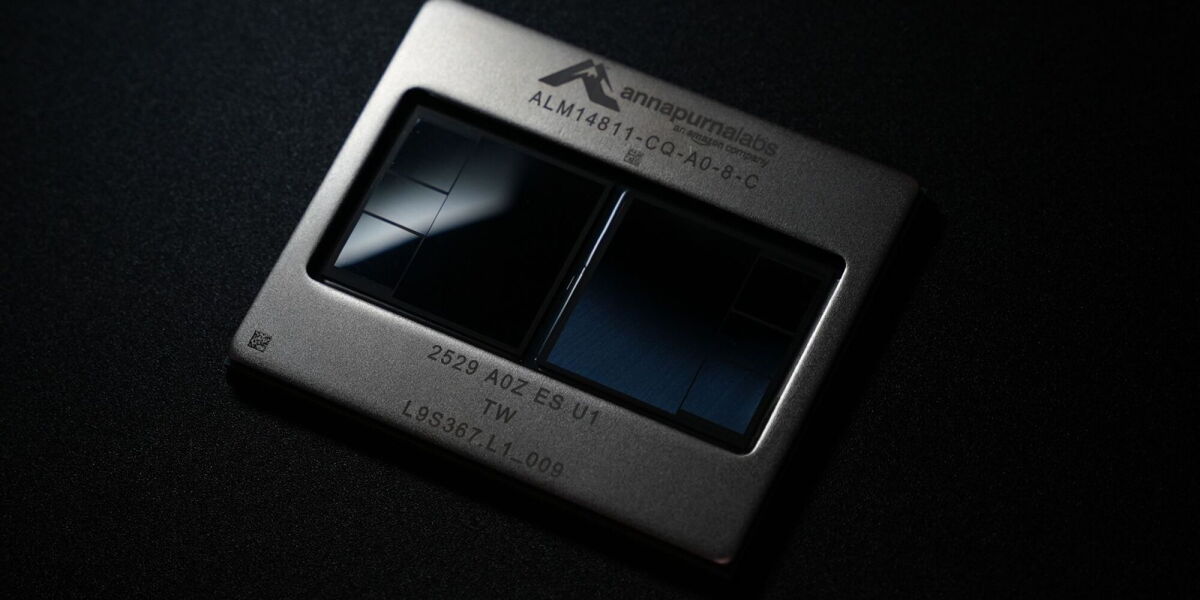
Amazon has moved to acquire the core optimization technology and founding team behind Israeli startup Decart, in a deal reported at roughly $7.5 billion. The transaction, announced on 23 November 2026, is not primarily about buying another AI model lab. It is about buying the software layer that can extract substantially more performance from Amazon’s own Trainium chips. In a market still dominated by Nvidia’s CUDA ecosystem, that distinction matters.
The official Amazon statement is measured. The company said it has signed an agreement to purchase the proprietary technology behind the Decart Optimization Stack (DOS) and to bring co-founders Dean Leitersdorf, Moshe Shalev and Orian Leitersdorf, along with their researchers and engineers, into Amazon. The stated goal is to optimize both inference and custom-silicon performance so that more customers can train and run models faster and at lower cost. Amazon noted that the two teams have worked together since 2025 and already delivered strong results on Trainium through a full-stack approach.
Independent reporting, led by Bloomberg and Israeli outlets Calcalist and Globes, puts the value near $7.5 billion, structured as cash and stock with performance-linked installments and multi-year founder commitments. Amazon itself has not confirmed the figure. The deal remains subject to customary closing conditions and regulatory clearance. Decart is not being absorbed wholesale; reports indicate Amazon is acquiring the optimization stack and talent rather than the company’s consumer-facing generative models such as Lucy or Oasis.
What Decart Actually Built
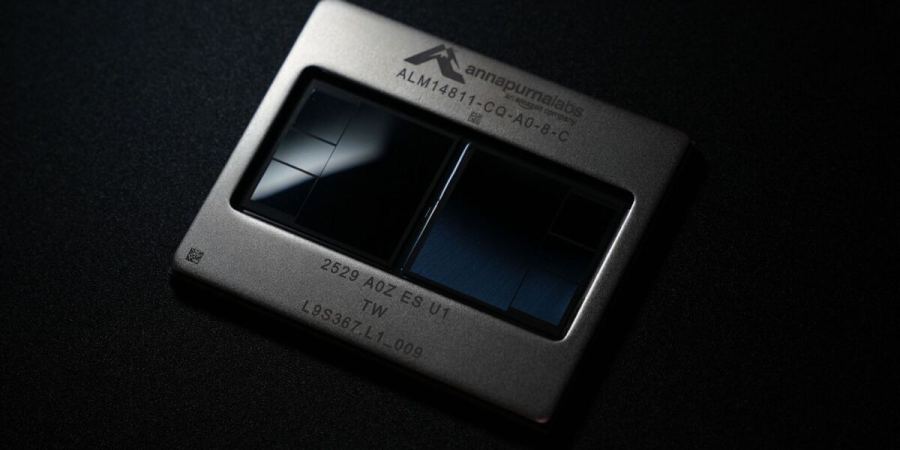
Decart was founded in 2023. Its public face has been real-time generative video and interactive world models. Under the hood sits the Decart Optimization Stack, a compiler, kernel and runtime layer engineered to make models run efficiently across different accelerators, including Nvidia GPUs, Google TPUs and Amazon Trainium. The company has claimed high utilization rates on Trainium3 (figures around 80 percent Model FLOPS Utilization have been cited in coverage of its real-time video work) and large speed-ups for specific workloads, including roughly four times the frame rate of comparable GPU runs at lower cost for its Lucy model.
These numbers are company-reported and apply most clearly to Decart’s own tightly co-designed models. They are not universal benchmarks. Still, they illustrate the practical problem Amazon faces. Hardware advantages on paper do not automatically translate into developer adoption when the software stack is thinner than CUDA. Porting a production model from Nvidia to Trainium has historically required significant engineering effort. A mature optimization stack that compresses that work is valuable.
Amazon’s Peter DeSantis, senior vice president overseeing foundational AI models, custom silicon and quantum computing, framed the acquisition in exactly these terms: every leap forward in AI starts with getting more out of every chip. More efficient compute, he said, means better training, better reinforcement learning, faster inference and better models for customers at lower cost. That language aligns with Amazon’s longer-term custom-silicon strategy, which also includes Graviton CPUs and Inferentia inference chips.
Why the Timing and Structure Matter
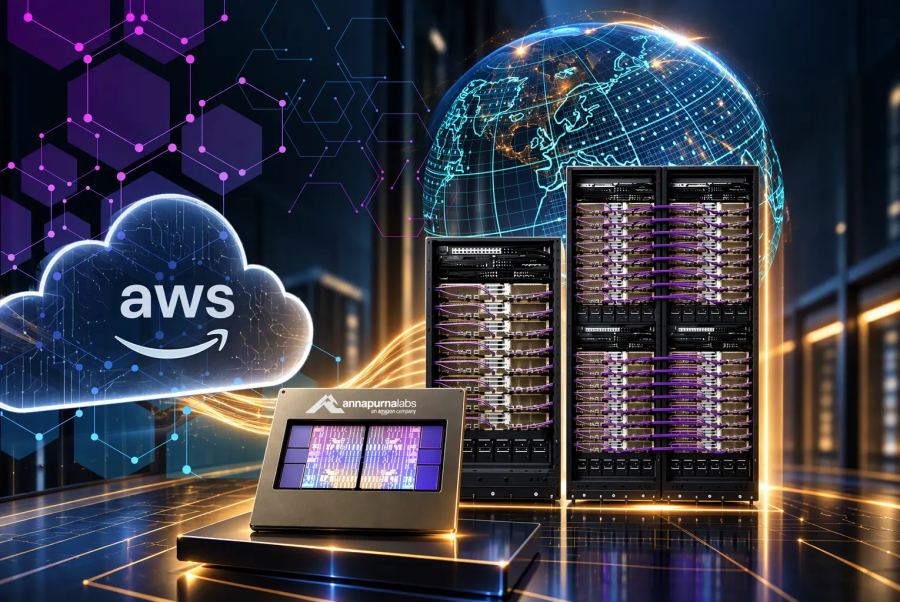
The acquisition arrives while Amazon is preparing to expand Trainium availability beyond pure AWS rental. Earlier commentary from Amazon leadership indicated plans to offer the chips more broadly starting in late 2027. At the same time, Trainium revenue commitments have grown sharply. The software that makes those chips easy and economical to use becomes a gating factor for external adoption.
The deal also continues a pattern of Big Tech talent-and-technology acquisitions in AI infrastructure rather than pure model labs. Earlier talks between Decart and both Anthropic and Nvidia reportedly did not conclude. Amazon, which already had a working relationship with the team on Trainium, stepped in. Founders are expected to remain for several years, with a substantial portion of consideration tied to performance milestones. That structure reduces the classic risk that key people leave after an earn-out, but it also means Amazon is paying for continued execution, not just past IP.
From a competitive standpoint, the move strengthens Amazon’s ability to offer a vertically integrated alternative to the Nvidia-centric stack. Customers who already run large Anthropic or other frontier workloads on Trainium gain a clearer path to higher utilization. New customers evaluating Trainium versus GPUs gain a better software story. Whether that is enough to shift meaningful share depends on how broadly the optimization technology generalizes beyond Decart’s own models.
Broader Context in the AI Compute Stack
This transaction sits inside a larger set of pressures on AI infrastructure. Memory bandwidth and inference efficiency have become binding constraints for long-context and agentic workloads, a theme examined in TechMash coverage of memory-centric architectures such as Fractile’s approach in Memory First: Fractile’s $7 Billion Raise. Software that raises effective utilization on existing silicon is one response; novel memory hierarchies are another.
Export-control and remote-access rules continue to reshape where advanced compute can be placed. TechMash analyzed the implications of the latest BIS remote-access rule in Closing the Cloud Gap. Efficient custom silicon that can be deployed under tighter geographic and licensing constraints gains strategic weight. Amazon’s ability to deliver high performance per watt on Trainium therefore intersects with both commercial and policy realities.
Foundry economics remain foundational. TSMC’s continued record results and the ramp of advanced nodes underpin every custom AI chip, a dynamic covered in Wafer Economics in the Age of Agents. Software optimization cannot create capacity that does not exist, but it can raise the return on the capacity that does. Parallel efforts to improve density in high-bandwidth memory, discussed in The 4F² Shockwave, will interact with these software gains.
Local and edge inference is another related vector. Compact systems that bring meaningful AI capability to desks, examined in TechMash’s look at Nvidia’s RTX Spark platforms in The Compact Supercomputer Lands, show that the efficiency race is not only happening inside hyperscale data centers. Better software stacks on cloud custom silicon and better local hardware are complementary rather than contradictory.
What to Watch Next
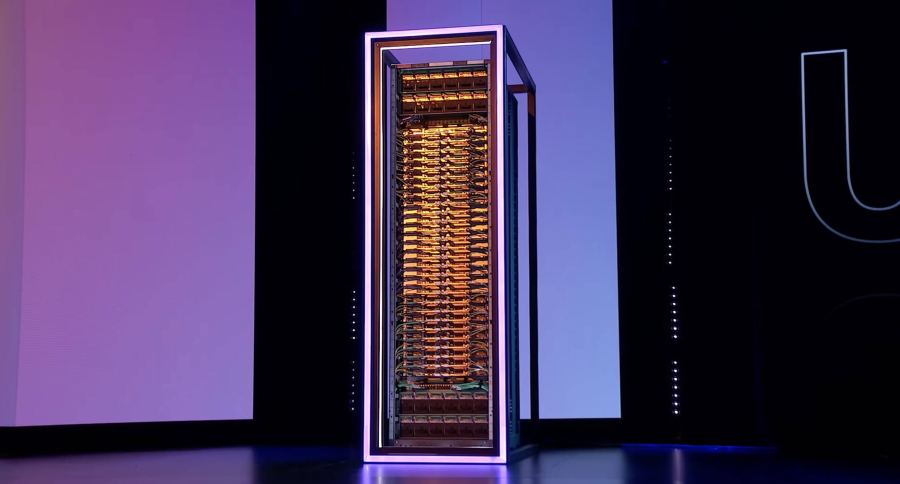
Several concrete milestones will reveal whether the acquisition delivers. First, integration speed: how quickly the Decart team can productize its stack inside Amazon’s Neuron software environment and make it available to a broader set of customers beyond co-designed models. Second, measurable utilization and cost-per-token improvements on public benchmarks and real customer workloads, not only on Decart’s video systems. Third, regulatory outcome and any conditions attached to closing. Fourth, the competitive response from Nvidia and from other cloud providers that are also investing in custom silicon and software.
Also relevant is the planned broader availability of Trainium outside AWS. If the optimization layer meaningfully lowers the friction of moving workloads, external sales could accelerate. If the gains remain narrow, Trainium will continue to be used primarily where Amazon already has large committed customers such as Anthropic. The five-year founder commitments give Amazon time, but they also create a multi-year execution clock.
Conclusion: Software as the Multiplier

Amazon’s purchase of Decart’s optimization technology is best read as a recognition that custom AI silicon cannot win on hardware specifications alone. The CUDA ecosystem’s advantage has always been as much software as silicon. By bringing in a team that has already demonstrated high utilization on Trainium for demanding real-time workloads, Amazon is trying to close that gap from the software side.
The reported $7.5 billion price is substantial for a three-year-old company, yet it is modest relative to the annual capital expenditure Amazon and its peers are committing to AI infrastructure. If the technology generalizes and raises the effective performance of Trainium across a wider set of models, the acquisition can pay for itself through higher utilization, lower customer costs and stronger competitive positioning. If it remains specialized, the return will be narrower.
Either way, the deal underscores a durable industry reality: in the current phase of AI infrastructure, the highest-leverage investments are often those that make existing or near-term silicon more productive. Hardware scale still matters, but software that unlocks that scale is increasingly where competitive advantage is decided.
Official sources: Amazon announcement and Reuters reporting on the transaction.
Comments
0