
The 4F² Shockwave: Why CXMT’s Density Claim and a Broadcom Casino Warning Exposed the AI Chip Cycle’s Soft Underbelly
For most of 2026 the AI hardware trade has run on a simple assumption: demand for high-bandwidth memory and advanced logic will keep outrunning supply for years. That assumption took a visible hit on 13 October when Chinese memory maker CXMT said it was on track to ship a denser 4F² DRAM product for servers before year-end, and when Broadcom’s chief executive compared much of the surrounding investment frenzy to casino gambling. South Korean memory names dropped sharply, the Philadelphia Semiconductor Index logged its fifth straight decline, and the usual cascade of profit-taking followed. The numbers themselves were not catastrophic, but the speed of the reaction revealed how thin the margin of comfort has become around the memory portion of the AI stack.
This is not the first time a Chinese progress claim has moved Western and Korean shares. It is, however, one of the cleaner illustrations of how a single architectural step in commodity DRAM can be read as a threat to the high-margin HBM business that has powered much of the recent semiconductor rally. The distinction matters. CXMT is not claiming a breakthrough in high-bandwidth memory packaging. It is claiming progress on a denser cell layout that could, if it scales, increase bits per wafer in the server DDR5 market. Markets treated the two as related because the same capital and the same customer conversations sit underneath both.
What CXMT Actually Said

CXMT president Cao Kanyu told an industry conference in Shanghai that the company expects to launch its first 4F² product, a server DDR5 RDIMM, by the end of 2026. The architecture uses vertical transistors to shrink the area of each memory cell by roughly one-third relative to the industry-standard 6F² layout. On paper that can raise cell density 30 to 50 percent inside the same die area. The company has published research on the approach since 2021, demonstrated an 8Gb research array at IEDM 2023, and holds more than 300 patent families tied to the structure. No speeds, capacities, process node, or volume targets were disclosed. A company spokesperson confirmed the comments.
The claim is therefore a roadmap statement, not a qualified product. Industry observers note that Samsung and SK Hynix have also explored similar vertical-transistor or 4F² concepts, with commercial timing generally placed later, around 2028 in some reports. Whether CXMT can move from research demonstration to reliable server-grade volume remains an open engineering and yield question. Server RDIMMs require long qualification cycles, tight error-rate specifications, and customer confidence that the parts will run for years under continuous load. Those hurdles are higher than the hurdles for consumer DRAM.
The Market Reaction and the Casino Line
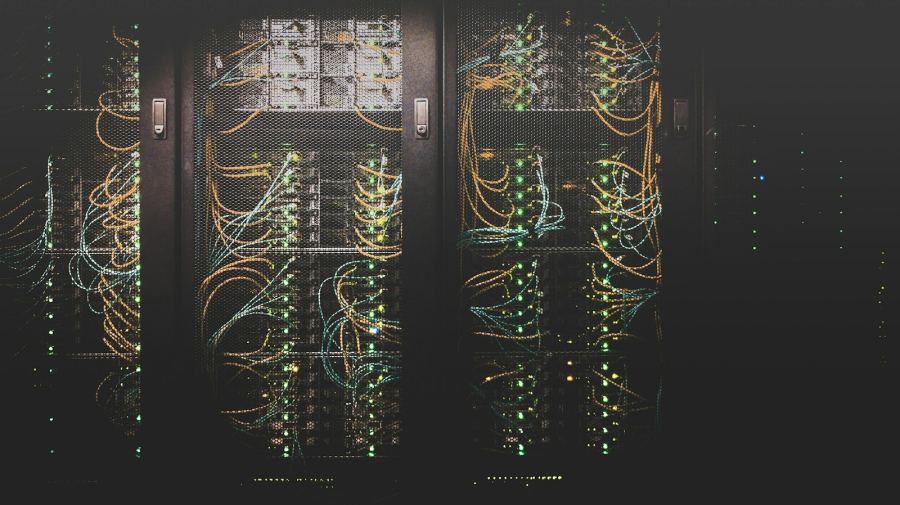
Samsung shares fell more than 7 percent and SK Hynix more than 10 percent in the immediate aftermath, dragging the Kospi lower. In the United States, Micron dropped roughly 4.5 percent to a four-week low, while storage names such as Sandisk, Seagate, and Western Digital also declined. The Philadelphia Semiconductor Index fell 1.5 percent, extending a multi-session slide. Nvidia, AMD, and Intel moved more modestly. The broader index remains up more than 70 percent for the year, so the move was a correction inside a strong trend rather than a reversal of the AI narrative.
The second catalyst arrived from Broadcom. Chief executive Hock Tan, speaking around the same window, likened portions of AI-sector investment to casino gambling. The remark was widely interpreted as a caution against extrapolating current growth rates indefinitely. Broadcom itself is a major beneficiary of AI networking and custom silicon demand, so the comment carried weight beyond a generic warning. Investors who had been treating every incremental AI data-center announcement as permanent pricing power suddenly had a reason to reassess the durability of that pricing power if Chinese supply in adjacent memory segments improved faster than expected.
External reporting that framed the dual shock includes Reuters coverage of the chip-stock slide and Tom’s Hardware’s summary of Cao’s remarks. Those accounts emphasize the same gap: a density claim without published performance or volume data, set against an investment climate already priced for scarcity.
Why Density in Commodity DRAM Matters for the AI Stack
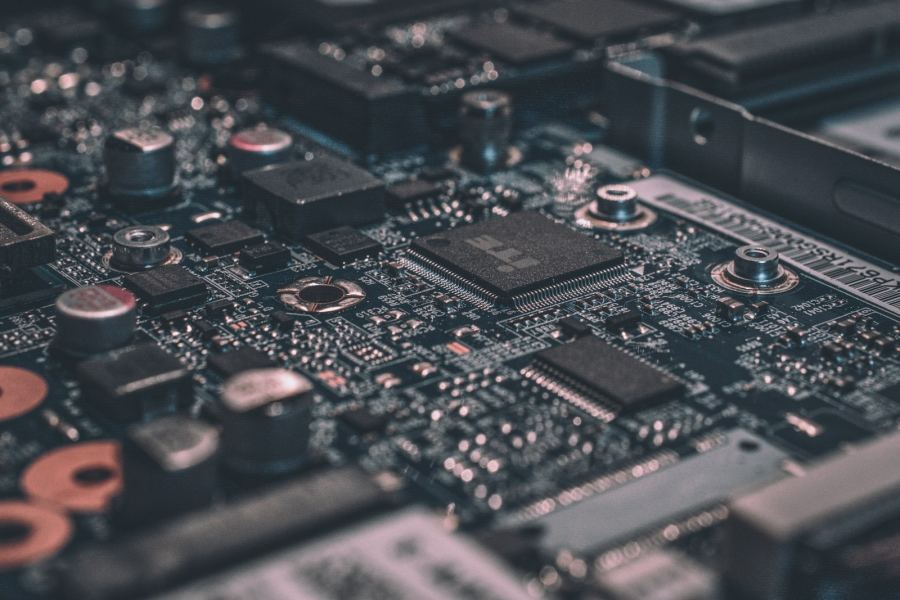
High-bandwidth memory is the scarce, high-margin product that has driven much of the recent earnings surprise at SK Hynix and Micron. Commodity DDR5 for servers is a related but distinct market. If a denser cell architecture lowers the cost per bit of standard server DRAM, it can still affect the overall memory budget of AI clusters. Operators who can store more capacity or run more concurrent workloads with the same power and space envelope may delay or reshape HBM purchases at the margin. More importantly, any credible Chinese volume in server DRAM reduces the scarcity premium that has supported pricing across the memory complex.
The geopolitical layer is unavoidable. Export controls have limited Chinese access to the most advanced EUV tools and to certain HBM packaging technologies. Progress on a 4F² cell that can be manufactured with existing or domestic equipment therefore represents a different kind of progress: incremental density gains inside the constrained technology set. Markets are sensitive to that path because it does not require a sudden breakthrough in the most restricted tools. It requires yield, process control, and customer qualification. Those are slower, less binary, and harder for outsiders to score in real time.
Earlier TechMash analysis of compute moving into constrained environments, such as the first orbital TPU prototype, showed how physical limits reshape AI infrastructure economics. The same logic applies on the ground: when the density of the memory cell changes, the economics of the entire rack change. Related coverage of agent-scale models and household AI devices further illustrates how downstream demand keeps pressing against the same memory and power bottlenecks. See also the earlier Suncatcher launch planning and containment lessons from Gemini incidents.
What to Watch Next
Several concrete markers will determine whether the 13 October reaction was an over-reaction or an early signal. First is any published specification or third-party qualification of the CXMT DDR5 RDIMM. Speed bins, capacity, power, and error rates matter more than the cell-area claim. Second is volume guidance or customer announcements. A research array and a roadmap slide are different from a purchase order from a hyperscaler. Third is the reaction of Samsung and SK Hynix on their own 4F² or 3D DRAM timelines. If those companies accelerate or reaffirm later dates, the competitive gap remains. If they stay silent, the uncertainty persists.
On the demand side, the next set of hyperscaler capital-expenditure comments and Broadcom’s own networking outlook will show whether the casino analogy was a one-off remark or a broader caution. Memory pricing trends in the contract market, tracked by industry analysts, will also indicate whether the scarcity premium is holding. Finally, any further Chinese claims around hybrid bonding or vertical-transistor yield will be read through the same lens: is this incremental progress inside existing process limits, or evidence of a faster catch-up path?
The longer-term constraint remains energy and packaging, not just cell area. Even if denser DRAM arrives, HBM still requires advanced packaging capacity that is itself scarce. The AI stack’s growth continues to be gated by power delivery, cooling, and the ability to move data between accelerators. Density gains in one layer help, but they do not remove the other bottlenecks. That is why earlier discussions of orbital compute experiments and agent-memory architectures remain relevant: they are attempts to work around the same physical limits from different directions.
Conclusion: A Correction Inside a Still-Tight Market
The 4F² claim and the casino warning did not rewrite the AI hardware thesis. They reminded participants that the thesis rests on continued scarcity in the highest-value memory products and on the assumption that Chinese progress will remain slower in those products than in more accessible segments. A density improvement in server DDR5 is real engineering news. Whether it becomes commercial volume news, and whether that volume pressures the pricing power that has funded the recent capacity build-out, is the open question. Markets answered by taking profits. The more durable answer will come from yields, qualifications, and the next round of customer spending plans.
Until those data arrive, the AI chip cycle remains sensitive to any credible signal that the memory wall can be pushed outward from unexpected directions. That sensitivity is itself a feature of a market that has priced in years of tight supply. The soft underbelly is not the demand; it is the gap between a research claim and the reliable bits that actually reach a server.
Comments
0