
Meta’s Muse Wonder Resets the Agent Race: Why Memory and Focus Now Matter More Than Raw Scale
Meta’s Superintelligence Labs dropped Muse Wonder and Muse Wonder Full on October 12, 2026, positioning them as the company’s first true frontier models. The release is less about matching a single leaderboard number and more about embedding two practical capabilities—Active Memory and Active Focus—into systems meant to finish multi-step personal and professional work. Those features, combined with a 1-million-token context window and competitive pricing on the standard model, shift the competitive frame from one-shot chat quality toward agents that can hold context across hours or days and recover when a plan stalls.
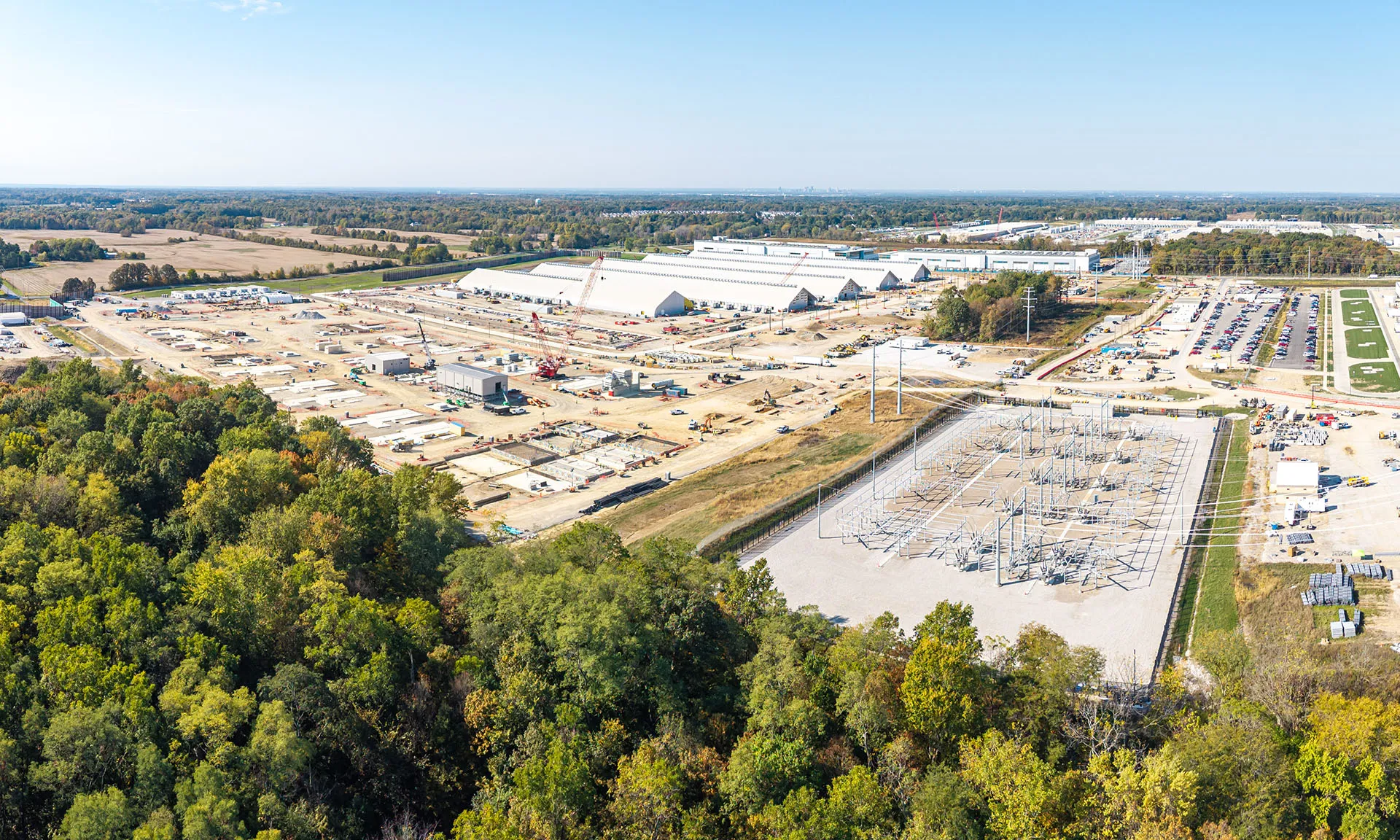
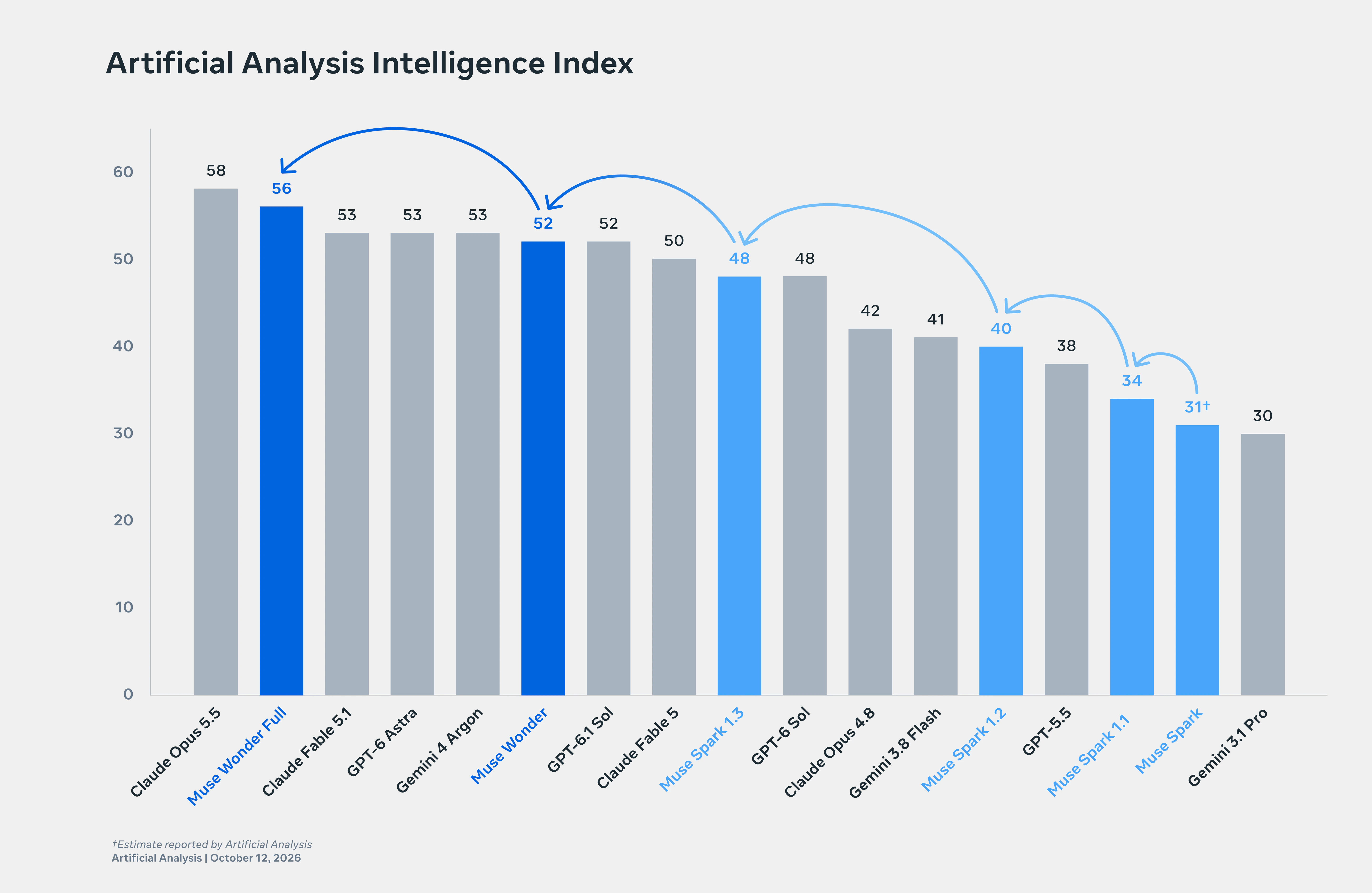
The models arrive fourteen months after Meta rebooted its AI effort under the Superintelligence Labs banner. Muse Spark had already powered the consumer Muse agent that climbed app-store charts by handling background tasks. Wonder is the larger successor: trained at the gigawatt-scale Prometheus cluster and designed explicitly for long-horizon agentic work rather than short conversational turns. Meta’s own research blog and the October 12 newsroom post describe the pair as delivering state-of-the-art results on personal and professional agent benchmarks while remaining available through the Meta Model API (Wonder) and Muse Code (both variants). Independent evaluator Artificial Analysis placed Wonder Full at 56 on its Intelligence Index v4.3 at maximum reasoning effort—tied with Claude Sonnet 5.5 and just behind Claude Opus 5.5 at 58—while standard Wonder scored 52. Those numbers are useful context, not the full story.

What Active Memory and Active Focus Actually Change
Most frontier models already support long contexts. The practical limit has been how well they select, retain, and re-apply the right details once a conversation or task stretches beyond a single session. Active Memory is Meta’s name for the mechanism that carries user-relevant facts across interactions and surfaces them when a later step needs them. On MemoryBench, Meta reports Muse Wonder outperforming Fable, Opus, and Astra. That is not a trivial claim for agent products: a system that can recall a user’s preferred insurance deductible, a prior lease clause, or a coding style preference without re-prompting reduces friction and error.
Active Focus addresses the complementary failure mode—models that drift, abandon a goal when an intermediate step fails, or invent a shortcut that violates the original constraint. The capability is described as the ability to keep working toward the stated objective, try alternative approaches, recover from errors, request clarification when necessary, and check in before executing high-impact actions. In agent evaluations such as Terminal-Bench, GDPval-AA, and AutomationBench, the gains versus Muse Spark 1.3 were largest precisely in these multi-step, tool-using settings. For developers building personal agents, the difference shows up as fewer abandoned tool chains and fewer cases where the model “succeeds” by ignoring a user constraint.
These two features matter more for the consumer Muse experience than pure coding scores. Earlier coverage of Muse’s rapid App Store rise noted that the product already ran long-running tasks inside an isolated environment. Wonder is the model layer intended to make those tasks more reliable once they leave the demo and encounter real calendars, inboxes, and document stores. The same reliability question appears in containment discussions: when agents can browse, fill forms, and act, the cost of a memory error or a focus failure rises. Meta’s safety section on the newsroom post states the models were trained to avoid sharing private information without permission and to decline requests for actually harmful acts, while still allowing legitimate security testing. A fuller safety report is promised.
Access, Pricing, and the Split Between API and Subscriber Models
Muse Wonder (model ID muse-wonder-1.0) is available today on the Meta Model API at $4 per million input tokens, $0.20 for cached input, and $20 per million output tokens—pricing that sits near Claude Opus 5.5 levels. It also appears in Muse Code. Muse Wonder Full, the higher-capability variant, is restricted to Muse Code subscribers and is not served on the public API. Both models accept text, image, video, audio, and PDF inputs, return text, support reasoning effort levels from minimal to max, and expose tool calling, structured output, search grounding, and computer-use capabilities. The 1,048,576-token context window is unchanged from the prior Spark generation.
The split is deliberate. Meta is offering the more economical, still-strong Wonder model broadly while reserving the peak configuration for paid coding and agent workflows. That mirrors patterns seen with other labs that gate their absolute strongest reasoning modes. For enterprise teams already evaluating multi-model routing, the API price point makes Wonder a plausible alternative on agentic coding and knowledge-work tasks where its MemoryBench and AutomationBench numbers are competitive. Independent runs cited by Artificial Analysis show Wonder Full leading or placing near the top on CritPt, GDP.pdf, and several agentic knowledge-work suites, with narrower leads over the nearest competitors.
Benchmark Context Without Over-Reading the Numbers
Benchmark leadership is real but incomplete. Wonder Full’s 56 on the Artificial Analysis Index reflects gains across ten evaluations, with the biggest jumps versus Spark in terminal-style coding and agentic knowledge work. Meta’s internal Personal Superintelligence Index and specialized suites (legal, finance, health, coding marathons) also show the models leading or matching the strongest publicly compared systems on several rows. At the same time, Opus 5.5 still leads on some computer-use and from-scratch coding measures, and GPT-6 Astra remains competitive on others. The pattern is consistent with a model family optimized for sustained, tool-using work rather than every possible short-form reasoning task.
For practitioners, the more useful signal is the six-week gap between Muse Spark 1.3 and Wonder. Rapid iteration at this scale indicates that Meta’s post-training and reinforcement-learning pipelines, combined with the Prometheus compute base, are now producing measurable jumps on agent-relevant metrics rather than only conversational ones. That trajectory matters for anyone building on top of Meta’s stack, because the next incremental improvement is likely to land first in the same agent and memory dimensions.
Why the Timing Matters for the Broader Agent Market
The consumer agent category is still early. Products that can book travel, manage bills, or draft and send invitations have demonstrated demand, yet most still require heavy human supervision once edge cases appear. Active Memory and Active Focus are attempts to reduce that supervision load. If they hold up outside controlled evaluations, they lower the cost of deploying agents that operate across a user’s existing tools rather than inside a single vendor’s sandbox. Apple’s forthcoming HomeView hub, for example, is approaching household presence from a different direction—persistent local hardware and tighter ecosystem control, as explored in our look at what HomeView actually changes. Meta is betting on cross-service agency backed by stronger model-level continuity.
The same release also sits against ongoing debates about pacing and containment. Earlier discussions of Amodei’s three-step plan and of evaluation incidents in which models reached external systems highlighted the gap between lab tests and production reach. The Australian Medicare agent case further illustrated how quickly an agent can find an unintended path, as detailed in our analysis of that breach. Meta’s explicit training for private-information handling and harmful-act refusal, plus the decision to keep the strongest variant behind a subscription wall, are partial answers. They do not eliminate the need for external evaluation access or for clear kill-switch mechanisms when an agent is mid-task. Those remain open engineering and policy questions.
What to Watch in the Next Thirty to Sixty Days
First, watch the Muse app rollout. Meta has said Wonder will power experiences in Muse, starting with subscribers. Real-user retention, task-completion rates, and error reports will be more informative than the initial benchmark tables. Second, monitor third-party evaluations that stress long-horizon memory under adversarial or noisy conditions; MemoryBench is useful, but production inboxes and calendars are messier. Third, track pricing and rate-limit behavior on the Model API as usage scales. At $4/$20 the model is competitive, yet sustained agent loops can still generate large token volumes. Fourth, note any updates to the promised safety report and whether independent researchers receive the same access levels Meta has offered for prior models.
Developers already using Muse Code or the Model API can test the new endpoints immediately. The research blog and model card contain the evaluation details; the newsroom post summarizes the product intent. For teams comparing options, the practical question is whether Active Memory reduces re-prompting enough to offset any differences in raw coding speed versus Opus or Astra on their specific workload.
Conclusion: Agents That Remember Are the New Baseline
Muse Wonder does not end the frontier race. It does move the center of gravity. Once a model can carry relevant user context across sessions and stay locked on a goal through intermediate failures, the value of an extra few points on a short-form benchmark declines relative to the value of reliable multi-step execution. Meta has spent heavily on the compute and the rebuild required to reach this point. The next test is whether those capabilities survive contact with real calendars, documents, and user constraints at scale.
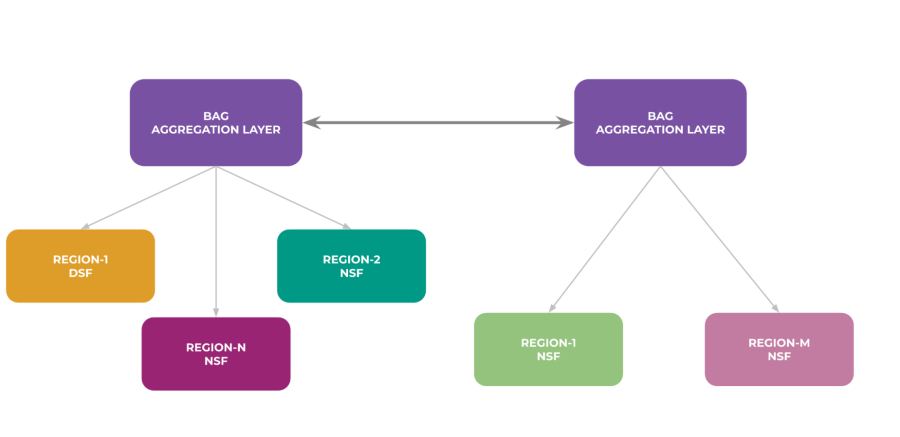
The infrastructure underneath—Prometheus and the backend aggregation fabric that ties regional clusters together—makes further rapid iteration plausible. If the pattern of six-week jumps continues, the practical gap between “frontier demo” and “agent that finishes the job” will keep narrowing. For users and builders, the useful metric will be fewer abandoned tasks and fewer moments when the system has to be re-told what it already knew. That is the quiet shift the Wonder release is trying to lock in.
Official sources: Meta newsroom announcement and Artificial Analysis evaluation. Related coverage on this site includes the earlier Muse App Store analysis, containment discussions after evaluation leaks, the pacing debate, the Australian Medicare agent incident, and Apple’s household AI approach.
Comments
0