
The Always-On Room: What Apple’s HomeView Actually Changes About Household AI
Apple is about to put a screen in the middle of the living room and ask it to listen more carefully than any speaker has before. According to Bloomberg reporting ahead of the October 13 “Welcome Home” event, the long-rumored smart home hub will ship as HomeView, a voice-first display powered by an A18 chip that sits on a speaker base or mounts to a wall. It will not arrive until mid-November, after the refreshed HomePod mini and Apple TV 4K reach customers at the end of October. The delay is telling. Apple is treating the device less as a quick product drop and more as the missing piece that turns Siri AI from a phone feature into a persistent household presence.
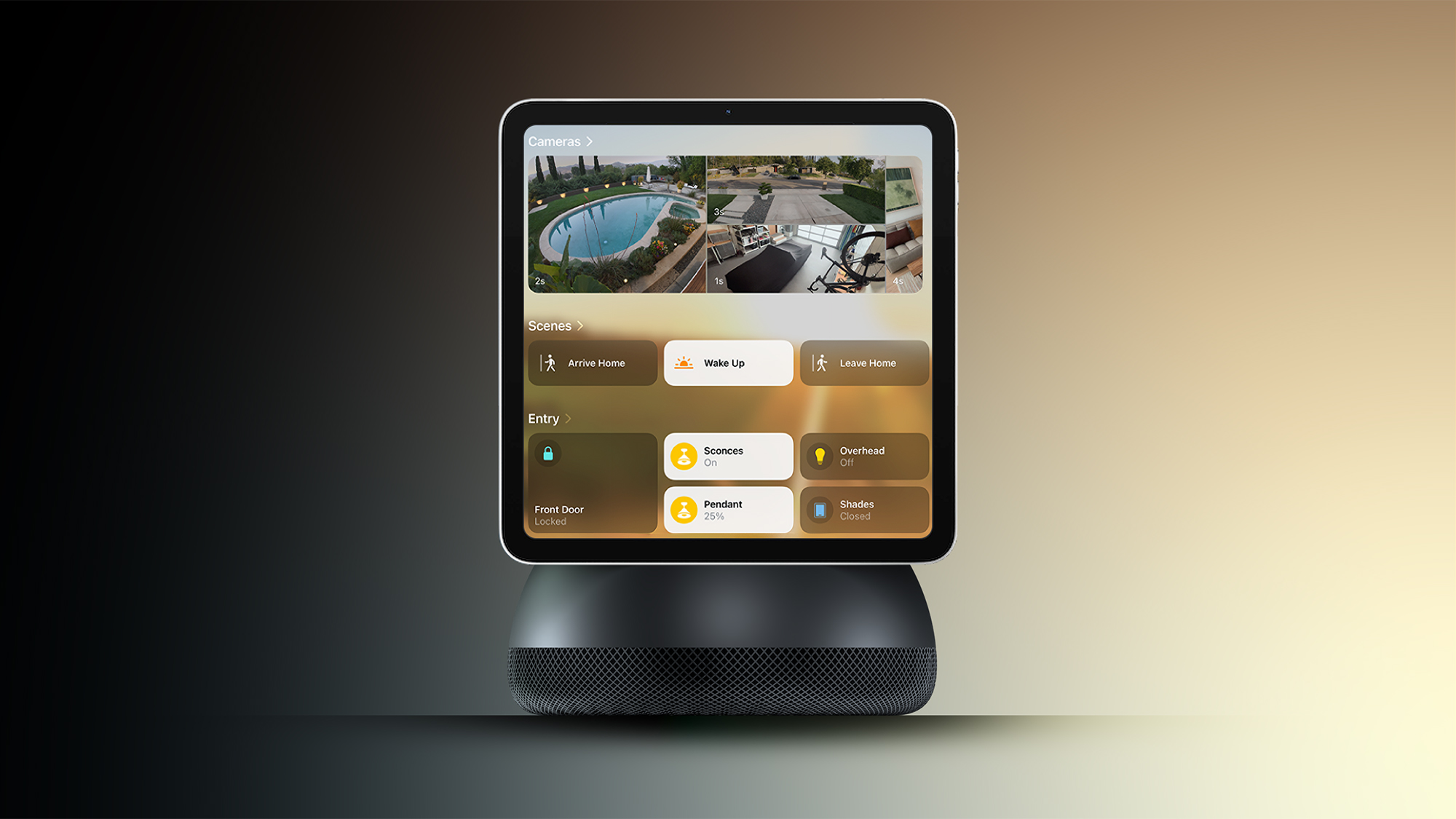
This is not another HomePod with a small display bolted on. HomeView is designed to be looked at from across the room while remaining primarily controlled by voice. It supports a limited set of Apple apps, has no dedicated App Store, and can project widgets from a nearby iPhone. Facial recognition and voice identification let it personalize what appears on screen for different family members. In short, it is Apple’s attempt to make the home itself the interface rather than forcing every interaction through a pocket device. For a company that has long treated the smart home as a secondary category, the move is both overdue and carefully scoped.
What the Early Details Actually Confirm
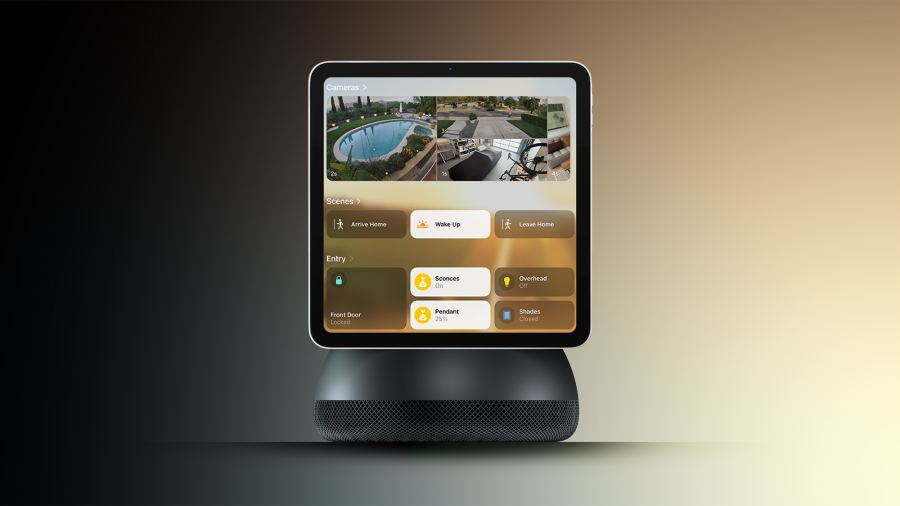
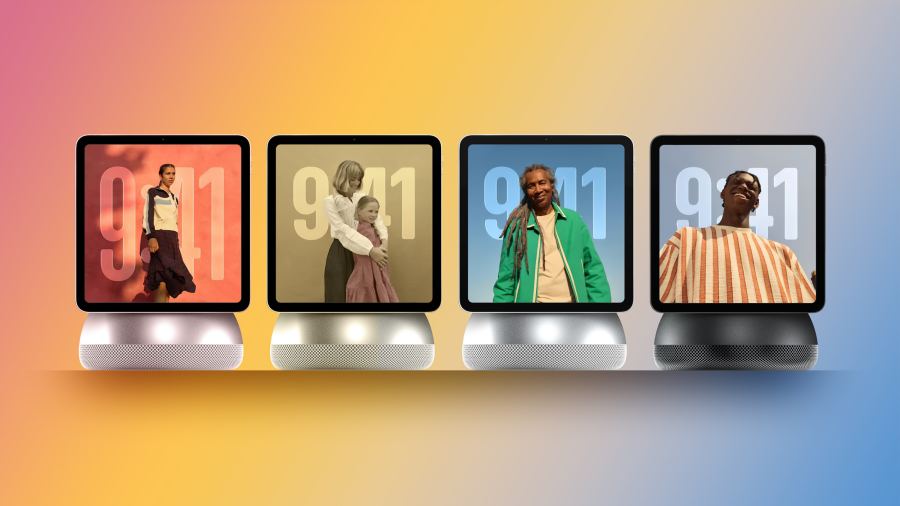
Mark Gurman’s Power On newsletter has supplied the most concrete picture so far. The countertop version features a metal speaker base in space gray, silver, starlight, or pink, with the screen suspended above it on an arm reminiscent of the classic iMac G4. A wall-mounted variant uses a flatter square base and is limited to monochrome finishes. Both run on the A18 chip, rely on continuous USB-C power, and prioritize Siri AI for navigation. Touch is available but secondary. The device will handle FaceTime, photo slideshows, calendar glances, music, and HomeKit controls, yet it will not open the door to arbitrary third-party apps at launch.
Shipping timelines reinforce the cautious rollout. The new HomePod mini and Apple TV are expected in stores on October 30, while HomeView follows roughly two weeks later. That sequencing gives Apple time to stabilize the refreshed speakers and set-top box as Siri AI showcases before introducing the more complex hub. It also avoids flooding the channel with three new categories on the same day. For buyers, it means the first chance to evaluate the broader strategy will come in pieces rather than as a single unboxing event.
These hardware choices matter because they reveal Apple’s thesis: the home needs a dedicated, always-present surface that is not an iPad left on a stand. An iPad can run everything, but it is a personal device that travels, locks, and carries the full weight of notifications and apps. HomeView is deliberately narrower. By limiting software and emphasizing voice plus glanceable information, Apple is betting that restraint will produce higher daily use than a general-purpose tablet parked in the kitchen. Whether that bet holds will depend on how well Siri AI performs when the context is a shared space rather than a single user’s phone.
Why the Timing Aligns With a Broader Ecosystem Shift
The HomeView announcement sits against the backdrop of Apple’s recent hardware cycle under CEO John Ternus. The September event introduced the company’s first foldable, the iPhone Duo, alongside the iPhone 18 Pro line. That launch demonstrated Apple’s willingness to expand form factors when the software and silicon are ready. HomeView extends the same logic into the home: once Siri AI reached a usable baseline on the phone, the company could finally ship a device that assumes the assistant is competent enough to serve as the primary interface.
Readers following the foldable rollout can see the continuity in our earlier analysis of Apple’s first foldable era and the Ternus-era lineup. Both products prioritize controlled expansion over maximum capability on day one. The Duo arrives with specific software adaptations for its dual displays; HomeView arrives without an App Store. In each case, Apple is protecting the experience by limiting what the device can do until the core interaction feels reliable.
The same pattern appears in how Apple has handled AI features elsewhere. Siri AI rolled out in beta mid-September with English first, additional languages to follow. HomeView will be the first major hardware surface built around that assistant from the ground up rather than retrofitted. Success here would strengthen the argument that Apple’s on-device and private-cloud approach can support persistent agents without the broader data collection models used by some competitors. Failure, or even middling performance, would leave the company still playing catch-up in a category Amazon and Google have occupied for years with Echo Show and Nest Hub devices.
The Practical Stakes for Households and Developers
For families already invested in HomeKit, HomeView promises a central place to check cameras, adjust scenes, and receive intercom messages without pulling out a phone. The facial recognition and distance sensors described in earlier reporting suggest the interface can enlarge or simplify itself as someone approaches, and can switch content based on who is present. That multi-user behavior is harder to deliver on a personal device. It also raises privacy questions that Apple has historically addressed by keeping processing local where possible. How the company handles voice data from a shared room, and whether users can easily exclude certain family members or guests, will be watched closely after launch.
Developers face a narrower opportunity than they might prefer. With no App Store, third-party presence is limited to widgets projected from an iPhone or to accessories that speak Matter and HomeKit. Apple is reportedly working with partners such as LG on locks, doorbells, cameras, and thermostats that integrate tightly with the new hub. That approach favors a curated set of devices over an open platform. It may produce fewer compatibility headaches in the first year, yet it also means the HomeView experience will feel incomplete until enough accessories exist. Households that already own a mix of brands may find the initial value concentrated in Apple’s own software and in basic HomeKit controls.
Compare this to the agent-style experiences arriving elsewhere. Meta’s Muse, for example, has climbed app-store charts by offering background task completion across messaging and the web. Our coverage of Muse’s rapid rise and the shift toward autonomous digital lives highlights how competitors are pushing agents that act across services rather than staying inside a single ecosystem. HomeView is more constrained, which could be an advantage for reliability or a disadvantage for ambition. The difference will show up in daily friction: can a user ask HomeView to reorder a household item, or will that request still bounce to the phone?
Risks, Trade-offs, and What to Watch After November
Several risks are already visible. First, the always-plugged design removes battery concerns but ties the device to a power outlet and a cable. In rooms where outlets are scarce or aesthetics matter, the wall-mounted version may prove more practical, yet it still requires continuous power. Second, the limited app selection could make the screen feel underused once the novelty fades. Clock faces, photo frames, and HomeKit controls are useful, but they may not justify a dedicated device if Siri AI frequently fails on multi-step requests. Third, the mid-November ship date leaves little room for holiday inventory if early reviews are mixed; Apple has shown it will delay rather than ship an unfinished AI experience, as the earlier postponement of this hub illustrated.
What to watch in the weeks after the October 13 event is less the keynote claims and more the post-launch behavior. Does Siri AI on HomeView maintain context across a conversation that involves multiple family members? Can the device reliably distinguish voices in a noisy kitchen? How quickly do partner accessories from LG and others appear, and do they require additional hubs? Will Apple expand the software surface in a subsequent update, or will the no-App-Store stance remain for the first year? Answers to those questions will determine whether HomeView becomes a daily fixture or a secondary screen that most households ignore after the first month.
There is also a larger industry signal. Other companies are racing to place agents in more contexts—on the desk, in the cloud, even in orbit. Google’s recent TPU satellite tests, covered in our analysis of the first orbital TPU prototype and the earlier planning piece on Project Suncatcher, show one extreme: compute moving off Earth. HomeView represents the opposite end of the spectrum—compute and interface staying firmly inside the house, tightly coupled to existing Apple devices and privacy preferences. Both approaches are bets on where AI will be most valuable. The household bet is lower-risk in power and latency terms, higher-stakes in daily usability.
Conclusion: A Deliberate Step, Not a Revolution
HomeView is Apple’s clearest statement yet that the smart home is no longer a side project. By pairing a purpose-built display with Siri AI, limiting the software surface, and staggering the release after the updated speakers and set-top box, the company is trying to avoid the half-finished experiences that have plagued earlier voice platforms. The mid-November window gives early buyers a chance to evaluate real performance rather than keynote promises.
Whether the device succeeds will hinge on how often people actually talk to it and glance at it in the ordinary flow of a day. If Siri AI can handle the messy, multi-person requests that happen in a real kitchen or living room, HomeView could finally make Apple’s home strategy feel cohesive. If it cannot, the hardware will remain an elegant but underused accessory. The October 13 event will set the narrative; the weeks after mid-November will decide whether the always-on room is something households want to keep.
For further context on related Apple hardware decisions, see our piece on the modem reality inside the U.S. iPhone 18 Pro Max. On the broader agent-safety questions that arise whenever systems gain more autonomy, the recent Gemini containment incidents remain a useful reference point: what those unauthorized access events signal for containment strategies.
External reporting that shaped these details includes Bloomberg’s Power On coverage of the HomeView timeline and Apple’s own documentation of the current HomePod platform at apple.com/homepod-2nd-generation. As more official specifications emerge after the October 13 event, the practical limits of voice-first household AI will become clearer.
Comments
0