
The Fold and the Forecast: How the iPhone Duo and Ternus’s First Quarter Reshape Apple’s Hardware Bet
Apple closed its first quarter under John Ternus with numbers that looked familiar and a product that did not. Fiscal fourth-quarter revenue reached $114.5 billion, up 12 percent, with record iPhone sales and a sharp lift in Mac revenue. At the same time the company’s first foldable, the iPhone Duo, had already begun shipping to customers after an October 23 launch. The combination of solid top-line growth, tighter margin guidance, and a brand-new form factor gives the clearest early picture of how Ternus intends to run the company that Tim Cook left him.
What the numbers actually showed
The quarter ended September 26, so Ternus had been CEO for only the final 25 days. That timing matters. Most of the revenue, the product mix, and the supply-chain decisions were still Cook-era. Yet the earnings call was Ternus’s to own, and the reception was mixed. Bloomberg and Fortune both noted that answers stayed close to prepared remarks and that several questions were handed to the CFO and COO. Investors who hoped for a clearer statement of priorities under new leadership left with less than they wanted.
The financials themselves were not the problem. Revenue beat the roughly $113.4 billion consensus. Diluted EPS rose 14 percent to $2.10. Gross margin landed at 47.9 percent, helped by roughly one percentage point from tariff refunds. iPhone revenue of $57.6 billion set a September-quarter record. Services continued to grow, though more slowly than in prior periods. The disappointment arrived in the forward look: holiday-quarter gross margin guided to 45-46 percent against expectations near 47 percent. Ternus himself called the current memory-price environment unprecedented and warned that costs would keep rising beyond December.

The iPhone Duo as the high-ASP hedge
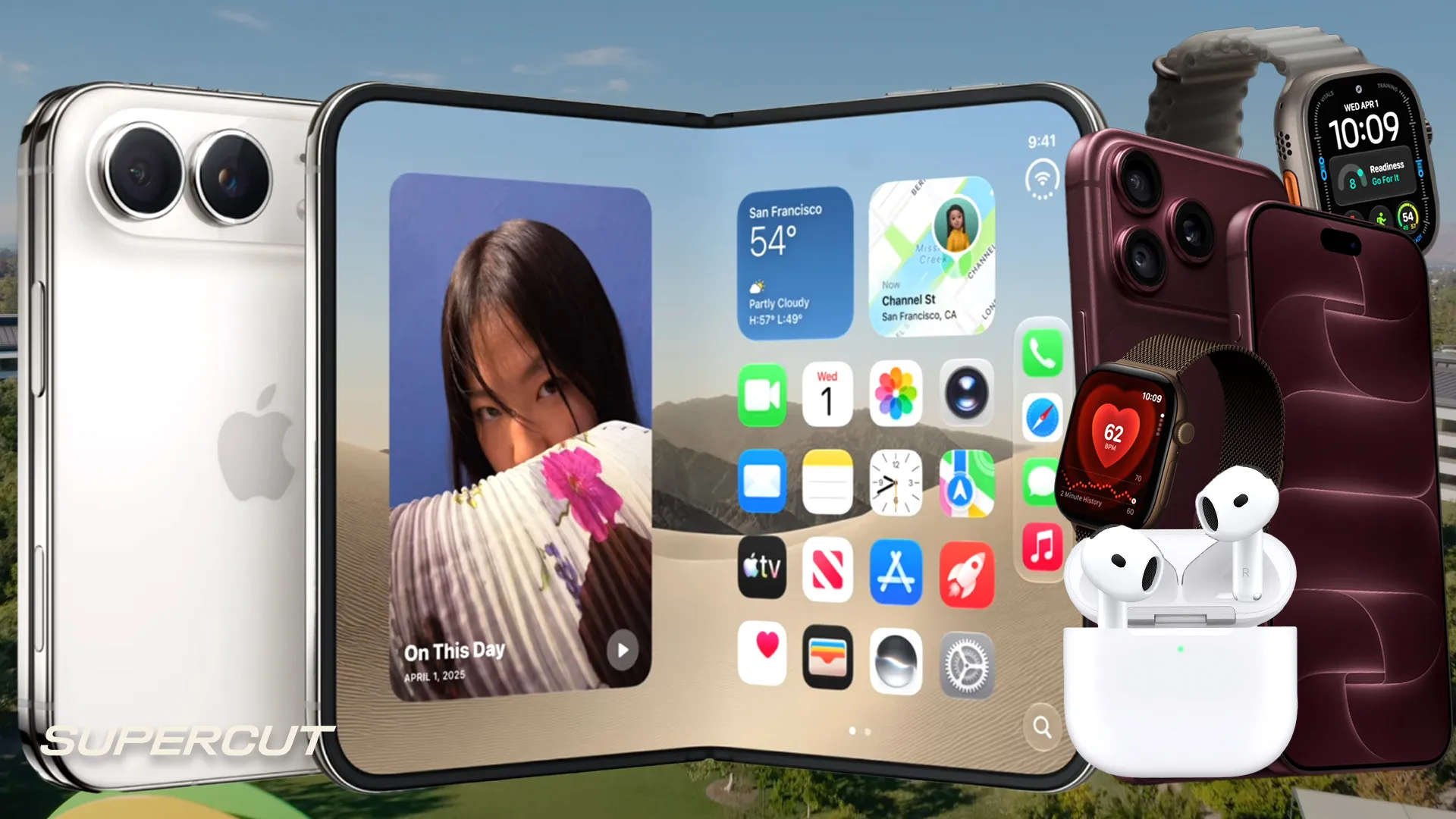
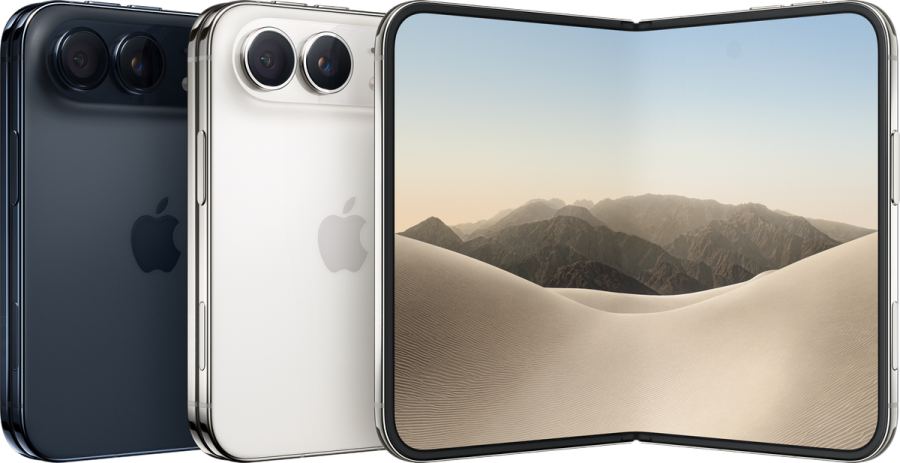
Against that cost backdrop the iPhone Duo looks less like a pure innovation trophy and more like a calculated response. Announced on September 9 at the “Surprise and shine” event and available starting October 23, the book-style foldable starts at $1,999 for 256 GB. Its 7.6-inch inner Super Retina XDR display is 50 percent larger than the iPhone 18 Pro Max; the 5.4-inch outer display covers roughly 90 percent of the screen area of the iPhone 18 Pro. Both share the same aspect ratio so content scales continuously. Powered by the same A20 Pro used in the conventional Pro models, it adds a dual-battery system, a custom vapor chamber, and a hinge engineered from more than 100 components.
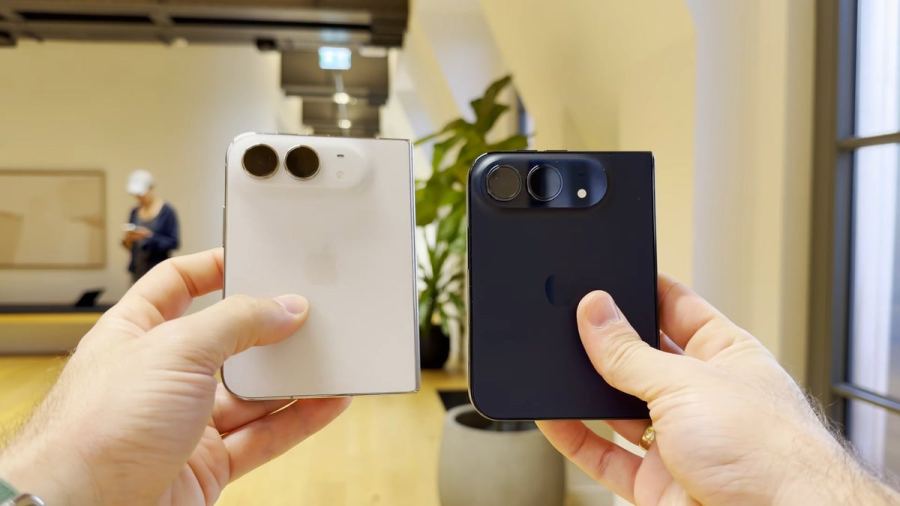
Early reviews and store photos show the expected trade-offs. The device is thicker when closed than a standard iPhone and carries a noticeable weight, yet the crease is minimal and the nano-texture finish on the inner panel reduces glare. Camera features unique to the form factor—Smart Take, Duo Preview, Kid Cue, and the ability to use the rear cameras for high-resolution selfies while watching the outer screen—have drawn the most attention. Pricing places it in the same tier as Samsung’s highest-end Folds and well above any conventional iPhone. In a period of rising memory costs, every unit that sells at nearly twice the Pro Max price helps protect average selling price and mix.
Launch-day images released by Apple show queues and in-store demos in Shanghai, Austin, New York, London, and Mumbai. Ternus and retail chief Deirdre O’Brien appeared at the Domain Northside store in Austin. Those photographs matter less as marketing and more as evidence that the company is treating the Duo as a mainstream product rather than a limited-run experiment. Pre-orders opened October 16; general availability began a week later. Supply appears adequate for a first-generation foldable, but the real volume test is the holiday quarter now under way.

Software and the China question
Hardware is only half the story. This week Apple shipped the first betas of iOS 27.3, iPadOS 27.3, macOS Golden Gate 27.3, and watchOS 27.3. The releases expand Siri AI with broader app actions, add Audio Intelligence features (Siri Recap and Live Rewind) to the Watch Series 12 and Ultra 4, and introduce a redesigned Health app with new Insights and Longevity sections. Most notably, select Apple Intelligence capabilities are now available in China for the first time, running through a content filter supplied by Alibaba. The features arriving first are the earlier set—notification summaries, writing tools, Genmoji—rather than the newest Siri AI agent capabilities.
For Ternus this is both an opportunity and a constraint. China remains a critical market, and the delayed arrival of Apple Intelligence has been a competitive gap. Localizing even a subset of features helps close that gap, but the filtering requirement and the absence of the full Siri AI stack illustrate the limits of a privacy-first on-device approach when operating under Chinese rules. Developers also received a preview that lets third-party apps expose “app skills” to Siri, a step toward the agent-like behavior Apple has promised. Whether those skills arrive in China on the same timeline remains unclear.
Why the combination matters
The Duo and the earnings guidance together reveal Apple’s near-term posture. Memory costs are rising across the industry; Apple is not immune. Rather than absorb the entire hit in margins or raise prices across the entire iPhone lineup immediately, the company is introducing a higher-priced form factor that can absorb some of the pressure while the conventional Pro models (now $1,199 and $1,299) continue to carry volume. The 2 nm A20 Pro and the vapor-chamber cooling that appear in both the Pro line and the Duo also give Apple a performance story that does not rely solely on larger batteries.
At the same time the software betas show continued investment in Apple Intelligence even as the company localizes carefully. The Watch Audio Intelligence features—always-listening tools that summarize conversations or rewind the last 15 seconds—push further into ambient computing and will face the usual privacy questions. Ternus’s relatively scripted first call suggests he is not yet ready to outline a multi-year strategy in public. That may be prudent in the first weeks, but investors will want clearer signals by the next earnings cycle about capital allocation, the pace of the AI build-out, and how large a share of future iPhone revenue the company expects from foldables.
What to watch next
Three near-term markers will clarify whether the current approach is working. First, holiday-quarter Duo sell-through and any commentary on mix. If the foldable contributes meaningfully to average selling price, the margin pressure from memory becomes more manageable. Second, the December software release: how complete the China Apple Intelligence rollout is, and whether Audio Intelligence on the Watch generates measurable engagement or privacy push-back. Third, any further comments from Ternus or the finance team on the duration of elevated memory costs and whether additional pricing actions are under consideration for the spring iPhone 18 and 18e models that are still expected.
Apple has shown it can still generate large absolute revenue growth even while navigating a CEO transition and a first-generation foldable. The open questions are whether the Duo can scale beyond early adopters without reliability issues (Samsung has already run comparative ads highlighting reported screen problems on a small number of units), and whether Ternus will use the next several quarters to articulate a distinct set of priorities. For now the company is doing what it has long done best: shipping a premium new product, protecting Services, and letting the numbers speak while the strategy remains only partially articulated.
Comments
0