
Tesla’s Flying Roadster: How Elon Musk’s SpaceX Thrusters Turned a Sports Car Into a Short-Hop Rocket
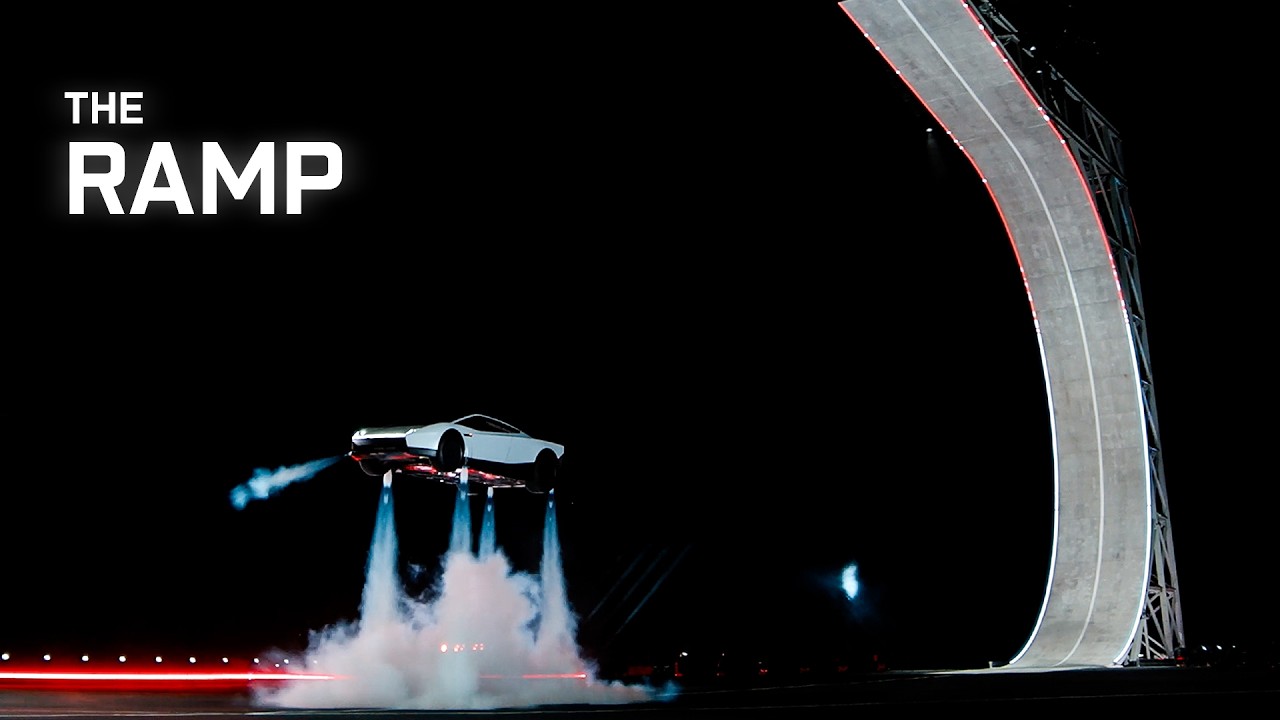
On the evening of October 15, 2026, at SpaceX’s rocket development and testing facility in McGregor, Texas, Tesla rolled out the long-delayed second-generation Roadster and immediately put it through a sequence of maneuvers that no production sports car has ever attempted in public. A white two-seater drove up a steep curved ramp, hung upside down using underbody suction, launched off the end, completed a controlled flip, and landed on compressed-gas thrusters. Moments later the same vehicle used rear thrusters to leap over a row of parked Teslas—including a Cybertruck, Cybercab, Semi, Model Y and Model 3—before settling back on its wheels in a cloud of white vapor. Elon Musk, standing nearby, posted on X: “Turns out the future does have flying cars.”
The demonstration was remotely controlled “to make sure we don’t kill anyone,” Musk told the audience. Production is targeted for 2028. Whether the car qualifies as a true flying vehicle or an exceptionally energetic hopper remains a matter of definition, regulation and physics, but the spectacle was unambiguous: Tesla and SpaceX have fused automotive and aerospace engineering in a single chassis.
What Actually Happened on the Ramp
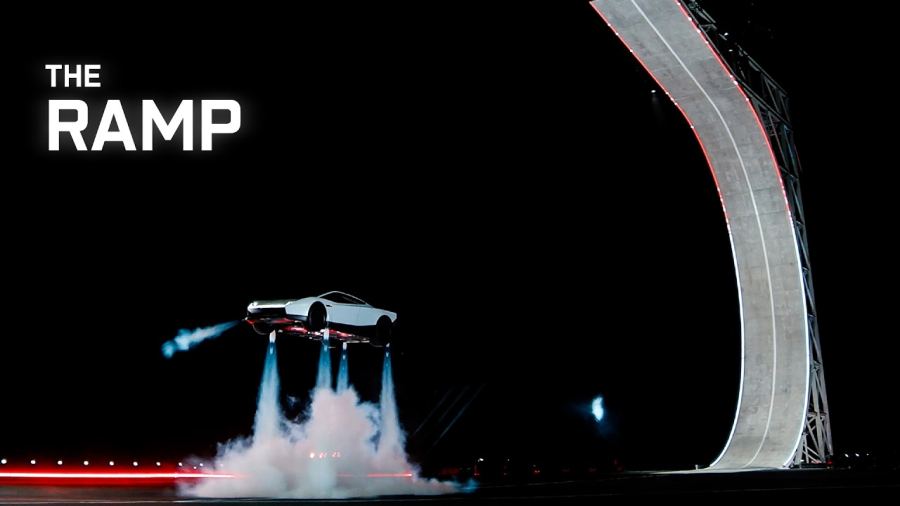
The core technology is a multi-mode fan system under the body that seals against the surface and extracts air, generating enough suction to hold the car inverted even when stationary. Tesla claims the fans, combined with active aero surfaces, produce downforce levels approaching those of Formula 1 cars at zero speed—features banned in F1 precisely because they are so effective. Once the car reached the top of the ramp, SpaceX-supplied cold-gas thrusters took over. Engineering chief Lars Moravy described roughly ten nozzles fed by about 600 liters of ultra-high-pressure compressed air. The tanks can be recharged. Thrust figures cited at the event exceeded 80 kilonewtons—enough to lift and rotate the roughly 1,700 kg vehicle through short hops and rolls.
A separate acceleration run, assisted by four rear thrusters, posted a claimed 0–60 mph time of 0.81 seconds. Musk noted that even without thrusters the car should post Formula 1-level track times thanks to the suction system. Top speed is listed above 230 mph, with Musk expressing a desire to approach half the speed of sound. Range is stated at more than 300 miles. The design language draws from the SR-71 Blackbird and F-35, with angular surfaces, butterfly doors and a stark white finish that contrasts with earlier Tesla concepts.
Three Versions, One of Them Invite-Only
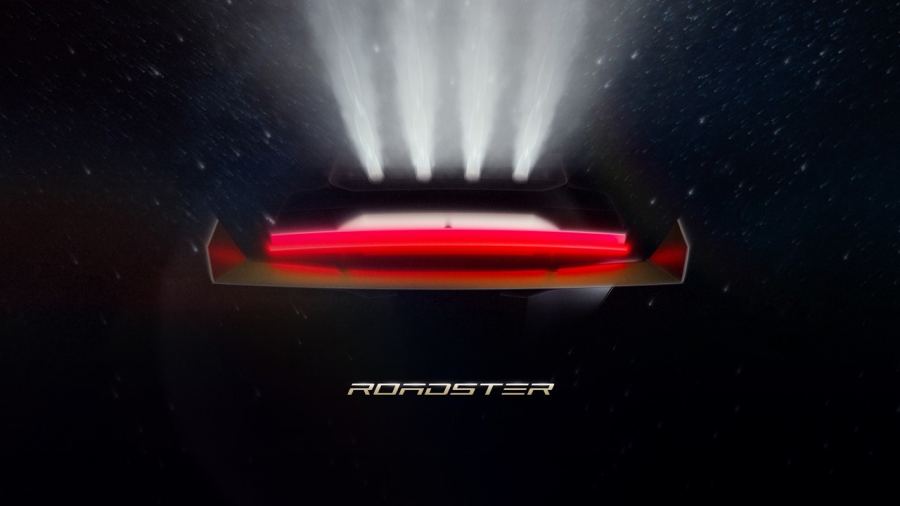
Tesla is offering three configurations. The Performance model is the road-oriented version, available for reservation with a $50,000 refundable deposit ($5,000 by card plus $45,000 by wire within ten days). The Thrust version adds rear cold-gas thrusters for sub-one-second 0–60 runs and carries a $250,000 deposit. The Rocket trim—the one that performed the full aerial stunts—is invite-only, single-seat, and equipped with a “full flight system” of thrusters distributed around the body. No public reservation path exists for the Rocket, and Tesla has not disclosed pricing or production volume for it.
All three share the same core electric powertrain claims: more than 300 miles of range, speeds above 230 mph, and an 800–1,000 V battery architecture with nickel-based cells capable of 500 kW charging on V4 Superchargers. The lightest version is listed around 1,700 kg. Founders Series reservation holders from 2017 are reportedly receiving the Thrust configuration. The official Tesla Roadster page already describes the multi-mode fan system and notes that “additional SpaceX components can transform that road performance into a truly revolutionary experience.”
Regulation, Safety and the Definition of Flight
Musk was explicit that the prototype is “not necessarily a safety-optimized car” and that he is “not sure it’s necessarily legal in all jurisdictions.” Aviation experts quoted by Wired and others noted that any vehicle leaving the surface of the Earth falls under Federal Aviation Administration jurisdiction once it exceeds certain weight thresholds. A recreational pilot certificate or experimental aircraft certification may be required for sustained or repeated flight. The demonstration itself operated under temporary flight restrictions. Tesla’s own site indicates the planned flying model is not approved for public-road use in its current form.
The distinction between a short controlled hop and sustained flight is material. Cold-gas thrusters provide brief, high-force bursts rather than continuous propulsion. The air tanks are finite; recharging is possible but not instantaneous. What was shown is closer to a high-performance vehicle that can temporarily ignore gravity than to an eVTOL air taxi. That limitation does not diminish the engineering achievement, but it does constrain the real-world use cases. Owners will not be commuting over traffic in the Rocket trim any time soon.
Why the Timing Matters for Tesla and SpaceX
The Roadster has been promised since the 2017 Semi event. Deliveries were originally targeted for 2020. The October 2026 demonstration therefore arrives nearly nine years after the first concept and after multiple slips. Musk has previously described the car as a “small potato” relative to Tesla’s volume business, yet the collaboration with SpaceX turns it into a visible proof point of technology transfer between the two companies. Some observers have linked the event to broader discussions about closer integration or a potential combination of Tesla and SpaceX. Whether or not that reading is accurate, the thrusters, suction system and remote-control demonstration required engineering resources that sit outside a conventional automotive program.
The same week, other technology stories underscored how physical constraints continue to shape digital ambitions. TSMC’s sixth consecutive record quarter, detailed in Wafer Economics in the Age of Agents, showed how leading-edge silicon capacity remains the binding constraint for AI labs. Google’s orbital TPU experiment, covered in A Kilowatt in Orbit and its precursor Orbiting the AI Bottleneck, tests compute in extreme environments precisely because ground-based power and cooling are already strained. Meta’s Muse Spark Open release, analyzed in The Quiet Migration and the earlier Meta’s Muse Wonder Resets the Agent Race, illustrated that agentic workloads multiply demand for the very silicon and energy infrastructure that companies like Tesla and SpaceX are also consuming. The Roadster demo does not solve those constraints; it simply shows that aerospace-grade actuation can be packaged into a road car when the owner controls both the vehicle and the rocket company.
What Comes Next
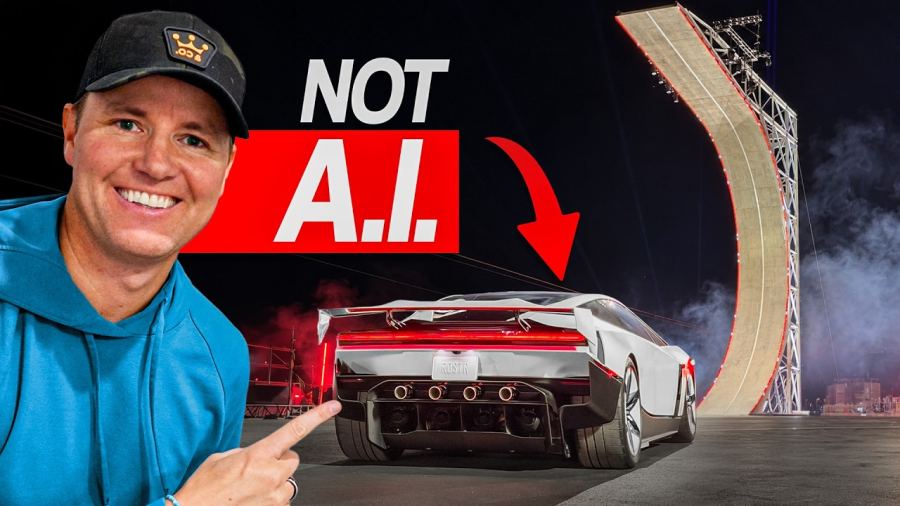
Production remains a 2028 target. Pricing for the Performance and Thrust versions has not been finalized beyond the reservation deposits. The Rocket trim’s availability, certification path and operating envelope are entirely unclear. Tesla will need to demonstrate that the suction and thruster systems meet automotive crash, emissions and noise standards, and that the cold-gas system can be operated safely by non-pilot owners in jurisdictions that permit it. Regulatory agencies in the United States, Europe and China will each have their own views on a vehicle that can leave the pavement under its own power.
In the meantime the demonstration has already done what Musk intended: it reset the public conversation about what a high-performance electric car can be. The Roadster is still, first and foremost, a two-seat sports car with extreme acceleration and active aero. The thrusters and suction system are optional, limited and, in the case of full flight, invitation-only. Yet the images of a production-intent chassis hanging inverted and then landing under its own thrusters are now permanent. For a company whose original Roadster is still orbiting between Earth and Mars, the new version’s brief departure from the ground is a logical, if theatrical, next step.
Official details appear on the Tesla Roadster page. Independent reporting from Reuters and CNN confirmed the timeline, the thruster description and the 2028 production target.
Comments
0