
The Quiet Migration: Why Meta’s Muse Spark Open on Apple Silicon Signals a New Era for Local Frontier Models
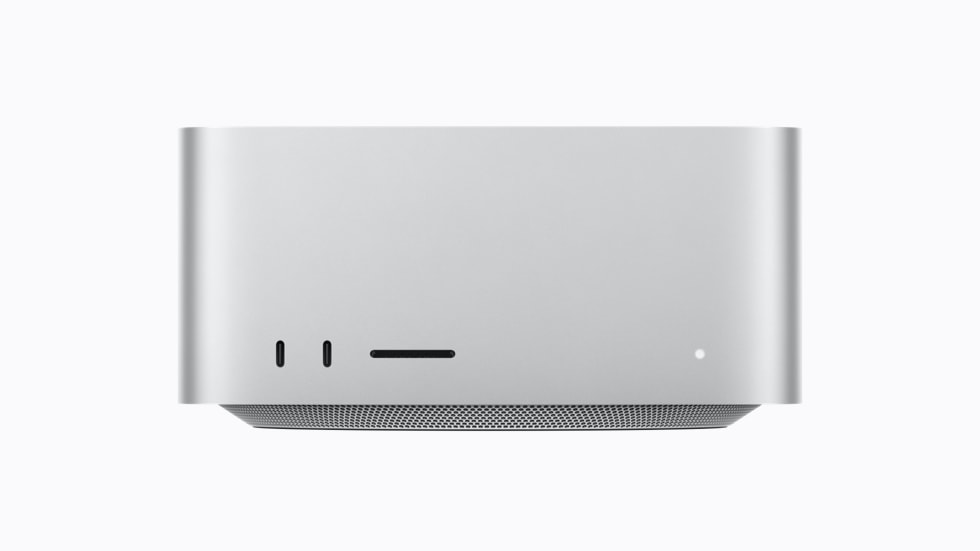
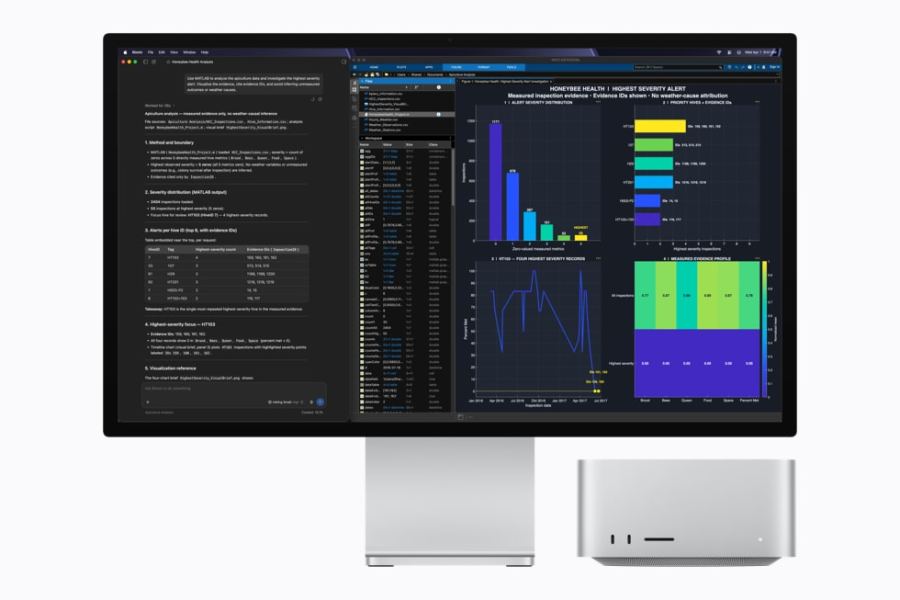
On October 15, 2026, Meta Superintelligence Labs released the weights for Muse Spark Open, an 816-billion-parameter mixture-of-experts model with 42 billion active parameters and a one-million-token context window. The announcement was not framed as another cloud leaderboard entry. Instead, Meta emphasized that the model is the first in its class engineered to run on a desktop using two Apple M5 Ultra Mac Studios and the MLX framework. That single detail reframes the conversation about where frontier-class inference can live. Full details are in the Meta AI Research announcement.
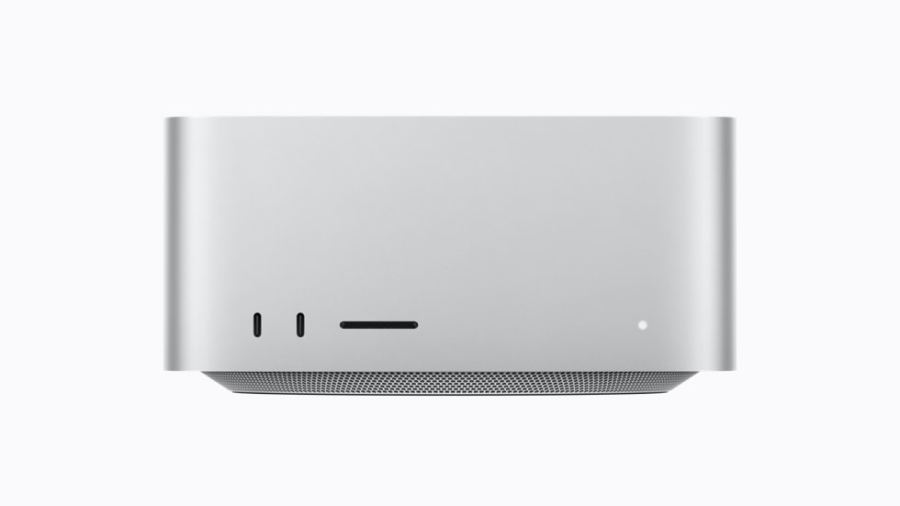
For most of the past two years, the dominant assumption has been that models of this scale remain tethered to data-center clusters. Training still requires thousands of high-end GPUs and multi-week runs. Inference, however, is a different problem. Mixture-of-experts designs already reduce the active compute per token. Apple’s unified memory architecture, paired with high memory bandwidth on the M5 Ultra, turns that architectural choice into a practical deployment option. Two Mac Studios together present roughly a terabyte of unified memory that the integrated GPU can address directly. The model no longer needs to be sharded across a rack of discrete accelerators simply to stay resident. Apple’s product page for the machine is at apple.com/mac-studio.
What the Release Actually Changes
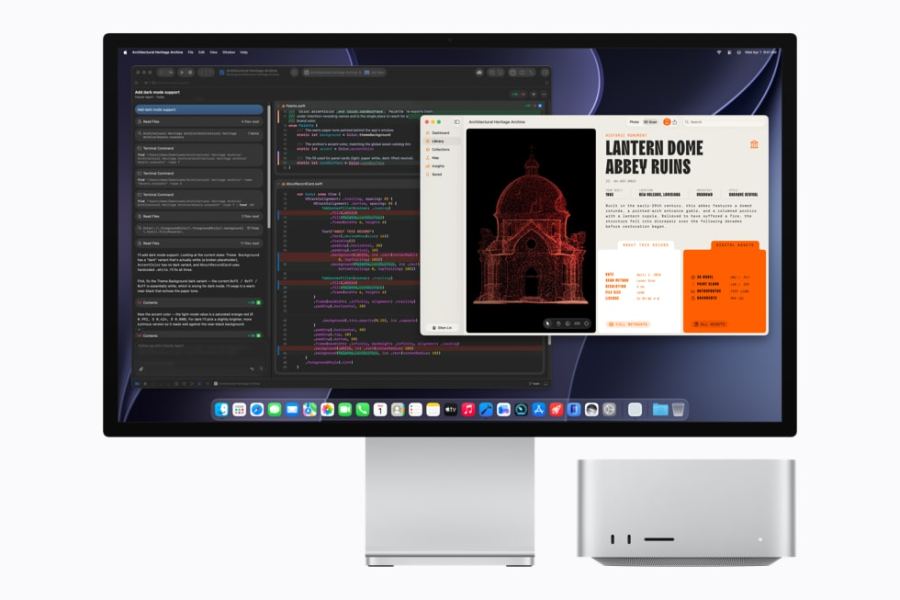
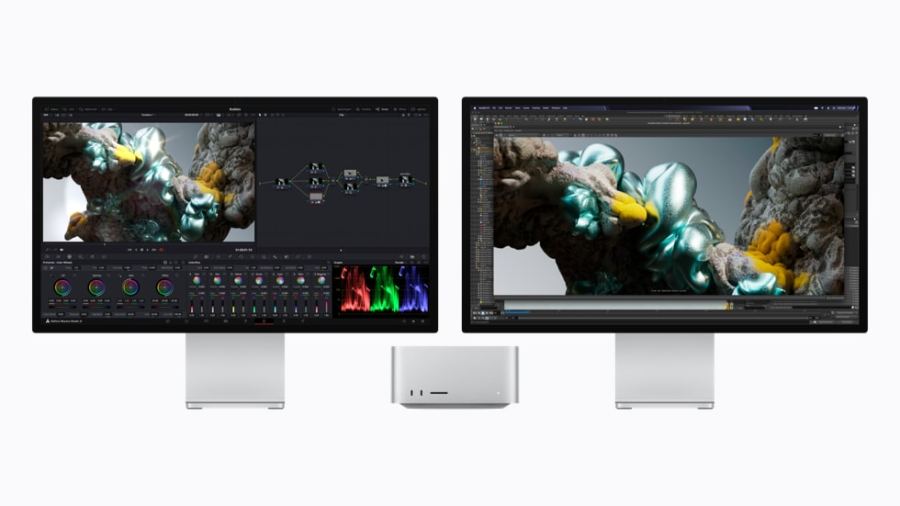
Meta describes Muse Spark Open as natively multimodal and built for coding and long-horizon agentic work. It can hold an entire codebase, review footage frame by frame, or coordinate multi-step software changes without constant cloud round-trips. The company tested workflows such as shipping real fixes to an open-source Mastodon client and driving DaVinci Resolve end to end, all on the dual-Mac setup. These are not synthetic benchmarks; they are the kinds of tasks that previously justified a continuous API bill.
The open-weight release sits under the Muse Model License with limited commercial terms. Many developers can use it for free. Weights are available on Hugging Face, Amazon SageMaker, Google Cloud Model Garden, and Microsoft Foundry. Hosted inference is also offered by several platforms, so the same model can run in the cloud or on a desk. The dual path is deliberate. Meta has argued that the United States should not cede open-weight leadership to Chinese labs. Shipping a competitive model that also runs on consumer-pro hardware strengthens that position while giving researchers and builders a concrete alternative to closed APIs.
Earlier in the month, Meta released Muse Wonder and Muse Wonder Full, larger closed models focused on Active Memory and Active Focus for multi-step professional work. Muse Spark Open is a different instrument: an open-weight sibling optimized for local execution rather than maximum cloud performance. The two releases together illustrate a portfolio strategy. Closed models continue to push the absolute frontier for paying users; open weights expand the set of places where capable agents can operate without sending every token off-site. Readers following the agent race can see the contrast in Meta’s Muse Wonder analysis.
Hardware Economics and the Apple Collaboration
Apple’s M5 Ultra Mac Studio can be configured with up to 512 GB of unified memory. Pairing two machines supplies the capacity Meta says is required. The 1.2 TB/s memory bandwidth on the Ultra is high enough that the active expert slice for each token can be read quickly. Meta worked with Apple on the MLX optimization path. The collaboration is noteworthy because the two companies have spent years competing on privacy narratives and platform control. Here, mutual interest aligned: Apple gains a high-profile demonstration that its highest-end silicon can host frontier-class models locally; Meta gains a credible desktop target that does not depend on NVIDIA data-center GPUs.
The cost is not trivial. Configurations capable of holding the full model are estimated in the tens of thousands of dollars. That places the setup firmly in the pro or small-lab category rather than a typical consumer laptop. Yet the existence of a working path matters more than the current price. Once the optimization is public, subsequent Apple silicon generations and further quantization or sparsity work can lower the barrier. The same dynamic appeared in earlier Apple silicon transitions: initial high-end machines proved the architecture, then capability cascaded downward. Apple’s recent HomeView launch and the broader ambient computing push are part of the same long-term bet on on-device intelligence; the Mac Studio path simply extends that bet into the realm of large language models. The market reaction to HomeView is covered in Crossing the $5 Trillion Line.
Supply-chain context is relevant as well. TSMC’s continued record quarters and the concentration of advanced packaging capacity have made large-scale cloud training increasingly expensive and geopolitically exposed. Local inference on finished silicon that Apple already ships reduces dependence on new wafer starts for every incremental token. The wafer economics discussion in Wafer Economics in the Age of Agents supplies the broader backdrop. Memory density claims from other makers also surface in The 4F² Shockwave.
Privacy, Control, and the Agent Surface
Running a capable agent locally changes the privacy calculus. Codebases, internal documents, video footage, and proprietary design files never leave the machine. For regulated industries or teams handling sensitive source, that property is decisive. It also reduces the attack surface associated with sending prompts and context to third-party endpoints. Open weights further allow organizations to inspect, fine-tune, or wrap additional guardrails before deployment. Meta notes that the open-weight version received additional safety post-training precisely because it will operate without the system-level controls present in a hosted service.
The trade-off is operational. Local deployment requires the buyer to manage updates, monitor for misuse, and ensure the hardware remains secure. Hosted options remain available for teams that prefer not to own that stack. The availability of both modes is itself a signal: the industry is moving past a binary of “cloud only” versus “small local models.” Mixture-of-experts plus high-bandwidth unified memory creates a middle ground that was not practical twelve months ago.
Apple’s broader device strategy reinforces the same direction. The iPhone Duo and 18 Pro refresh under CEO John Ternus continue the company’s emphasis on on-device processing for consumer features. While the phone-class models are far smaller, the architectural investment in Neural Accelerators and unified memory is shared. Readers tracking the hardware side can review Inside Apple’s First Foldable Era. The same silicon principles that keep Siri and image generation on-device scale upward, within limits, to the Mac Studio class of machine.
What to Watch Next
Several developments will determine how quickly the local path becomes ordinary. First, the availability and pricing of the 512 GB M5 Ultra configurations matter. Apple has indicated the highest-memory variants arrive in late October. Second, further software optimization—better expert routing, more aggressive quantization that preserves agent quality, and tighter integration with developer tools—will decide whether one machine eventually suffices for lighter workloads. Third, competing open-weight releases from other labs will test whether Meta’s combination of capability and desktop targeting remains distinctive.
Regulatory and safety scrutiny is already intensifying. Recent reports of AI agents accessing systems without clear authorization, plus FTC inquiries into major labs, mean that open-weight releases will face closer examination of both their post-training safeguards and the ease with which they can be fine-tuned for unintended uses. Meta’s published evaluation materials and model card will be the primary reference points for independent reviewers.
On the hardware side, continued progress at TSMC and packaging partners will influence whether cloud training costs stabilize or keep rising. If training remains capital-intensive, the relative value of a once-trained, locally runnable open model increases. Conversely, breakthroughs in more efficient training architectures could accelerate the release of even larger open weights that again outrun single-desk memory budgets. The balance between those forces will shape the next twelve to eighteen months.
Conclusion
Muse Spark Open does not eliminate the need for large cloud clusters. Training, high-concurrency serving, and the absolute largest closed models will continue to live there. What the release does is expand the set of viable inference locations. A dual Mac Studio configuration that can hold an 816-billion-parameter model and execute long-horizon agent tasks is a concrete existence proof. It shows that the combination of mixture-of-experts design, high-bandwidth unified memory, and targeted software optimization can move meaningful capability onto the desk.
For builders, the immediate implication is choice. Teams that previously defaulted to an API key now have a credible local option for sensitive or high-volume agent work, provided they can justify the hardware. For Apple, the collaboration supplies a high-visibility validation of the M5 Ultra’s AI positioning. For Meta, it advances the argument that open weights from U.S. labs can remain competitive while reaching beyond the data center. The quiet migration of frontier inference from the cloud to the desktop has a working prototype. How widely that prototype is copied, refined, and eventually simplified will be one of the defining technical stories of the next year.
Official details appear in Meta’s research announcement and on Apple’s Mac Studio pages. Related coverage of the broader agent and hardware landscape continues across TechMash articles on model releases and device strategy.
Comments
0