
Ternus’ Early Test: How the iPhone Duo Sell-Out and HomeView Launch Are Defining Apple’s New CEO Era
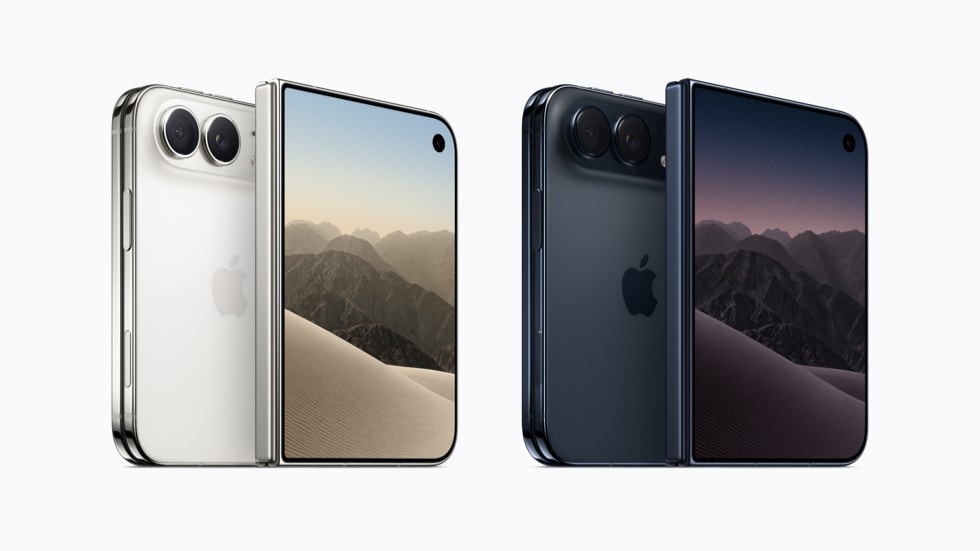
John Ternus has been Apple’s CEO for barely six weeks, yet the company is already delivering the kind of product moments that will define his tenure. On Friday, October 16, pre-orders opened for the iPhone Duo, Apple’s first foldable smartphone. Within minutes, shipping estimates for every configuration slipped from the October 23 launch date deep into January 2027. Apple later described demand as “nothing short of extraordinary.” At the same time, the company is taking pre-orders for HomeView, its first dedicated smart display, priced at $299 and scheduled to reach customers on November 13.
These two products arrive under very different conditions. The Duo is a high-stakes, high-priced bet on a form factor Apple spent years avoiding. HomeView is a more measured entry into a category Amazon, Google, and others have occupied for years. Together they offer an early read on how Ternus, a longtime hardware engineering leader, intends to run the company Tim Cook built into a services and ecosystem powerhouse.
What Actually Happened With the Duo
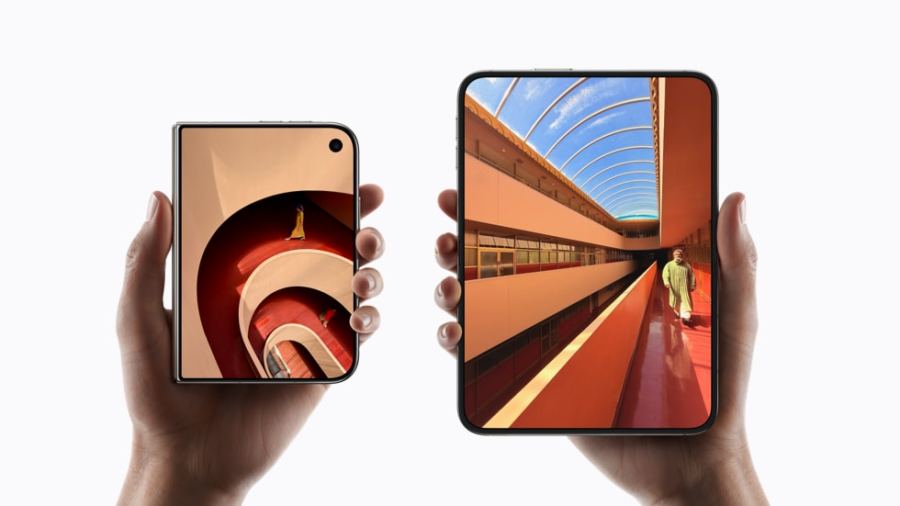
Apple announced the iPhone Duo on September 9 at its “Surprise and Shine” event—the first keynote Ternus hosted as CEO. The phone folds book-style. Closed, it offers a 5.4-inch outer Super Retina XDR display. Open, it expands to a 7.6-inch inner display, roughly 50 percent larger than the iPhone 18 Pro Max screen. Both panels share the same aspect ratio, run ProMotion up to 120 Hz, and support Always-On. The frame and hinge cover use grade 5 titanium. Inside sits the same A20 Pro chip found in the iPhone 18 Pro, paired with a dual-battery system and a vapor chamber for thermal management.
Pricing starts at $1,999 for 256 GB and climbs to $3,199 for 2 TB. Colors are limited to Star White and Night Sky. Pre-orders were delayed until October 16, with retail availability set for October 23—an unusual gap for a flagship iPhone. Supply constraints had been widely reported; several analysts and leakers noted yield challenges on the folding display and hinge assembly.
When the store went live at 5 a.m. Pacific on the 16th, the rush was immediate. Multiple reports, including from Bloomberg and 9to5Mac, showed delivery dates moving to late January within half an hour. By mid-morning, no configuration offered a 2026 delivery through Apple’s own channels. Carrier sites sometimes fared slightly better for early orders, but Apple’s own storefront was effectively sold out for the holiday quarter. Scalpers appeared on secondary markets almost at once, listing units well above retail.
Apple’s statement to the Financial Times was measured but clear: demand was extraordinary, and the company is working to accelerate deliveries. The company has not published unit targets, but earlier supply-chain reporting suggested initial production runs well below 10 million units even after a reported 30 percent increase in orders. For context, a typical iPhone Pro cycle moves tens of millions of units in the first quarter. The Duo is a different animal—premium, novel, and capacity-constrained.
HomeView: A Different Kind of Bet
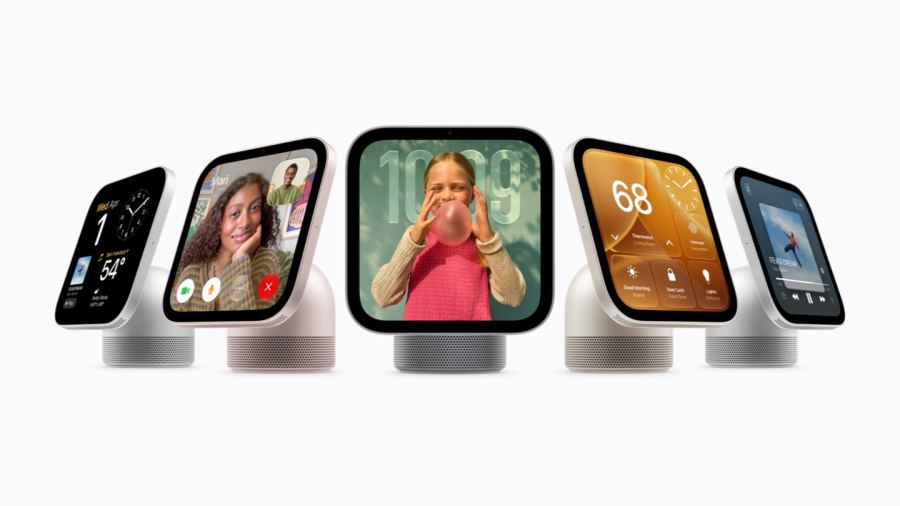
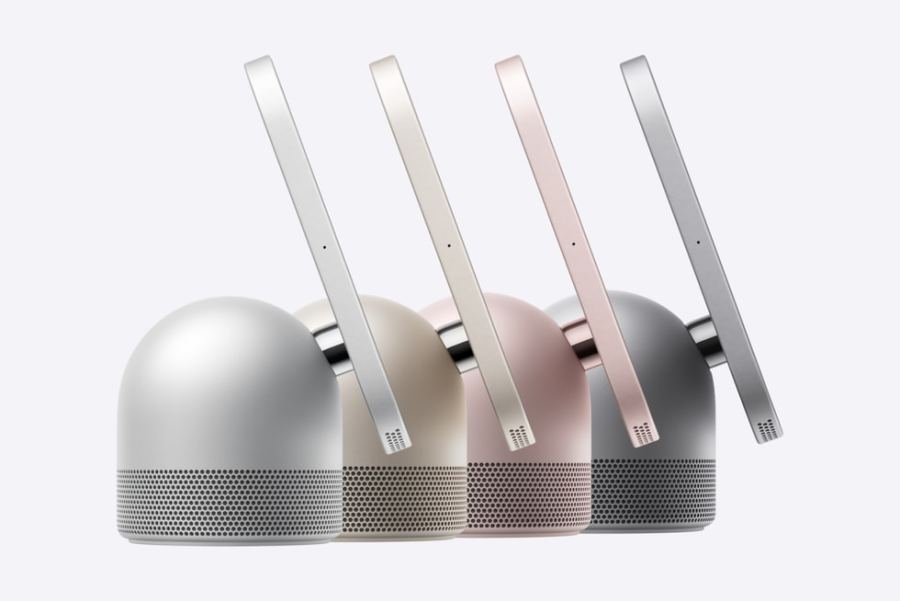
Three days before Duo pre-orders, Apple introduced HomeView on October 13 as part of its “Welcome Home” set of announcements. The device is a 7-inch square Liquid Retina display (1088 × 1088) mounted on a domed speaker base via a stainless-steel tilting hinge, or available as a wall-mounted panel. It runs an A18-class chip, includes a 12-megapixel Center Stage camera, and supports FaceTime, Apple Music, Podcasts, and third-party apps. Most importantly, it can recognize up to six household members by face and surface personalized widgets, calendars, and messages while keeping data end-to-end encrypted via iCloud+.
Siri AI—the more conversational, context-aware assistant rolling out with iOS 27—is central. HomeView can pull personal context from a paired iPhone, control Matter and HomeKit devices, display multiple camera feeds, and offer video descriptions of HomeKit Secure Video clips. It also detects smoke and carbon-monoxide alarms. Pricing is $299 for both the tabletop and wall-mounted versions. Pre-orders opened immediately in the United States, United Kingdom, Canada, Australia, New Zealand, Singapore, South Africa, and India, with first units shipping November 13. It is not launching in the EU at the outset.
Unlike the Duo, HomeView is not expected to be severely supply-constrained. It is a new category for Apple, but the components are more conventional. The strategic value lies less in unit volume and more in ecosystem lock-in: a persistent, shared screen in the kitchen or living room that makes the rest of Apple’s hardware and services more useful.

Why These Products Matter for Ternus
Ternus took over on September 1. Tim Cook moved to Executive Chairman. Ternus had previously led hardware engineering, overseeing the Mac, iPhone, and other major lines. His elevation signaled a return to product-centric leadership after years in which services growth and operational excellence defined Apple’s public narrative. Early earnings under Cook’s final full quarter were strong: fiscal Q3 2026 revenue of $109.4 billion, up 16 percent, with iPhone, Mac, and Services all setting June-quarter records. The stock touched new highs around $348 in mid-October, still largely reflecting the Cook-era results and guidance.
The Duo and HomeView are Ternus’ first high-visibility product launches. The Duo, in particular, carries his fingerprints. He has spoken publicly about design priorities and was the executive who presented the phone at the September event. A successful launch—measured not only by initial demand but by sustained availability, repair rates, and long-term software support for the folding display—would reinforce the narrative that Apple under Ternus is willing to enter new form factors when the engineering is ready. A protracted supply shortage or early reliability issues would invite questions about execution under the new CEO.
HomeView is quieter but strategically useful. Smart-home displays have been a gap in Apple’s lineup. By pricing it at $299 and tying it tightly to Siri AI and family sharing, Apple is testing whether a privacy-focused, high-quality panel can carve out share without competing directly on price with Amazon’s Echo Show. Success here would extend the “Apple Home” story Ternus inherits and give the company a physical presence in more rooms.
There are also external pressures. Component shortages, especially memory, have been cited as a reason some iPhone 18 Pro upgrades were constrained and why base models were delayed. Regulatory scrutiny of the App Store continues, and child-safety features are receiving more attention. Ternus has indicated that design and product quality remain central; how he balances those priorities against services growth and regulatory demands will become clearer over the next two or three quarters.
What to Watch Next
Several milestones will clarify the picture. First, whether Apple can meaningfully improve Duo availability before the end of the year or whether the January shipping dates hold. Store pickup on October 23 may offer limited relief; long lines are possible if inventory appears. Second, early user reports on hinge durability, display crease visibility, and battery life under real-world folding use. Apple has not published detailed repair pricing beyond noting high costs for the inner display without AppleCare+. Third, the reception of HomeView once units arrive in November—particularly whether the facial-recognition personalization and Siri AI integration feel useful enough to justify a new device in the home.
On the financial side, Apple reports fiscal Q4 2026 results on November 2. That call will be Ternus’ first as CEO. Investors will listen for commentary on iPhone mix (Pro versus Duo versus the delayed base models), Services growth, and any updates on supply constraints. The stock’s recent strength suggests the market is giving the new leadership the benefit of the doubt so far; concrete guidance will matter more than the initial sell-out headlines.
Longer term, the base iPhone 18 and any iPhone Air successor are expected in early 2027, according to multiple reports. How Apple positions those models relative to the Duo and the higher-priced Pro line will reveal whether the foldable is a permanent high-end addition or a specialized product. Software support for the Duo’s unique multitasking features and Apple Pencil support will also be telling; early reviews praised the concept but noted that the full experience depends on apps adapting to the larger canvas.
For now, the data points are straightforward. The iPhone Duo is generating the kind of scarcity-driven excitement Apple has not seen for a new form factor in years. HomeView is a competent, privacy-conscious entry into smart displays. Both are shipping under a CEO who spent his career on the hardware side. The next several months will show whether that background translates into smoother execution and clearer product strategy, or whether the constraints that delayed the Duo and shaped the HomeView launch continue to shape the early Ternus era. Apple has the demand. The harder task is meeting it without compromising the quality standards that still define the brand.
The combination of a sold-out foldable and a new home hub does not rewrite Apple’s trajectory overnight. It does, however, give John Ternus two concrete products on which his early record will be judged—one that tests Apple’s willingness to expand the iPhone form factor, and one that tests its ability to make the rest of the home feel more Apple-like. Those are useful tests, and they are arriving early.
Comments
0