
The Desk That Stops Renting Intelligence: What Surface Laptop Ultra Changes About Local Agents
On October 7, 2026, Microsoft opened pre-orders for a laptop that is less a refresh of Surface and more a statement about where agentic work is supposed to run. Surface Laptop Ultra starts at $2,599, ships from October 16, and is built around Nvidia’s RTX Spark superchip rather than a conventional Intel or Qualcomm notebook platform. Alongside it, a desk-bound Surface RTX Spark Dev Box opens at $5,999 and is scheduled to ship in the United States in November. The pair is the hardware half of a software story Microsoft is calling hybrid intelligence: cloud models when the job is huge, local silicon when the job is sensitive, repetitive, or simply too expensive to meter by the token.
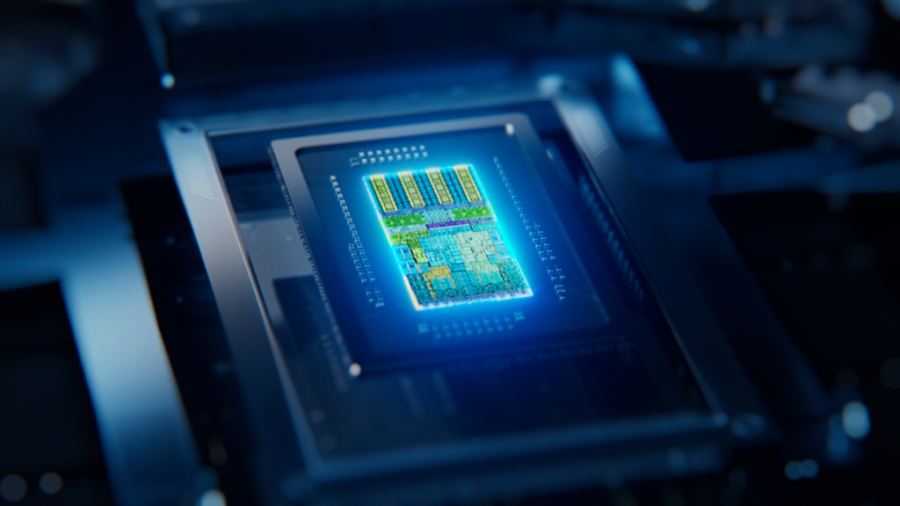
That framing matters more than the marketing line about the “new shape of power.” For two years the industry sold Copilot+ PCs as thin machines with a neural processing unit good enough for webcam effects, live captions, and a handful of on-device image tricks. Surface Laptop Ultra is a different class. Microsoft and Nvidia are describing a Grace CPU with up to 20 cores, a Blackwell RTX GPU with up to 6,144 cores, and as much as 128 GB of unified memory, with a claimed peak of about one petaflop of sparse FP4 AI performance and the ability to hold models larger than 120 billion parameters locally. If those numbers hold in independent testing, the machine is closer to a portable inference workstation than to a travel ultrabook with an NPU sticker.
TechMash is treating the launch as a pricing and architecture story, not a hands-on review. Pre-order pages are not lab results. What is already public is enough to ask a sharper question: does a $2,599 Windows laptop finally make local agents economically rational, or is Microsoft just moving the cloud bill into a higher hardware invoice?
What actually shipped into the pre-order page
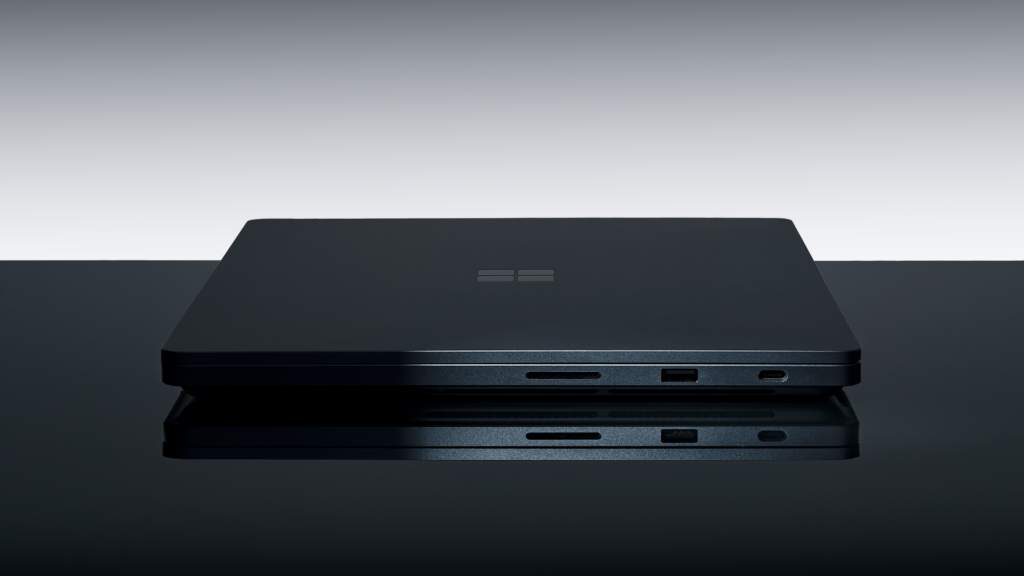
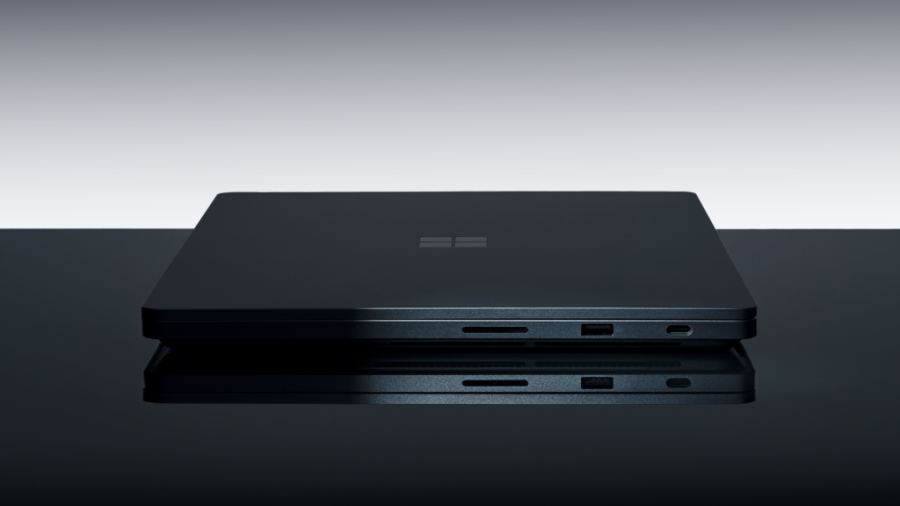
The consumer entry configuration is not the fantasy spec. Reporting around the San Francisco event puts the $2,599 starting point at an 18-core RTX Spark variant with 24 GB of memory and 512 GB of storage. The top of the laptop stack, closer to $5,900, is the one that pairs a 20-core Grace CPU, a 6,144-core Blackwell GPU, 128 GB of unified LPDDR5X, and 1 TB of storage. Microsoft’s own devices blog describes a chassis under 18 millimeters and under 4.5 pounds, a new thermal design claimed to offer up to 2.5 times the thermal capacity of current Surface Laptops, and a 15-inch PixelSense Ultra touchscreen with peak HDR brightness of 2,000 nits. The display is touch-first; pen input is not supported, which is an odd omission for a Surface aimed at annotating footage and designs.
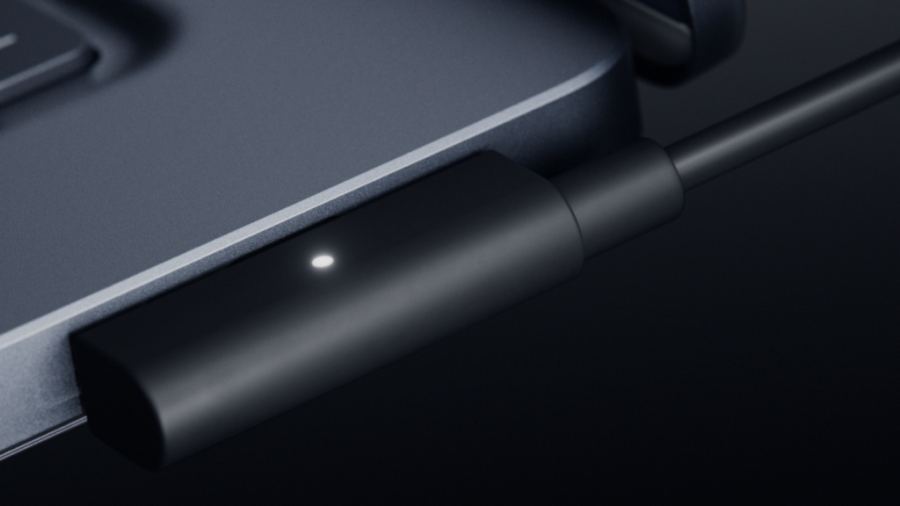
Ports are unusually complete for a recent Surface. Microsoft is shipping Magnetic Connect, which it calls the first built-in magnetic USB-C charging port on a laptop: the cable snaps to the right-side USB-C connector and releases if someone trips over it, while the port itself still carries video and data. Two further USB-C ports, HDMI, USB-A, an SD card reader, and a headphone jack sit alongside it. External display support is listed at up to three 4K panels. Storage is user-removable, a quiet reversal of the sealed-laptop trend and a practical detail for teams that need to pull a drive before a machine leaves the building.
The Dev Box is the same silicon story without the battery. Microsoft positions it as a Project Zenith device that arrives with Visual Studio Code, Git, the GitHub CLI, GitHub Copilot, WSL, Python, and Node already present. The pitch is less configuration, more iteration. At $5,999 it sits in the same neighborhood as Nvidia’s own desk-side Spark systems, which TechMash examined through the lens of what a $4,999 DGX Spark changes for desk-side agents. The difference is the operating system and the agent control plane Microsoft wants wrapped around it.
Unified memory is the real product
Unified memory is the feature that decides whether the laptop is a curiosity or a workflow change. On a discrete-GPU notebook, a 24 GB graphics card and 64 GB of system RAM are not a single pool. A local model that wants 40 GB cannot simply borrow from the other side. RTX Spark, like Apple’s M-series approach, lets the CPU and GPU draw from one physical memory space. Microsoft is explicit that the GPU-addressable slice is less than the headline total and depends on configuration and workload, so a 128 GB machine is not 128 GB of model weights. Even with that caveat, a shared pool is what makes a 70-billion-parameter model, a code index, and a browser of logs plausible on one machine.
That is also why the base 24 GB configuration should be read carefully. Twenty-four gigabytes of unified memory is enough for smaller open models, embeddings, and copilots that mostly orchestrate cloud calls. It is not enough for the “over 120 billion parameters” line that will dominate ads. Buyers who want the local-agent story are buying the upper configs, and those configs approach the price of the Dev Box. The laptop premium is mobility, the 15-inch HDR panel, and the Windows application catalog. The Dev Box premium is sustained thermals and a desk that does not throttle when a long evaluation run starts at 4 p.m.
Nvidia’s CUDA stack is the other half of the bet. Windows on Arm has spent years explaining itself to developers who still expect x86 binaries. RTX Spark does not erase that compatibility work, but a Blackwell GPU with CUDA support gives Windows a native answer for PyTorch experiments, local fine-tunes, and inference servers that previously assumed a Linux workstation. Microsoft’s Foundry-on-Windows notes published the same day add experimental llama.cpp support inside Windows ML, so GGUF models can be called through task APIs rather than only through a side-loaded binary. The stack is trying to look boring on purpose: open weights, local server, familiar client, Windows policy on top.
Hybrid intelligence is a cost-control story
Microsoft’s Windows experience post on the same day describes hybrid intelligence as the ability to move work between the PC and the cloud. The practical version is less poetic. Agent runs are expensive when every file read, every test execution, and every retry is a cloud token. A developer who lets an agent investigate a failing build can burn through a monthly Copilot allowance before lunch if the loop is naive. Putting the investigation on a local RTX Spark box, and only sending the summary or the hard reasoning step upstairs, is how a finance team keeps an agent program alive after the pilot.
Microsoft is pairing the hardware with containment language. Execution Containers are meant to sandbox agent actions. Upcoming Windows features are described as using Microsoft Entra to separate agent activity from user activity, and as extending Agent 365 controls onto local agents. That is the enterprise sentence hidden inside a consumer pre-order. A local model that can read the repo is only acceptable if identity, audit, and spend policy still apply. Without that, “on device” becomes “unlogged.” The same tension shows up whenever an assistant starts keeping durable context about people, a problem TechMash traced in why Meta’s Muse keeps a page on everyone you know.
There is a second cost the launch does not advertise: power and heat. A configurable 45 to 80 watt platform inside a laptop under 4.5 pounds will not sustain the peak FP4 number for an hour. Microsoft’s thermal claim is relative to earlier Surface Laptops, not relative to a tower. Creative shops that render all afternoon, and agent loops that compile and test continuously, will still want the Dev Box or a cloud burst. Hybrid is not a slogan here. It is the admission that the laptop is the interactive tier.
Who this is actually for
Three buyers are being asked to pay up. The first is the developer who already lives in GitHub Copilot and wants the agent to touch the local tree without shipping every file to a tenant they do not fully control. For that person, removable storage, WSL, and a CUDA GPU matter more than the haptic touchpad. The second is the creator who wants a Windows color pipeline, ray-traced previews, and a bright HDR panel in one bag. Microsoft is explicitly comparing peak HDR brightness with the MacBook Pro M5 and offering up to $1,000 back on an eligible MacBook Pro trade-in through November 23 in the United States and Canada, with the usual conditions on device condition and chargers. The third is the commercial fleet manager who has been told that more than 40 percent of business laptops now being built are Copilot+ PCs, and who needs a higher tier for the people actually building agents rather than only using them.
Gamers are a secondary audience, not the design center. Ray tracing, DLSS, and Reflex on a 120 Hz panel are real, and Windows on Arm’s game catalog is no longer a footnote. A $2,599 starting price still loses a pure frames-per-dollar argument to a thicker gaming laptop. The point of the RTX cores, in Microsoft’s telling, is that the same silicon accelerates a Blender scene at noon and a supported game at night. That is a convenience argument, not a benchmark win.
It is also a competitive argument aimed at Apple. Unified memory, a premium aluminum laptop, and on-device models are the M-series pitch. Microsoft’s counter is CUDA, a touchscreen, broader port selection, and a Windows agent stack that can see local files. Apple’s counter remains battery life, app compatibility, and a developer base that already trusts the memory model. Neither side has published a fair, sustained tokens-per-watt comparison on identical open weights. Until those numbers exist, the trade-in offer is doing as much work as the architecture.
What to watch before October 16
Shipping day is the filter. First, independent memory bandwidth and sustained-power tests will show whether the 128 GB config can actually keep a large model resident without collapsing clocks. Second, Windows on Arm compatibility for the creative and scientific apps these buyers already pay for will matter more than another Copilot demo. Third, the agent containment story needs a public control: what an admin can see, block, and bill when a local agent edits files. Fourth, pricing ladders from Asus, Dell, HP, Lenovo, and MSI, which Microsoft says are also bringing RTX Spark machines, will tell us whether $2,599 is a Surface tax or the new floor.
There is a software race running in parallel. OpenAI’s same-week push toward richer in-chat interfaces keeps the cloud conversation loud, while smaller efficient models keep trying to make local inference cheap enough that a giant memory pool is optional. TechMash looked at that efficiency pressure in why Reflection’s Beam puts efficiency ahead of raw open-weight size, and at the retrieval layer those local agents still need in what EmbeddingGemma 2 changes about search across voice, video, and code. A fast laptop does not replace a good index. It just moves the index closer to the keyboard.
Energy is the offstage constraint. Training and inference campuses are already signing multi-gigawatt contracts, and experimental compute is leaving the ground entirely, as in what Google’s first TPU satellite actually tests. A laptop that absorbs the interactive slice of agent work does not shrink a training cluster. It does change the marginal cost of the thousand small loops that never should have left the building.
The implication, not the spec sheet
Surface Laptop Ultra is Microsoft admitting that the Copilot+ era undershot the machines agents actually need. An NPU that blurs a background cannot hold a repository, a test suite, and a 70-billion-parameter coder in memory at once. RTX Spark can, on paper, if the buyer pays for the memory and accepts that peak FP4 is a marketing ceiling rather than an all-day budget. The $5,999 Dev Box is the more honest object: a small desk supercomputer with a Windows image and an agent policy layer. The laptop is the same idea with a battery and a trade-in coupon aimed at MacBook owners.
The useful question for the next month is not whether the chassis looks like a Surface. It is whether a team can move a class of agent tasks off the meter without losing audit, and whether the base $2,599 machine is honest about being a creative laptop rather than a local-model workstation. Microsoft’s pre-order post and the Surface Laptop Ultra product page are the primary documents; the Windows devices blog announcement is where the thermal, port, and memory footnotes live. Those footnotes, more than the keynote adjectives, are what October 16 has to survive.
If the sustained numbers are real, the center of gravity for everyday agents shifts a few feet, from a regional data center to the desk. If they are not, Surface Laptop Ultra will still be a fast, bright, expensive Windows laptop with an unusually clear story about why the next PC is being designed around memory pools instead of around another chatbot button.
Comments
0