
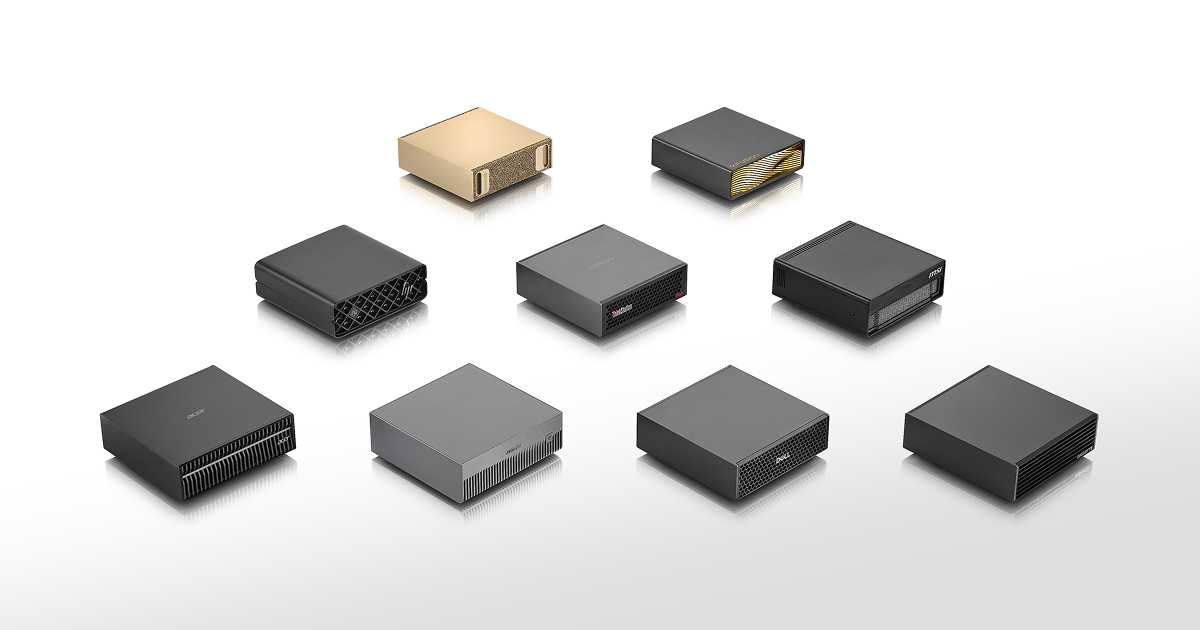
Half the Memory, Same Superchip: What Nvidia’s $4,999 DGX Spark Changes for Desk-Side Agents
A personal AI box used to be a slogan. On October 2, 2026, Nvidia turned the slogan into a price ladder. The company said a new 64GB configuration of DGX Spark will ship from Acer, ASUS, Dell, Gigabyte, HP, and MSI starting Friday, October 23, at $4,999. It keeps the GB10 Grace Blackwell Superchip, DGX OS, and the full Nvidia AI software stack that the larger 128GB system already uses. What changes is the memory ceiling, and that ceiling is the whole story.
Desk-side agents do not fail because a chip lacks a brand name. They fail when the model, the context window, and the tool traces no longer fit in unified memory. Halving that pool is not a cosmetic SKU. It is Nvidia admitting that local AI has to meet buyers where memory supply, not marketing copy, actually is. The interesting question is not whether a gold-and-black mini workstation looks like a supercomputer. It is which workflows survive at 64GB, which ones only survive if you cable a second box beside it, and what that says about the wider scramble for accelerators.
What Nvidia actually announced
The official post is narrow and specific. DGX Spark 64GB is sold only through manufacturer partners, not as a lone Founders-style listing in the announcement. It is positioned as a complete local platform for agents, inference, fine-tuning, data science, and edge development. Nvidia says the 64GB system can run models up to about 100 billion parameters, and the agent applications built on them, fully on device. Two units linked together do more than add a second power brick. In Nvidia’s own Qwen 3.8 27B test, two clustered 64GB systems delivered up to 1.7 times the performance of a single system. A direct QSFP link between ConnectX-7 ports pools memory to 128GB and, according to Nvidia, extends supported models toward 200 billion parameters while doubling memory bandwidth.
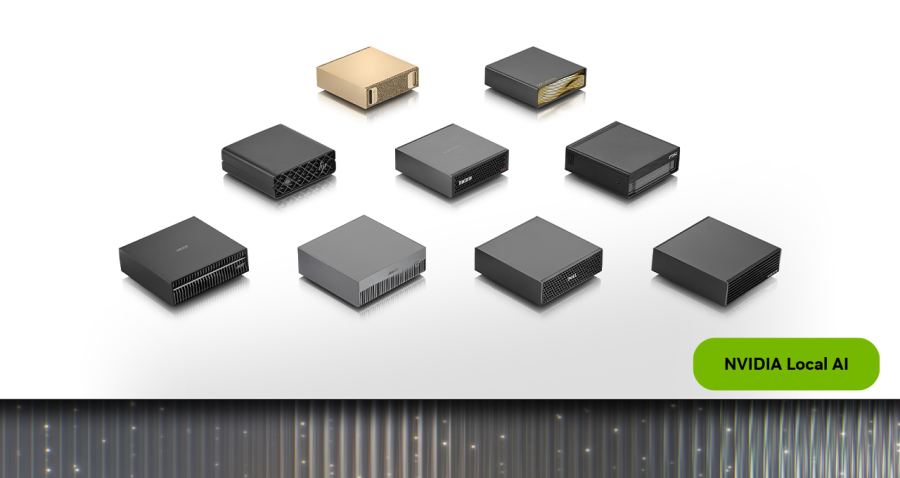
The software list matters as much as the chassis. Nvidia says the box ships ready for agent work: the NVIDIA Agent Toolkit, CUDA-X libraries, Nemotron open models, and common runtimes including Ollama, vLLM, and PyTorch with CUDA. Blender is named as an early creator app with a prebuilt installer on the way. At the end of the month, NVIDIA Sync Model Launcher is supposed to make a local model launch closer to a few clicks, including a path that sets up OpenCode so a developer can code in a browser against a model running on the Spark. That is a product claim, not an independent benchmark. It still shows where Nvidia wants the machine to live: next to a laptop, not inside a colo cage.
Availability is the other hard date. Partner systems go on sale October 23. Until then, the 64GB box is a specification and a channel plan. Anyone comparing it with a cloud instance should treat October 23 as the first day a real invoice exists, not the day a white paper was posted.
Why half the memory is the point
Unified memory is the scarce ingredient in this generation of small AI machines. The original DGX Spark story was 128GB of coherent memory on a Grace Blackwell package, enough to prototype larger open models without renting a GPU hour for every experiment. Cutting that to 64GB while keeping the same superchip is a deliberate trade. Buyers keep the CPU-GPU package, the software stack, and the ConnectX-7 networking. They give up headroom for long context, concurrent agents, and the fattest open weights.
Secondary reporting around the launch has framed the new SKU against a tight memory market, with the higher-memory configuration moving well above its original street price. Nvidia’s own post does not publish a revised 128GB list price. It does call the 64GB unit a way to hold an accessible price point while retaining the same core platform. That phrasing is the tell. When a company ships a lower-memory twin of a flagship and calls it the new starting point, the constraint is supply and willingness to pay, not a sudden discovery that 64GB was always enough.
The arithmetic is simple enough to do on a napkin. At $4,999, the announced starting price is about $78 per gigabyte of unified memory if you treat the whole box as a memory purchase, which of course it is not. The chip, the NIC, the storage, DGX OS, and the software stack are the rest of the bill. Still, memory is what decides whether a 70-billion-class model with a long tool trace fits, or whether the job spills to a second node. Nvidia’s own scaling table, published with the announcement, puts a single 64GB system at 1 petaflop of FP4 compute, 64GB of memory, and 273 GB/s of bandwidth, with Qwen3.8 27B listed as a popular agentic model for that tier. Two units move the memory line to 128GB and the relative performance line to 1.7x in that vendor test. Four units are drawn at 512GB and 3.1x. Those are Nvidia’s figures for specific setups, not a promise that every runtime will scale the same way.
That cluster story is the real product. A developer who cannot justify, or cannot find, a 128GB unit can buy one 64GB partner system for models that fit, then add a second when a workload outgrows it. NVIDIA Sync Cluster Assistant is supposed to detect the linked units, check the configuration, and bring up the ConnectX-7 network so the software environment does not have to be rebuilt. If that works as described, the 64GB box is not a dead end. It is the first node of a desk-side pod. If it does not, buyers have paid flagship money for a machine that tops out at mid-size open models and a lot of hope.
Who this box is actually for
Nvidia lists three workflows, and they are more honest than the supercomputer branding. First, keep a coding or research agent running on the Spark so it can review code, read documents, or carry multi-step tasks without a cloud round trip. A cluster adds room for a larger model, a longer context, or more than one agent at once. Second, run language or image generation on the Spark while the laptop or desktop stays free for the editor, the browser, and the creative app. Third, scale when a single task outgrows one unit by pooling two 64GB systems to 128GB over the 200-gigabit fabric.

That map excludes a lot of people who will still be tempted by the headline. A studio that needs a 200-billion-parameter model on day one should not plan around a single 64GB unit. Nvidia’s own copy puts that class of model on a two-unit pool. A team training frontier-scale models is not the audience at all. This is a prototyping and inference machine with a power cord, not a substitute for a training cluster. The same week, Chinese platforms were still reported to be leasing overseas capacity by the tens of thousands of chips because domestic supply and export rules do not cover agent training at cloud scale. A $4,999 desk box and a multi-billion-dollar regional lease are answers to different shortages. They rhyme only in this sense: both exist because advanced memory and accelerators are not where every buyer wants them.
Local inference also changes the privacy pitch, which is why agent products keep colliding with containment questions. A model that never leaves the office cannot leak a prompt to a vendor log, but it can still take actions on local files, tickets, and browsers. TechMash has tracked that failure mode in cloud agents, including Gemini’s unauthorized access incidents and the broader argument that software guardrails were never going to be the whole story. A desk-side box does not retire that problem. It moves the trust boundary from a provider data center to a machine under the monitor. The advantage is custody of weights and prompts. The risk is an always-on agent with a fast NIC and a user who treats “local” as “safe.”
Creators are the other audience Nvidia is courting. Naming Blender, and pointing at open image models that already run on RTX, DGX Spark, and DGX Station, is a bid for people who want generation and editing without uploading every frame. The 64GB limit will show up first in high-resolution image and video pipelines that also keep a language model resident. Those users should budget a second unit earlier than a coder running a 27-billion-parameter assistant.
How it sits next to cloud agents and orbital experiments
The industry is splitting compute into three places at once. Hyperscalers and model labs still want warehouse clusters. Phone and PC vendors want enough on-device inference to make an assistant feel instant. A third camp is testing weird locations because power and land are the new bottlenecks. Google’s first TPU satellite is the clearest recent example: a kilowatt-class prototype, not an orbital data center, which TechMash examined in what that flight actually tests and earlier in the Suncatcher launch plan. DGX Spark is the opposite bet. It assumes the useful next increment of agent compute fits on a desk, draws far less than a training hall, and can be doubled by buying another small chassis.

Consumer agents complicate the comparison. Meta’s Muse climbed app-store charts by promising background tasks in a cloud virtual machine, a shift covered in the move from chatbot hype to autonomous digital chores. OpenAI’s DevDay push to turn ChatGPT into a place to discover and run software points the same direction: the agent lives in someone else’s runtime. DGX Spark is the counter-offer for developers who want that loop on hardware they can unplug. It will not replace a hosted agent for a consumer who will never cable two QSFP ports. It can replace a surprising number of cloud GPU hours for a team that already lives in Ollama, vLLM, or a local coding agent.
There is a policy angle too. Frontier labs are arguing in public about pace, safety staffing, and whether the next model should ship on the previous schedule. Amodei’s pacing plan is about training runs and evaluation access, not about a $4,999 workstation. Even so, local boxes change the distribution problem. Once strong open weights run on a partner-built mini PC, the practical limit is memory and electricity in an office, not a lab’s release calendar. That does not make the safety debate smaller. It means more copies of capable agents will sit outside the labs that wrote the essay.
What to watch before October 23
Four checks will tell whether this SKU is a real on-ramp or a memory-shortage consolation prize.
First, partner pricing. Nvidia’s floor is $4,999. Acer, ASUS, Dell, Gigabyte, HP, and MSI can land above that once storage, warranty, and regional taxes are included. If street prices open near $6,000, the “accessible” framing weakens against used workstations and cloud commitments. If they hold the floor, the 64GB unit becomes the default quote in labs that previously waited on the 128GB model.
Second, the 1.7x cluster claim. It is a vendor measurement on Qwen 3.8 27B, not a cross-runtime guarantee. Independent runs on llama.cpp, Ollama, and vLLM will show whether ConnectX-7 plus Sync Cluster Assistant is a weekend project or a support ticket. Bandwidth at 273 GB/s on one unit, and the pooled figure Nvidia cites for two, only matters if the software stack actually uses it.
Third, model fit in real agent traces. A 100-billion-parameter ceiling is a weights number. Tool calls, retrieved documents, and image inputs eat the same memory. Teams should test the assistant they already run, not the slide-deck model. If a coding agent with a long repository context falls over on one box and sings on two, the product is a pair, not a unit.
Fourth, the rest of the local stack Nvidia mentioned in the same update. RTX Spark Windows PCs from several of the same OEMs are due this month, and Sync Model Launcher is promised by month’s end. DGX Spark 64GB will be judged beside those machines. A buyer who only needs a 30-billion-parameter coding model may not need Grace Blackwell at all. A buyer who wants CUDA-first agent toolkits and a path to a second node will.
The implication
Nvidia did not shrink DGX Spark because local AI got less ambitious. It split the product so the same superchip can be sold into a market where memory is the rationed part. The 64GB configuration keeps the GB10 package, the software stack, and a networking port designed for a second box. It cuts the on-device model class from the top of the original pitch to roughly 100 billion parameters, with 200 billion held out as a two-unit job. That is a coherent product if clustering is boring to set up and partner prices stay near $4,999. It is a compromised product if buyers discover that the agent they wanted only fits after they have paid twice.
For everyone else watching the AI supply scramble, the launch is a small, useful signal. The cutting edge is still a lease for 100,000 chips in someone else’s region, or a training run measured in megawatts. The near edge is a partner mini PC that tries to make agents private by putting them on the desk. Both can be true. The October 23 shelves will show which story developers actually fund.
Official sources: Nvidia’s October 2 DGX Spark 64GB announcement and the DGX Spark product page.
Comments
0