
Apple finally priced a fold, and the queue starts before the phone does
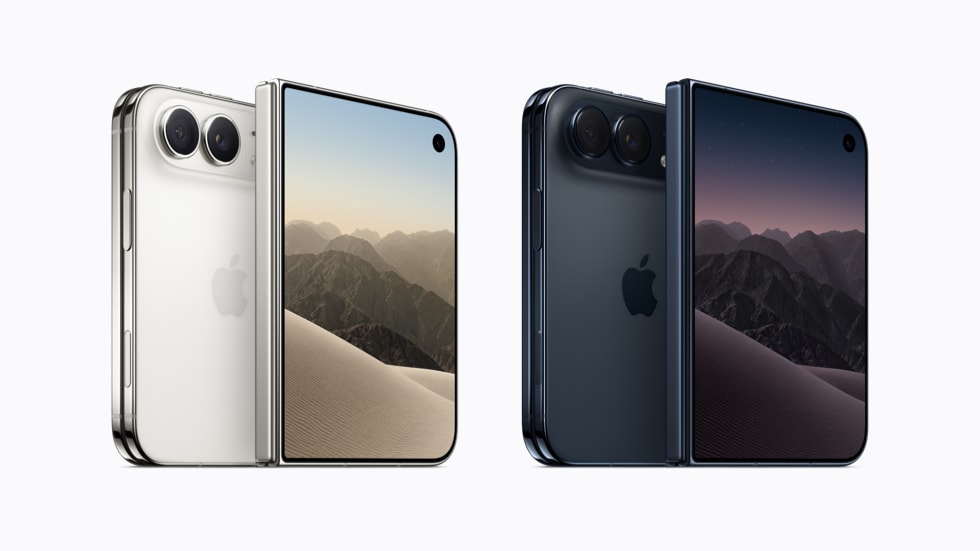
Apple spent years letting other companies take the hinge jokes. On September 9, 2026, that wait ended in public. John Ternus, weeks into the chief executive job he took on September 1, stood up the iPhone Duo as an official product: a book-style foldable with a 7.6-inch inner Super Retina XDR display, a 5.4-inch outer display, a polished grade 5 titanium frame, and a starting price of $1,999 in the United States for 256GB. Pre-orders begin at 5 a.m. Pacific on Friday, October 16. Stores and first deliveries start Friday, October 23, in more than 70 countries and regions, with a second wave of 28 markets on October 30. None of that is a rumor anymore. The rumor phase was the summer talk of an iPhone Ultra and a $2,099-to-$2,299 band. The official name is Duo, and the official floor is a dollar under two thousand.
What moved this week is not another render. Apple opened a checkout path it calls Get Ready, available through the Apple Store online and in the Apple Store app starting Monday, October 12. Shoppers can pick Star White or Night Sky, choose 256GB, 512GB, 1TB, or 2TB, confirm a carrier, add the $79 Duo case or the $129 folio with a kickstand, set AppleCare+, enter a trade-in, and store payment and shipping. On October 16 the remaining step is mostly confirmation. That is a logistics feature dressed up as a product moment, and it is the clearest signal yet that Apple expects the first wave to sell out.
What actually shipped on stage
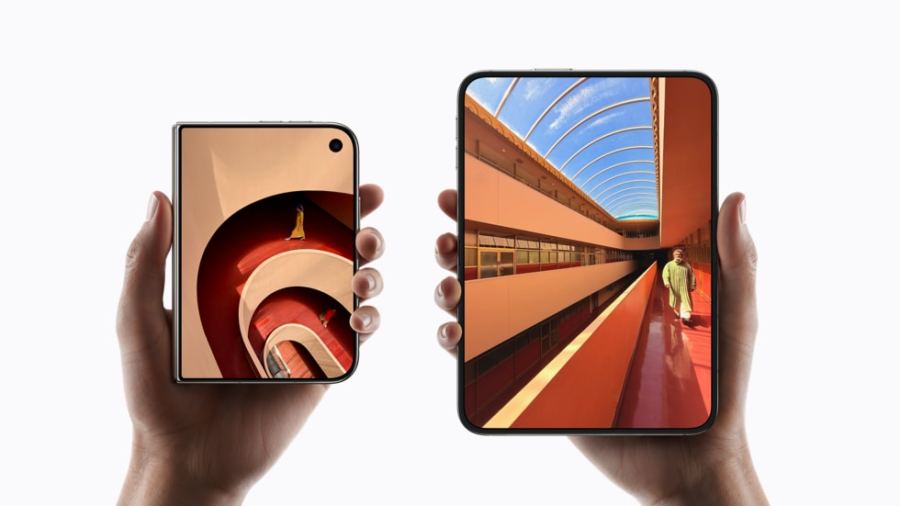
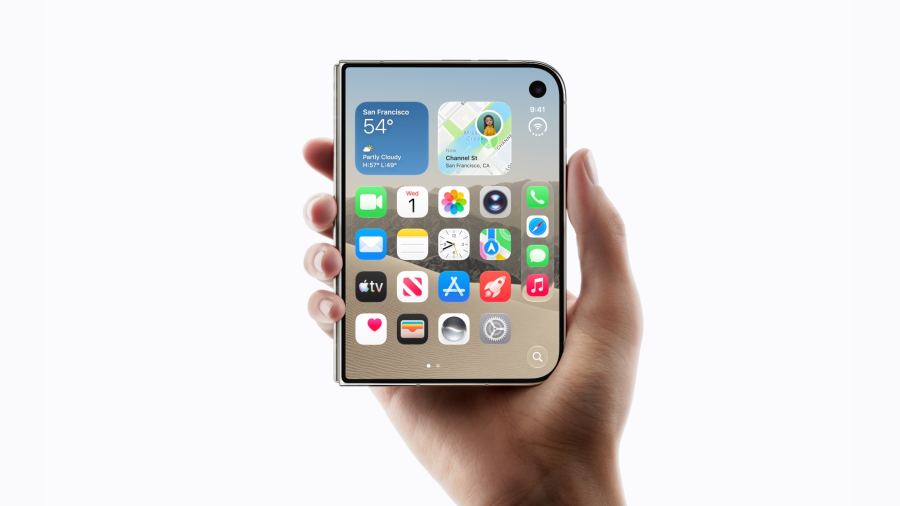
Closed, Apple says the outer display delivers about 90 percent of the screen area of the iPhone 18 Pro and sits in a body roughly the size of a passport. Open, the company calls it the thinnest iPhone it has ever made, with an inner panel about 50 percent larger than the 18 Pro Max and a nano-texture finish meant to cut glare and soften the look of the crease. Both panels share an aspect ratio, run ProMotion and Always On, and are rated to 3000 nits outdoors. A FaceTime camera sits under the inner display so the canvas stays uninterrupted. Touch ID lives in the side button, which is a real departure from Face ID on the slab phones, and an Apple Watch can still unlock the device.
The camera story is narrower than the Pro line. Duo has a 48-megapixel Fusion Main camera with an optical-quality 2x crop and a 48-megapixel Fusion Ultra Wide that matches the Pro's ultra-wide, including macro. There is no dedicated telephoto. The fold is the feature Apple is selling instead: rear-camera selfies previewed on the outer display, Duo Preview so the subject can see the frame, Smart Take so on-device models fire the shutter when people pose, Kid Cue animations on the cover screen, and Duo FaceTime that lets someone nearby join on the outer display. Center Stage on the front camera can rotate the frame. Video goes to 4K120 Dolby Vision on the main camera, with cinematic effects that can be applied after capture up to 60 fps.
Power is an A20 Pro with a vapor chamber and a dual-battery layout. Apple is promising all-day life rather than a headline hour count in the same way it did for the Pro Max. Later this year the Duo is set to take Apple Pencil with USB-C. Storage tops out at 2TB. In China, published list prices put 256GB at 15,999 yuan and the 2TB model at 26,499 yuan. In the US, Apple Upgrade leasing is quoted from $57.99 a month on a 24-month term, and carrier math this week has already been framed as low as about $9 a month after a rich trade-in. Those monthly numbers are marketing until the trade-in device is in Apple's hands.
The hinge is the product
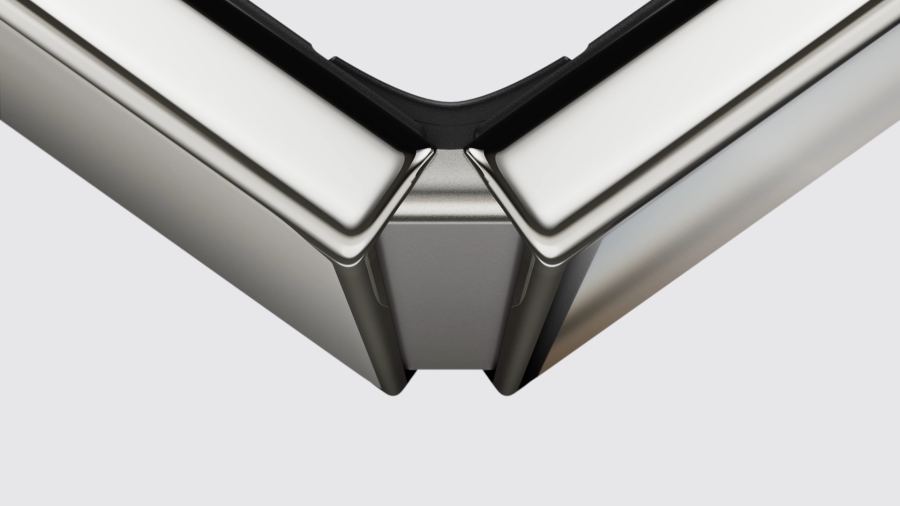
Every foldable lives or dies on the hinge, and Apple's description is unusually mechanical. More than 100 components, support ribs, a 3D-printed hinge cover with a micro-blasted finish against the mirror-polished titanium, ceramic fiber inserts at antenna splits, and a magnet array that closes the phone with a snap. The inner stack is the part buyers cannot see in a store for the first week: a scratch-resistant coating, a custom polymer nano-texture cover Apple says is up to 40 percent stiffer than other industry materials, high-strength glass above and below the panel, adhesives that let layers slide, and a titanium plate underneath. Ceramic Shield covers the back. Ceramic Shield 2 on the outer display is claimed to have three times the scratch resistance of the previous generation. The phone is IP68.
That is the official durability pitch. It is not a long-term reliability report. Samsung's foldables spent years teaching buyers to ask about dust in the hinge, a visible crease after a season, and what happens if the phone is dropped open. Apple is answering with materials language and a nano-texture that is supposed to make the crease harder to see, not with a public cycle count. Early owners on October 23 will be the first real test. Until then, treat crease-free claims from outside tipsters as rumor. Apple itself has not promised an invisible fold. It has promised a matte surface that minimizes crease visibility.
Software has to earn the second screen
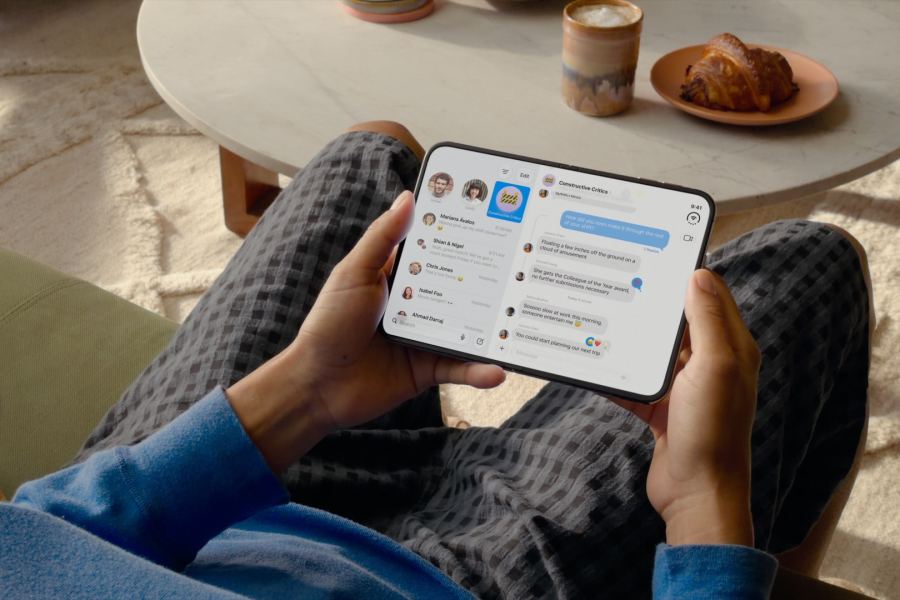
iOS 27 is already out for the rest of the lineup. On Duo it is supposed to behave differently. Lock Screen controls, the Dock, and navigation shift to the side so the vertical space stays for content. Open, the home screen shows two pages, with Today View widgets on the left. The status area becomes a circular cluster in the corner. Dynamic Island moves to the side of both displays. Split View puts two apps side by side on an iPhone for the first time, including two Safari windows, and pairs can be saved. StandBy works on either display even when the phone is not charging, with new Calendar and Weather faces. Netflix, Zoom, Slack, and a content app called Detail were named on stage as already adapted.
That is the right list if the pitch is productivity. It is a thin list if the pitch is that every app a buyer already pays for will look native on day one. Developers get updated SDKs and, later, Duo support in Xcode's Device Hub. The gap between Apple's own apps and the long tail of the App Store is the risk. A $1,999 phone that opens into a stretched phone app will feel like a tax. A $1,999 phone that holds a chat on one side and a document on the other will feel like the reason the base iPhone skipped this fall.
Siri AI, which began rolling out in English with iOS 27 on September 14, is part of the Duo pitch too. French, Japanese, Korean, Portuguese, and Spanish support was scheduled for October, which overlaps the Duo launch window. Personal context, on-screen awareness, and systemwide actions are the official claims. On a foldable they matter more, because the useful demo is Siri on one half of the inner display while the other half stays on the thing you were doing. That only works if the assistant is reliable. Beta English is not the same thing as a finished assistant.
Why the price is the strategy
Apple did not ship a standard iPhone 18 in September. The fall slate was Pro, Pro Max, Duo, Watch Series 12, Watch Ultra 4, and AirPods 5. The Pro starts at $1,199 and the Pro Max at $1,299, with up to 36 and 45 hours of video playback on eSIM models, a smaller Dynamic Island that can show three Live Activities, and the variable-aperture main camera. The cheaper iPhone, by the pre-event reporting that Apple has not contradicted with a product, is pointed at early 2027. That split is the business story. Fall revenue stays concentrated in the highest average selling prices. The foldable does not have to outsell the Pro. It has to make the Pro look like the sensible choice and still pull a limited, expensive run of buyers who want the largest iPhone screen in a pocket.
Ternus is the other half of that story. Bloomberg reported on September 29 that the new chief executive wants a leaner organization, fewer layers between engineers and executives, and product drops that are less locked to the old spring and fall cadence. Duo is the first public proof of the hardware side of that argument: a category Apple declined for years, shipped under a new CEO, on a delayed retail date that does not match the September 18 Pro launch. The Get Ready window is how you sell a scarce object without pretending the line will be deep on day one.
There is a regulatory shadow on the services side that does not touch the hinge but does touch the company writing the price. App Store commissions have been under pressure in the US, Brazil, Japan, and the EU. Reporting through September described a push, with Eddy Cue back over the store after Phil Schiller stepped away from day-to-day oversight, to find more revenue as link-out fees and regional rules bite. A $1,999 phone does not fix that. It does give Ternus a hardware headline while the services debate continues. Buyers should not confuse the two.
What to watch between now and October 23
First, whether Get Ready actually shortens the October 16 checkout or just moves the anxiety earlier. If carrier checks, trade-in quotes, or Apple Card financing stall inside the prep flow, the head start disappears. Second, allocation. Apple has not published a unit number. Reports around the event described tight initial supply. A second wave of countries on October 30 is consistent with a staged build, not a flood. Third, the crease and the hinge in hands, not in keynote b-roll. Photographers Jake Michaels and Jason Nocito had official sample frames circulating by October 3. Those show what the cameras can do. They do not show a phone after three months of folding.
Fourth, the missing base iPhone. If Apple stays quiet into November, the 2027 timing for the cheaper 18 holds. If an October event appears for iPad mini, Apple TV, or HomePod mini, as supply-chain notes suggested after the September keynote, that is a different product day. It should not be read as a surprise cheap iPhone. Fifth, Siri AI language expansion in October, and whether Duo ships with the English beta only in some markets. Sixth, repair and warranty language. A hinge with more than 100 parts is a service problem waiting for a price list. Apple has not put a fold-cycle warranty in the public spec sheet.
The official record is enough to stop calling this a rumor. Duo is a titanium foldable at $1,999, on sale October 23, with a checkout rehearsal on October 12 and pre-orders on October 16. The open question is whether the second screen and the hinge are worth a $700 step up from the Pro, or whether Apple just built the most expensive way to wait in a virtual line.
Comments
0