
MicroDuck: The $399 Open-Source Robot Duck That Walks, Learns by Falling, and Stole the Show at NVIDIA’s GTC
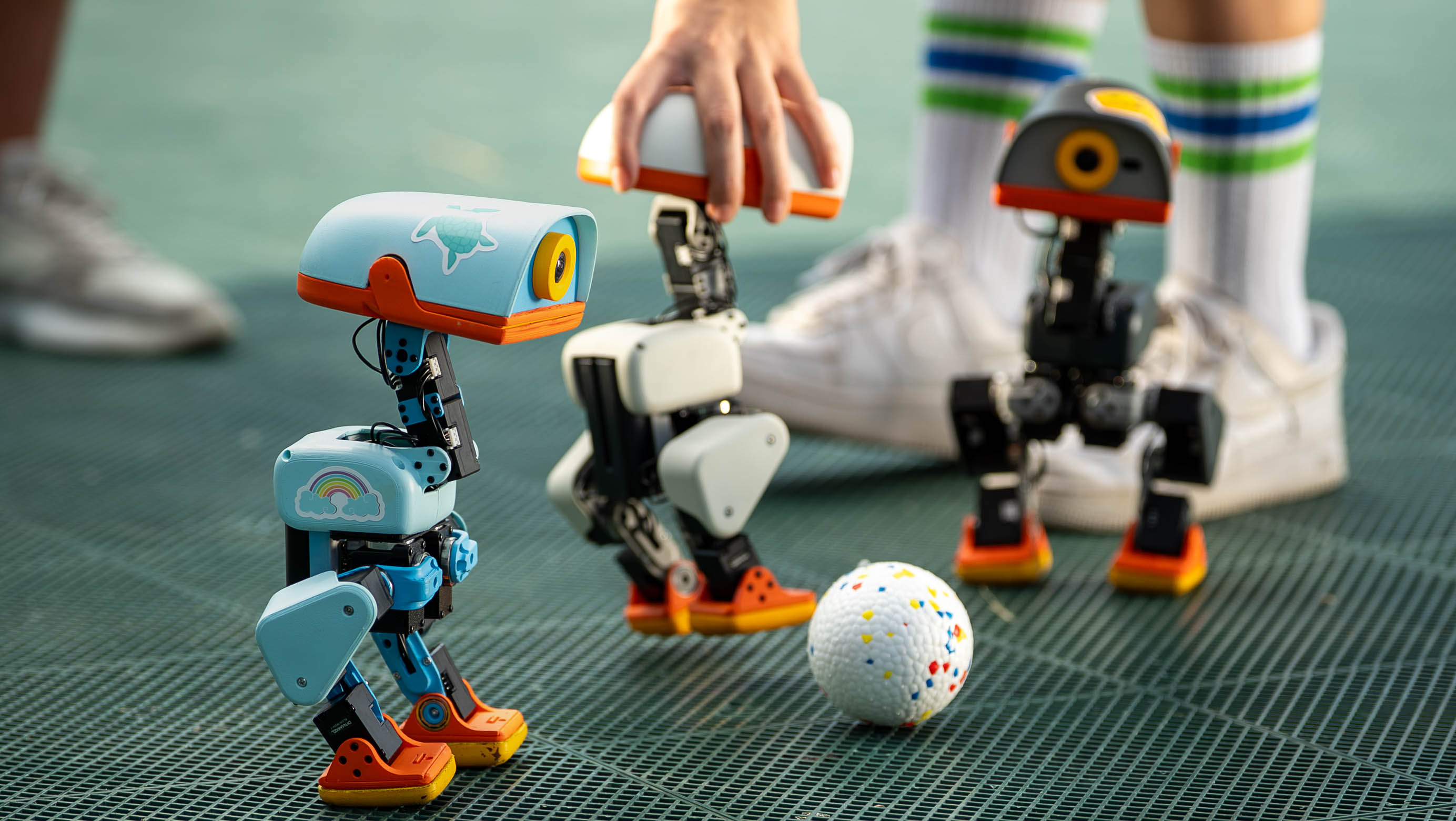
A recent Instagram reel from physicalai humanoid put a deceptively cute question front and center: “Would you keep a robotic duck on your desk if it could move, see, and talk to you?” The clip showcases MicroDuck, a 25 cm tall, roughly 780–800 g bipedal robot that looks like a desk toy but packs serious embodied-AI hardware. That question is landing at the perfect moment. MicroDuck, from Pollen Robotics (the Bordeaux team now part of Hugging Face), has gone from an August 2026 pre-order phenomenon to a stage prop at NVIDIA’s GTC Berlin keynote on October 21.
What MicroDuck Actually Is
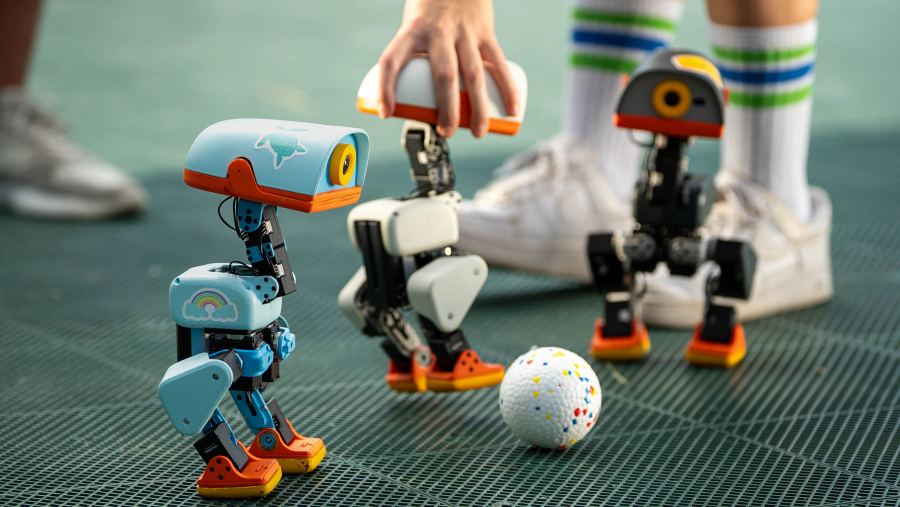
MicroDuck is a compact biped deliberately engineered to leave the desk, explore, fall, and get back up. At 25 cm tall and 14 cm wide, it weighs under 800 g (sources cite ~780 g). It has 15 motors (primarily Dynamixel XL330-series servos) controlling the legs, neck, head, and an articulated beak that acts as a simple gripper. Sensors include a front camera (with a classic REC-style indicator), an 8×8 time-of-flight LiDAR matrix, and two IMUs (one in the body, one in the head). Compute is a Rockchip RK3566 with an AI accelerator, 1 GB RAM, and 32 GB storage, running onboard policies at 50 Hz. Power comes from a removable NP-F550-style battery (around one hour of use). It includes Wi-Fi, Bluetooth, and NFC antennas, plus microphones and a speaker that generates a unique voice per robot.
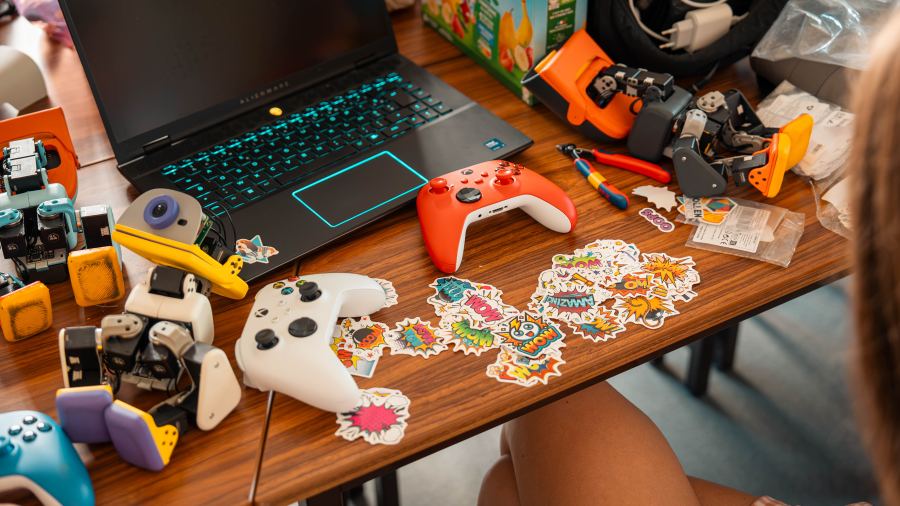
Four colorways ship: Cream, Graphite, Lavender, and Sky. The base package ($399 introductory price, before tax and shipping) includes the robot, battery, USB-C cable, and a game controller. Optional packs add chargers, spare motors, roller skates, a ball, laser pointer, and NFC tags. Pre-orders opened August 27, 2026; reports put first-week sales above 10,000 units and several million dollars in revenue, with early production batches targeted for delivery before Christmas 2026 (later orders face longer lead times).
Seven Behaviors Out of the Box — All Learned, Not Scripted
Unlike many consumer robots that rely on hard-coded animations, every core movement is a reinforcement-learning policy trained in simulation (MuJoCo with PPO) and transferred to the real hardware. The shipped set includes:
- Velocity-tracking walking (steer with the gamepad)
- Sit and stand
- Kick (one-shot, then return to walking)
- Grab (beak dips to the floor, scoops, and pops upright)
- Roller skating (with optional wheels)
- Self-recovery from a fall (including from flat on its back)
It can also follow a laser pointer and respond to NFC tags. The duck aesthetic is not pure marketing: the proportions and waddling gait emerge naturally from the design, and the approachable character makes frequent falls during learning feel less like failure and more like part of the process. Software is open source under Apache-2.0 (SDK, simulator, and full RL training stack on GitHub). Users train new policies in simulation—often in 1–2 hours for a usable gait on a single GPU with thousands of parallel environments—export to ONNX, and deploy onboard. Mechanical and electronic design files are not open, so this is open-source software on closed hardware.
Why the Hardware Density Matters
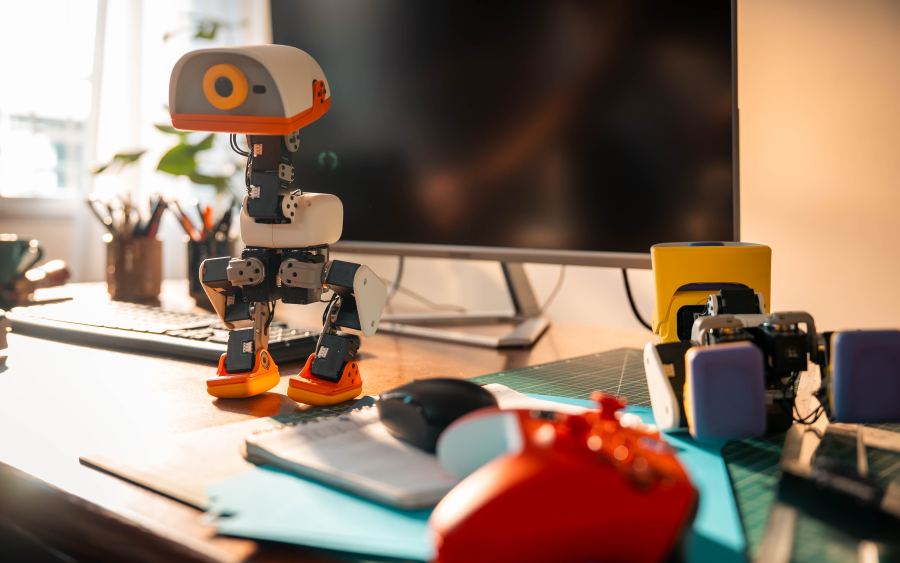
The Instagram reel correctly flags the engineering density: 15 motors plus vision, depth, dual IMUs, and audio in a palm-sized package. Coordinating that many joints while reacting to the environment in real time is non-trivial. The onboard 50 Hz loop means the robot is not streaming every action from a cloud server. Battery life (~1 hour) and limited compute (1 GB RAM) are real constraints—it is not a household chore robot or a conversational AI assistant like its sibling Reachy Mini. It is a platform for physical AI experimentation: low-stakes falls, portable, and designed so hobbyists, students, and researchers can iterate on sim-to-real transfer without lab budgets.
This sits alongside broader shifts in AI, from models that increasingly handle their own research (see our piece on Claude’s growing role in Anthropic’s R&D) to the physical limits of scaling compute (the energy wall facing new AI campuses). MicroDuck shows the same pattern on the hardware side: accessible platforms plus open training stacks.
The NVIDIA GTC Berlin Moment
Just days before this writing, four MicroDucks walked onto the stage during Jensen Huang’s GTC Berlin keynote. Huang demonstrated that the robots had been trained using NVIDIA tools (Isaac Lab/Isaac Sim, AI agents on RTX Spark, cloud compute, and digital twins in Omniverse). The ducks sat, stood, and “took a nap” on command—three flopped down promptly while the fourth wandered a few extra steps before joining them. Huang told them they were “created on RTX Spark,” trained in the cloud on NVIDIA systems, and learned skills in a digital twin. The demo underscored the broader shift: accessible hardware plus mature simulation pipelines is collapsing the cost of teaching robots physical skills.
It also echoes the agentic direction we covered with Meta’s Muse Wonder and the wafer economics that power these systems (TSMC’s latest record quarter). Even space is getting involved—Google’s first TPU satellite is testing the same compute in orbit (Project Suncatcher).
Implications and the Desk Question
MicroDuck sits at the intersection of consumer robotics and open physical AI. It is far cheaper and more approachable than research bipeds (Unitree G1 territory is an order of magnitude more expensive), yet more capable and retrainable than pure toys. Demand signals were strong enough that Rockchip’s shares reacted to the launch. Limitations remain clear: short runtime, beak-only manipulation, software-only openness, and the fact that “useful” autonomous behavior still requires significant user effort.
The reel’s question is fair. A robotic duck that can waddle across your desk, pick up a small object, right itself after a tumble, and eventually run policies you trained yourself is no longer pure science fiction. Whether it becomes a permanent fixture depends on what owners actually do with the open RL stack once units arrive. For now, it is one of the clearest examples yet that you do not need a human-sized humanoid to explore embodied AI—just a compact platform that is designed to fall and get back up.
Official sources: Pollen Robotics Microduck page and the GitHub repositories.
Would you keep one on your desk? The hardware is real, the pre-order numbers were real, and the NVIDIA stage demo was real. The next test is what people teach it once it ships.
Comments
0