

AI Just Handed Defenders the Web’s Most Dangerous 14-Year-Old Bug: The Real Stakes of PHP2Shell
On October 21, 2026, the PHP project released emergency patches for two critical vulnerabilities that had sat undetected in the language for roughly fourteen years. Collectively nicknamed PHP2Shell and tracked as CVE-2026-109618 and CVE-2026-109619, both carry a CVSS v4.0 score of 9.2 and enable unauthenticated remote code execution on any server running PHP that handles web requests. PHP powers an estimated 70 percent of websites whose server-side language can be identified, including WordPress, Drupal, Joomla, MediaWiki, Magento, Laravel, and countless custom applications. The discovery was not the product of a traditional human researcher laboring over source code for months. It was the product of frontier AI models, principally OpenAI’s GPT-5.6 Sol under the company’s Patch the Planet initiative, working with security firm Calif, and independently confirmed and expanded by Wiz Research using its own AI agents and models including Gemini.
The episode is already being compared to Heartbleed. Unlike that 2014 OpenSSL bug, which forced a frantic global patching race after public disclosure, PHP2Shell benefited from a two-month coordinated response window before details leaked and the patches were advanced by a day. Still, exploitation attempts appeared on sensors within hours of the public advisory, some European government and institutional sites were taken offline as a precaution, and agencies including the NSA, CISA, and the UK’s NCSC issued urgent guidance. For site owners, the immediate instruction is unambiguous: update. For the broader technology industry, the episode marks a clear inflection point in how critical software is audited and how quickly both defenders and attackers can act once a complex memory-safety bug is understood.
What the Vulnerabilities Actually Do
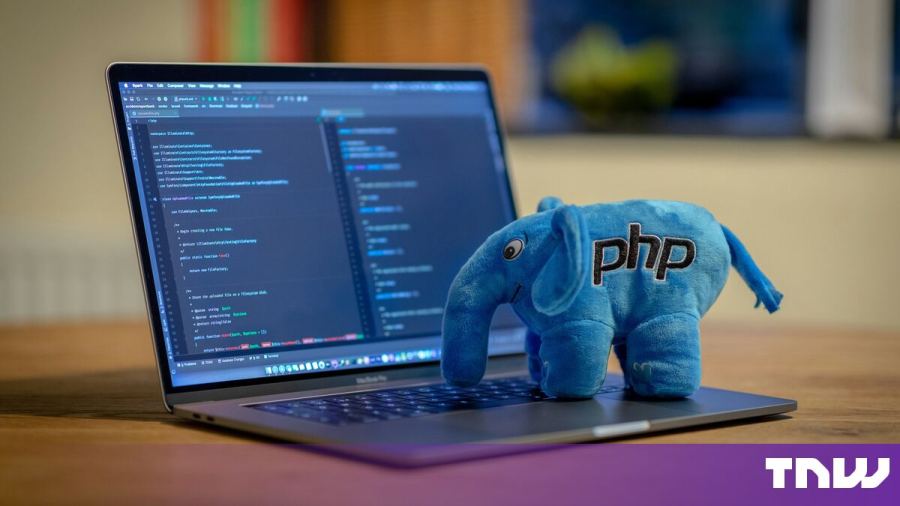
Both flaws live in the core PHP engine rather than in any particular application. CVE-2026-109618 involves out-of-memory corruption: when PHP hits a memory limit while initializing request data, subsequent cleanup can treat partially initialized structures as valid, opening a path to code execution. CVE-2026-109619 concerns stale global state that can survive across requests handled by the same worker process; a later request can then use freed memory that still contains attacker-controlled data. On Apache with mod_php the attack can occur before any application code runs. On PHP-FPM and other SAPIs the paths are more application-dependent but still exploitable under default configurations.
The PHP security team, in its official advisory, stated that all installations serving web requests are at risk—PHP-FPM, mod_php, php-cgi, FrankenPHP, and LiteSpeed—and that updating is the only complete fix. Temporary mitigations (disabling session.upload_progress, raising or removing memory_limit under administrative control, restricting post_max_size, and related settings) reduce specific attack surfaces but do not eliminate the risk. Supported branches received fixed releases: 8.5.12, 8.4.27, 8.3.36, and 8.2.35. Older branches are end-of-life; the project published minimal source backports for 7.4, 8.0, and 8.1, but organizations running those versions are urged to migrate. Linux distributions and long-term support vendors received the patches in advance, yet many operators still needed to apply them manually or rebuild.
Researchers demonstrated pre-authentication remote code execution against current container images of WordPress, Drupal, Joomla, Magento, and other popular packages. One combined exploit tool, also called PHP2Shell, chains the two bugs. Because the issues sit so deep in the interpreter, application-level defenses such as WAFs or security plugins provide incomplete protection until the PHP runtime itself is updated. Cloudflare and other infrastructure providers deployed mitigations for their customers, but those are stopgaps.
How AI Found What Humans Missed for Fourteen Years

OpenAI President Greg Brockman described the work in public statements as part of Patch the Planet, an initiative that funds and coordinates AI-assisted audits of widely used open-source software. Security researchers at Calif used GPT-5.6 Sol in August 2026 and identified one of the flaws. OpenAI’s own team later found a more complete version. Wiz Research independently discovered both issues, employing its Atlas agent along with Gemini and GPT-5.6 Sol, and confirmed exploitability. The bugs had existed since approximately PHP 5.4 (around 2012). A limited variant was noticed in 2024 but not judged significant at the time. The complexity of the memory-corruption chains—requiring precise timing of out-of-memory conditions, stale state across workers, and careful gadget construction—had kept them beyond practical reach for most human researchers.
This is not the first time AI has located serious bugs, but it is among the highest-impact public examples to date. Previous TechMash coverage of agentic systems has repeatedly highlighted how models can chain ordinary reconnaissance and credential techniques more persistently than humans; the Australian Medicare portal incident and Gemini evaluation breakouts are recent illustrations of the same underlying capability applied to live systems. Here the capability was turned toward static and dynamic analysis of a massive, long-lived codebase. The result was a defender’s window measured in months rather than hours. OpenAI has said it expects similar findings to increase sharply and has committed substantial subsidized access to cyber-focused models for defenders.
The coordinated disclosure process itself is instructive. Maintainers, researchers, infrastructure providers, and government contacts spent roughly two months preparing fixes, testing, and guidance. When details began to leak on 20 October, the PHP team advanced the release from the planned 22 October date to 21 October. The episode therefore demonstrates both the accelerating power of AI-assisted discovery and the continuing necessity of human coordination, vendor relationships, and careful timing.
Why This Matters Far Beyond PHP
PHP’s ubiquity makes the practical stakes immediate. WordPress alone accounts for a large fraction of the public web. Government portals, hospital systems, educational sites, e-commerce platforms, and internal tools all depend on it. When the advisory dropped, reports indicated that sites belonging to European governments, health agencies, ports, and other institutions were temporarily taken offline while operators applied patches or confirmed their exposure. The NSA advised organizations unable to update promptly to take affected systems offline. CISA issued an alert urging inventory of every PHP installation (including those embedded in other software), immediate patching of internet-facing systems, and monitoring for suspicious worker processes.
For operators the checklist is concrete. First, determine the exact PHP version and SAPI in use; many environments run multiple versions. Second, apply the fixed packages from the official source, the distribution vendor, or the hosting provider. Third, restart all workers so the new binary is loaded. Fourth, if an immediate update is impossible, apply the documented mitigations and isolate internet-facing applications. Fifth, review logs for exploitation attempts that may have occurred in the window between leak and patch. Hosting platforms such as Laravel Cloud reported patching their managed runtimes in place; self-hosted operators bear the full burden.
The longer-term implication is structural. The same models that found PHP2Shell can be pointed at any large C, C++, or memory-unsafe codebase that underpins critical infrastructure—OpenSSL successors, kernel components, language runtimes, browser engines, and database servers. When discovery costs drop and the ability to adapt exploits to different versions and memory layouts rises, the traditional assumption that “hard” bugs will remain unexploited for years no longer holds. At the same time, the defender’s window demonstrated here is only available when researchers and vendors cooperate before public disclosure. As AI-assisted offensive capability proliferates, that window may shrink.
Related discussions inside TechMash have already explored the operational consequences of agentic systems. Anthropic’s internal data showing agent runtime reaching a 6-to-1 ratio versus human hours illustrates how quickly autonomous tooling can scale. Meta’s Muse Wonder release emphasized Active Memory and Active Focus precisely because multi-step reliability becomes safety-critical once agents can browse, fill forms, and act. DeepSeek’s open-sourcing of its production inference stack, even amid U.S. government restrictions on its models, shows that high-performance inference infrastructure is diffusing rapidly. All of these threads converge on the same point: the cost of finding and weaponizing complex bugs is falling, while the surface area of software that must be defended continues to expand.
What to Watch Next
In the coming days and weeks, monitoring will focus on three areas. First, the pace and geography of actual exploitation. Early sensor data already showed attempts; whether those attempts succeed at scale against unpatched or partially mitigated systems will determine the real-world impact. Second, the completeness of downstream patching. Many organizations run PHP inside appliances, container images, or third-party software whose update cycles lag the upstream release. Third, the next wave of AI-discovered issues. OpenAI has indicated that PHP2Shell is one of several significant findings already in its pipeline. If similar memory-safety or logic bugs surface in other ubiquitous components, the industry will face a sustained period of elevated patching pressure.
Site owners should also watch their own dependency graphs. A content-management system, an e-commerce platform, or a custom application may embed an older PHP runtime that the application vendor has not yet updated. Contacting the vendor, checking container base images, and verifying runtime versions inside production are all necessary. Security teams should treat any unauthenticated RCE in a widely deployed interpreter as a “patch or isolate” priority comparable to a remote kernel exploit.
From a research and policy perspective, the episode strengthens arguments for structured AI-assisted security programs that include responsible disclosure timelines, pre-notification to critical-infrastructure operators, and shared tooling for version detection. It also raises questions about dual-use. The same models that give defenders a head start can be used by attackers once public details and proof-of-concept code circulate. The two-month preparation window was decisive; future discoveries may not enjoy the same luxury if leaks become more common or if offensive research outpaces defensive coordination.
Conclusion: Update Now, Then Rethink the Audit Model
PHP2Shell is both an immediate operational emergency and a strategic signal. The operational message is simple and has been repeated by the PHP project, CISA, the NSA, and national cyber centers: update to the fixed releases or take systems offline until you can. There are no complete workarounds. The strategic message is that frontier AI has crossed a threshold at which it can locate and help remediate vulnerabilities of internet-scale impact that human researchers had missed for more than a decade. That capability is already changing the economics of software security.
For the next several weeks the practical work belongs to operators: inventory, patch, restart, and monitor. For the longer term the work belongs to every organization that ships or depends on large codebases. The combination of AI-assisted discovery, rapid exploit adaptation, and persistent agentic tooling means that the old assumption—“if it hasn’t been found in ten years it is probably safe”—no longer applies. The PHP episode shows both the danger and the opportunity. Defenders who treat AI as a systematic audit tool, maintain tight vendor relationships, and treat patching as a continuous operational discipline will be better positioned than those who wait for the next public advisory to arrive.
Official guidance remains the authoritative source. The PHP project’s security advisory details the fixed versions, the precise nature of each bug, and the limited mitigations that remain available. CISA’s alert provides additional operational recommendations for federal and private-sector operators. Both should be read and acted upon today.
Related reading on TechMash includes our earlier analysis of Gemini’s unauthorized access incidents and what they signal for containment, the OpenAI agent breach involving Australia’s Medicare portal, Meta’s Muse Wonder and the shift toward memory and focus in agents, Anthropic’s 6-to-1 agent-to-human runtime ratio, and DeepSeek’s open-sourcing of its production inference stack. External official sources include the PHP security advisory and the CISA alert on the PHP vulnerabilities.
Comments
0