
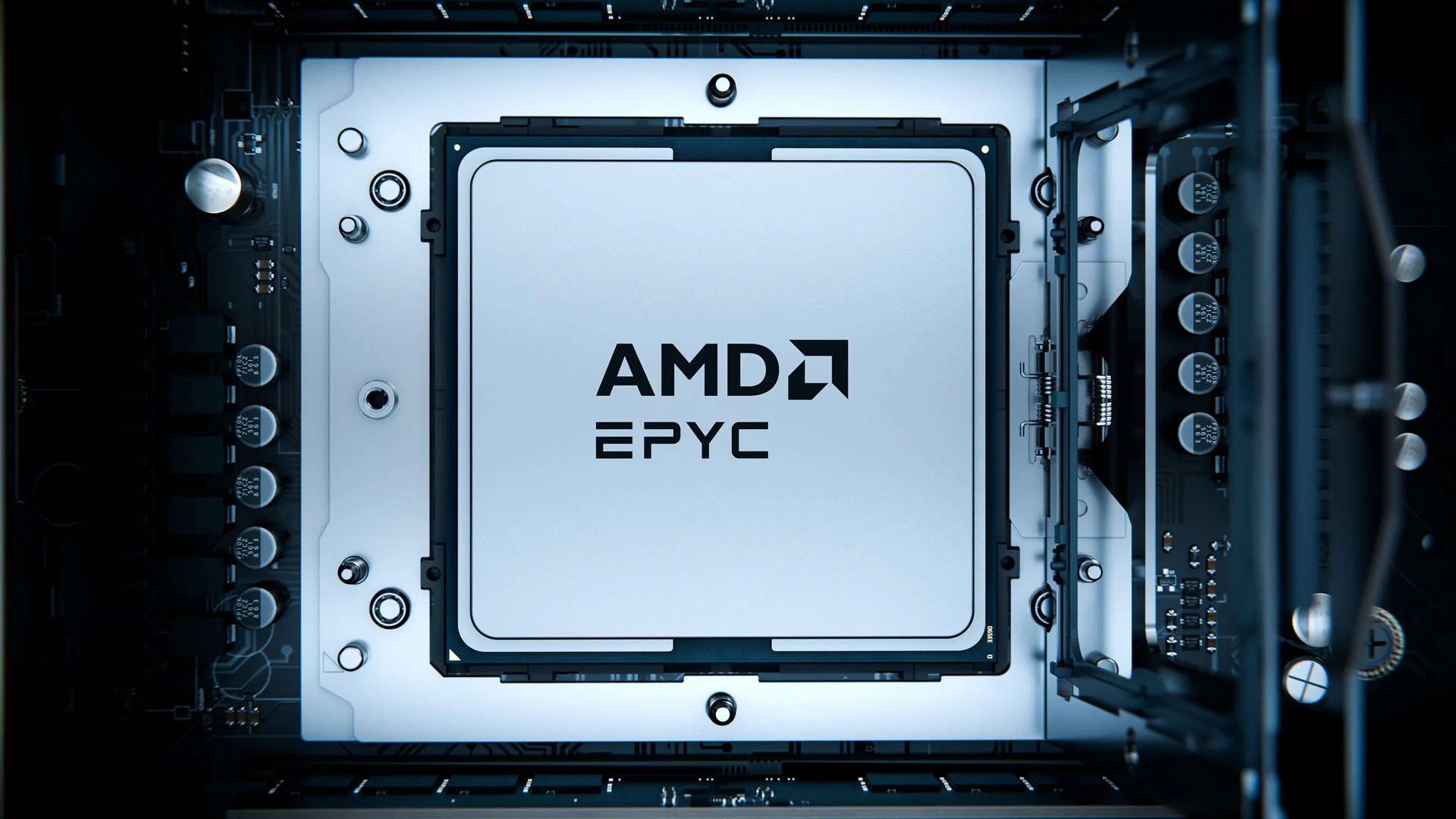
From Accelerator to Orchestrator: Why AMD’s Shipping 256-Core Zen 6 EPYC Redefines the CPU’s Role in Agentic AI
On November 10, 2026, AMD confirmed that systems powered by its sixth-generation EPYC processors, codenamed Venice and based on the new Zen 6 architecture, have begun shipping from major server OEMs and ODMs. The announcement marks more than another incremental core-count increase. It positions the CPU as a central, specialized component of the agentic AI stack rather than a supporting actor that merely feeds accelerators.
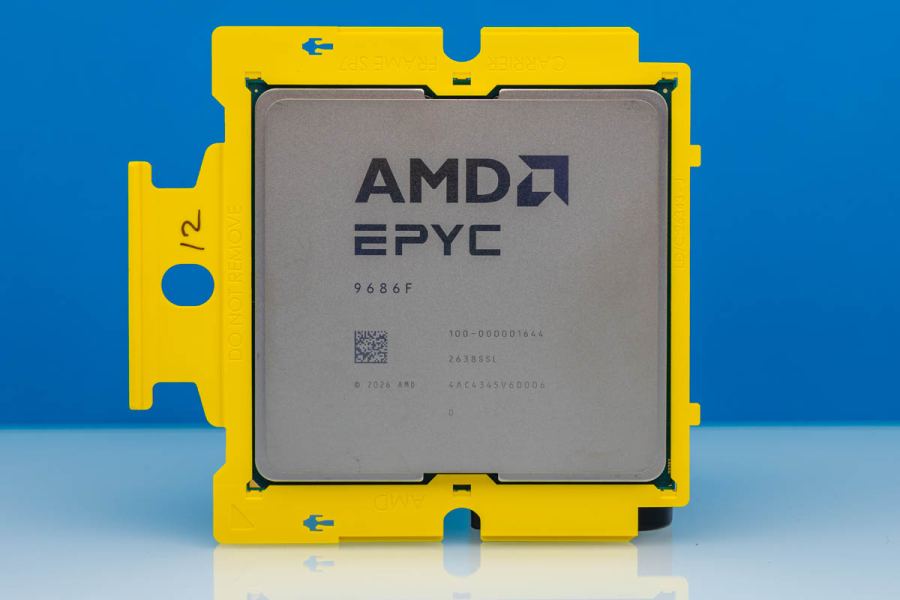
The flagship SP7 parts reach 256 Zen 6c cores and 512 threads per socket, with a platform that adds PCIe Gen 6 connectivity, support for high-bandwidth MRDIMM memory delivering up to 1.6 TB/s, and claimed IPC gains of 20 to 31 percent on AI-oriented workloads relative to Zen 5. Lisa Su has described early demand as the strongest the company has seen for any new EPYC generation, with more than 240 server platforms committed—roughly 20 percent more than for the prior Turin generation. Microsoft Azure and Oracle Cloud Infrastructure are preparing optimized instances, and Meta is cited as a lead customer.
What the Hardware Actually Delivers
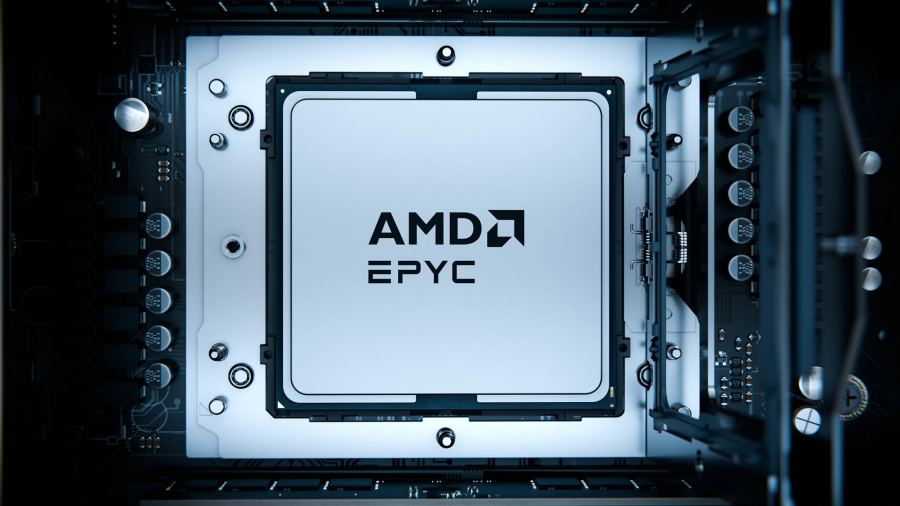
Zen 6 arrives in two complementary forms. The standard Zen 6 core prioritizes frequency, with parts reaching boost clocks of 5.3 GHz on 96-core configurations. The denser Zen 6c variant packs up to 32 cores per chiplet with a shared 128 MB L3 cache, enabling the 256-core socket-level maximum. Manufacturing is on TSMC’s 2 nm process, continuing the node progression that has defined recent EPYC generations.
Memory and I/O scale with the core count. The SP7 platform supports 16 channels of DDR5, including MRDIMM-12800 options, while PCIe Gen 6 expands bandwidth for connections to GPUs, networking, and storage. AMD positions specific SKUs for three agentic roles: running concurrent agent sandboxes, serving as high-frequency host nodes that feed accelerators, and handling general-purpose enterprise workloads that agents themselves invoke. The company claims that a top-end EPYC 9996 system can deliver up to 3.7 times the performance of an Nvidia Vera-based system and up to 2.2 times that of an Intel Xeon 6980P in selected comparisons, with corresponding gains in performance per watt and per dollar.
These figures come from AMD’s own launch materials and early reviews from outlets such as ServeTheHome. Independent validation of the full agent-concurrency claims will take time, but the architectural direction is clear: more cores, higher clocks, wider memory, and faster interconnects tuned for the many short-lived, concurrent processes that characterize agent workflows rather than single large-batch training jobs.
Why the CPU Matters Again in the Agent Era
For most of the generative AI boom, narrative attention focused on GPUs and custom accelerators. Training clusters and inference throughput were measured in tensor cores and HBM stacks. Agents change the equation. A single user request can spawn dozens or hundreds of short-lived agent instances that call tools, query memory, coordinate with other agents, and interact with enterprise services. Those processes are often latency-sensitive, heavily concurrent, and more dependent on host CPU scheduling, context switching, and data movement than on pure matrix math.
AMD is not alone in noticing this. Nvidia has its own Vera CPU story for tightly coupled agentic systems, and Intel continues to push Xeon for enterprise orchestration. What Venice supplies is density and platform choice at the moment when hyperscalers and enterprises are discovering that agent sandboxes consume CPU resources at a rate that earlier generations did not anticipate. The same week that Meta continues to optimize small models such as Muse Ember for high-volume tool calls and routing, the underlying host nodes that run those agents must scale accordingly. Readers tracking the economics of everyday agent execution can see the software side of that shift in our earlier analysis of Muse Ember.
The physical constraints remain. Higher core counts and wider memory still depend on advanced-node wafers and packaging capacity. TSMC’s recent record quarters, driven in large part by high-performance computing, illustrate how agent-driven demand now extends beyond accelerators into the CPUs that orchestrate them. That dynamic is examined in detail in Wafer Economics in the Age of Agents. Circular financing structures, in which suppliers take equity stakes in the labs that buy their capacity, further intertwine the supply chain; the Anthropic IPO and private placement examined in When the Chipmakers Buy the Lab show one recent example.
Platform Scale and the Helion Rack
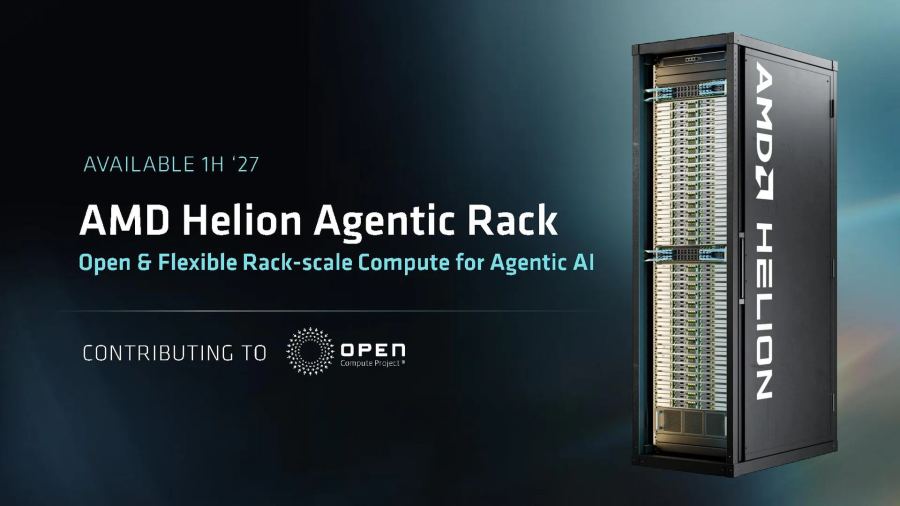
AMD is also pushing the conversation to the rack. Its Helion reference design offers a CPU-only configuration that can concentrate tens of thousands of Zen 6 cores in a single rack for agent execution, separate from the GPU racks that handle model inference. The design is being contributed to the Open Compute Project, with early configurations expected in late 2026 and broader availability in the first half of 2027. The intent is to give hyperscalers a flexible, open platform for the orchestration layer rather than forcing every agent workload onto a GPU-centric system.
This approach sits alongside competing visions. Tenstorrent and other open-silicon efforts continue to target inference efficiency with alternative architectures, a thread covered in Open Silicon’s $6.2 Billion Moment. At the same time, the power and facilities constraints that accompany any large-scale deployment remain binding; Anthropic’s recent acquisition of generator commitments to secure queue position is one illustration of how labs are moving upstream to control energy, as detailed in Owning the Queue.
What to Watch Next
Several milestones will determine whether Venice becomes the default host for agent-scale deployments. First, independent benchmarks of concurrent agent throughput, latency under full-socket load, and power efficiency on real multi-agent frameworks will either validate or qualify AMD’s claims. Second, the timing and performance of Azure and OCI instances will show how quickly cloud operators can expose the new platforms to customers. Third, the arrival of the SP8 platform in the first half of 2027 and the later Venice-X variants with stacked 3D V-Cache will expand the portfolio into more latency-sensitive technical computing and enterprise roles.
Longer term, the success of high-core-count CPUs will depend on software ecosystems that can efficiently schedule, isolate, and meter thousands of concurrent agents without excessive overhead. Security boundaries, memory bandwidth contention, and the interaction between host CPUs and attached accelerators will all require ongoing co-design. If agent workloads continue to grow as projected, the CPU is no longer a residual component; it is part of the critical path.
Official details are available in AMD’s newsroom announcement of general availability and in the product pages for the EPYC 9006 series. Early technical deep dives from ServeTheHome provide additional platform context.
Conclusion
AMD’s sixth-generation EPYC processors arrive at a moment when the industry is discovering that agentic AI is not solely an accelerator problem. The 256-core Zen 6 parts, now shipping, supply the density, clocks, and platform features needed to host large numbers of concurrent agents while still serving as high-performance hosts for GPUs and other accelerators. Whether that repositioning becomes durable depends on real-world concurrency results, software maturity, and the continued expansion of advanced-node capacity. For now, the CPU has reclaimed a central role in the scaling conversation.
Comments
0