
How the iPhone Duo and a $5 Trillion Close Define the Early Ternus Era
Apple’s first foldable iPhone arrives under a new chief executive at a moment when the company’s market value has just closed above $5 trillion for the first time. The iPhone Duo, unveiled at the September 9 “Surprise and Shine” event and set for pre-orders on October 16 with availability on October 23, is the clearest hardware signal of the John Ternus era so far. It is not merely a delayed entry into a category Samsung and others have occupied for years. It is a deliberate redesign of what a foldable can be, engineered around shared aspect ratios, dual displays that enable new camera behaviors, and software that treats the hinge as a feature rather than a compromise.
What Happened at the September Event and After
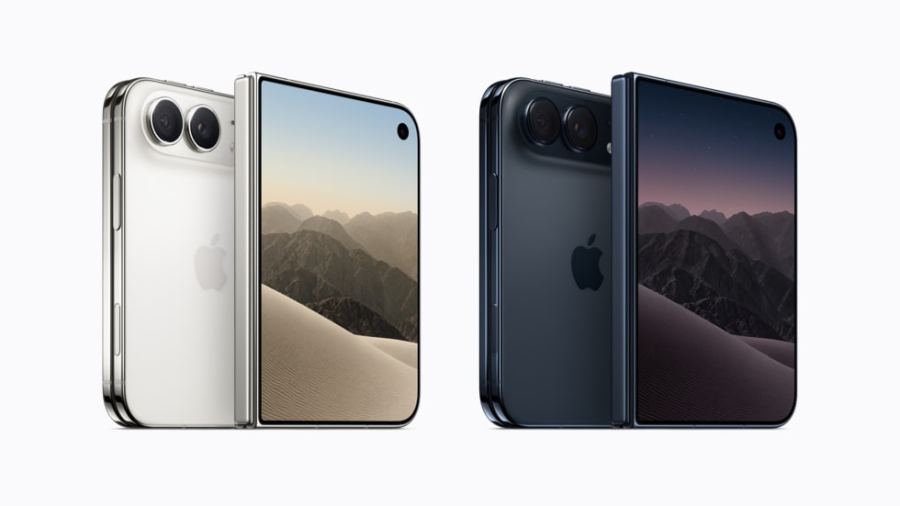
On September 9, 2026, John Ternus hosted his first major hardware keynote as Apple’s CEO, having succeeded Tim Cook on September 1. The event introduced the iPhone 18 Pro and Pro Max alongside the Duo, Apple Watch Series 12 and Ultra 4, and AirPods 5. The Pro models reached stores on September 18 at starting prices of $1,199 and $1,299. The Duo was held for an October window. Pre-orders open October 16 and the device ships October 23 in star white and night sky, starting at $1,999 for 256 GB.
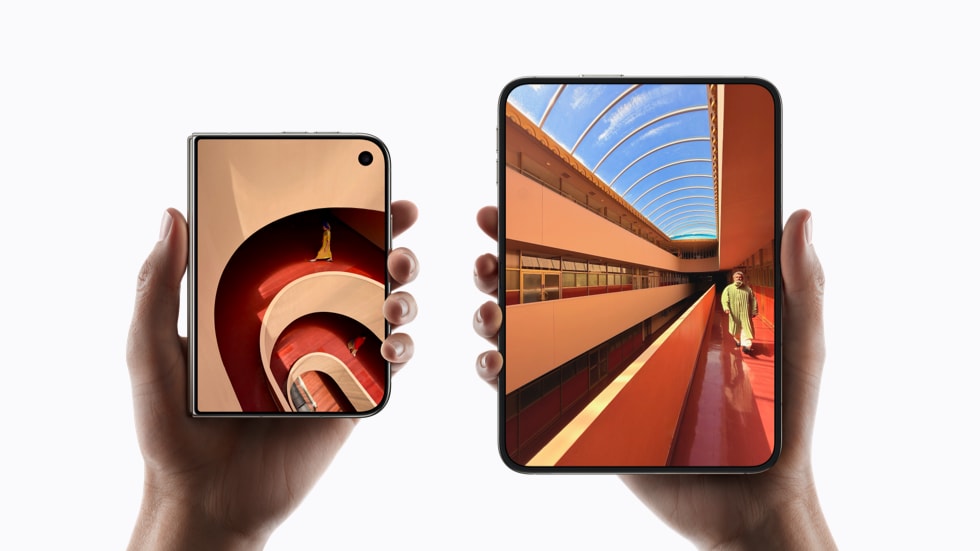
The Duo’s outer display measures 5.4 inches and the inner display 7.6 inches. Both share the same aspect ratio so content scales without letterboxing or awkward stretching. Opened, it is the thinnest iPhone Apple has made; closed, it is roughly passport-sized. The hinge uses more than 100 components, a 3D-printed recycled titanium cover, and custom adhesives that let display layers glide relative to one another. Ceramic Shield protects the exterior and a nano-texture finish on the inner panel reduces glare and crease visibility. Power comes from the A20 Pro on a 2 nm process with a vapor chamber and dual-battery architecture. The camera system centers on a 48 MP Fusion Main and 48 MP Fusion Ultra Wide, with computational modes that exploit the dual screens: Duo Preview on the outer display while shooting with the rear cameras, Smart Take for automatic capture, and a hidden FaceTime camera under the inner panel.
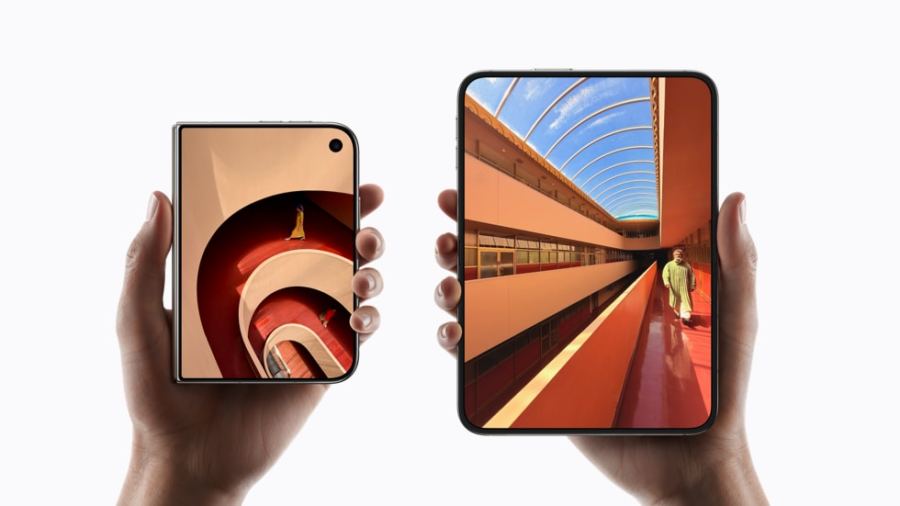
These specifications were official from the September 9 press release and keynote. Subsequent reporting has confirmed the pricing, colors, and dates. Early Geekbench numbers shared in mid-October placed the Duo’s A20 Pro performance in line with the iPhone 18 Pro, as expected. Apple has also released sample images shot on the Duo, emphasizing the posing and dual-display shooting modes rather than pure optical zoom range.
Why the Timing and Design Matter
The October availability was not an afterthought. By spacing the Pro models and the Duo, Apple maximized early production capacity and memory allocation for the higher-volume Pro line while preparing the more complex foldable. The $100 price increase on the Pros relative to the 17 Pro generation reflects component costs, particularly memory and the 2 nm process. The Duo’s $1,999 starting price positions it as a premium device rather than a mass-market replacement. Investors appear to have priced in the cycle: Apple closed above $5 trillion on October 14 for the first time, ending at $5.005 trillion after shares finished at $342.96, even as most large technology names declined.
That close occurred less than six weeks after Ternus took the CEO role and two days before Duo pre-orders. It also followed the October 13 HomeView smart-home event. The sequence—Pro launch, HomeView, Duo pre-orders, then the November 2 earnings call that will be Ternus’s first as CEO—gives the market a clear product cadence under the new leadership. Tim Cook has described the handover as planned years in advance and has said he wanted Ternus to have “wind at his back” for the Duo cycle.
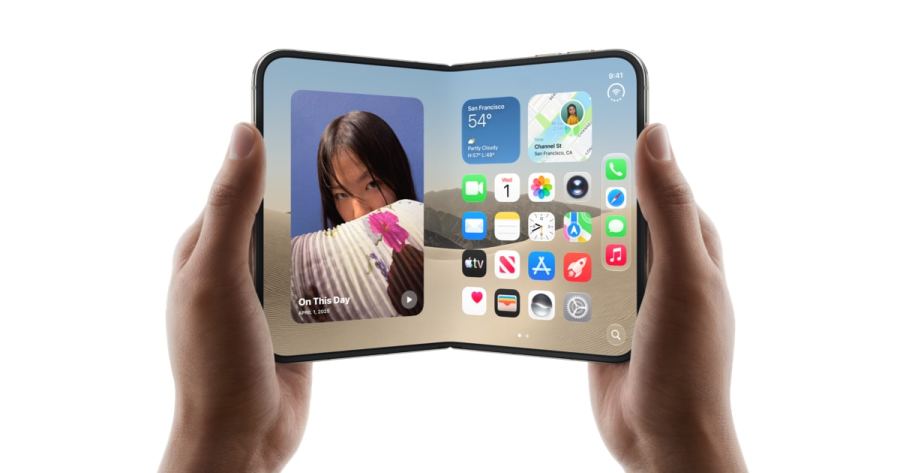
The design choices also address long-standing foldable criticisms. Most book-style foldables open into a near-square canvas that wastes space for video and single-app use. Apple’s matched aspect ratios and side-placed controls in iOS 27 aim to keep content usable in both states. The dual-display camera features are practical rather than gimmicky: a subject can see the framing on the outer screen while the photographer uses the higher-resolution rear sensors. The device can stand in multiple poses for hands-free FaceTime or video without an external tripod. These are the kinds of experience differences that can justify a premium if the crease remains minimal and durability holds up in daily use.
Market Context and Investor Signals
Apple’s September-quarter guidance called for total revenue growth of 9 to 11 percent year over year, with iPhone revenue expected to grow at a mid-teens rate. The quarter includes the opening weeks of iPhone 18 Pro, Watch Series 12, Ultra 4, and AirPods 5 sales. The Duo’s contribution will fall mainly into the December quarter. Reports of softer-than-expected Pro demand and component-order adjustments appeared in early October, yet the stock recovered and closed at a new high on the $5 trillion day. The combination of resilient services growth, the new product cycle, and the leadership transition appears to have outweighed short-term production headlines.
Apple Intelligence and Siri AI remain central software themes. The Duo ships with the capabilities that launched alongside the Pros, and Apple has indicated Apple Intelligence will reach China in December via iOS 27.3, though some Siri AI features may lag. HomeView, announced October 13, brings a 7-inch Liquid Retina display on a hinged base with personalized Siri experiences, expanding the same intelligence stack into the home. Together these moves show Ternus inheriting both the hardware ambition of the foldable and the multi-year software platform build that Cook oversaw.

What to Watch Next
Pre-order demand on October 16 will be the first quantitative signal for the Duo. Delivery estimates and any early sold-out configurations will indicate whether the $1,999 price and passport form factor resonate. Reviews that appear around the October 23 availability window will focus on crease visibility, hinge longevity after repeated cycles, battery life across the dual-cell design, and whether the dual-display camera modes feel natural in everyday use. Side-by-side app multitasking and the adapted iOS controls will also be scrutinized.
The November 2 earnings call is Ternus’s first as CEO. Analysts will ask about Pro demand trends after the reported order adjustments, the initial Duo outlook, component-cost trajectory, and the pace of Apple Intelligence expansion. Longer term, the success of the Duo will shape whether Apple accelerates additional foldable form factors or treats this as a high-end specialty product. Early Geekbench parity with the Pro models suggests the silicon and thermal design are not bottlenecks; the commercial test is whether users value the larger canvas and new shooting poses enough to justify the premium over a conventional Pro Max.
Apple also faces the usual external variables: currency effects on guidance, any further regulatory developments around the App Store or intelligence features in key markets, and competition from Android foldables that have had years to iterate. The early Ternus period has so far emphasized continuity of product quality with a willingness to ship a complex new form factor on a measured schedule. The $5 trillion close and the imminent Duo pre-orders together mark the first major public scorecard of that approach.
The combination of a record market-cap close, a new CEO’s first hardware cycle, and the arrival of Apple’s first foldable creates a coherent narrative. The next several weeks of pre-order data, hands-on durability observations, and the November earnings conversation will determine how durable that narrative proves to be.
Comments
0