
The week before Duo preorders, Apple still has to prove the crease is worth $1,999
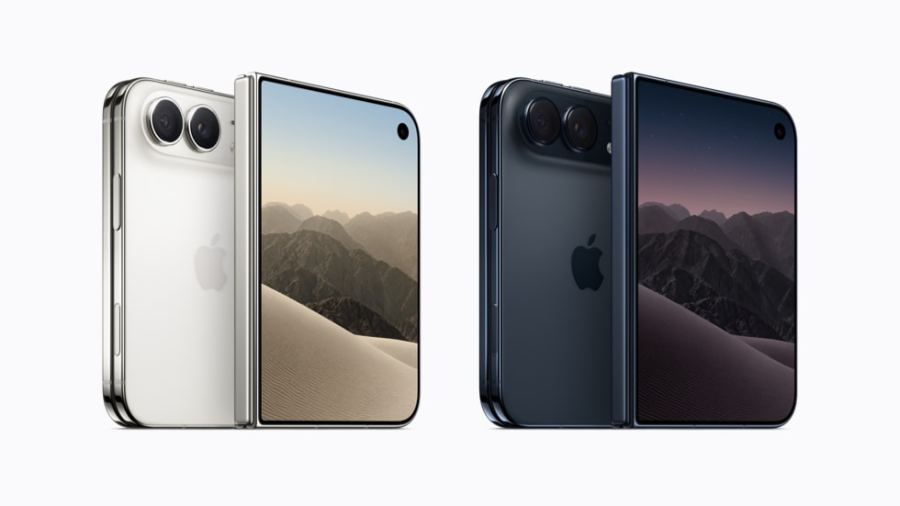
A week from Friday, Apple will find out whether the most expensive iPhone it has ever put in a preorder queue is a design statement or a product people actually line up for. iPhone Duo, announced as official hardware on September 9 by CEO John Ternus, opens for orders on October 16 and reaches stores on October 23. The starting price is $1,999 for 256GB, in Star White or Night Sky. That date is no longer a rumor. The open question is what the first allocation will say about a book-style phone Apple spent years refusing to ship.
This is not the iPhone 18 Pro conversation. Those phones already landed. Preorders began September 12 and sales started September 18, at $1,199 and $1,299, a $100 step up from the 17 Pro pair. Duo is the delayed sibling, the one Apple held back until October so the Pro cycle could clear the floor. Treating the two launches as one story misses the point. The Pro is an iteration with a new chip and a faster charge curve. Duo is the first change to the iPhone’s basic shape since 2007, and it arrives under a CEO who has been in the job since September 1.
What Apple actually confirmed
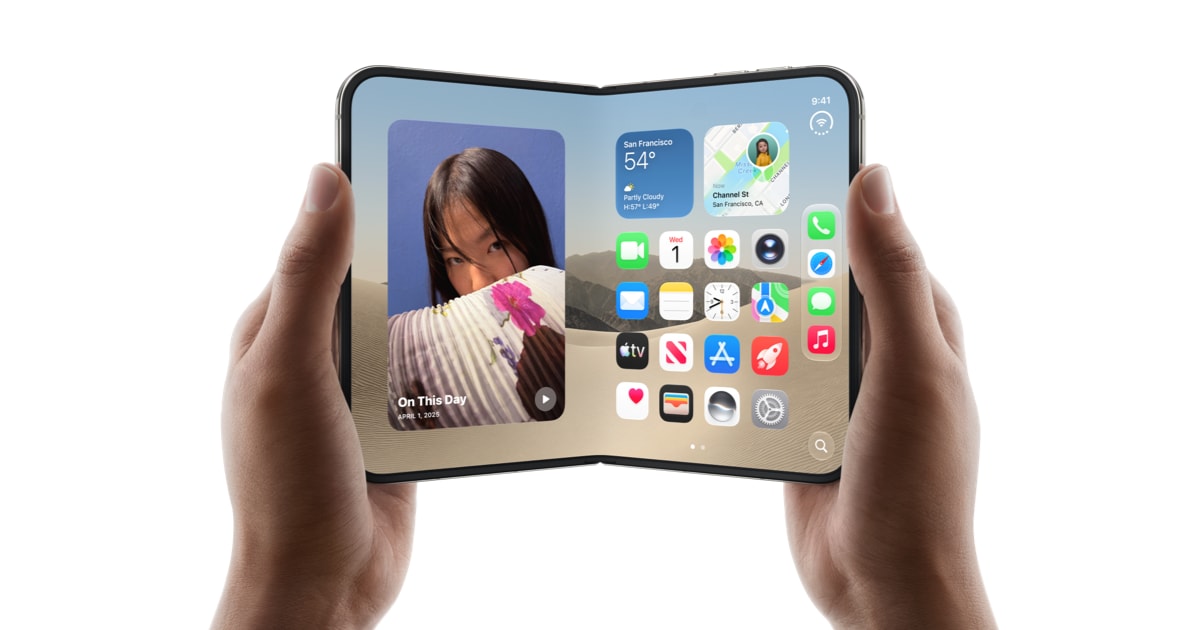
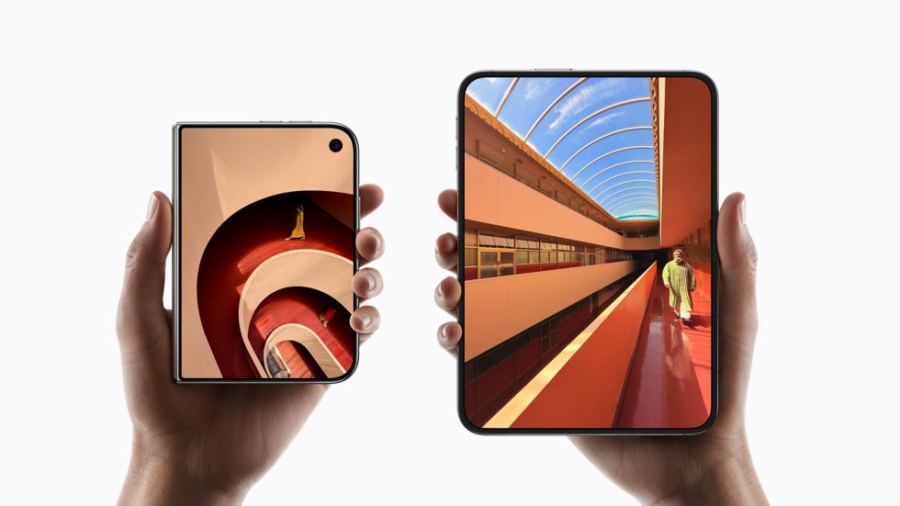
The official product page and the September 9 newsroom release are consistent on the numbers that matter. Closed, Duo has a 5.4-inch Super Retina XDR outer display that Apple says covers about 90 percent of the screen area of iPhone 18 Pro. Open, the inner panel is 7.6 inches, which Apple calls 50 percent larger than the 18 Pro Max display, with a nano-texture finish meant to cut glare and make the crease less obvious. Both panels share an aspect ratio, so a photo or a video does not jump to a different crop when the phone opens. Peak outdoor brightness is listed at 3000 nits. ProMotion and Always-On are on both screens.
The hinge is the part Apple spent the most stage time defending. The company describes more than 100 components, support ribs, a titanium plate under the panel, and a cover stack that lets layers slide like pages so the fold does not take the full bend stress. Ceramic Shield sits on the back. Ceramic Shield 2 is on the outer front, with a claim of three times the scratch resistance of the prior generation. The rating is IP68. Touch ID is in the side button, because Face ID on a folding face is awkward when the phone is closed, and Apple Watch unlock is supported. Camera Control is present, including a Siri Camera mode.
Storage starts at 256GB and runs through 512GB, 1TB, and 2TB. In the US the monthly framing Apple published is $83.29 over 24 months, or a Klarna lease path that can start near $57.99. Europe lists begin higher. The Dutch store, for example, starts at about €2,339. None of that is rumor. It is the price card.
The screen is the product, not the camera count
Duo does not get the full 18 Pro camera stack. Official specs list a 48-megapixel Fusion Main at 26mm, f/1.6, with sensor-shift stabilization, plus an optical-quality 2x at 52mm from that same sensor. The ultrawide is also 48 megapixels, 13mm, f/2.2. There is a 12-megapixel Center Stage front camera and a separate under-display FaceTime camera on the inner panel. Video goes to 4K Dolby Vision, including 120 fps on the main camera. That is a strong pair of sensors. It is not a tetraprism telephoto, and buyers comparing spec sheets with an 18 Pro Max will notice.
Apple is betting the fold itself is the camera feature. Duo Preview puts the live view on the outer screen so a subject can see the frame. Smart Take uses on-device models to fire the shutter when people are posed. Kid Cue plays Peanuts animations on the cover display. Duo FaceTime lets a second person join a call on the outside screen. Those are software tricks that only exist because there are two displays. If they feel like party features in week one, the phone will be judged as a tablet that folds. If they become the reason people hand the phone to someone else, the camera story holds without a third lens.

Why the software has to carry the price
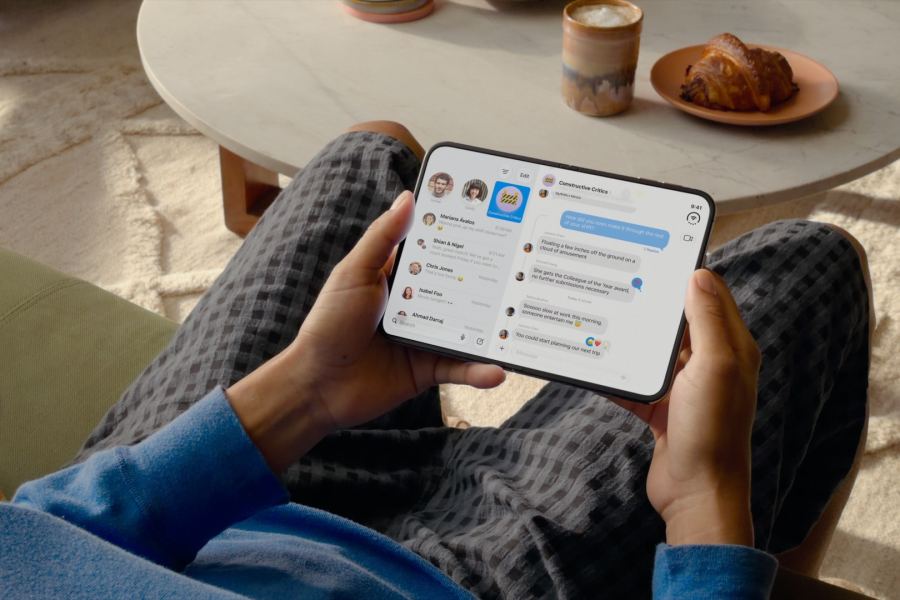
iOS 27 already shipped on September 14 for existing phones. Duo will land on a later build, iOS 27.1, which matters because the fold-specific behaviors are not what an iPhone 16 owner is testing today. Split View on iPhone is new: two apps side by side, or two windows of the same app, with saved pairs. StandBy works on either display even when the phone is not charging, with Calendar and Weather faces added to Clock, Modular, and Photos. Apple Pencil with USB-C support is listed for later this year, after the October 23 in-store date, so day-one buyers do not get stylus input.
Siri AI is the other half of the pitch, and it is still a beta. It rolled out in English on September 14 for supported devices. French, Japanese, Korean, Portuguese, and Spanish are scheduled for October, which may or may not land before Duo preorders. On iPhone, iPad, and Apple Watch, Siri AI is not initially available in the European Union. Mac and Vision Pro users in the EU can get it in a supported language. China mainland Apple Accounts do not get it. A $1,999 phone whose marquee assistant is region-locked is a harder sell in markets where Samsung’s foldables already have a software lead and no Apple Intelligence carve-out.
The chip underneath is A20 Pro, the same family as the 18 Pro, with a 6-core CPU, 7-core GPU, dual 16-core Neural Engine, and hardware ray tracing. Apple pairs it with a vapor chamber and a dual-battery pack, one cell on each side of the hinge. The company calls the result the biggest battery ever in an iPhone and quotes up to 31 hours of video on the inner display and 44 hours on the outer display, or about 24 hours of mixed use. Wireless charging and the C2 modem, Apple’s own cellular silicon with mmWave in the US, are part of the same “we left Qualcomm on this radio” story that started on the Pro phones. None of that is unique to the fold. It is table stakes so the fold does not feel slower than the slab next to it.
The Ternus context is not a side note
Duo is the first flagship Ternus has presented as CEO. Tim Cook moved to executive chairman on September 1. Ternus’s quote in the newsroom release is the standard launch line, that this is the most transformational iPhone since the original. The more useful read is operational. Bloomberg’s reporting in late September described an internal push to make Apple faster and leaner, with design pulled back toward the center. Duo is the exhibit for that argument: a hardware shape the prior regime would not ship, released inside Ternus’s first six weeks, with a delayed store date that keeps it off the Pro’s opening weekend.
Investors get their first Ternus earnings call on November 2, for the fiscal fourth quarter. Last quarter Apple reported $109.4 billion in revenue, up 16 percent, with June-quarter records in iPhone, Mac, and Services. Guidance into the September quarter was roughly 9 to 11 percent growth, with iPhone possibly in double digits, and supply limits on iPhone, Mac, and iPad. Duo will not be in those September numbers. It will be a forward comment on the December quarter. A CEO who just put a $1,999 phone on the calendar will be asked, on that call, whether foldables are a niche or a new top of the lineup. An $8.5 million stock sale Ternus filed for October 2 has already been read by Apple watchers as tax-related compensation math, not a signal about the launch. The November call is the real signal.
What to watch between now and October 23
First, the preorder page itself. Apple has not published a full country-by-country ship window beyond the October 16 order date and October 23 availability in a long list of markets that includes the US, China, India, Japan, the UK, and much of Europe. If Star White or Night Sky slips past the 23rd in the US, the hinge ramp is tighter than the keynote implied. If both colors hold a launch-week delivery, Apple built more of these than a typical first foldable from a cautious supplier set.
Second, the crease in other people’s hands. Hands-on notes from the September event, including 9to5Mac’s gallery, described the nano-texture as doing real work and the hinge as feeling finished. That is not the same as a month of pocket wear. Review units should land with the October 23 window. The test is not whether a crease exists. Every book-style fold has one. The test is whether Apple’s claim that the texture and the layer stack make it ignorable survives outdoor light and a week of opening cycles.
Third, the missing pieces that Apple already dated. Pencil support is later in 2026. SynthID identification for AI-edited images is later in 2026. Apple Reference Image, the authenticity feature on the 18 Pro cameras, is not available in the EU or China. Live Rewind on the new watches is a separate later-2026 beta. None of those block a Duo purchase. Together they show a launch that is officially real and still incomplete outside the US English bubble.
Fourth, the Pro comparison buyers will actually run. iPhone 18 Pro and Pro Max are already in pockets, with up to 36 and 45 hours of video playback claims, a 50 percent charge in about 15 minutes on the new wireless path, and colors in black, silver, glacier, and burgundy. They cost $800 to $700 less than Duo at the starting tier. Duo wins on inner-screen size and on tricks that need two displays. It does not win on telephoto reach, and it does not win on price. IDC’s early read, cited by Reuters, was that Apple could take about 40 percent of the foldable niche by the end of next year. Niche is the right word until the preorder data says otherwise.
A practical read for the next seven days
If you want the new Pro camera and the A20 Pro in a slab, that phone has been on sale since September 18. Waiting for Duo does not improve it. If you want the fold, the only official window is October 16 for the order and October 23 for the handoff, at $1,999 before storage and carrier deals. There is no cheaper Duo, and Apple skipped a standard iPhone 18 this cycle, so the lineup below the Pro is last year’s phones plus the fold at the top.
The analysis that holds this week is narrow. Apple has shipped the announcement, the price, the dates, the chip, and the display sizes. It has not yet shipped the first customer unit, the Pencil, or a Siri AI that works the same way in Frankfurt as it does in Cupertino. Ternus gets to find out, in public, whether a titanium book with a 7.6-inch panel is the product that justifies a new CEO’s first hardware bet, or a $1,999 proof that Apple can build the thing it spent a decade calling unnecessary. Preorders next Friday are the first number that is not a keynote slide.
Comments
0