
The foldable Apple would not sell in September
Ten days from now, Apple opens the order book on a phone it refused to sell in September. iPhone Duo, the company’s first foldable, was the centerpiece of the September 9 “Surprise and Shine” event at Apple Park, but it does not ship with the iPhone 18 Pro and Pro Max that have already been in stores since September 18. Pre-orders start Friday, October 16. Retail and shipping start Friday, October 23. The base price is $1,999 for 256GB, climbing to $2,199 for 512GB, $2,599 for 1TB, and $3,199 for 2TB. That delay is the story, not a footnote.
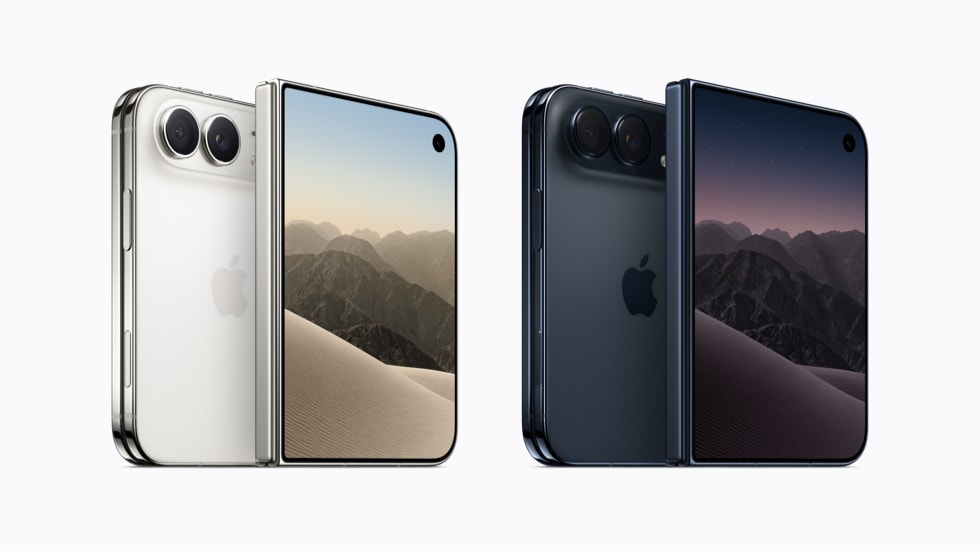
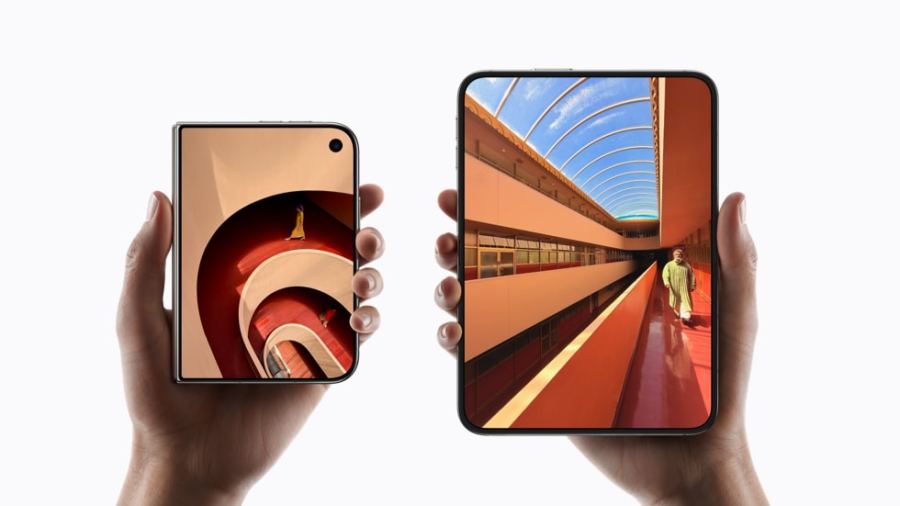
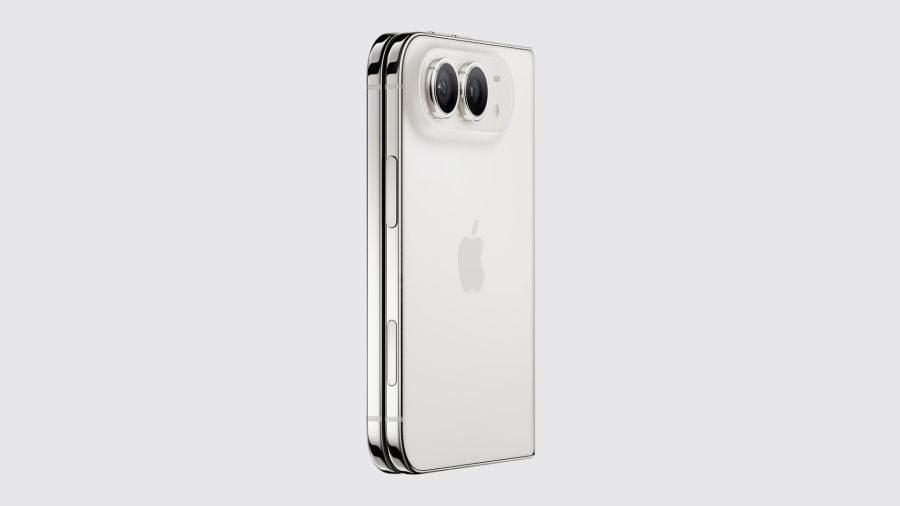
Apple has spent years watching Samsung, Google, and a handful of Chinese brands treat the foldable as a yearly spec bump. The company waited until it could claim a matched aspect ratio on both screens, a hinge it is willing to put on stage, and an outer display that is not a postage stamp. Closed, Duo is a 5.4-inch phone that Apple says covers about 90 percent of the screen area of iPhone 18 Pro. Open, it is a 7.6-inch panel, close to an iPad mini, and Apple calls the open device the thinnest iPhone it has ever made. Star White and Night Sky are the only finishes. There is no base iPhone 18 this cycle. The ordinary flagship is gone, the Pro pair is already shipping, and the foldable is the late arrival.
What actually shipped on September 9
The official announcement is no longer a rumor. Apple Newsroom posted the Duo unveil the day of the event, and the product page now lists the two colors, the dual-display layout, and the camera system. The outer and inner panels share an aspect ratio so video and apps scale instead of being letterboxed when the phone opens. That is a design choice aimed at the complaint that has followed book-style foldables since the first Galaxy Fold: the cover screen and the inner screen feel like two different products.
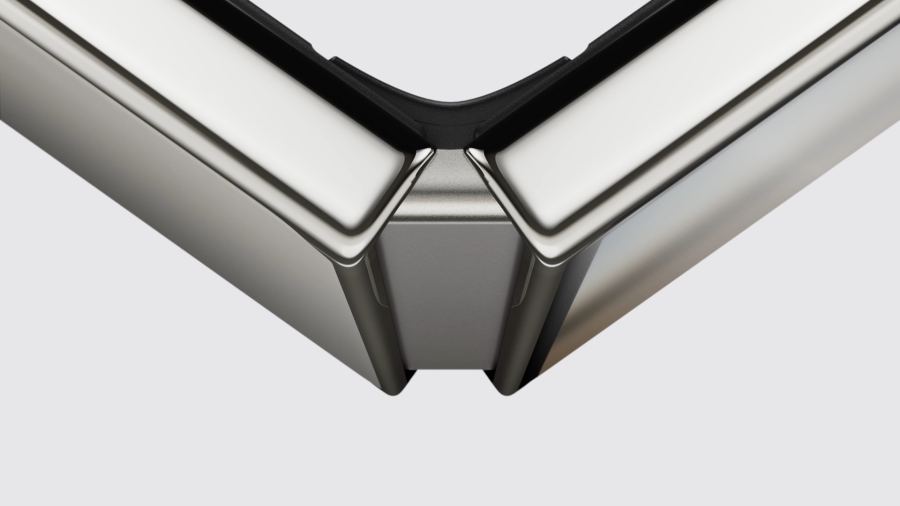
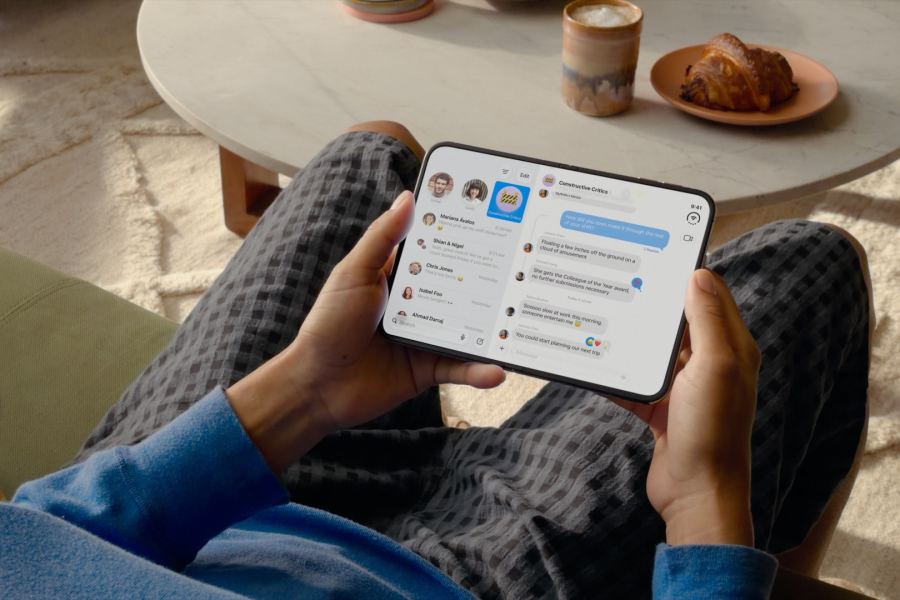
The camera stack is Pro-adjacent rather than a cut-down experiment. Apple is putting a 48MP Fusion Main camera on Duo, with an optical-quality 2x crop, plus the same 48MP Fusion Ultra Wide used on the 18 Pro models, and a Center Stage front camera that can reframe without rotating the phone. Photographic Styles with texture and grain control, and a low-light path, are part of the marketing set. None of that is unique to a foldable. What is unique is using the outer screen as a viewfinder while the inner panel stays protected, and using the open pose as a small tablet for playback. Apple’s own keynote frames treat the hinge, the multi-layer lamination, and Ceramic Shield as the durability argument. Hands-on reports from the Steve Jobs Theater, including 9to5Mac’s gallery, described the crease as hard to see at most angles. That is early, controlled, and not a two-year durability test.
Why the calendar is split
The Pro phones, Apple Watch Series 12, Apple Watch Ultra 4, and AirPods 5 all moved on the normal September clock. Pros opened for pre-order on September 12 and reached stores on September 18, at $1,199 and $1,299 to start, a $100 step up from the prior Pro generation. Duo waits another month. Apple has not published a yield memo, but the practical effect is obvious: the company can sell the phones it can build in volume now, and hold the foldable until the hinge, the inner panel, and iOS 27.1 are ready together.
That software point matters. Apple Developer has already said Duo will launch on iOS 27.1, not on the iOS 27 build that shipped with the Pro phones, and not on the 27.2 beta branch developers received on October 5. Xcode 27.1 is the toolchain that adds Duo poses and a simulator. A foldable with two displays, a posable hinge, and side-mounted toolbars is not a skin. Shipping it on a point release gives Apple a few weeks to land layout bugs that would be embarrassing on a $1,999 device. It also means early Pro buyers are not beta-testing Duo’s interface on hardware that cannot fold.
The split also protects the Pro launch from being judged only as “the phone that is not a foldable.” Variable aperture on the 18 Pro main camera — six laser-cut blades, stops at f/1.48, f/1.8, f/2.8, and f/4 — is a real optical change. A20 Pro on a 2nm-class process, a larger vapor chamber, and the biggest battery jump Apple has claimed for a Pro Max are the reasons those phones are already in bags. Duo does not have to win that comparison in week one. It has to justify a price that starts where a loaded Pro Max ends.
The price is the product strategy
At $1,999, Duo is not a replacement for the iPhone 17 that Apple left in the lineup as the volume phone. It is a third premium tier above Pro and Pro Max. Storage runs to 2TB, matching the new ceiling on the Pro models, so the top configuration is a $3,199 phone. In the UAE, published starting prices put Duo near Dh8,499 and the 18 Pro near Dh5,099. In India, reported starts were about Rs199,900 for Duo and Rs134,900 for the 18 Pro. Europe’s published starts clustered near €2,299 and £1,999. The pattern is consistent: this is a flagship for people who already own a flagship.
That is a risk in a year when foldable rivals have spent cycles cutting prices and thickening the warranty story. Apple’s counter is familiarity. Same aspect ratio, iOS rather than a skin, Apple Intelligence on-device, and a repair narrative the company has not yet stress-tested in public. Repairability advocates have already noted that durability gains on foldables have not automatically meant easier screen swaps. Apple has not published a Duo repair price. Until it does, the $1,999 sticker includes an unknown second bill if the inner panel fails outside warranty.
CEO John Ternus, who took over from Tim Cook on September 1, owns this launch even if the product was designed under the previous regime. A foldable that slips a month is a small slip. A foldable that ships with a visible crease, a dead hinge, or an iOS 27.1 layout that wastes the inner screen would be the first product-cycle grade of his tenure. Bloomberg reporting in late September described Ternus pushing for a faster, more experimental hardware cadence. Duo is the opposite of that tempo: a long-gestating category entry. The faster-cadence test comes later, with glasses and home devices still described as future work. Buyers on October 16 are grading the old plan.
What the Pro Max trouble does and does not say
A separate, narrower failure is already in the wild. Apple has said a small number of iPhone 18 Pro Max units on AT&T lose cellular service in a way that iOS 27.0.1 cannot repair after the fact. Affected phones need replacement units that already have that update and the carrier settings bundle. Apple says it has only observed the issue on U.S. Pro Max models. Those U.S. models use Qualcomm’s Snapdragon X80; Pro Max units elsewhere use Apple’s C2 modem. The company has not said the modem is the cause. No other iPhone model or carrier is confirmed affected. It is not a Duo problem, and it is not a recall in the formal sense Apple has used twice before. It is a reminder that the September 18 shipment was not clean, and that the phone with the largest battery claim is the one currently generating support tickets.
Anyone deciding between Pro Max and Duo should keep those facts apart. The Pro Max issue is carrier- and region-specific, small by Apple’s wording, and already mitigated for phones that have not failed. Duo’s risks are different: first-generation hinge, first-generation inner panel, a software build that is not in wide use yet, and a price that makes a return painful. Mixing the two into one “Apple’s fall is broken” headline overstates both.
What to watch between now and October 23
Three dates matter more than another spec recap. October 16 is the pre-order open. Ship estimates that day will tell you whether Apple staged enough launch inventory or whether Duo is a six-week wait in Star White. October 23 is the first day independent hinges, crease photos, and thermal tests leave the hands-on corral. And the iOS 27.1 release notes, whenever Apple posts them for the public, are the real feature list: side toolbars, pose changes, and whatever Apple Intelligence layout only exists on the inner display.
Developers already have a parallel track. iOS 27.2 beta 3, build 24B5099f, landed on October 5 with an App Tracking Transparency change for France, Germany, Italy, Poland, and Romania. That beta is not the Duo OS. Treating it as a preview of the foldable’s day-one software is a mistake. The Duo simulator lives in the Xcode 27.1 line.
Trade-in math is the other number worth running before the 16th. A 17 Pro Max in clean shape still offsets a meaningful slice of $1,999, but not enough to make Duo the default upgrade. For most people already on an 18 Pro, the foldable is a second device decision, not a replacement. Apple’s own lineup says so: it kept the 17 as the cheaper iPhone, raised the Pro, and parked Duo a month later at a price that assumes you wanted a new category, not a better camera.
The honest read, after the event and before the pre-order, is that Apple did what it said it would do. The foldable is real, dated, and expensive. The Pro phones are the ones you can buy today, variable aperture included. The next two weeks will show whether the wait was manufacturing discipline or demand Apple is not ready to meet. Either way, October 16 is the first time the $1,999 claim has to survive a checkout button.
Comments
0