
Crossing the $5 Trillion Line: What HomeView's Launch Reveals About Apple's Ambient Computing Endgame
Apple’s market capitalization crossed the $5 trillion threshold shortly after unveiling HomeView, the $299 smart home display. Investors interpreted the launch as confirmation that Apple has assembled the pieces for ambient computing: a shared physical interface that remains private to each user, powered by on-device Siri AI and silicon-level isolation. The device recognizes up to six household members by face, draws personal context from a nearby iPhone, and serves as the hub for a new Apple Home Collection of cameras, locks, and thermostats developed with LG and Schneider Electric. Pre-orders opened October 13 in major markets excluding the EU, with availability on November 13.
This is the post-launch assessment that builds on earlier speculation. The pre-event analysis in The Always-On Room outlined the expected architecture; the shipped product matches those expectations while adding concrete hardware and privacy details that strengthen the case for household lock-in. Crossing $5 trillion is less about the immediate unit volume of a single accessory and more about the extension of Apple’s high-margin model into new rooms of the home.
Hardware Designed for Shared Spaces
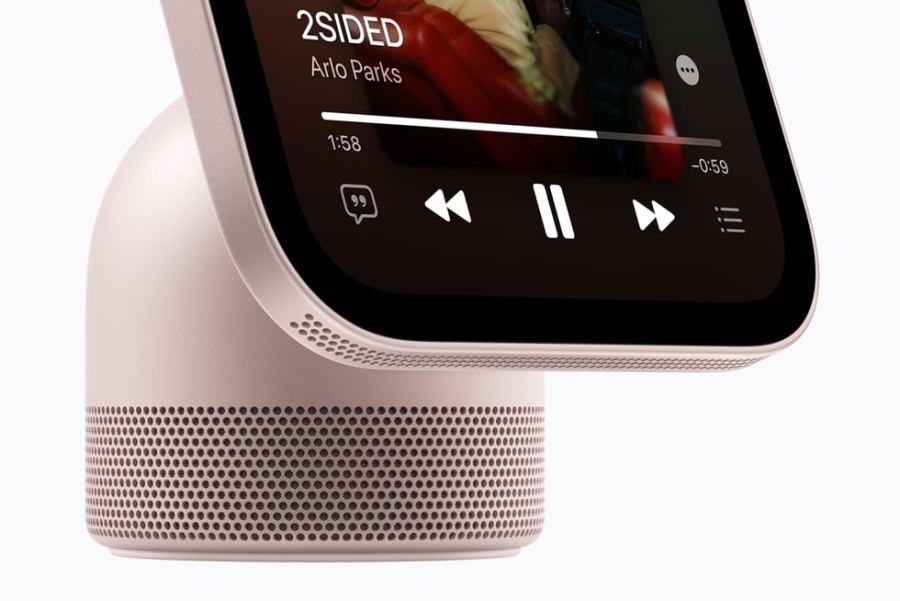
HomeView is offered in tabletop and wall-mounted versions, both at $299. The tabletop unit features a 7-inch Liquid Retina display (1088×1088 at 220 ppi) connected by a stainless-steel hinge to a domed aluminum base containing the primary speakers. Colors are silver, starlight, rose pink, and space gray. The wall-mounted model is lighter and uses Schneider Home mounts sold separately. Power is continuous via USB-C; no battery is included. An A18 chip, 12-megapixel Center Stage camera, four far-field microphones, and computational audio complete the hardware. Brightness ranges from 500 nits to 0.3 nits. The interface simplifies when viewed from a distance and adds detail on approach.
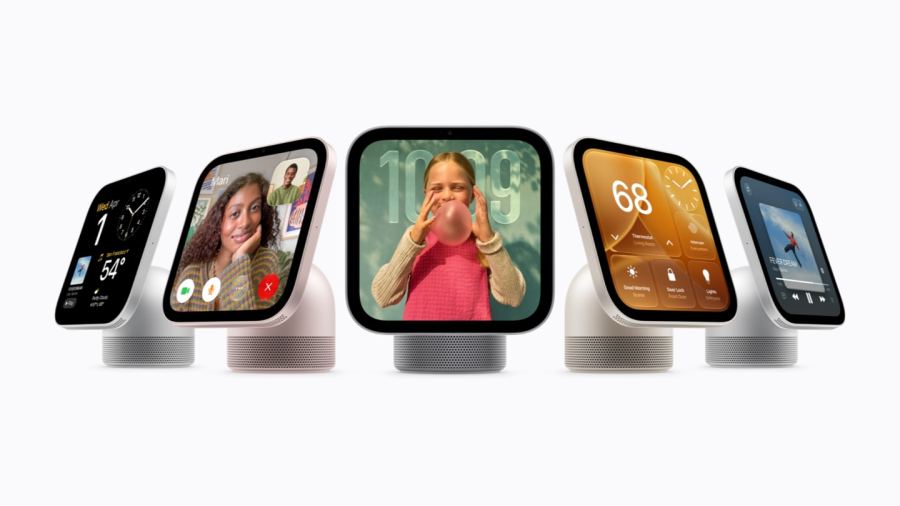
Connectivity covers Wi-Fi 6E, Bluetooth 6.0, and Thread. The combination supports Matter accessories and multiroom audio with HomePods and AirPlay speakers. These choices position HomeView as an always-present object rather than a device users must pick up. Early hands-on reports note that the unit is smaller than expected and that the tilt hinge works well on kitchen counters of varying heights.
Personalization and Privacy Architecture
Facial recognition for six users is the central differentiator. Each enrolled person receives a private Home Screen. Messages, Calendar, Reminders, and Find My content appear only when the correct face is detected and a recently unlocked paired iPhone or iPad is nearby. Shared photo albums and music remain available to everyone. This model avoids a single shared login while still allowing household use. Siri AI, the new conversational assistant, supplies broad knowledge and, when paired, personal context from the user’s apps. Conversations continue on the phone via iCloud. Custom voice settings carry over from the paired device.

Privacy relies on Secure Exclaves, protected silicon runtimes that process camera and microphone data separately. Apple states that this data cannot be accessed by the device software, apps, the user, or Apple. The architecture is consistent with the company’s on-device preference and contrasts with cloud-heavy approaches used by competitors. Independent verification of the exclave claims will be important, but the design intent is clear. For comparison with other agent approaches, see coverage of Meta’s Muse Wonder memory features.
Entertainment, Communication, and Smart Home Controls
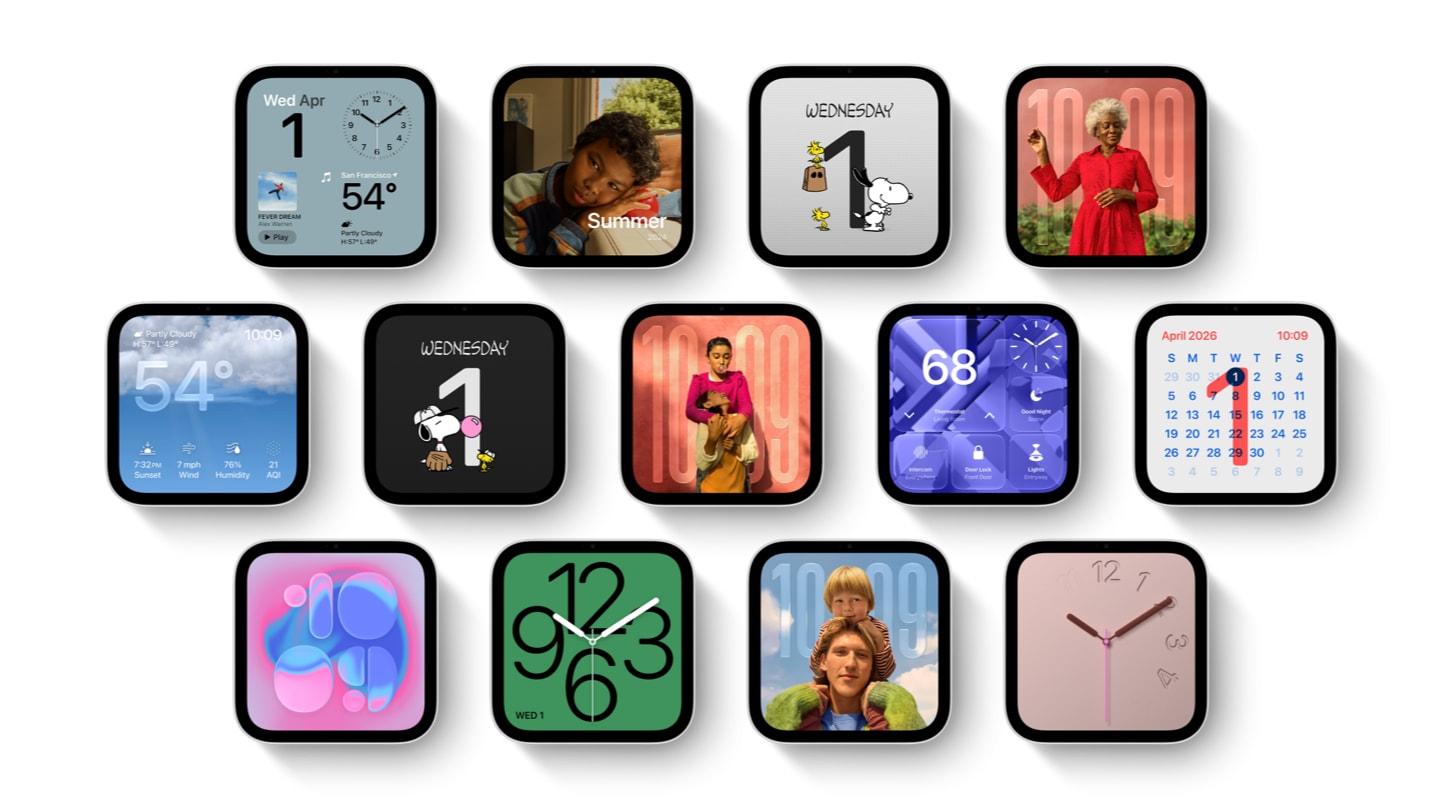
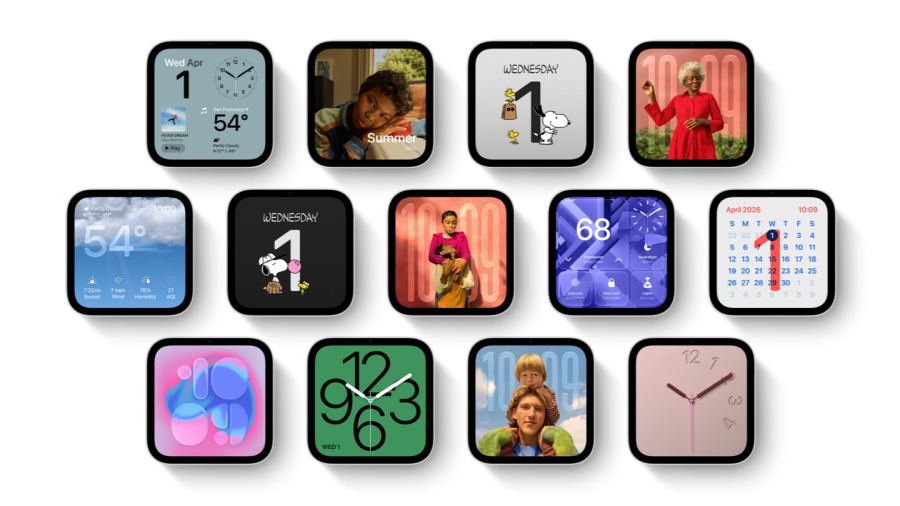
HomeView supports Apple Music with animated art and lyrics, Podcasts, News, TV, and compatible third-party apps. Handoff continues playback from a nearby iPhone. FaceTime uses Center Stage. Intercom reaches other HomeView and HomePod units plus personal devices. In the kitchen, web recipes convert to step-by-step instructions with voice timers. Idle faces include Photos with depth effect, reactive Flow artwork, Snoopy animations, Calendar, Weather, and modular Home widgets. Users swipe between them. The Photos face can draw from shared albums so remote family members contribute images.
As a Home app dashboard, the device shows up to nine camera feeds, controls lights and thermostats, and manages locks by touch or voice. iCloud+ adds encrypted recognition of people, pets, packages, and vehicles plus video descriptions. Smoke and carbon-monoxide alarm sounds trigger alerts on other Apple devices. The simultaneous Apple Home Collection—cameras, doorbell, lock, and thermostats from LG and Schneider—works without separate accounts. The lock supports PIN, remote, and proximity unlock. Thermostats can use sensors in HomeView and the new HomePod mini 2. Availability begins in December. The partnership is unusual for Apple, which typically controls the full stack; here the company retains the software and privacy layer while collaborating on hardware design.
Market Implications and Competitive Position
The $5 trillion reaction reflects a bet on platform duration. HomeView does not need iPhone-scale volumes if it increases retention and accessory attach rates. Each user who routes daily queries and camera checks through the device raises the switching cost for the next phone or watch. Risks include Siri AI reliability in noisy environments, the EU exclusion under DMA rules, and competition from Amazon Echo Show and Google Nest Hub lines that already have installed bases. Supply-chain pressures on memory, discussed in recent chip-cycle analysis, could affect costs if production ramps quickly. Broader context includes Google’s orbital compute tests covered in A Kilowatt in Orbit and ongoing connectivity shifts. HomeView itself is largely local, yet still depends on reliable broadband and silicon availability.
Competitors offer lower entry prices and broader third-party support in some markets. Apple’s advantage is ecosystem depth: one purchase unlocks Messages, FaceTime, Music, Find My, and Home without additional logins for households already inside the Apple world. Mixed households face higher friction and the requirement for a recent iPhone or iPad. The wall-mounted version’s extra mount cost further raises the total. Official details are confirmed on Apple’s newsroom page and the product site.
What to Monitor Next
Key indicators through year-end include real-world Siri AI accuracy and latency after the November 13 launch, attach rates for Home Collection accessories in December, any expansion of Siri AI to additional regions, Matter interoperability friction, and practical experience with wall mounting and continuous power. Longer term, success will be measured by whether households treat HomeView as the default glance and voice surface or ignore it after the novelty period. Apple has a track record of rapid software iteration; the hardware already anticipates both table and wall use. The privacy and personalization model must prove more compelling than existing Alexa and Google Assistant habits to shift behavior at scale.
The $5 trillion milestone is a market judgment on Apple’s decision to treat the home as the next major interface. HomeView is the concrete expression: a shared object that attempts to stay private, an audio system that also displays information, and a hub that prioritizes on-device intelligence. Durability will appear in subscription renewals, accessory sales, and whether users still reach for their phones when the answer is already on the counter. The launch supplies a clear reference point; household data over the coming months will determine whether the bet was correctly timed.
Comments
0