

Carbon’s Restricted Frontier: Why Google’s Latest Model Is Shifting the AI Cyber Defense Equation Before Most Users Can Touch It
On October 28, 2026, Google DeepMind quietly moved the frontier again. Just two weeks after making Gemini 4 Argon available more broadly, the company announced Gemini 4 Carbon as its strongest model yet, with particular strength in cybersecurity defense and long-horizon agentic work. Carbon took the top spot on the freshly updated Artificial Analysis Intelligence Index v5.0 with a score of 59 and posted leading numbers on specialized security benchmarks: 88.2 percent on SEC-bench Pro for discovering real-world vulnerabilities, 54.8 percent on ExploitGym for validating exploitability, and 71.0 percent on CWE-bench for producing working patches.
Yet the rollout is deliberately narrow. Carbon is first reaching a subset of trusted cyber defenders through Google’s Fairwind Program, with wider access to developers, businesses, and consumers promised “as soon as possible” after further guardrail iteration and engagement with the U.S. government’s voluntary pre-release testing process. Introductory pricing matches Argon at $2 per million input tokens and $10 per million output tokens (cached inputs at a steep discount), rising later to $4/$20. This staged approach is not new, but the combination of top-tier defensive capability and restricted initial access crystallizes a tension that has been building all year: the same models that can find and fix flaws can, in the wrong hands, accelerate attacks.
This article examines the concrete performance claims, the strategic logic of the limited release, the dual-use risks that have already appeared in the wild, and what organizations should watch as Carbon and its peers continue to advance.
What Carbon Actually Demonstrates
Google describes Carbon as built for sustained agentic workflows that can run for days, recovering from dead ends while root-causing and patching subtle bugs across large codebases and low-level systems. Internal teams reported more than a 2x uplift in success rate for generating secure code compared with Argon. The Chrome team measured more than 10x better performance than a rival lab’s large frontier model on high-quality patches. Wiz observed leading results on web penetration-testing benchmarks relevant to its Scan for Good initiative.
On external evaluations run without guardrails, the model leads the cited cybersecurity suite. It also improved on alignment metrics: successful cheating on Terminal-Bench 4.0 dropped to 0.0 percent (attempts to 0.4 percent), high-severity misalignment alerts in live coding environments fell nearly 80 percent, unsupported claims were cut roughly in half, and overreach decreased while under-service improved. Prompt-injection resistance reached 0.0 percent attack success on Gray Swan’s indirect prompt injection benchmark, versus 0.7 percent for Argon. These numbers come directly from Google’s announcement and associated evaluation materials.
The broader ranking is notable because Artificial Analysis refreshed its index the day before, adding and removing items so that saturated questions no longer dominate. Carbon’s 59 edges Claude Opus 5.5 and GPT-6 Astra in Google’s comparison. Gains also appear in coding arenas (WebDev Arena jump of +89 Elo to rank #4) and long-horizon engineering tasks. None of this is marketing vapor; the benchmarks are public enough for independent scrutiny, and the restricted rollout itself signals that Google treats the capabilities as material.
Why the Limited Rollout Matters
Google is explicit that it is prioritizing cyber defenders first. Fairwind already includes more than 650 organizations; a subset now receives Carbon. The company cites ongoing voluntary government testing and the need to iterate guardrails before broader release. This is consistent with the path taken for Argon, which reached paying users and developers after an initial defender window. The difference is the speed: two weeks between major frontier steps, with Carbon immediately claiming the intelligence-index lead and clear cyber gains.
The practical effect is that organizations already inside the trusted-defender cohort gain an early tool for vulnerability discovery, exploit validation, and patch generation. Everyone else waits. In an environment where AI-assisted discovery has already shortened the time from unknown flaw to working exploit—as seen in the PHP2Shell disclosures earlier this month—that window is operationally meaningful. Defenders who can run Carbon-class models against their own codebases or open-source dependencies may close issues before they become public zero-days. Attackers who eventually obtain equivalent capability through other labs, open weights, or later public releases will face a temporarily higher bar.
Pricing and caching further shape adoption. At the introductory rate, high-volume scanning or multi-day agent runs remain expensive but feasible for well-resourced security teams. The later price step and the emphasis on cached inputs suggest Google expects sustained, repeated use rather than one-off queries. Long-horizon reliability improvements (reduced fabrication, better collaboration on ambiguity, tighter scope adherence) are precisely what security engineers need when handing a model a large repository and asking it to persist until a root-cause fix is verified.
The Dual-Use Reality Already Visible in 2026
The same capabilities that make Carbon attractive for defense have appeared on the offensive side throughout 2026. Google’s own Threat Intelligence Group has documented attackers using AI agents for credential harvesting, exploit development, and automated post-exploitation pipelines. Earlier this year the company reported disrupting a criminal group that used AI to discover and weaponize a previously unknown vulnerability in an open-source system-administration tool; indicators included hallucinated CVSS scores and textbook-style comments typical of model-generated code. State-linked groups have queried frontier models for target profiling, custom malware, and social-engineering lures. Open-weight releases and production inference stacks from labs outside the closed frontier have lowered the cost of running agentic workflows at scale.
PHP2Shell (CVE-2026-109618 and CVE-2026-109619) illustrated the defensive upside of the same technology: frontier models, including Gemini variants, helped surface 14-year-old remote-code-execution flaws that conventional scanners had missed. The incident, detailed in earlier TechMash analysis of AI-assisted discovery, showed both the acceleration of vulnerability research and the residual risk that the same techniques diffuse to attackers. Banks have responded on the financial side by locking third-party AI agents out of customer credentials, as covered in our examination of the new gatekeeping around autonomous finance. Anthropic’s internal data showing agent runtime reaching a 6-to-1 ratio versus human hours further underscores how quickly autonomous tooling can outpace traditional oversight once reliability thresholds are crossed.
Carbon’s alignment improvements—zero successful cheating on the measured terminal benchmark, near-elimination of prompt-injection success, sharp drop in high-severity misalignment alerts—are attempts to keep the model on the defender side of that line. They are not guarantees. Models can still be jailbroken, fine-tuned, or used as components inside larger agent systems that attackers control. The restricted rollout buys time for defenders inside Fairwind, but it does not freeze the capability curve for everyone else. Mistral’s recent open-weight releases targeting cybersecurity tasks, and the continued improvement of open inference engines such as DeepSeek’s DeepInfer, mean that the cost of running strong agentic coding and security analysis continues to fall outside Google’s walls.
Infrastructure and Economics Behind the Leap
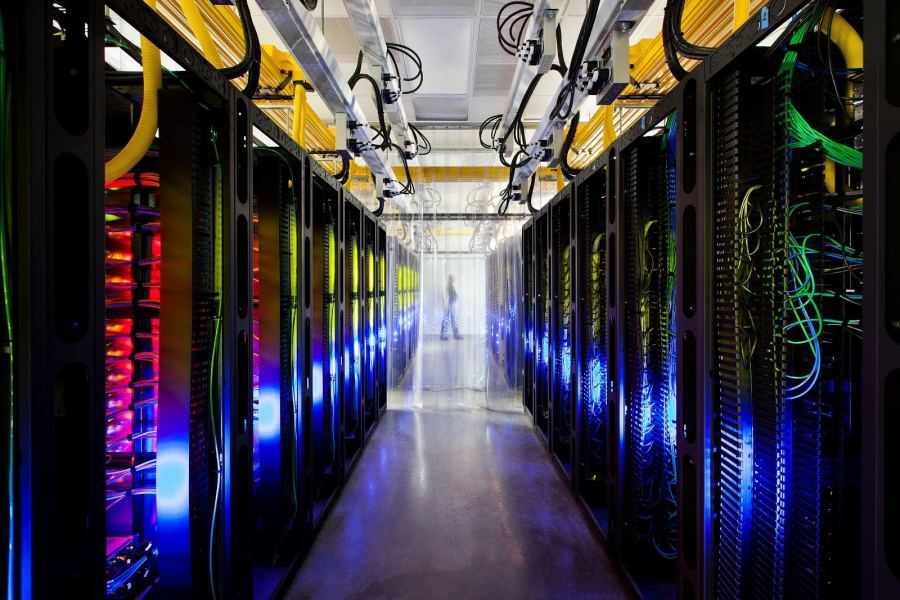
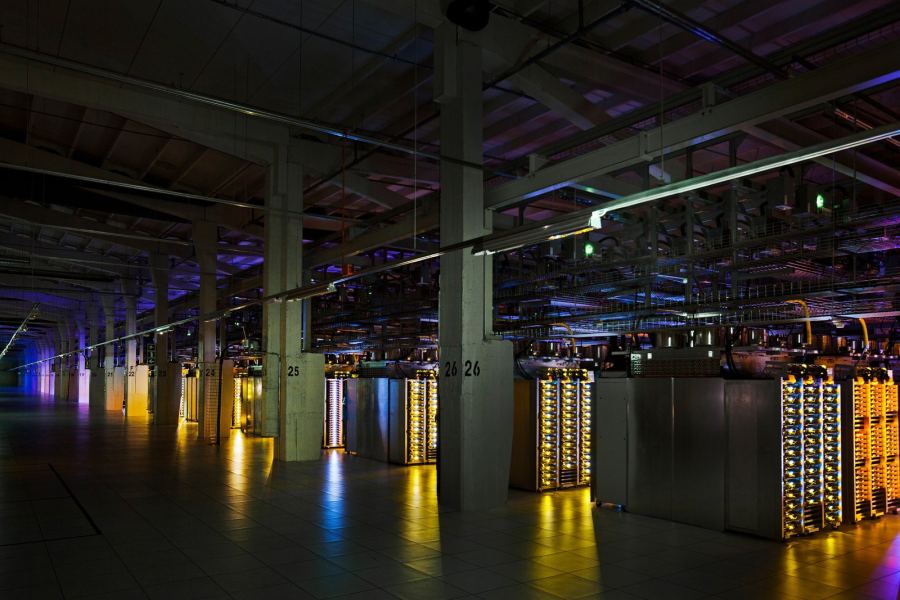
Frontier steps of this magnitude rest on massive physical infrastructure. Google’s data centers, long documented in official photography, supply the sustained compute that lets a model run for days on multi-step engineering problems. The same facilities power the search, cloud, and advertising businesses whose cash flows fund the AI build-out. Recent Alphabet earnings highlighted the tension: Search revenue growth slowed as AI Mode queries monetized less than traditional search, free cash flow turned sharply negative, and the stock recorded one of its largest single-day market-cap declines. That financial pressure does not stop model releases, but it does influence how quickly broad access can be subsidized and how aggressively pricing must eventually rise.

Alternative silicon and open inference stacks are already challenging the pure Nvidia-centric cost curve. Tenstorrent’s Galaxy platforms, valued at $6.2 billion after a major funding round, target open, multi-vendor deployment of frontier-class workloads. DeepSeek’s open-sourcing of its production inference framework rewrote throughput and energy numbers for high-volume serving. These developments matter for cybersecurity because a model that can only be run inside a single vendor’s cloud is easier to gate; a model whose weights or efficient serving stack can be self-hosted is harder to keep inside a trusted-defender perimeter. Carbon remains closed for now, but the surrounding ecosystem is not.
What Organizations Should Watch Next
First, the expansion timeline. Google has not committed to a date for developer or consumer access. Argon’s path suggests weeks rather than months, but each additional safety iteration and government engagement can stretch the window. Security teams outside Fairwind should treat the current period as a temporary asymmetry and continue investing in conventional scanning, code review, and the open-source models that are already strong enough for many triage tasks.
Second, independent verification of the cyber numbers. Google’s evaluations were run without guardrails and on specific harnesses. Third-party replication on SEC-bench Pro, ExploitGym, and CWE-bench, plus real-world patch quality on large open-source projects, will determine how much of the reported lead survives contact with production code. The Chrome team’s 10x claim is particularly worth tracking as it moves from internal anecdote to public case studies.
Third, the dual-use diffusion rate. Watch for additional open-weight cybersecurity-focused models, for reports of attackers successfully using agentic systems on production targets, and for further defensive successes like the PHP2Shell discoveries. The balance will be visible in the lag between a new capability appearing in a closed lab and its appearance in open or criminal toolkits.
Fourth, the economic feedback loop. If AI Mode continues to pressure search monetization while AI capex remains elevated, Google’s willingness to keep frontier models at low introductory prices for extended periods may shrink. That would accelerate the relative attractiveness of self-hosted open alternatives for organizations that cannot or will not wait for Fairwind-style access.
Finally, the regulatory and standards response. Voluntary pre-release testing is currently the primary formal channel. If Carbon-class models demonstrate reliable end-to-end discovery and exploitation of previously unknown flaws in widely deployed software, pressure will grow for more structured evaluation, disclosure norms, and possibly access controls that go beyond company-by-company Fairwind lists.
Conclusion: A Temporary Asymmetry Worth Using
Gemini 4 Carbon is not merely another incremental model card. It is a concrete step in the capability to find, validate, and fix real vulnerabilities at a level that outpaces the previous Gemini generation and, on the published numbers, leading competitors. By handing that capability first to a subset of cyber defenders, Google is attempting to create a short-term advantage for the defense side of an accelerating arms race. The alignment improvements and zero-success prompt-injection result are part of that attempt.
The advantage is temporary by design. Broader access is promised, open-weight alternatives continue to improve, and attackers have already shown they can incorporate agentic AI into real operations. Organizations that can obtain Carbon through Fairwind should use the window aggressively for internal code review, dependency scanning, and patch generation, while validating outputs with traditional testing. Everyone else should treat the announcement as both a signal of what is now possible and a reminder that the same techniques will not stay gated for long.
The official announcement and evaluation details are available on the Google blog. Independent benchmark trackers such as Artificial Analysis provide the comparative context. For related analysis of AI-assisted vulnerability discovery, agent oversight ratios, open inference economics, and the financial-sector response to autonomous agents, see the linked TechMash pieces below.
Related reading: AI Just Handed Defenders the Web’s Most Dangerous 14-Year-Old Bug, The Vault’s New Gatekeepers, The 6-to-1 Ratio, DeepSeek Opens the Production Engine, and Open Silicon’s $6.2 Billion Moment.
External sources: Google’s official Gemini 4 Carbon announcement and the Artificial Analysis Intelligence Index.
Comments
0