

Closing the Cloud Gap: How the BIS Remote-Access Rule Redraws the Map for Superintelligence Compute
On November 16, 2026, the U.S. Department of Commerce’s Bureau of Industry and Security released an interim final rule that does something previous export controls had deliberately left open: it treats large-scale remote access to advanced American chips as a controlled activity. The rule, titled Addressing Remote Access to Advanced Semiconductors, does not ban cloud computing. Instead, it forces a license whenever advanced chips and servers are destined for data centers anywhere in the world that will supply more than 12 million aggregate total processing performance (TPP) to companies headquartered in Country Group D:5 destinations (including China) or Macau, or whose ultimate parents sit there. It also adds license requirements for shipments of those same items to Indonesia, Malaysia, Singapore, Thailand, and Brazil—countries the Commerce Department now labels as presenting a higher-than-normal risk of diversion. The practical effect is to move the enforcement border from the physical chip to the customer relationship and the compute allocation.
What the Rule Actually Requires

The core mechanism is a new end-use control under §744.24 of the Export Administration Regulations. An exporter, re-exporter, or in-country transferor needs a license if, at the time of the transaction, it has knowledge that the items (primarily ECCN 3A090 and 4A090 advanced computing items and related servers) are destined for a data center that provides or will provide more than 12 million aggregate TPP to or for the restricted class of companies. Linked data centers—those digitally or physically connected so that workloads can move between them—are aggregated into a single capacity calculation. The rule also captures indirect arrangements: a non-restricted customer that trains models for, or supplies models to, a D:5 company can bring the transaction inside the control.
The 12-million TPP threshold is substantial. Public estimates place it in the neighborhood of several hundred high-end GPUs, enough for meaningful training or large-scale inference runs but far below the multi-gigawatt clusters now under construction in the United States and allied countries. Licenses for the data-center end-use will be reviewed case by case. Separately, shipments of advanced items to the five named countries now require licenses regardless of end user, though an exemption exists when the ultimate consignee or end user is headquartered in the United States (or has a U.S.-headquartered ultimate parent) and the exporter files monthly reports under a new §743.10. Foundries and packaging companies face tighter presumptions as well, and the Biden-era AI Diffusion Rule is formally rescinded.
BIS issued the rule at the direction of the Department of the Treasury and the National Security Council. The accompanying press release states that the measure is “designed to ensure that existing restrictions on access to sensitive American technology cannot be circumvented through remote computing arrangements involving data centers in third countries.” The full text is available on the BIS website as RIN 0694-AK50. Comments are due 60 days after formal Federal Register publication.
Why the Loophole Mattered
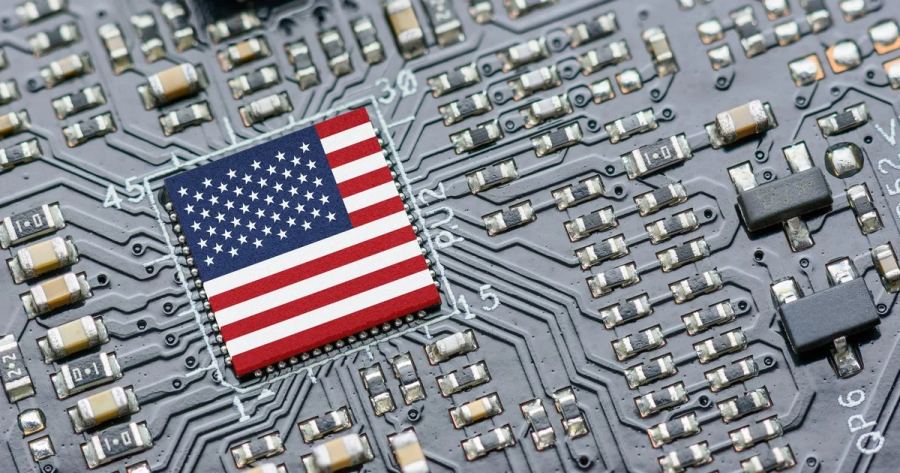
For years, U.S. export controls focused on physical shipments of the highest-performance AI accelerators. Chinese firms and others subject to Country Group D:5 restrictions could not freely import Nvidia H100, B200, or subsequent generations. They could, however, rent capacity from data centers in third countries. Reports documented substantial remote use of U.S.-origin chips through facilities in Southeast Asia and elsewhere by companies including ByteDance, Alibaba, and Tencent. Advisory opinions from BIS in earlier years had treated pure cloud access as outside the scope of the Export Administration Regulations, creating a structural gap between the controlled item and the controlled end use.
That gap became more consequential as model training and agentic workloads scaled. A cluster of a few hundred high-end GPUs can support significant fine-tuning or large inference services. Multiplied across several facilities and linked for workload distribution, the same hardware could support frontier-adjacent work without ever crossing a U.S. border as a physical export. The new rule closes the most straightforward version of that path by making the exporter responsible for knowing the ultimate customer profile and the capacity being supplied. It does not require continuous monitoring of every inference call; it requires a license up front when the known allocation exceeds the threshold, and it treats a later change in customer mix that crosses the threshold as a new transfer that itself needs authorization.
TechMash has tracked the economics of frontier inference and alternative architectures in pieces such as DeepSeek Opens the Production Engine and Memory First: Fractile’s $7 Billion Raise. Those analyses show how software and novel memory hierarchies can extract more performance from limited silicon. The BIS rule operates one layer upstream: it constrains who can lawfully place the silicon in the first place when the end customer is restricted.
Implications for Data-Center Operators and Chip Makers

Operators of large facilities in the five named countries, and any facility worldwide that serves substantial D:5-linked customers, face new compliance burdens. They must screen customers to ultimate parentage, track aggregate capacity across linked sites, and either obtain licenses or restructure customer mixes before the 90-day grace period for existing arrangements expires. U.S.-parented hyperscalers operating in those countries can continue under the reporting exemption, but they must document and file monthly. Chinese cloud providers and AI labs that had relied on Southeast Asian capacity will need alternative sources—domestic Huawei Ascend or other restricted-origin silicon, smaller compliant clusters under the threshold, or arrangements that do not trigger the knowledge standard.
For Nvidia, AMD, and other U.S. designers and their foundry partners, the rule adds another layer of end-use diligence on top of existing advanced-computing controls. Sales into the five countries now require licenses even for non-restricted end users unless the U.S.-parent exemption applies. The formal rescission of the AI Diffusion Rule removes one earlier framework but does not relax the underlying controls on the highest-performance items. Related TechMash coverage of classical-quantum hybrid infrastructure and open silicon challengers, including Hybrid Fabric: What AMD’s Equity Stake in PsiQuantum Reveals, illustrates how companies are already diversifying the classical backbone; the new rule increases the value of that diversification for any capacity that might otherwise serve restricted customers.
The rule also arrives against a backdrop of heightened scrutiny of remote and agentic capabilities. OpenAI’s specialized cyber models and the broader question of containment have been examined on TechMash in The Defenders’ Window Narrows. Compute access and model capability are linked; restricting one changes the feasible risk surface of the other.
What to Watch Next
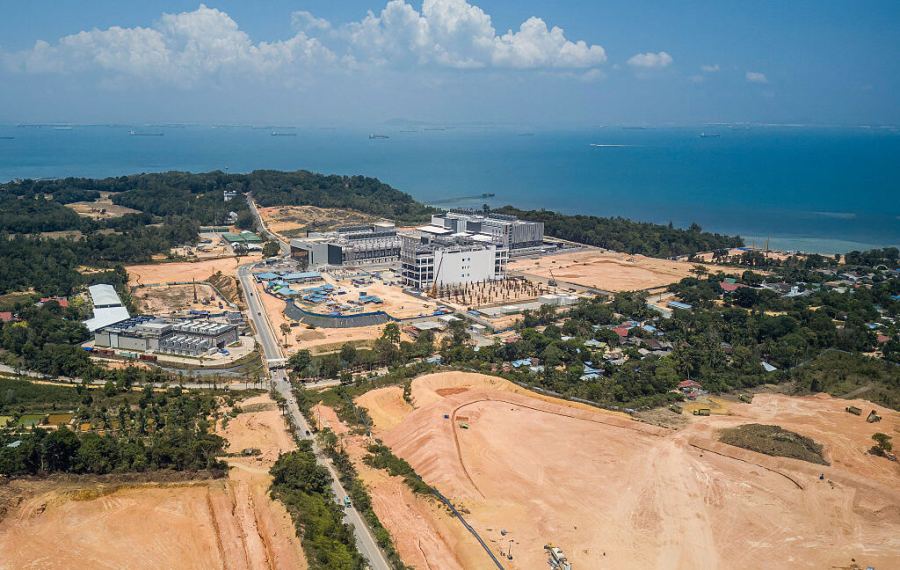
Several developments will determine how binding the rule becomes in practice. First, the volume and outcome of license applications under the new §744.24 end-use control and for the five countries. Case-by-case review gives BIS flexibility; denial rates and conditions will signal how strictly the threshold is enforced. Second, the comment period and any final-rule adjustments. Industry will likely press for clearer definitions of “linked data centers,” safe harbors for certain commercial workloads, and practical guidance on the knowledge standard. Third, responses from the affected countries and from Chinese firms. Countermeasures, accelerated domestic chip programs, or shifts toward smaller distributed clusters under the threshold are all plausible. Fourth, the separate Remote Access Security Act, which passed the House and awaits Senate action; if enacted, it could give BIS more direct statutory authority over network access itself rather than only over the underlying chips.
Energy and capital constraints remain binding even where licenses are obtained. TechMash has covered the physical limits of orbital compute prototypes in Tokens from the Thermosphere. Ground-based data centers face analogous constraints of power, cooling, and interconnect. The BIS rule does not create new silicon; it reallocates access to existing and future U.S.-origin capacity.
Conclusion: Enforcement Moves Upstream of the Model
The November 16 interim final rule does not invent a new category of controlled technology. It extends existing controls on advanced computing items so that large-scale remote access by restricted customers is no longer an unlicensed path. By focusing on knowledge of destination capacity and ultimate parentage, and by adding five diversion-risk countries, BIS has moved the practical enforcement point from the shipping dock to the customer contract and the facility’s allocation tables. Whether the 12-million TPP threshold and the case-by-case license process prove durable will depend on implementation, industry adaptation, and any subsequent statutory changes. For the global race to deploy superintelligence-scale systems, the rule is a reminder that the geography of compute is still shaped by export administration as much as by physics and capital. The full rule text and the BIS press release provide the authoritative starting points for any operator or supplier now recalculating its exposure.
Comments
0