
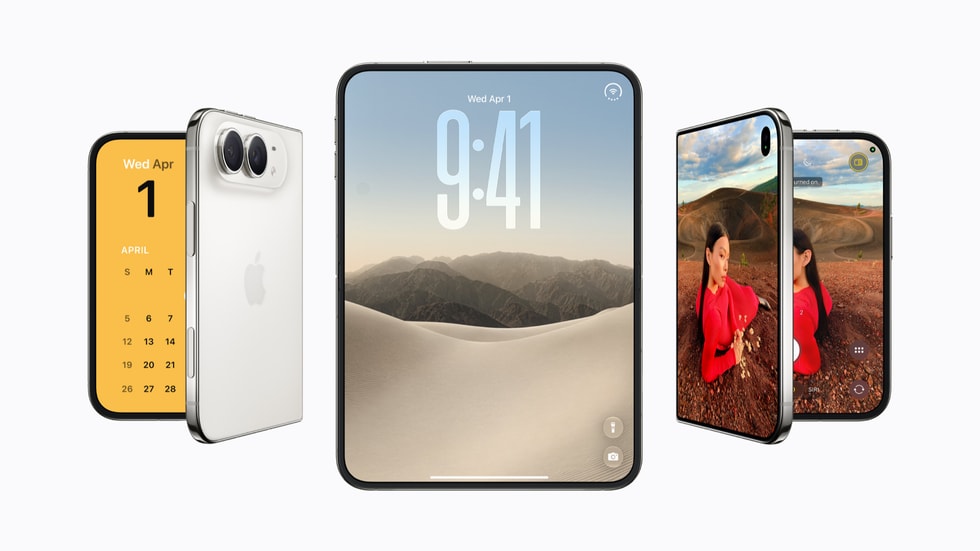
The iPhone Duo Arrives: Ternus’s First Hardware Cycle Tests Apple’s Foldable Ambition
Apple has spent years watching the foldable phone category mature under Samsung, Google, and a handful of Chinese brands. On September 9, 2026, under the “Surprise and shine” banner at the Steve Jobs Theater, the company finally entered the race. The iPhone Duo is not merely a new form factor; it is the first major hardware statement of John Ternus’s tenure as CEO, and it arrives with a $1,999 starting price, a delayed availability window, and demand already strong enough to push new orders into early 2027.
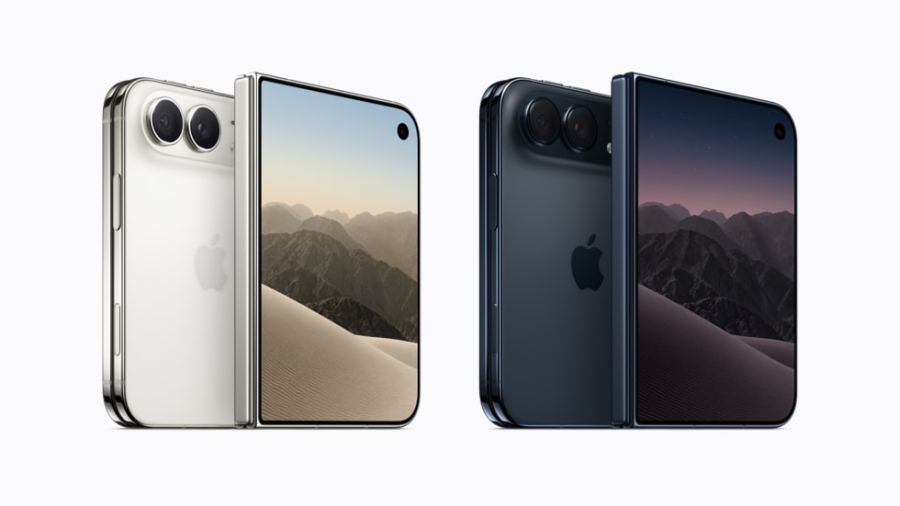
The Duo is a book-style foldable. Closed, it is roughly passport-sized with a 5.4-inch outer Super Retina XDR display that Apple says delivers about 90 percent of the screen area of the iPhone 18 Pro. Opened, it becomes the thinnest iPhone the company has ever made, revealing a 7.6-inch inner display that is 50 percent larger than the iPhone 18 Pro Max. Both screens share the same aspect ratio, so content scales rather than stretching or letterboxing when the device is flipped or folded. A nano-texture finish on the inner panel is intended to reduce glare and minimize the visibility of the crease. Touch ID lives in the side button so authentication works whether the phone is open or closed. Ceramic Shield 2 covers the outer display; the back is protected by Ceramic Shield. The frame is Grade 5 titanium with a mirror polish. An IP68 rating is claimed. Pre-orders began October 16; the phone reaches stores on October 23.
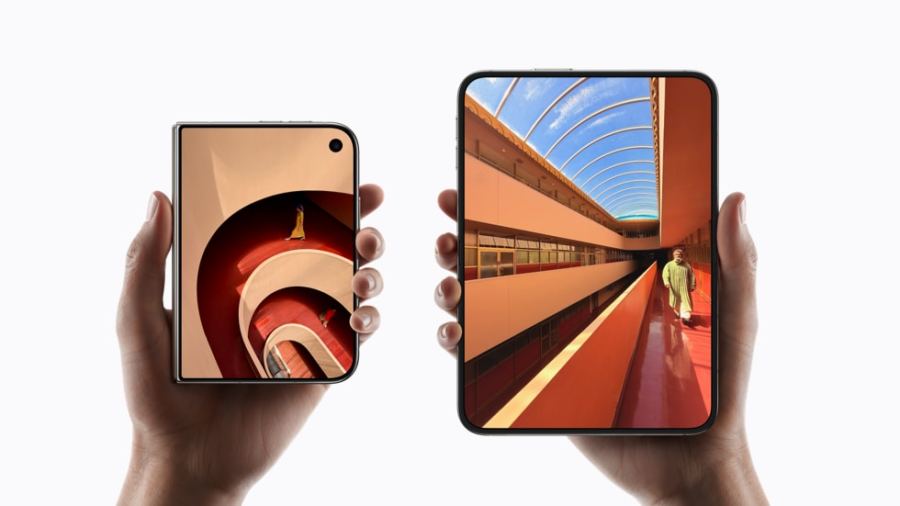
What actually shipped
Under the hood the Duo runs the A20 Pro chip with a custom vapor chamber and a dual-battery architecture that Apple says delivers all-day life even on the larger panel. The camera system is dual 48-megapixel: a Fusion Main sensor with optical-quality 2x zoom (cropped from the center of the sensor) and a Fusion Ultra Wide that matches the one on the iPhone 18 Pro. There is no dedicated telephoto lens. A Center Stage front camera sits on the outer display; a second camera hides under the inner display for FaceTime when the phone is open or propped. New software features lean on the dual-screen design: Smart Take uses on-device models to fire the shutter when subjects are posing, Duo Preview lets people check framing on the outer screen, and Kid Cue plays Peanuts animations to get children looking at the lens. 4K120 Dolby Vision recording is supported on the main camera.
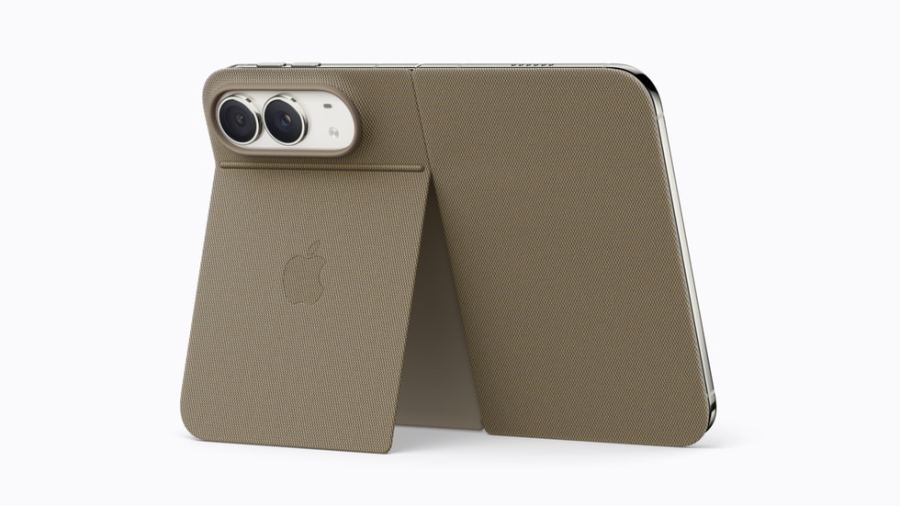
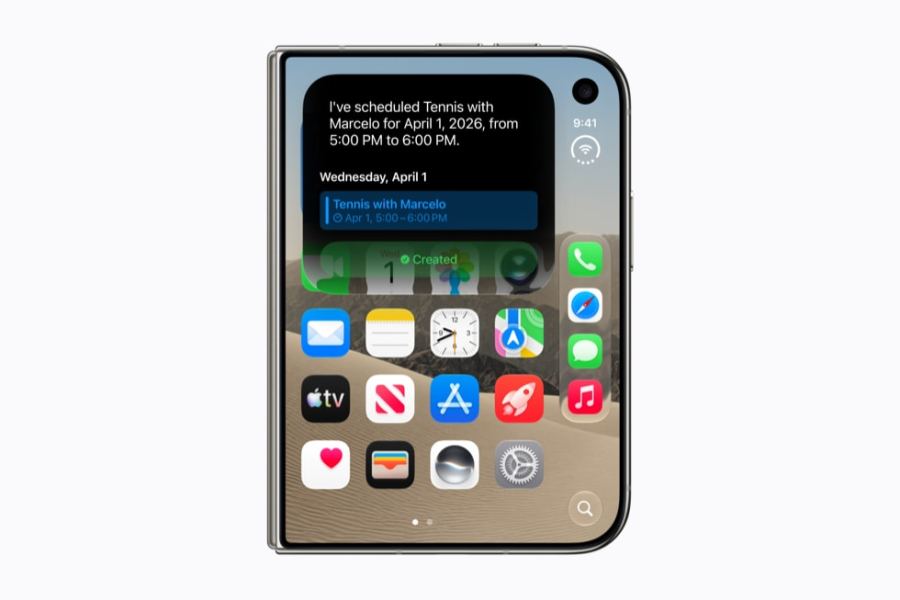
iOS 27 has been adapted rather than rewritten. Controls move to the side of the larger canvas, the Home Screen can show two pages plus a Today View of widgets when open, and the Dynamic Island is reshaped for the new geometry. Split View multitasking is native. Siri AI, the next generation of Apple Intelligence that began rolling out in beta with iOS 27, is integrated so the assistant can act across apps with personal context. Later this year Apple Pencil with USB-C will work on either display. Two colors ship: Star White and Night Sky. Storage starts at 256 GB and climbs to 2 TB. Accessories include a Folio with an integrated kickstand in navy and taupe, plus more conventional cases.
Why the timing and the price matter
The standard iPhone 18 and a possible second-generation Air were deferred to spring 2027, leaving the fall 2026 lineup as a premium-only affair: the 18 Pro, 18 Pro Max, and the Duo. Analyst Ming-Chi Kuo and others had flagged manufacturing constraints on the hinge and inner display that would limit early volume, a pattern reminiscent of the 2017 iPhone X. Pre-orders opened a week after the event; the first units do not arrive until late October. Within days of the order window opening, reports surfaced that new orders were already facing delivery estimates stretching into late January 2027 in multiple markets. Apple has not published official allocation numbers, but the combination of a $1,999 entry price (lower than some pre-event forecasts of $2,299–$2,499) and constrained supply appears to have produced exactly the scarcity dynamic the company has historically used to signal desirability.
For Ternus, who became CEO on September 1 after Tim Cook moved to executive chairman, the Duo is the first product he can claim as his own on stage. Cook spent fifteen years expanding services, tightening the supply chain, and navigating regulation. Ternus is a hardware engineer who previously led the teams behind iPhone, Mac, Watch, and AirPods. The foldable is the clearest possible signal that the company is willing to invest in new mechanical complexity rather than iterate only on existing form factors. It also arrives in a year when Apple Intelligence and Siri AI are finally shipping at scale across iOS 27, iPadOS 27, macOS 27, and watchOS 27. The Duo is the largest canvas Apple has ever put those features on.
The competitive context
Samsung has iterated the Galaxy Z Fold line for years; the Z Fold 8 is the current benchmark. Google has the Pixel Fold series. Both have refined hinges, reduced creases, and expanded software support. Apple’s pitch is integration rather than raw specification supremacy. The same aspect ratio on both screens, the hidden inner camera, the side-mounted Dynamic Island, and the deep Siri AI hooks are meant to make the Duo feel like an iPhone that happens to fold rather than a tablet that snaps in half. Whether that distinction holds will be settled by early reviews and by how many third-party apps actually use the new APIs. Netflix, Zoom, and Slack were name-checked at launch as already optimized; the long tail of the App Store will take longer.
Durability claims will be scrutinized. Apple has detailed the multilayer lamination, custom adhesives that let layers slide like book pages, and a titanium plate under the inner panel. The hinge is described as containing more than 100 components and an integrated magnet array for a satisfying close. Independent drop and fold-cycle testing will matter more than marketing language. The absence of a dedicated telephoto will also be tested in real-world use; optical-quality 2x from a 48 MP crop is useful but not equivalent to the longer zooms on the Pro models.
What to watch next
Several near-term milestones will clarify whether the Duo is a successful category entry or a high-margin niche. First is actual retail availability on October 23 and the subsequent allocation reports. If walk-in stock is minimal and online orders remain pushed into 2027, the scarcity narrative will dominate coverage. Second is the November 2 earnings call—the first under Ternus as CEO. Investors will want color on Duo demand, any supply commentary, and how the premium-only fall lineup is tracking against guidance. Third is the broader Apple Intelligence rollout. Siri AI is still in English beta with additional languages promised; HomeView, the new smart display announced October 13 and shipping November 13, extends the same assistant into shared spaces. How well those pieces work together on the Duo will shape perception of Apple’s AI strategy.
Further out, the spring 2027 event is expected to bring the standard iPhone 18 and possibly an Air 2. That launch will test whether Apple can maintain interest in the Duo once a more affordable large-screen option exists. Software updates that improve multitasking, Pencil latency, or camera computational features will also matter. And regulatory pressure on the App Store and on Apple’s overall platform power has not disappeared; a successful foldable does not insulate the company from those fights.
The iPhone Duo is the product Apple could no longer postpone. It arrives later than the Pro models, costs more than any previous iPhone, and lacks one of the camera features that define the Pro line. It also offers the largest, thinnest, most software-integrated folding phone Apple has ever built, under a new CEO whose background is hardware. Early demand suggests the market is willing to pay for that combination. Whether the hinge holds up, the crease stays acceptable, and the software lives up to the canvas will determine if this becomes the start of a durable new product line or a one-cycle experiment. For now, the orders are in, the delivery dates are slipping, and Ternus’s first major test is already under way.
Comments
0