
Apple’s First Foldable Was Worth the Wait: Inside the iPhone Duo’s Decade-Long Path and the Demand That Followed
Introduction
Apple finally opened the doors on its first foldable iPhone on Friday, October 23, 2026. The iPhone Duo arrived after years of rumors, a deliberate delay, and a leadership change that put hardware engineer John Ternus in the CEO chair. What followed was a scene Apple has not seen in years: overnight lines at stores from Shanghai to Austin, pre-order delivery estimates that slipped into late January 2027 within minutes, and Apple itself describing demand as “nothing short of extraordinary.”
This was not a quiet soft launch. It was the first major product cycle under Ternus, and it tested both the engineering claims he has been making and the company’s ability to scale a brand-new form factor at a starting price of $1,999. The results so far suggest the wait was strategic rather than accidental.
What Actually Happened
Apple announced the iPhone Duo on September 9 at its “Surprise and Shine” event at Apple Park, alongside the iPhone 18 Pro and Pro Max, Apple Watch Series 12, Watch Ultra 4, and AirPods 5. Pre-orders opened on October 16. By the time general availability arrived a week later, shipping windows had already stretched into 2027 for many configurations.
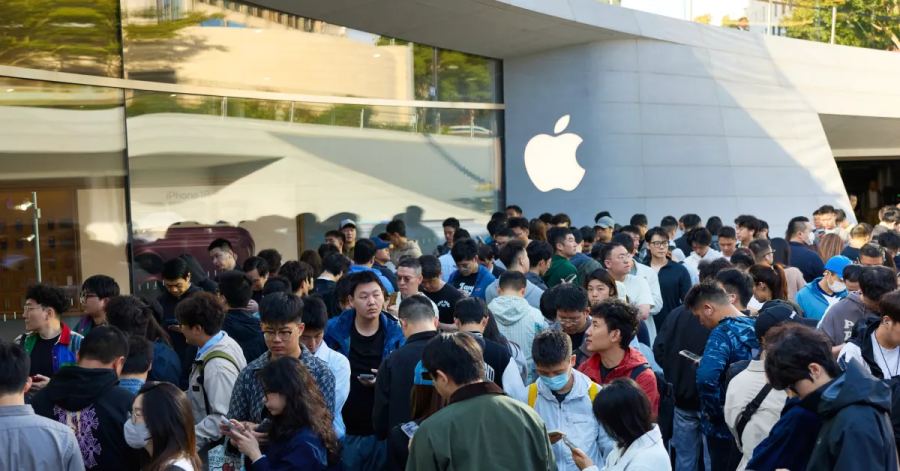
Walk-in inventory was limited. Apple Stores in the United States, the United Kingdom, China, and other launch markets saw queues form the night before and, in some cases, days earlier. At Apple Jing’an in Shanghai and Fifth Avenue in New York, customers celebrated with raised boxes once they cleared the doors. Ternus himself opened the Domain Northside store in Austin, joined by retail chief Deirdre O’Brien—an unusual choice that signaled the new CEO wanted to be present for the first foldable sale.
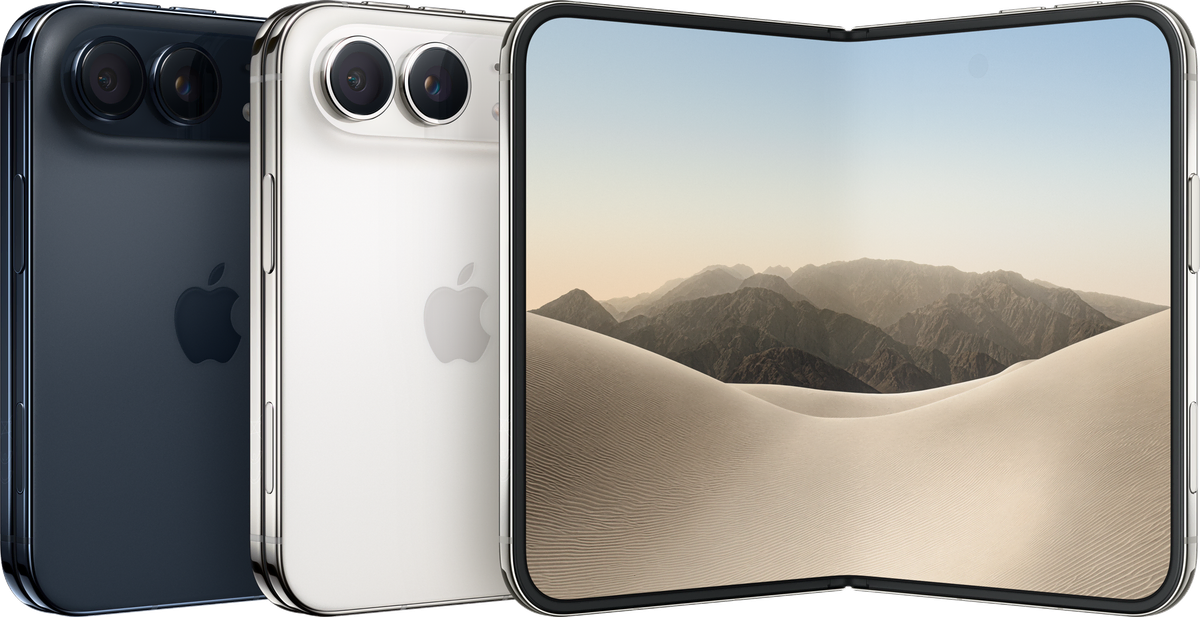
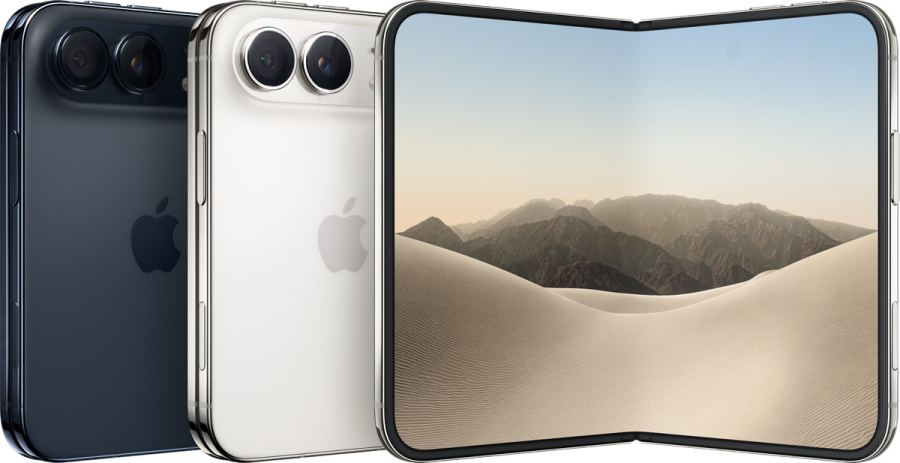
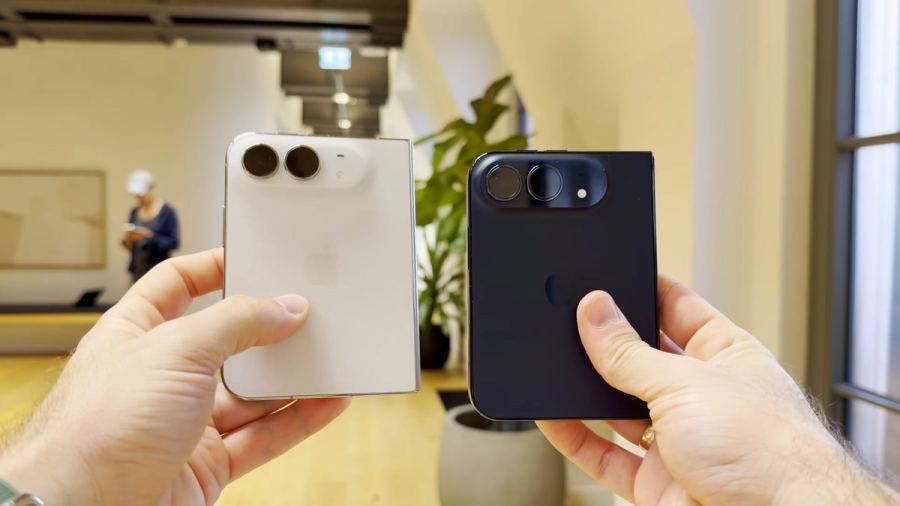
Hardware details that had been rumored for years became official: a 7.6-inch inner Super Retina XDR display with a nano-texture finish, a 5.4-inch outer display that keeps roughly 90 percent of the screen area of the iPhone 18 Pro, a titanium frame, a precision hinge with more than 100 components, dual-battery architecture, and the A20 Pro chip. Colors are Star White and Night Sky. Storage runs from 256 GB to 2 TB. The outer display is designed so the phone still feels like a conventional iPhone when closed; the inner display turns it into something closer to a small tablet for multitasking, video, and side-by-side apps.
Why Ternus Said Early Foldables Felt “Cheap and Crappy”
In a TIME interview published around the launch window, Ternus was blunt about the category. He described early foldable smartphones as having durability problems and visible creases that made them feel unfinished. Apple, he said, had recognized the potential of flexible OLED as far back as 2011, when he and a small group of engineers filed an early patent. The company simply refused to ship until the hinge, the display stack (more than ten ultrathin layers), and the software experience met its standards.
That stance is consistent with Ternus’s background. A 25-year Apple veteran who rose through hardware engineering, he has framed his early months as CEO around making the company leaner while still protecting the product bar. The iPhone Duo is the clearest public test of that approach so far. By waiting, Apple avoided the first-generation crease and durability complaints that defined Samsung’s early Galaxy Z Fold models and several Chinese competitors. The trade-off is that the company enters a market that already has mature players and a customer base accustomed to foldables.

Software, AI, and the Gemini Decision
The hardware story is only half of it. iOS 27 on the Duo introduces new poses: partially folded tent modes, laptop-style viewing, and side-by-side app layouts that scale with the continuous aspect ratio of both displays. Apple has also pointed to a new display engine running on its own silicon to keep transitions smooth when the phone opens and closes.
On the AI side, Ternus confirmed that Apple will use Google’s Gemini model to help power the next generation of Siri. He framed it as a pragmatic choice rather than a philosophical surrender: Apple does not need to build every underlying model itself. The visible result for customers is a Siri that can act on what is on screen and work across third-party apps. China received approval for Apple Intelligence features more recently, though Siri AI itself still faces a staggered rollout there. These software pieces matter because a foldable only justifies its price if the larger canvas feels meaningfully better than a large slab phone.
Demand Signals and What They Mean
Apple raised first-year production targets after seeing the early sell-through, according to reporting that cited a jump from roughly 9.7 million to 14 million units. Whether that figure holds, the directional signal is clear: a $1,999 starting price did not suppress interest. Delivery estimates stretching into late January 2027 are the practical evidence. Walk-in stock disappearing within minutes or hours at multiple stores adds another data point.
This is useful context for the rest of the 2026 cycle. The standard iPhone 18 and a possible iPhone 18e or Air successor are widely expected in spring 2027, a deliberate split that prioritizes the higher-margin Pro and Duo models in the fall. Memory and component shortages have been cited as one reason for the staggered cadence and for the $100 price increases on the iPhone 18 Pro models. The Duo’s strong early demand suggests the premium end of the lineup can absorb higher prices when the product feels differentiated.
What to Watch Next
The immediate next chapter is already on the calendar. On October 28, Apple is holding a “Pro and Tell” media experience in Los Angeles. Reporting from Bloomberg and others points to the first OLED MacBook Pro models with touchscreen support, a Dynamic Island-style cutout replacing the notch, lighter designs, M6 versions of the entry-level MacBook Pro and iMac, and an OLED iPad mini. It is not expected to be a full keynote, but a hands-on launch event—another sign that the product cadence under Ternus remains aggressive.
Beyond that, watch for three things. First, real-world durability reports on the Duo hinge and display after the first weeks of ownership; early teardowns have already highlighted the dual-battery layout and repair complexity. Second, whether iOS 27.1 features that are currently exclusive to the Duo (or at least first appear there) expand to the rest of the lineup. Third, the spring 2027 base iPhone 18 and any further Apple Intelligence expansions, including the Gemini-backed Siri experience outside English.
Ternus has described the early foldable market as unfinished. With the Duo now in customers’ hands and stores still seeing demand that outstrips immediate supply, the next several months will show whether Apple’s decade of patience produced a product that can sustain that interest once the initial excitement fades. The lines on October 23 were real. The harder test is whether the phone still feels worth the wait in January 2027.
Comments
0