
First Week with the Fold: What the iPhone Duo Launch Actually Told Us
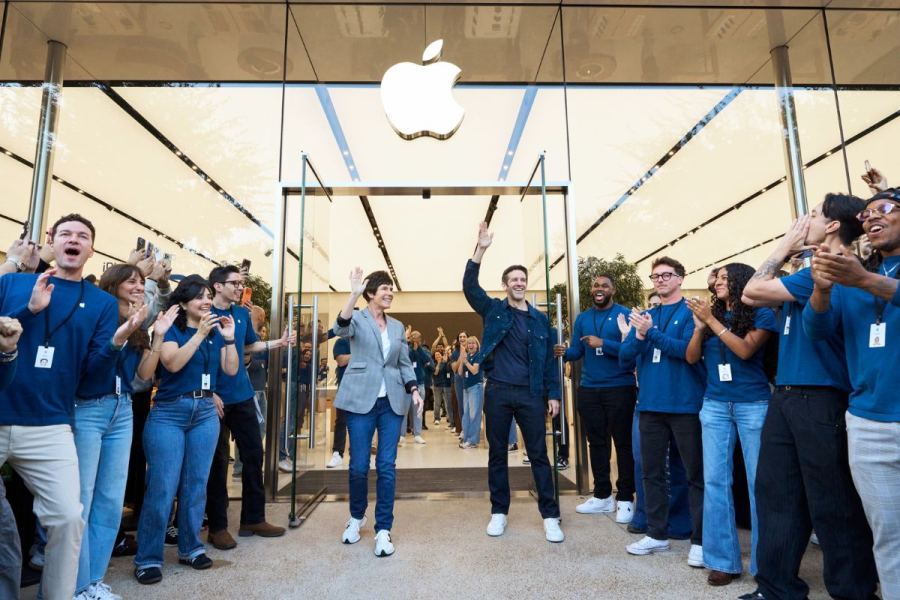
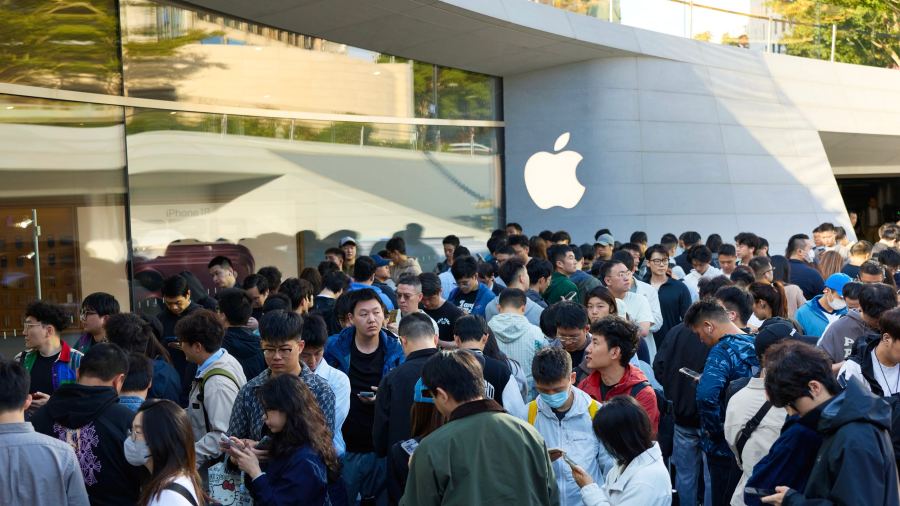
Apple’s first foldable iPhone is no longer a rumor, a concept, or a September keynote slide. As of October 23, 2026, the iPhone Duo is in customers’ hands across more than 70 countries and regions, with another 28 markets scheduled to open on October 30. The launch day scenes — long queues, limited walk-in stock, and Apple’s new CEO personally greeting buyers — gave the company exactly the visual it wanted. The harder part starts now: proving the device can survive real use, real dust, and real expectations.
What Happened on October 23
Apple’s Newsroom framed the day cleanly. At Apple Domain NORTHSIDE in Austin, John Ternus and retail chief Deirdre O’Brien welcomed customers. At Fifth Avenue in New York, Greg “Joz” Joswiak and Vanessa Trigub did the same. Similar scenes played out in London, Mumbai, Shanghai, and dozens of other cities. Pre-orders had opened on October 16 and, according to multiple reports, sold out in minutes for many configurations. Apple had already warned that walk-in inventory would be limited; on the day itself that proved accurate.
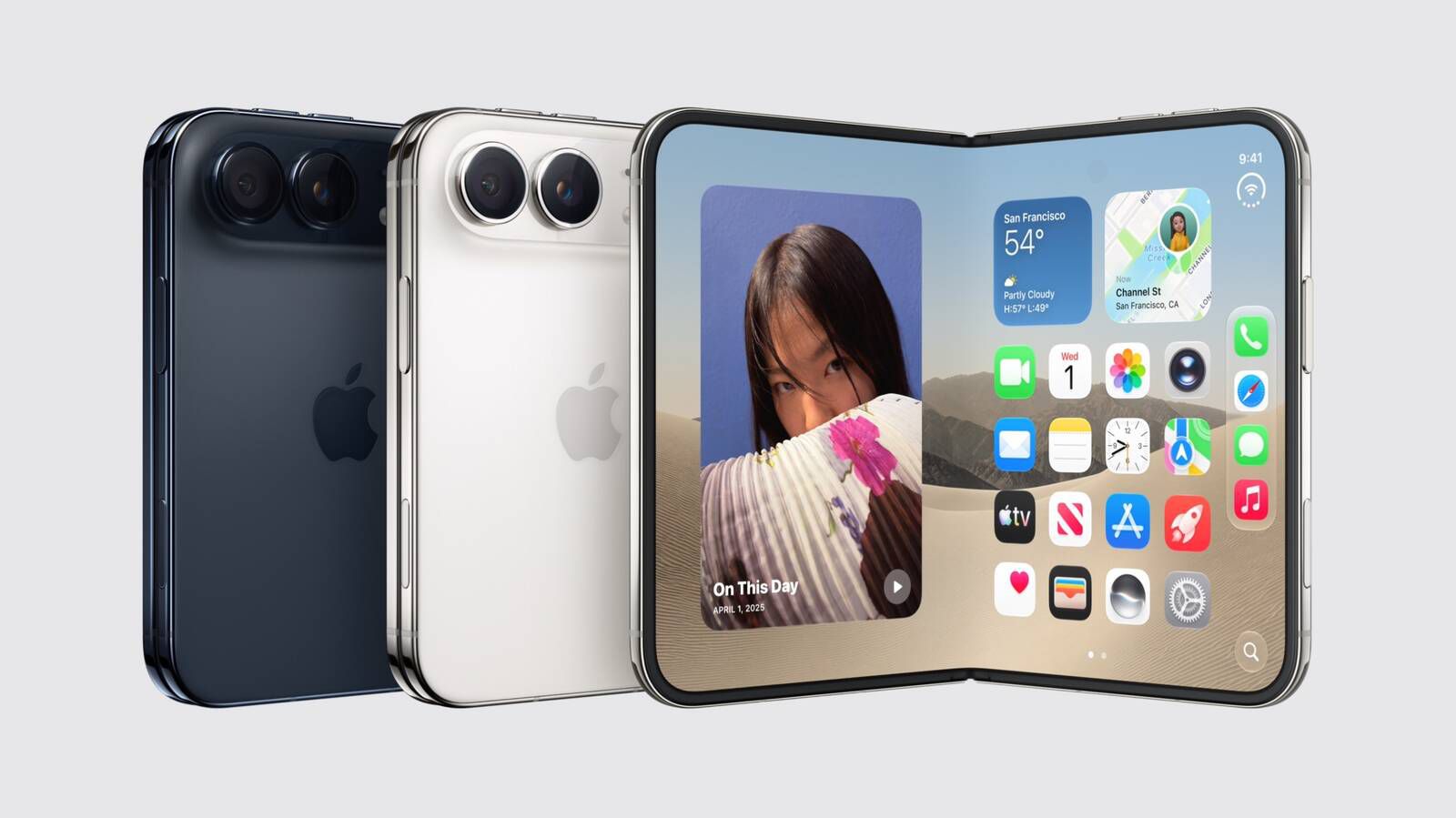
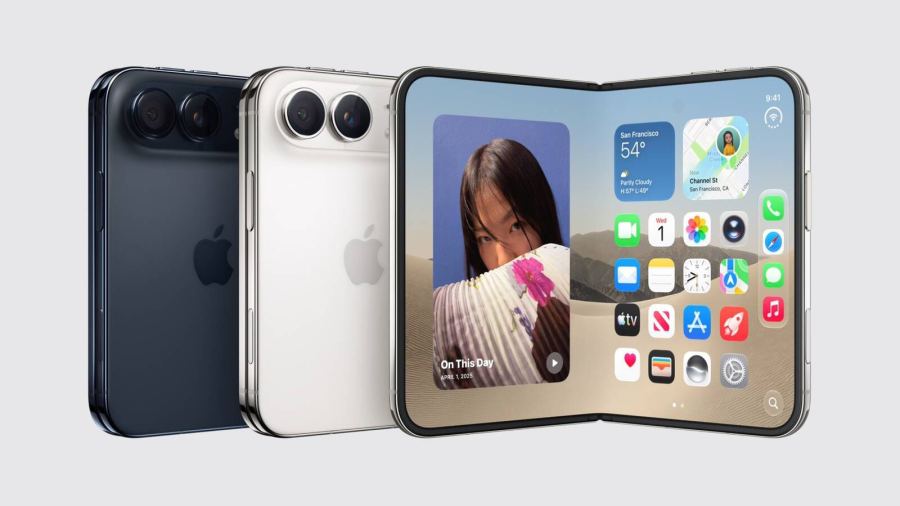
The pricing is unambiguous: $1,999 for the 256GB model in the United States, scaling to $3,199 for 2TB. Colors are Star White and Night Sky. The device folds book-style, with a 5.4-inch outer display and a 7.6-inch inner Super Retina XDR panel that Apple says is 50 percent larger than the iPhone 18 Pro Max. It runs the A20 Pro chip, carries dual batteries, uses Touch ID on the side button instead of Face ID, and supports Apple Pencil (USB-C) once iOS 27.2 arrives. Split View multitasking is native. The hinge is designed to hold the inner display flat when open and to deliver a satisfying feel at every angle.
Why the Launch Timing Matters
This is Ternus’s first major product cycle as CEO. He took the role on September 1 after Tim Cook moved to Executive Chairman. The September “Surprise and Shine” event introduced the Duo alongside the iPhone 18 Pro and Pro Max, the Apple Watch Series 12 and Ultra 4, and AirPods 5. Shipping the Pro models in mid-September and holding the Duo for late October created a staggered window that let Apple build narrative around both the conventional flagship and the form-factor bet.
Early hands-on coverage has been largely positive on the basics: the outer screen is usable, the inner screen is large enough for genuine multitasking, and the software transition between the two is smoother than most first-generation foldables. Reviewers have noted the lack of a dedicated telephoto camera, the reliance on Touch ID, and the still-maturing app ecosystem for the wider canvas. Those are known trade-offs Apple accepted. What was less expected is the cluster of early reports about inner-screen failures — bright lines appearing after a crunching sound during open or close cycles.
What iFixit Found Inside
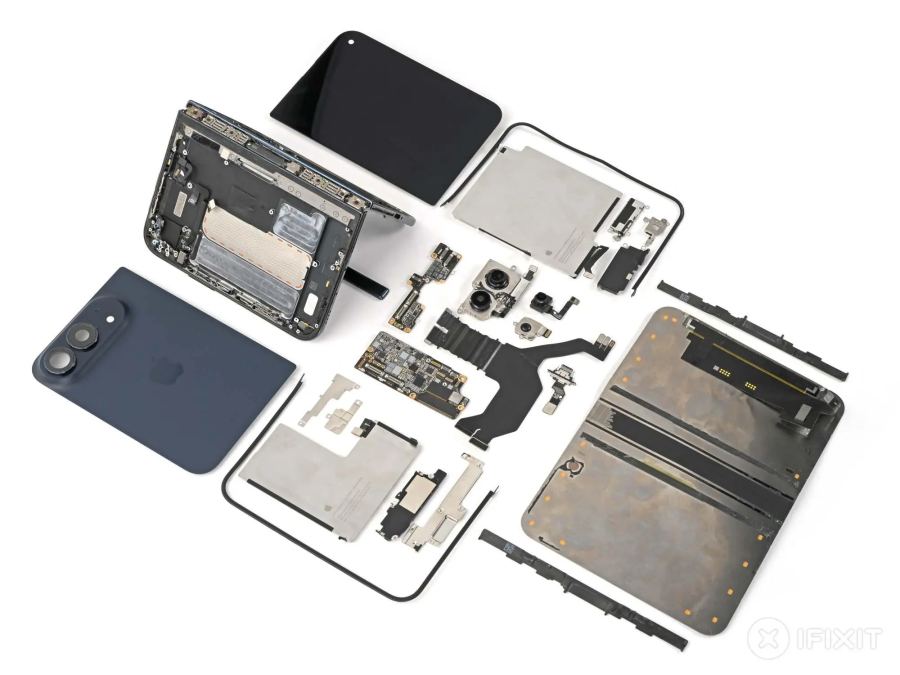
On October 25, iFixit published its teardown. The site gave the Duo a provisional 5 out of 10 for repairability, the highest score it has ever assigned to a foldable. The outer display can be removed intact. Both battery cells release with the electrically activated adhesive Apple has used on recent iPhones. Dust testing with fluorescent particles showed relatively little ingress compared with recent Galaxy Z Fold and Pixel Fold devices, though some particles reached the hinge and made it crunch.
More relevant to the screen reports: iFixit built a 3D model of the hinge from teardown footage, patents, and CT scans. Reported damage clusters near the transition between the flex-cable gap and the central hinge support. One hypothesis is that a center support bar does not drop low enough during closing, letting the curved display press against it. Another involves the curved guide rails. Apple has not publicly confirmed a design issue or a recall; support documents published on launch day already cover hinge troubleshooting, which suggests the company anticipated some users would encounter noise or incomplete open/close behavior.
The Demand Signal and the Supply Constraint
Apple has not published unit numbers. What is public is the behavior of the order system. Shipping estimates moved out quickly after pre-orders opened. The company imposed a two-unit limit per customer in several markets, a tactic it has used before when scalping risk was high. Second-wave markets open October 30. Meanwhile, Apple is running Today at Apple sessions focused on the Duo and on iOS 27 features. The combination of constrained supply and high visible interest is the classic Apple launch pattern, but the price point is higher than any previous iPhone, and the form factor is new. How many of the early buyers are long-term daily drivers versus curiosity purchasers will only become clear in the months ahead.
What to Watch Next
Three threads matter in the next few weeks. First, the screen and hinge reports. If the failures remain isolated, the story stays technical. If volume increases, Apple will have to decide between software workarounds, service programs, or a design revision for the next generation. Second, software. iOS 27.2 is expected to bring Apple Pencil support; Reachability (reworked for the wider displays) is promised later this year. App developers are still updating layouts for Split View and the dual-aspect-ratio canvas. Third, the October 28 “Pro and Tell” media experience in Los Angeles. Apple has invited selected journalists for hands-on time; the widely expected headliners are OLED touchscreen MacBook Pro models, an M6 iMac, and an OLED iPad mini. That event is not a traditional keynote, but it will show whether Ternus’s first autumn continues to deliver hardware that feels finished rather than rushed.
The iPhone Duo is the clearest statement yet that Apple is willing to enter a category late if it believes it can do so with better integration. The launch day images and the early teardown both support that claim in different ways. The images show demand. The teardown shows thoughtful engineering alongside a plausible mechanical weak point. Whether the product ultimately expands the iPhone franchise or becomes a high-end niche will depend on how those two realities evolve over the next several months.
Comments
0