

Early Display Failures on the iPhone Duo Test Apple’s Foldable Strategy Under John Ternus
Apple’s first foldable iPhone reached customers on October 23 after years of development and months of anticipation. Within days, a small but visible set of early owners reported inner-display problems that appeared near the hinge, often after a crunching sound while opening or closing the device. Bright lines, stuck pixels, and in some cases unusable inner screens showed up on units that had seen little use. On October 26, Apple publicly acknowledged the issue and directed affected users to AppleCare for replacements.
The timing is notable. The Duo is the first major hardware launch fully under CEO John Ternus, who took the role in September 2026 after Tim Cook stepped aside. Ternus personally opened the Domain Northside store in Austin on launch day, continuing Apple’s tradition of executive presence at retail openings. The foldable itself had been framed as a careful, long-game product rather than a rush to market. Reports of early failures therefore land as both a practical support matter and an early test of how the new leadership handles product issues in public.

What customers and Apple have reported
Owners described a consistent pattern. Many said the phone felt stiff or produced an unusual sound near the fold, after which a vertical or horizontal band of defective pixels appeared on the inner screen. The outer display continued to function in the cases that were documented. Some failures occurred during initial setup; others appeared after only a few hours of normal use. Bloomberg and other outlets verified a number of the reports through photos and support records. Apple’s statement, shared with multiple publications, was concise: the company is aware of an issue impacting the inner display on a small number of units, and users who experience problems should contact AppleCare for a replacement.
Apple further clarified that most Duo units are not susceptible and that affected devices tend to show the defect relatively quickly. It has not published a failure rate or a detailed technical explanation. Third-party teardowns, including work by iFixit, have pointed to the hinge assembly as a likely area of concern. The hinge is a complex multi-part mechanism; small manufacturing variations or debris could place unexpected stress on the flexible display. Apple has not confirmed or contradicted that analysis. Replacement experiences have varied by location and inventory. Some customers received in-store swaps; others were told stock was limited and wait times could stretch toward January.
Why the timing and the product matter
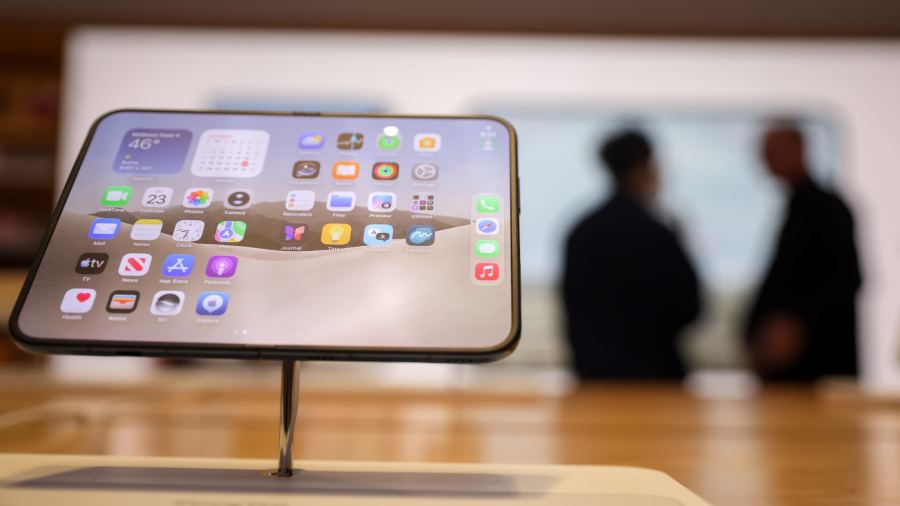
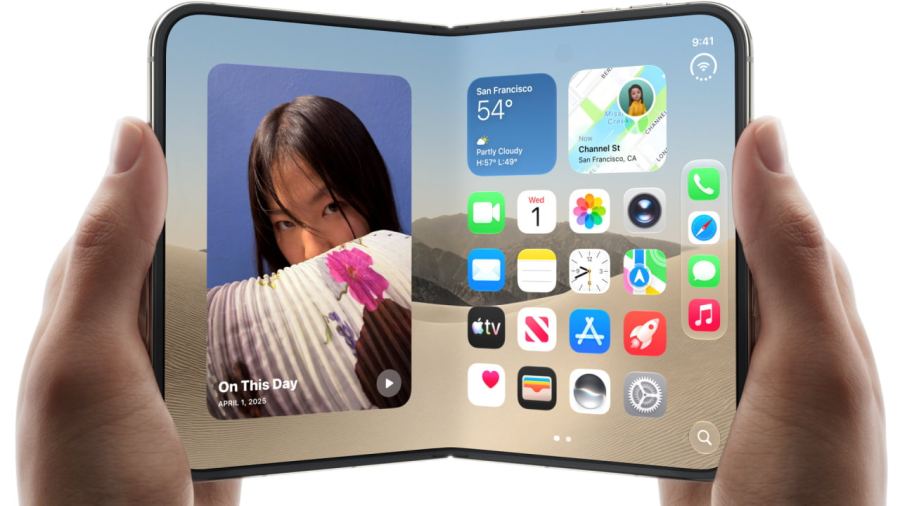
The Duo starts at $1,999 and is positioned as Apple’s most versatile iPhone, with a 7.6-inch inner Super Retina XDR display when open and a 5.4-inch outer display when closed. Both share a similar aspect ratio so content scales cleanly. Apple has emphasized durability, a precision hinge, titanium construction, and IP68 resistance. Those claims now sit alongside early field reports of inner-display damage. For a product that Apple deliberately delayed relative to competitors, the first wave of real-world use is an important data point. Competitors have spent years refining foldable hinges and displays; Apple argued it waited until the technology was ready. Early failures do not automatically invalidate that approach, but they do raise questions about how thoroughly the hinge and display stack were validated at volume.
The broader context is Apple’s fall product cycle under Ternus. September brought the iPhone 18 Pro models, Apple Watch Series 12 and Ultra 4, and AirPods 5. October has already included the Duo launch, HomeView and related home products, and Monday’s OLED iPad mini announcement. Software updates arrived the same day Apple acknowledged the Duo issue: iOS 27.2, iPadOS 27.2, macOS 27.2, and companion releases expanded Siri AI with conversation recall, additional personal-context sources, and support for five more languages. The Duo itself gained Apple Pencil support in that update. Hardware reliability and software capability are therefore arriving in the same window, and both will shape early perceptions of the Ternus era.
Apple’s response and what it signals
Directing customers to AppleCare for free replacements on affected units is the standard and expected first step. It protects early buyers and limits the immediate reputational damage. What remains open is the scale. “A small number” is not a number. If the defect is tightly limited to a specific production batch, replacements and tighter quality controls can contain it. If the hinge design itself has a narrower margin than Apple anticipated, the issue could surface more widely as more units circulate. Supply of the Duo was already constrained; pre-order estimates slipped into early 2027 for many configurations. Diverting inventory to replacements will tighten retail availability further in the near term.
Ternus has spoken publicly about the Duo’s long development arc, noting that work on flexible displays and related mechanisms dates back more than a decade inside Apple. The decision to launch only when the company believed the design was ready was presented as a deliberate choice rather than a competitive response. Early field failures test that narrative. They also test Apple’s communication style. The company’s statements so far have been factual and limited. They confirm the problem exists, describe it as narrow, and point to the remedy. They do not offer a root-cause explanation or a timeline for any design adjustment. That approach is consistent with past Apple product issues, but it leaves room for third-party analysis and customer speculation to fill the gap.
What to watch in the coming weeks
Several signals will clarify how significant the issue becomes. First is the volume of replacement requests that AppleCare and Apple Stores process. Public forums and support wait times will give an early indication even if Apple does not publish figures. Second is whether later production runs show the same failure mode. If new units arriving in November and December remain clean, the problem is more likely a contained manufacturing variance. Third is any silent design revision. Apple rarely announces mid-cycle hardware changes, but service parts and later serial ranges sometimes reveal adjustments to hinges, display stacks, or assembly tolerances.
The October 28 “Pro and Tell” event in Los Angeles is the next major public moment. Expectations center on new Macs, including a possible touchscreen MacBook Pro, plus M6-powered iMac and entry-level MacBook Pro models. The OLED iPad mini was already announced on the 26th, so the event can focus on the Mac lineup. How Apple frames overall product quality and the fall cycle in that setting will be worth watching, even if the Duo itself is not the headline. Software continues to evolve as well. iOS 27.2 already expanded Siri AI and added Duo-specific features such as Pencil support. Further point releases can address software side effects, but they cannot fix a mechanical display problem.

For buyers still waiting on a Duo, the practical advice is straightforward. Document any unusual resistance, sound, or pixel issues immediately. Contact AppleCare rather than assuming the problem is user damage. Keep records of purchase date and symptoms. Those who have not yet ordered may want to watch the next several weeks of replacement reports before committing, especially given the existing supply delays. For Apple, the Duo remains a strategically important product: it expands the iPhone form factor, supports higher pricing, and demonstrates the company’s willingness to enter a category it had previously left to others. Early display failures do not end that effort, but they do set the tone for how carefully the company will need to execute the next generations of foldable hardware.
The next month will show whether this is a narrow launch-batch problem or a broader design challenge. Apple’s willingness to replace affected units quickly, the behavior of subsequent production, and the company’s communication around the hinge will all matter. Under Ternus, the first major new form factor has arrived. The early returns on durability are mixed, and the response will be one of the first sustained tests of the new leadership’s approach to product quality in the field.
Comments
0