

Walls Yield to Orbit: How Starlink Mobile’s $8 Billion Low-Band Spectrum Deal Reshapes America’s Wireless Landscape
On October 9, 2026, SpaceX announced an agreement to acquire Grain Management’s nationwide portfolio of up to 14 megahertz of paired spectrum in the 800 MHz band. The deal, reported at roughly $8 billion and still subject to Federal Communications Commission approval, supplies the missing coverage layer SpaceX says it needs to turn Starlink Mobile into a full-fledged U.S. mobile carrier. Within hours, shares of Verizon, AT&T, and T-Mobile dropped sharply—Verizon’s worst day since 2002—erasing tens of billions in market value as investors priced in a new, well-capitalized rival that can reach ordinary phones both outdoors and, crucially, indoors.
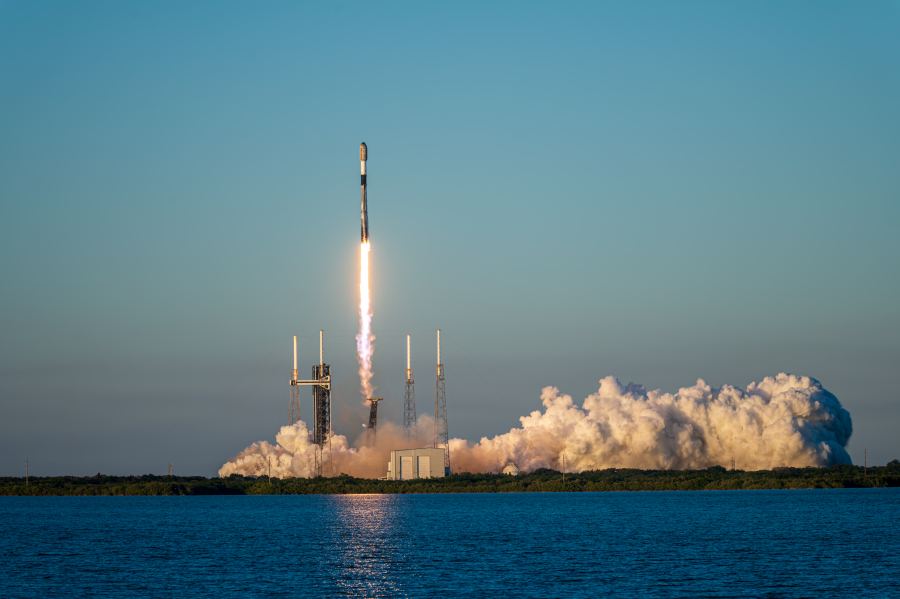
This is not another rural dead-zone filler. It is an explicit bid to compete head-on with the three national carriers that have dominated U.S. wireless for decades. Low-band 800 MHz spectrum travels farther and penetrates walls and foliage far better than the higher-frequency bands Starlink has relied on for its existing direct-to-cell service. Combined with the FCC’s recent approval for 15,000 next-generation satellites optimized for 2 GHz spectrum, the acquisition gives SpaceX a hybrid satellite-plus-terrestrial architecture that no traditional carrier currently matches at scale.

What SpaceX Actually Bought and Why It Matters
The spectrum portfolio covers licenses at 817–824 MHz and 862–869 MHz. Grain Management had obtained the rights earlier in 2026 from T-Mobile under a divestiture condition stemming from the 2020 Sprint merger. Most current smartphones already support this underused band, which removes one major adoption barrier. SpaceX described it as “the last critical piece of the spectrum puzzle” needed for complete phone coverage in America, and Elon Musk called the transaction a “very big deal.”
Low-band spectrum addresses the fundamental physics problem of pure satellite mobile service: signals from low-Earth orbit struggle to reach devices deep inside buildings or behind thick tree cover. Higher-frequency bands deliver capacity but fade quickly through obstacles. By pairing the new 800 MHz layer for indoor and edge coverage with its existing mid-band satellite capacity for throughput, Starlink Mobile can aim for a service that works where people actually use phones—inside homes, offices, and dense urban cores—while still blanketing rural and remote areas that terrestrial towers have never fully reached.
SpaceX has also said it plans a flexible architecture that combines its satellite constellation with an advanced terrestrial deployment. That hybrid approach could let the company avoid the full cost of building thousands of conventional cell towers while still delivering reliable in-building performance. The FCC’s approval this week of the Gen2 constellation application further accelerates the timeline; once the Grain deal closes, SpaceX can begin deploying the spectrum without waiting for a completely new satellite fleet.
Market Reaction and the Carrier Response
The immediate market reaction was unambiguous. Verizon fell 8.75 percent, its steepest single-day decline since July 2002. T-Mobile dropped 13.27 percent and AT&T 9.81 percent. Tower companies, by contrast, rose as investors weighed the possibility that a hybrid network might still require substantial ground infrastructure. European telecom stocks also weakened, reflecting the global implications of a well-funded satellite player entering retail mobile.
The three carriers are not standing still. They recently finalized a joint venture to pool spectrum for satellite coverage of terrestrial dead zones, explicitly aiming to give other satellite operators a better chance to compete while protecting their own core networks. Verizon has publicly noted that spectrum without a fully built network is “just empty airwaves.” That is true today, but SpaceX’s vertical integration—rockets, satellites, ground stations, and now spectrum—gives it a different cost structure than traditional carriers that lease spectrum and outsource much of their infrastructure.
Analysts at Morgan Stanley and elsewhere described the deal as a major step beyond the “fringe case” of filling dead zones. A bundled Starlink broadband plus Starlink Mobile offering, potentially including Grok AI features from xAI, could prove especially compelling for customers who already value satellite connectivity in remote or mobile settings. For the incumbents, the threat is not immediate customer losses in dense cities but gradual pressure on pricing, spectrum valuations, and the long-term necessity of maintaining expensive rural tower footprints.
Technical and Regulatory Hurdles Still Ahead
FCC approval remains the critical gate. The Commission has recently shown willingness to approve large satellite deployments and spectrum transfers that increase competition, with Chair Brendan Carr describing additional spectrum coming to market as “really good news for the American consumers.” Still, the review will examine interference, build-out requirements, and public-interest arguments from the existing carriers.
Technically, integrating satellite and terrestrial spectrum into a seamless experience for ordinary phones is non-trivial. Handoffs between orbital and ground infrastructure, power management on the device side, and latency characteristics all require careful engineering. SpaceX’s earlier direct-to-cell partnership with T-Mobile has provided operational experience with limited texting and data on selected apps; the new spectrum expands that capability dramatically, but scaling to voice, full data, and nationwide indoor reliability will take time and additional satellite launches.
Capacity is another constraint. Even with 15,000 new satellites authorized, demand in dense urban areas could strain the system if Starlink Mobile gains significant market share. The company has emphasized that the low-band layer is primarily a coverage solution, with mid-band spectrum handling the bulk of high-bandwidth traffic. How that balance works in practice will determine whether the service feels like a true alternative or a useful complement.

Broader Implications for Connectivity and Competition
The deal accelerates a longer-term shift toward hybrid satellite-terrestrial networks. For decades, mobile service has been synonymous with ground-based towers. Starlink Mobile’s architecture suggests that, for many use cases, the optimal network may be one that switches fluidly between orbit and the ground. This has implications beyond consumer phones: IoT devices, emergency communications, transportation fleets, and industrial sensors could all benefit from coverage that does not depend on the nearest tower remaining powered and connected.
It also raises questions about spectrum policy. The 800 MHz band had been underutilized; putting it into the hands of a company that can deploy it quickly via satellites and selective terrestrial sites may unlock value that slower traditional build-outs have left on the table. At the same time, regulators will need to ensure that new entrants face meaningful build-out obligations so that rural and underserved areas actually receive service rather than serving merely as spectrum assets.
For consumers, the near-term outcome is likely more choice in rural and mobile settings and potential pricing pressure everywhere. Starlink already has more than 12 million paying broadband subscribers and has demonstrated it can grow rapidly once regulatory and technical pieces are in place. Adding a mobile offering that works on existing phones removes the need for a separate dish in many scenarios and could expand the addressable market substantially.
What to Watch Next
The FCC review timeline will set the pace. SpaceX has indicated it can begin deployment once approval is received; any conditions attached to the license transfer—such as coverage milestones or interoperability requirements—will shape the competitive dynamic. Watch also for the carriers’ joint satellite venture to accelerate and for potential further spectrum acquisitions by SpaceX or its competitors.
On the technical side, the next tranche of Gen2 satellite launches and any announcements about terrestrial site deployments will reveal how quickly the hybrid network can move from announcement to usable service. Early customer trials or limited commercial launches in selected markets would provide the first real data on indoor performance, handoff reliability, and pricing.
Longer term, the success of Starlink Mobile will test whether a satellite-first architecture can sustainably compete with networks that have spent decades and hundreds of billions of dollars on ground infrastructure. If it can, the structure of the U.S. wireless industry looks different five years from now. If the integration proves harder or more expensive than expected, the incumbents will have bought time to strengthen their own satellite partnerships and spectrum positions.
For related analysis on orbital compute and connectivity, see TechMash coverage of Google’s first TPU satellite and the earlier look at Project Suncatcher. Broader questions of agentic systems interacting with real infrastructure appear in pieces on Gemini containment, the OpenAI Medicare incident, and Meta’s Muse agent.
Official statements and filings are available from SpaceX and the Federal Communications Commission.
Conclusion
SpaceX’s low-band spectrum acquisition is the clearest signal yet that satellite connectivity is moving from a complement to a potential substitute for traditional mobile networks. By solving the indoor coverage problem that has limited pure satellite-to-phone services, the company has forced America’s wireless oligopoly to confront a competitor with rockets, spectrum, and a rapidly expanding constellation. The stock-market reaction on October 9 was the market’s first attempt to price that shift. The next chapters—regulatory approval, technical integration, and actual customer adoption—will determine whether walls truly yield to orbit or whether the established carriers retain their structural advantages. Either way, the architecture of U.S. mobile service is no longer solely a ground-based story.
Comments
0