
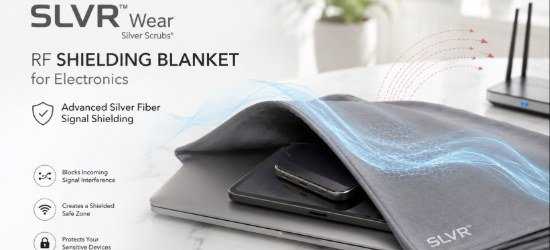
RF Shielding Blanket for Electronics How It Works | SLVR Wear ™
Plenty of products claim to block signals, but the actual mechanism behind an RF shielding blanket for electronics is grounded in well established material science, not a mystery ingredient. This article breaks down what makes the fabric work, why silver, why a layered construction and how the blanket differs structurally from a simple decorative throw. Understanding the engineering makes it easier to evaluate whether a given shielding product is built the way it claims to be.The Core Principle Conductive Materials and Radio Frequency Energy
Radio frequency energy is an electromagnetic wave, the same broad category of energy that carries WiFi, Bluetooth, cellular and countless other wireless signals through the air. When that wave encounters a sufficiently dense, conductive material, the material free electrons respond to the wave oscillating field, generating a current across the surface. That induced current reflects and absorbs the incoming energy, preventing the wave from passing through to the other side.
This is the same underlying principle behind a Faraday cage, an enclosure of conductive material that interrupts electromagnetic fields. A rigid metal box is one way to build that enclosure. A woven textile with conductive fiber integrated into its structure is another, more flexible, more comfortable to handle and far more practical for everyday household use.
Why Silver Specifically
Silver is used because it is one of the most electrically conductive materials available, whether in solid form or drawn into fine fiber for textile use. That conductivity is precisely what allows a silverfiber mesh to interact with and reflect RF energy the way a solid metal shield would, while still being flexible and washable enough to function as fabric.
This is the entire reason silver appears in the signal shielding baby blanket its conductive properties are what enable the shielding function. It has nothing to do with any other property sometimes associated with the metal; the sole engineering purpose here is electrical conductivity translated into RFblocking performance.
Why a Three Layer Construction, Not a Single Fabric
A shielding blanket built purely from a dense metal mesh would be stiff, heavy and unpleasant to use as a household textile. SLVR Wear™ approach instead uses a threelayer construction, each layer doing a distinct job
- The outer layers are made from refined cotton, selected for softness, breathability, drape durability through repeated folding and washing. These layers are what your hands actually touch and what gives the blanket its comfortable, familiar feel.
- The center layer is where the shielding function lives. This center layer features a 50% silver infused fabric blend, giving it the conductive density needed to interrupt RF energy effectively while still remaining flexible enough to fold and drape naturally.
- This layered approach of soft protective layers sandwiching a functional conductive core is a deliberate engineering choice. It means the blanket doesn't have to compromise between usable as a textile and effective as a shield. Each layer is optimized for its specific job rather than trying to make a single fabric do everything at once.
Why the Blanket Doesn't Use a Single Percent Silver Figure
Because the silver is concentrated specifically in the center layer rather than blended evenly across all three layers, a single overall percentage for the entire product wouldn't accurately represent how the blanket performs. The outer cotton layers contain no silver at all; they exist purely for comfort and durability while the center layer is where the concentration is meaningful.
This is why SLVR Wear™ signal shielding XLarge blanket describes the construction at the layer level; the center layer features a 50% silver infused fabric blend. That framing is more accurate than an average across the whole product; it reflects how the engineering actually works, a functional core layer doing the shielding job, wrapped in comfort layers that do not.
Woven Construction vs Coated or Sprayed Fabrics
Not every conductive textile on the market is built the same way the construction method matters for long term performance. Two broad approaches exist in the wider shielding textile market
- Woven in conductive fiber, where the conductive material is part of the fabrics actual thread structure from the start. This is the approach used in SLVR Wear™center layer.
- Surface coatings or sprays, where a conductive layer is applied to the outside of an otherwise ordinary fabric after the fact.
- The distinction matters because a coating sits on the surface of the fabric and can wear, flake, or rub off with repeated washing, folding and handling all things a blanket experiences constantly in daily use. Fiber that is woven into the structure of the fabric itself is part of the textile rather than a layer applied on top of it, which is a more durable foundation for a product meant to be folded, packed and washed repeatedly over its lifespan.
Certification What OEKOTEX® Standard 100 Actually Confirms
SLVR Wear™silver yarn carries OEKOTEX® Standard 100 certification. This certification is an independent, thirdparty verification that a textile has been tested and found free of harmful substances at levels that could be a concern for human contact. For a product that is handled daily, wrapped around a lap, or kept on a nightstand within arm reach, that kind of independent testing is a meaningful quality marker beyond the manufacturer's own claims.How This Compares to Other RF Blocking Textiles
Some products on the market use thinner, singlelayer conductive fabric with no comfort layer at all, prioritizing shielding density over usability. Others go the opposite direction, using so little conductive material that the fabric feels soft but performs inconsistently as a shield. The threelayer approach is a deliberate middle path with enough conductive density in a dedicated center layer to function as intended, with comfort focused layers on either side so the finished product is still something people will actually use every day rather than leave in a drawer. That last point matters more than it might seem. A shielding textile only works when it is actually used consistently; a stiff, uncomfortable fabric tends to get used less over time regardless of its technical performance on paper.
Where to See This Construction in Practice
The layered silver fiber construction described here is used across SLVR Wear™ entire blanket collection, including the X Large signal shielding blanket for larger coverage needs. The same underlying silverfiber shielding principle adapted for apparel rather than a textile wrap is also behind SLVR Wear ™ Silver Scrubs line, for anyone interested in how the material science translates into wearable products.
Frequently Asked Questions(FAQs)
Why does SLVR Wear™ use silver instead of another metal?
Silver is one of the most electrically conductive materials suited to textile applications conductivity is the property that allows a woven fiber layer to reflect and absorb RF energy effectively.
Is the entire blanket made of silver fiber?
No, The blanket uses a threelayer construction of refined cotton on the outside for comfort and durability, with the center layer featuring a 50% silver infused fabric blend where the shielding function is concentrated.
Why doesn't SLVR Wear™ list one overall silver percentage for the blanket?
Because the silver is concentrated in the center layer rather than distributed evenly across all three layers, a single blended percentage wouldn't accurately reflect the product construction or performance. Describing it at the layer level is more precise.
What does OEKOTEX® Standard 100 certification actually mean?
It means the silver yarn used has been independently tested and verified to be free of harmful substances at levels of concern for human contact, a third party quality and safety marker, not a performance claim.
Is woven in fiber better than a sprayed-on conductive coating?
Woven in fiber is part of the fabric structure from the start, which tends to hold up better over repeated washing and handling than a coating applied to the surface afterward, which can wear off with use.
Does the outer cotton layer do anything for shielding?
No, the outer layers are there for comfort, softness, durability. The shielding function is concentrated specifically in the center layer.
Comments
0