
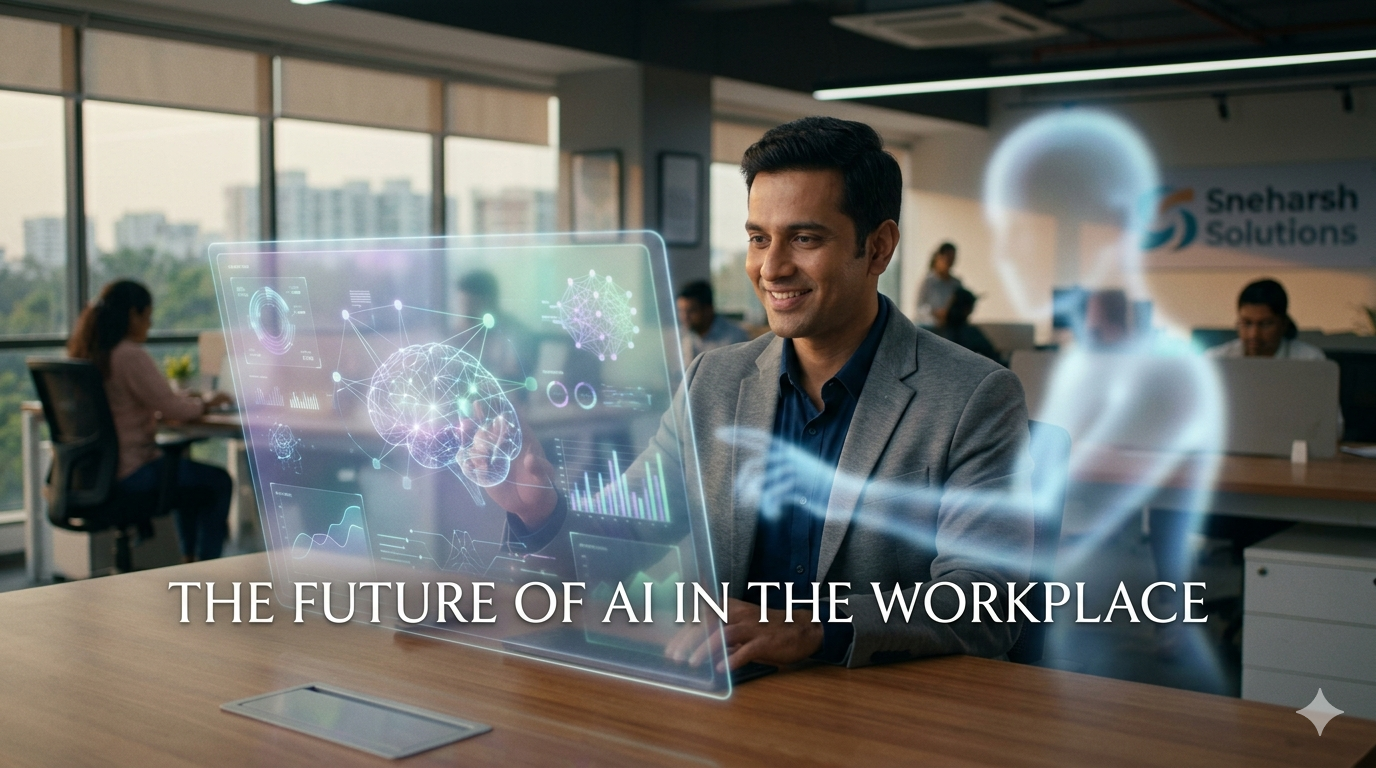
The Future of AI in the Workplace: Embracing the Transformation
Have you ever wondered if your desk neighbor is actually a human, or if you're just waiting for the next software update to tell you what to do? It’s a joke I often hear in the office, but honestly, it captures the nervous energy we’re all feeling. Everywhere you look, AI in the workplace is the talk of the town—or rather, the boardroom. As someone who has spent years in management, I’ve seen my fair share of "game-changing" technologies, but this one feels different. It isn't just about faster spreadsheets; it's about fundamentally changing how we define "work."
Understanding the Shift in Professional Roles

"Do you think I'm going to be replaced by a bot?" I asked a colleague the other day. She looked at me, shrugged, and said, "Only if you stop learning." That’s the reality. The future of AI in the workplace isn't about human versus machine; it’s about humans who use machines versus those who don’t. We are seeing a massive shift where repetitive tasks—data entry, basic scheduling, even routine reporting—are being handed over to intelligent agents.
When I look at my own team, I don't see AI as a threat. I see it as a "digital intern." You know, the one who never sleeps, never complains, and can summarize a 50-page PDF in seconds. This allows my staff to focus on what actually makes them human: empathy, complex problem-solving, and creative strategy. If you’re spending your whole day formatting cells, you aren't doing the work you were hired for. AI clears the deck so we can actually innovate.
Navigating the Challenges of Human-AI Collaboration
.png)
Of course, it’s not all sunshine and productivity. There’s a learning curve, and it’s steep. Implementing artificial intelligence technology in a professional environment requires more than just installing software. You need a culture shift. You need people who are willing to say, "I don't know how to use this tool, but I'm going to learn."
I’ve had to have some tough conversations with veterans in my field who feel left behind. My advice to them is always the same: "Don't try to master the tech overnight. Just find one thing that annoys you about your daily routine and see if AI can fix it." Start small. Use an AI assistant to draft that email you’ve been procrastinating on. Use a generator to help brainstorm your next project outline. The goal is to build a partnership, not a replacement.
There is also the ethical side of things. We talk a lot about data privacy and the accuracy of AI outputs. "Can we trust this?" is a question I ask every single day. The answer is that we have to be the final layer of quality control. AI can provide the raw material, but we provide the judgment. We are the curators of the output. That’s a role that won’t be automated anytime soon.
Looking ahead, I see a workplace where the most valuable skill won't be how fast you can type or how much data you can memorize. It will be how well you can direct, prompt, and refine the AI tools at your disposal. We are entering an era of "augmented intelligence." It’s a bit scary, sure. Change always is. But it’s also an incredible opportunity to strip away the "busy work" and get back to the work that actually matters—the stuff that challenges us, excites us, and makes our businesses grow.
So, next time you see an AI tool popping up in your workflow, don't close the tab. Open it. Explore it. It might just be the best "colleague" you’ve ever had.
Comments
0