
iPhone Duo is not a Pro Max with a hinge. That is the whole point.
Apple spent years pretending the foldable category did not exist. Then John Ternus walked on stage at Surprise and Shine and treated the iPhone Duo like it had always been the plan. That is the most important part of this launch: it is not a concept, a developer kit, or a limited drop. It is a $1,999 product with a ship date.
Pre-orders open Friday, October 16. Units start reaching customers Friday, October 23. That is a full month after iPhone 18 Pro and Pro Max land on September 18. Apple is staggering the two stories on purpose. The Pro phones are the volume business. The Duo is the argument that Apple still decides what a phone is allowed to look like.
What actually shipped on stage
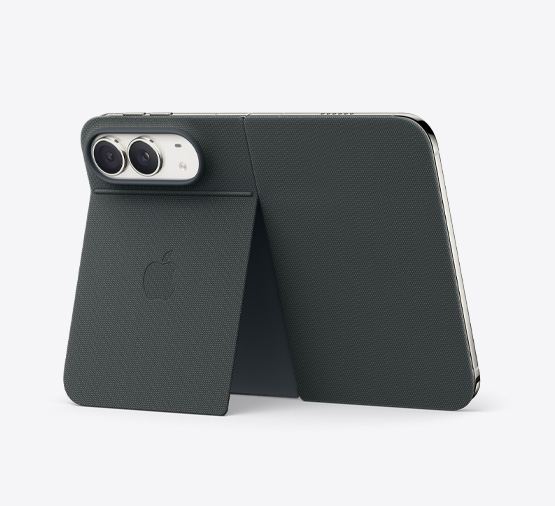
Closed, the Duo is a 5.4-inch cover phone with a passport-like footprint. Open, it becomes a 7.6-inch Super Retina XDR inner panel. Both displays keep the same aspect ratio, both run ProMotion up to 120Hz, both peak at 3,000 nits outdoors, and the inner glass gets a nano-texture finish meant to hide glare and, more importantly, the crease.
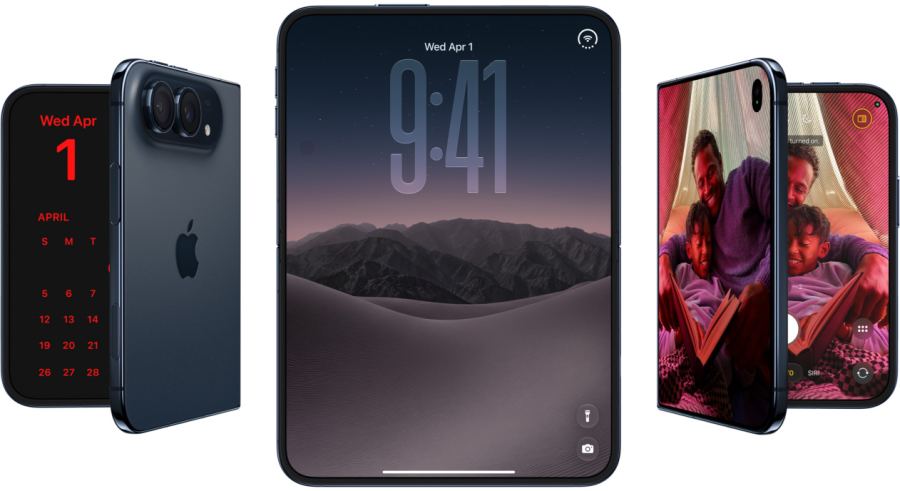
The chassis is grade 5 titanium with Ceramic Shield on the back and Ceramic Shield 2 on the cover. Weight is 254 grams. Folded thickness is 11.3 mm; unfolded it drops to 5.2 mm, which Apple calls the thinnest iPhone it has ever made. IP68 is official. Colors are Star White and Night Sky. Storage runs 256GB, 512GB, 1TB, and 2TB. The opening price is $1,999 for 256GB.
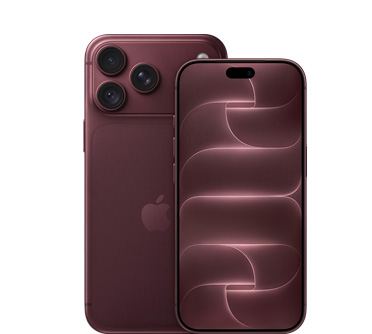
Inside is the same A20 Pro chip that powers iPhone 18 Pro, plus a display engine that drives both panels at once and Apple's C2 modem. Cameras are more restrained than the Pro pair: a 48MP Fusion main, a 48MP ultrawide shared with 18 Pro, and a 12MP 2x telephoto. There is no variable aperture. The cover gets a 12MP Center Stage camera; the inner FaceTime camera sits under the display.
Battery is the sleeper spec. Apple put a cell on each half and treats them as one pack. Rated video playback is up to 31 hours on the inner screen and up to 44 hours on the cover alone, or about 24 hours of mixed use. Wired charging is claimed to hit 50 percent in around 20 minutes. MagSafe and Qi2 are both supported.
Why the software story matters more than the hinge
Hardware is table stakes in 2026. Samsung and Google already sell book-style folds. What Apple is selling is a version of iOS 27 that knows which half of the device you are looking at. Split View can pin video to the top and leave the rest of the canvas free. Partial-fold postures are first-class, not afterthoughts. Standby is rebuilt for a device that can sit open like a tiny laptop. Apple Pencil support is coming later this year as a software update, not on day one.
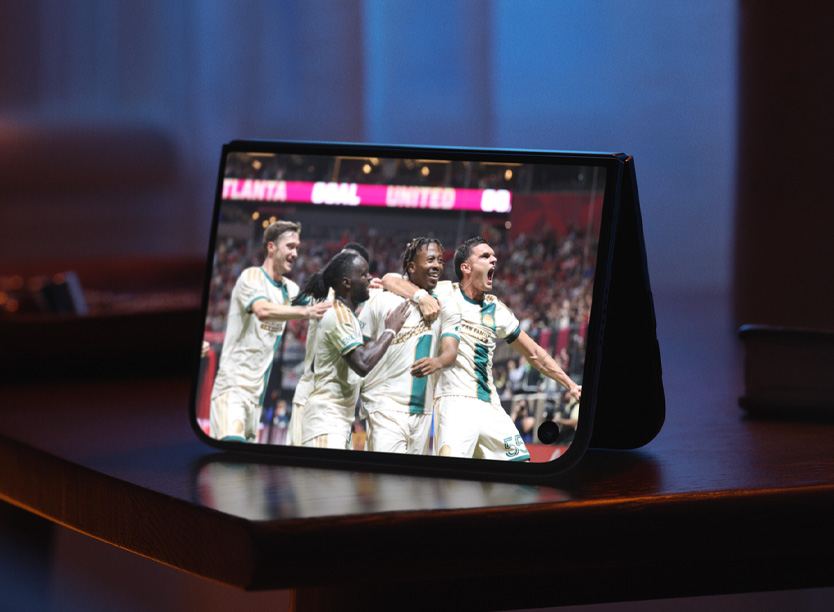
That last detail is revealing. Apple would rather ship a complete hinge and a half-finished stylus story than the other way around. It also published guidance for how apps should behave across the two displays. Developers who treat the inner panel as a stretched iPhone will look sloppy next to apps that use the extra width for real two-pane layouts.
The $800 question versus iPhone 18 Pro
iPhone 18 Pro starts at $1,199. Duo starts $800 higher. For that money you give up the Pro's variable-aperture main camera and you wait an extra month. You gain a tablet-class inner canvas, dual-battery endurance that may beat every other iPhone, and a form factor Apple has never sold before.
That trade only works if you actually open the device. People who live in messages, maps, and camera will be happier on 18 Pro Max. People who write, read, review documents, or run two apps for more than five minutes at a time are the Duo customer. Apple is not hiding that. There is no base iPhone 18 this fall. The lineup is Pro slates now and a foldable in October. The cheap phone is next spring's problem.
What to watch between now and October 23
Three things will decide whether Duo is a prestige SKU or a real second flagship. First, crease and durability after a week in a pocket, not on a keynote table. Apple's nano-texture and multi-layer lamination claims need to survive lint, keys, and sweat. Second, app readiness. If Mail, Safari, and the major third-party suites look like stretched iPhone layouts on October 23, the $1,999 pitch collapses. Third, supply. A month-long gap after the Pro launch is either logistics or a quiet admission that yields are tight.
Siri AI, which starts rolling out today with iOS 27, is a side plot here. It is English-only at launch, capped daily, and limited to iPhone 15 Pro and newer. Duo will get it, but nobody is buying a foldable for a beta assistant.
The honest read: Apple did not invent the foldable. It waited until it could ship IP68, titanium, a matched aspect ratio, and a software story it was willing to put a CEO on stage for. Whether that patience was wisdom or delay is a question the first weekend of reviews will answer. Until then, the only official facts that matter are the ones already on the price sheet. $1,999. October 16 to order. October 23 to hold one.
Comments
0