
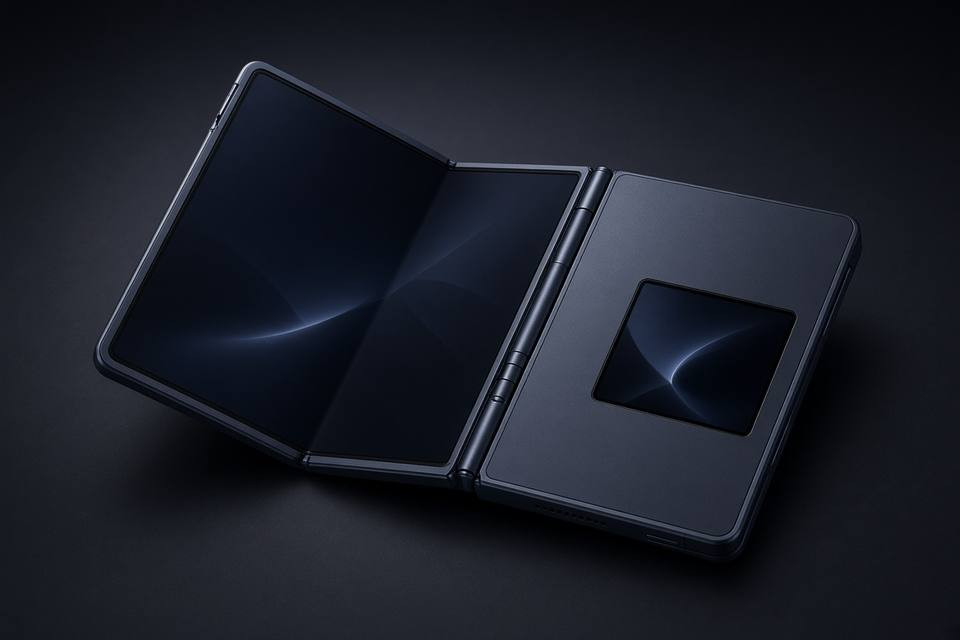
Ternus did not hide the hinge: why iPhone Duo is a $1,999 bet on patience
John Ternus did not ease into the job. A week into the CEO chair, he used Apple’s September 9 event to put a hinge on the product that still funds the company. The iPhone Duo is official: a book-style foldable that closes to a 5.4-inch outer display and opens to a 7.6-inch inner screen. Starting price is $1,999. Pre-orders open October 16. It ships October 23. That is not a rumor cycle. It is a delayed, expensive, very Apple version of a product category Samsung has sold for years.
The rest of the stage was more familiar. iPhone 18 Pro starts at $1,199. Pro Max starts at $1,299. Both are $100 above last year’s Pro floor, both start at 256GB, and both use the new A20 Pro chip. Apple Watch Series 12 and Ultra 4 keep their $399 and $799 starting prices. AirPods 5 put noise cancellation on the $129 pair. Those are real products with nearer ship dates. Duo is the one that will define whether Ternus is running a hardware company that still takes form-factor risks, or one that simply taxied a decade-old rumor onto a keynote.
What actually shipped on stage
Duo is a passport-shaped book fold, not a flip. Closed, the cover screen is meant to behave like a slightly smaller iPhone 18 Pro: Apple says it delivers about 90 percent of that phone’s viewing area. Open, the inner panel is the largest display Apple has put on an iPhone, roughly half again the size of the 6.9-inch Pro Max. The two screens share an aspect ratio so content is supposed to scale without looking stretched. Materials are Grade 5 titanium with a magnetic hinge. Unlock is Touch ID in the side button, with Apple Watch unlock as a backup. Apple Pencil support is coming to the outer display. Colors at launch are Star White and Night Sky.
Inside is the same A20 Pro silicon as the new Pro phones, plus a custom vapor chamber and a split battery, one cell per half, treated as a single pool. Apple’s video-playback claims are 31 hours on the inner display, 44 hours on the outer display, and 24 hours if you split time between them. Storage goes up to 2TB, a capacity the competing Fold and Pixel foldables still do not match at the base comparison Apple is making. The C2 modem is onboard. Apple called it the thinnest iPhone when open. It is also thicker than several Chinese foldables when closed. Both statements can be true.
Pricing is the other official number that matters. $1,999 is about $100 above the current Galaxy Z Fold8 and Pixel 11 Pro Fold at comparable base storage. The top Duo configuration reaches $3,199. That is not a mass-market phone. It is a prestige SKU that happens to fold. Pre-orders trail the Pro phones by more than a month, which is the cleanest tell that yields, hinge reliability, or both are still being managed in the factory rather than in marketing.
Why this launch is larger than another Pro bump
iPhone still accounts for a little more than half of Apple revenue. For twenty years the company has changed cameras, chips, and bezels while keeping the same rectangle. Duo breaks that. Ternus framed it as the biggest change since the original iPhone, which is keynote inflation, but it is the biggest change since iPhone X killed the home button. The product also arrives with a new CEO who came up through hardware engineering, not operations. The foldable is the first public test of whether that background produces different product bets.
It also arrives after Apple already raised iPad and Mac prices over the summer on memory costs. The Pro phones absorbed another $100. Duo did not try to hide behind a $1,799 tease. Apple priced it like a small laptop that fits in a jacket. That is honest. It is also a ceiling. IDC can forecast a 40 percent foldable-phone share for Apple by the end of next year; that forecast only holds if Duo is not a curiosity that reviewers praise and buyers rent once.
Software will decide more than the hinge. Split-view multitasking, camera tricks that use both panels, and how iOS 27 treats an inner canvas that is closer to iPad mini than to Pro Max are the parts customers will feel after the novelty fades. Apple has years of iPad windowing to borrow. It also has a habit of shipping a new shape with last year’s interaction model. If Duo opens into the same single-app slab, the $1,999 argument collapses to “bigger screen in a pocket.” That is a real benefit. It is not a new product category.
What to watch between now and October 23
First, durability theater. Foldables live or die on crease visibility, hinge grit after pocket dust, and whether the outer glass survives a drop the way a slab iPhone does. Apple will not publish a drop-test video that looks like a teardown channel. Independent units in reviewers’ hands after October 16 will. If the first week of reviews is about software and cameras, Apple won. If it is about the crease, Apple has a year of firmware and a mid-cycle silent revision ahead of it.
Second, supply. A late-October ship date after a September event is not how Apple treats iPhone 18 Pro, which pre-ordered September 12 and sells September 18. Watch whether Apple Stores show “ships in 2–3 weeks” on launch morning. A prestige foldable that cannot be held is just a rendering with a SKU.
Third, the rest of the lineup as a control group. Pro and Pro Max are the volume products. Watch Series 12’s new Health Sensing System and Ultra 4’s two-day battery are the wearables story. AirPods 5 at $129 with ANC is the accessory that will outsell Duo by a wide margin. If those three lines land cleanly and Duo slips, Ternus still had a normal Apple autumn. If Duo lands on time and the software feels native, the hinge becomes the first sentence of his tenure instead of a footnote under a $100 Pro price hike.
The honest read, four days after the event: Apple did not invent the foldable phone. It officially joined a market it used to treat as a science project, charged a premium, and asked customers to wait until late October. That is a conservative first swing from a new CEO who can afford one. The next swing is whether Duo still looks necessary after a month of living with a 7.6-inch inner screen that has to justify two thousand dollars every time it opens.
Comments
0