
Apple sold a camera and a cooling system — and left the regular iPhone off the stage
Yesterday’s Surprise and Shine keynote was John Ternus’s first product show as Apple CEO, and the company used it to do something it almost never does in September: skip the mainstream phone. There is an official iPhone 18 Pro and an official iPhone 18 Pro Max. There is still no official iPhone 18. That absence is not a rumor leftover. It is the shape of the fall lineup.
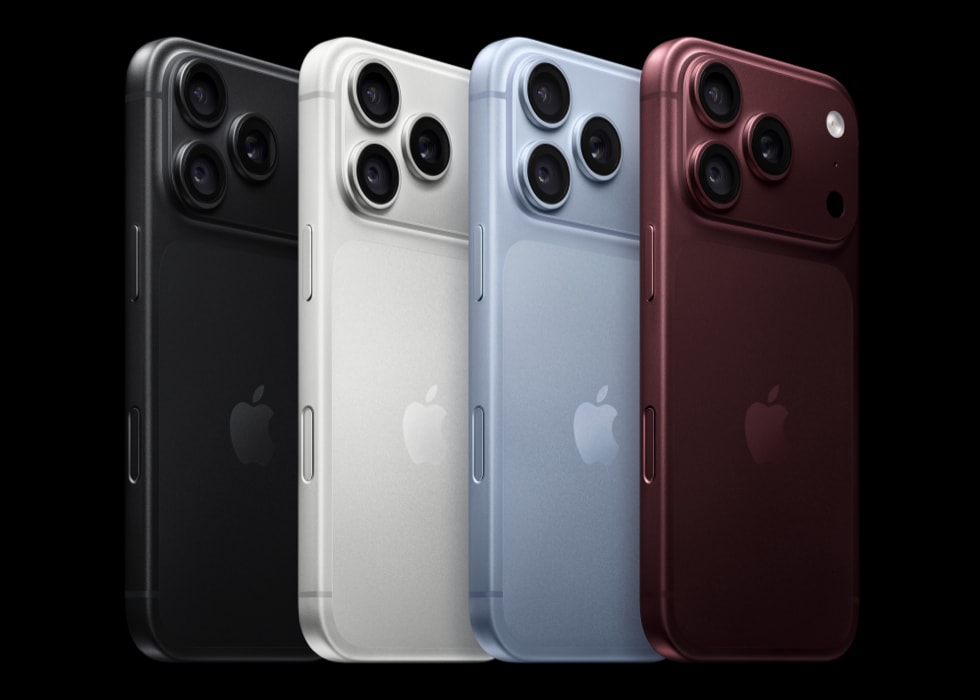
The Pro models are the product Apple actually wanted to talk about. They start at $1,199 and $1,299, preorder on Saturday, September 12, and go on sale Friday, September 18. Colors are black, silver, glacier, and a new burgundy. The screens stay in familiar 6.3-inch and 6.9-inch sizes. The work happened behind the glass.
What happened on stage
Apple put four claims on the new Pro phones: camera, performance, battery, and intelligence. The camera claim is the one that changes how the phone behaves in a hand. The 48MP Fusion Main sensor now has a variable aperture, so the lens can open up in dim rooms and stop down when the scene is bright and you want more of it sharp. That is a first for iPhone. Photographers have had that control on dedicated cameras for decades. Putting it on a slab that also runs Messages is the actual hardware story of this generation, not another megapixel bump.
The same camera system now signs what it sees. Apple Reference Image is a new mode that records sensor-level proof a still came from that main camera, then finishes the file in Private Cloud Compute. It will not stop every fake photo on the internet. It does give journalists, insurers, and anyone arguing about a screenshot a way to show an original that was not painted by a model. Whether other platforms honor that signature is the open question.
Cooling is the other official change that is easy to miss because it does not photograph well. The A20 Pro sits in a package that couples to a redesigned vapor chamber. Apple is no longer pretending thermal throttling is a rounding error. The company spent keynote time on heat because last year’s silicon, plus on-device Apple Intelligence, made phones hot in pockets and on video calls. If the chamber works, the Pro Max’s claimed video-playback endurance — Apple says up to 45 hours on the larger model — is the consumer-facing result of that engineering, not a bigger cell alone.
Siri AI rides the same chip. iOS 27 lands Monday, September 14, across the installed base, with a more capable assistant rolling in English first. The software date matters more than the slogan. A new phone that ships four days later will be judged on whether Siri actually follows a multi-step request, not on whether the keynote reel looked fluent.
Why the missing base model matters
Apple has trained customers to expect a $799–$899 slab every September. This year the cheapest new iPhone on the fall table is a $1,199 Pro, unless you count last year’s leftover inventory. Carriers will still run promotions. Trade-in values already slipped on older units the day prices were posted. The message from Cupertino is blunt: the volume phone can wait until 2027, and the company would rather spend wafer and assembly capacity on Pros and on the $1,999 iPhone Duo that does not even ship until October 23.
That is a Ternus-era bet as much as a Tim Cook leftover. Hardware people have wanted a cleaner split between “good enough” and “this is the camera we sell to professionals” for years. The risk is obvious. A household that upgrades every two years does not need variable aperture. It needs a price. If the spring iPhone 18 lands late or lands thin, Apple will have spent a holiday quarter selling only the expensive third of the lineup.
There is a quieter risk inside the Pro itself. Variable aperture and vapor chambers are the kind of features that look decisive in a controlled demo and average in a grocery-store parking lot. Review units will tell us whether the aperture actually tracks faces in mixed light, or whether the camera app buries the control three taps deep. They will also tell us whether the new thermal path keeps an A20 Pro from folding under a long Siri AI session the way last year’s phones did under image generation.
What to watch next
Watch three calendars. First, September 12 preorders: if Pro Max configurations sell out faster than the smaller Pro, Apple’s battery and cooling pitch landed. Second, September 14 and the iOS 27 public release: if Siri AI is region-locked, buggy, or limited to English on day one, the intelligence slide was theater. Third, October, when Duo preorders open. The foldable is a different product and a different buyer. The Pro phones have to hold the company’s iPhone revenue until that $2,000 device exists in stores.
Also watch the used market. When Apple withholds a base model, last year’s non-Pro becomes the real budget phone. That is good for people who refuse a four-figure upgrade. It is less good for Apple’s average selling price if too many of those buyers stay put.
None of this is rumor anymore. The 18 Pro is a priced, dated, colored product with a new lens mechanism and a new heat pipe. The regular 18 is still a gap on a slide. Ternus’s first keynote made that gap official. The next six weeks decide whether it was discipline or a hole in the shelf.
Comments
0