
The $100 Pro tax: what Ternus actually launched besides a foldable
John Ternus did not spend his first September keynote defending the familiar candy-bar iPhone. He spent it explaining why the Pro line is getting more expensive, why there is no standard iPhone 18 this fall, and why a six-blade aperture is the camera story Apple wants you to care about before the foldable even ships.
That is the quieter announcement from Wednesday’s “Surprise and Shine” event at Apple Park. The iPhone Duo will get the memes. The iPhone 18 Pro and 18 Pro Max are the products most people will actually buy in two weeks—and they arrived with a $100 starting-price hike, a 2nm A20 Pro chip, and a main camera that can finally change its aperture instead of faking depth after the fact.
What actually landed
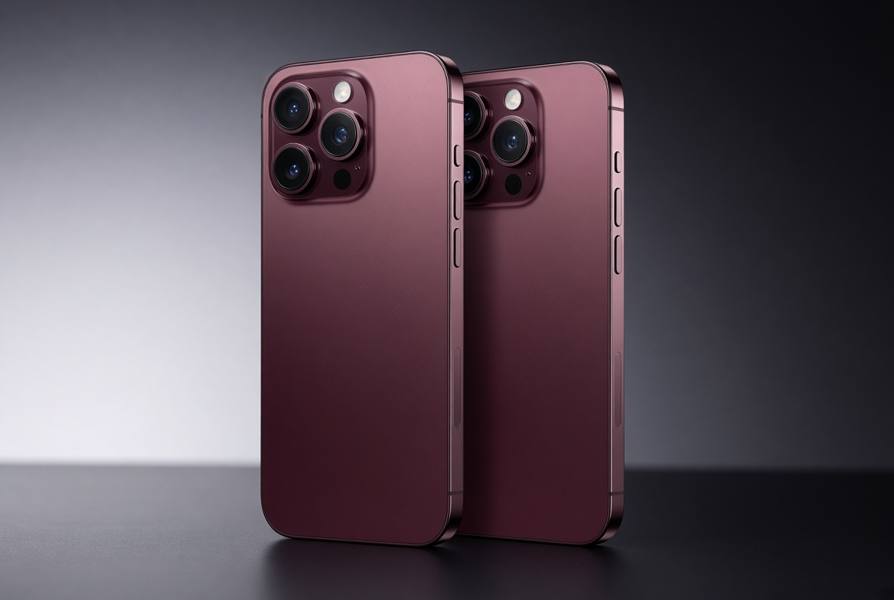
The iPhone 18 Pro starts at $1,199 for 256GB. The 18 Pro Max starts at $1,299. Both are $100 above last year’s openers. Apple and suppliers have pointed at memory costs; buyers will feel it most at the top of the storage ladder, where 1TB configurations absorb a larger effective jump. Storage now reaches 2TB on both Pro models. Colors are Deep Black, Silver, Glacier, and a new Burgundy, with color-matched back glass.
There is no base iPhone 18 this cycle. Apple is holding the non-Pro slab for a later window so the September stage could carry two distinct bets: a foldable that does not ship until late October, and a Pro pair that pre-orders this Saturday, September 12, at 5:00 a.m. Pacific and reaches stores on September 18.
Inside, the A20 Pro is billed as the first 2nm smartphone chip Apple has shipped. The company paired it with a larger vapor chamber—described in coverage as roughly three times the size of the iPhone 17 Pro’s—so sustained performance and on-device Apple Intelligence features do not immediately throttle. Battery claims are aggressive. The Pro Max is rated for up to 45 hours of video playback; Apple called the year-over-year gain the largest single-generation jump in iPhone battery life. Wired charging hits 50 percent in about 15 minutes with a 60W adapter.
The camera deck is the other reason the Pro line exists this year. Both phones use a 48-megapixel Fusion main camera with a variable aperture driven by six thin blades. Apple’s pitch is straightforward: the lens can open up for low light and close down when you want more of the scene in focus, instead of relying only on computational bokeh. New Pro controls expose white balance, shutter speed, aperture, and a histogram. Photographic Styles pick up texture and grain sliders. Video records 4K in Dolby Vision HDR with cinematic effects that can be adjusted after the take.
A smaller Dynamic Island can surface up to three Live Activities at once. The phones ship into iOS 27 and the new Siri AI stack Ternus spent a long stretch of the keynote describing—more personal context, more on-device action across apps, and usage limits that Apple will expand for a fee.
Why the price hike and the missing base model matter
Apple has raised Pro prices before, but doing it in the same hour you introduce a $1,999 foldable is a statement about where the company thinks the money is. The Duo is a category play with a later ship date. The 18 Pro is the volume product that has to fund the next year of silicon and the still-expensive Apple Intelligence rollout.
Skipping a standard iPhone 18 in September is equally revealing. It keeps the event from diluting the Pro message, and it gives Apple room to time a cheaper model against holiday inventory and the Duo’s October 23 launch. It also means anyone waiting for an $799–$899 refresh will wait. The choice this month is $1,199, $1,299, or a foldable that costs almost two thousand dollars and does not arrive for six more weeks.
Variable aperture is the feature that will actually show up in reviews. Computational photography already makes night shots look finished. A physical aperture that can change on the fly is the first hardware camera change in a few cycles that photographers can argue about in real lighting, not just in a slide. If the six-blade mechanism is noisy, slow, or inconsistent at the wide end, the $100 premium becomes a talking point instead of a shrug. If it holds up, Apple has a reason to keep charging Pro prices while Samsung and Google lean on software.
Ternus’s presence is not decoration. This was the first product show of the post-Cook operating era—Cook moved to executive chairman on September 1. The keynote tone was hardware-first: hinge engineering, vapor chambers, heart-rate cadence on the Watch, ANC numbers on AirPods 5. Siri AI was framed as a capability layer, not the entire story. That mix tells you how Ternus wants Apple to look in year one: still a device company, now willing to ship a foldable and to charge more for the phones that already print money.
What to watch next
Saturday morning pre-orders will be the first demand signal. Watch whether 256GB Pro inventory disappears faster than 512GB and 1TB; a $100 hike on the floor can push people either into last year’s leftover 17 Pro units or straight to the Max for the battery claim.
Hands-on camera tests matter more than the keynote clips. Variable aperture only counts if it changes the files, not just the marketing diagram. Look for how the Fusion sensor handles mixed indoor light, whether the blades hunt in video, and whether the new Pro controls are actually usable one-handed.
Thermals under Apple Intelligence workloads are the other review item. A 2nm A20 Pro plus a larger vapor chamber should keep Siri AI features on-device longer. If the phones still get hot during multi-app AI tasks, the “built for AI” line will age quickly.
Then comes the Duo on October 16. The Pro line is the product Apple can ship in nine days. The foldable is the product Ternus used to mark a new chapter. How those two stories share a quarter—price, supply, and whether a missing base iPhone 18 leaves a hole—will tell you more about this event than any single slide from Wednesday afternoon.
Comments
0