
iPhone Duo Is Finally Here: Features, Real-World Use, and What It Costs in the US vs the Rest of the World
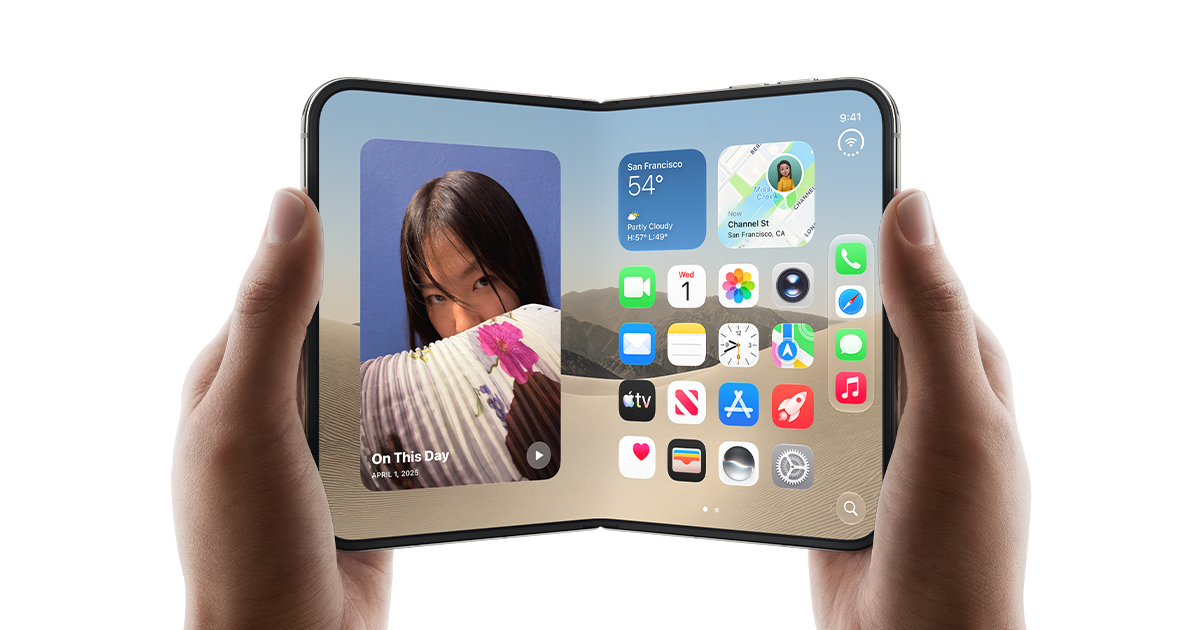
For years the rumor mill called it the iPhone Fold. Then the iPhone Ultra. On September 9, 2026, Apple finally put a name on it: iPhone Duo. After living with the idea of an Apple foldable for so long, the real thing feels almost strange in the best way. It is not two phones glued together. It is a passport-sized slab that opens into the largest canvas Apple has ever put on an iPhone.
If you have been waiting for Apple to do foldables properly, this is the moment. Pre-orders open October 16. It ships October 23 in more than 70 countries. The starting price is $1,999 in the US for 256GB — and a lot more in some markets. Here is the honest look at what you actually get, how the software works, and how the price changes once you leave American soil.

What it actually is
Closed, iPhone Duo is about the size of a passport: 84.1 x 117.8 x 11.3 mm and 254 grams. That is thick by modern iPhone standards, but it sits in the hand like a compact book, not a brick. Open it and you get a 7.6-inch Super Retina XDR inner display that is 50 percent larger than the iPhone 18 Pro Max screen. The phone itself becomes Apple’s thinnest iPhone ever at 5.2 mm.
The outer screen is 5.4 inches — roughly 90 percent of the display area of an iPhone 18 Pro — so you are not stuck with a tiny cover panel the way early Android foldables were. Both screens share the same aspect ratio. Content scales instead of stretching or letterboxing when you open or close the device. That sounds small. In daily use it is the difference between “this feels like two phones” and “this feels like one device that just changes size.”
Colors are limited on purpose. Star White and Night Sky. Grade 5 titanium frame, mirror-polished, with a precision hinge that Apple says uses more than 100 parts. Ceramic Shield 2 on the outer display, Ceramic Shield on the back, IP68 rating. Apple spent years insisting it would not ship a crease you could feel. The nano-texture finish on the inner panel is the company’s answer: less glare, less visible fold line, a slightly matte feel that hides the seam better than a glossy sheet.

The screens, without the marketing fog
Both displays are Super Retina XDR OLED with ProMotion up to 120Hz, Always-On, True Tone, and 3,000 nits peak outdoor brightness. The inner panel uses a multi-layer stack with custom adhesives so the layers can slide a little as the phone folds. That is how Apple claims the crease stays shallow over time.
The FaceTime camera on the inner screen sits under the display. It is not invisible — you will see a faint spot if you hunt for it — but it gives you a nearly uninterrupted canvas for video, reading, and Split View. Apple Pencil support arrives later this year over USB-C. That is new for any iPhone. Notes, markup, and light sketching on a 7.6-inch panel is the closest iPhone has ever come to “iPad in your pocket,” which is exactly the line Apple used on stage.
Unlocking is Touch ID in the side button. No Face ID on this model. You can also unlock with Apple Watch. Camera Control is still there for quick photo access. You can stand the phone half-folded on a table, use it like a mini laptop, or leave it closed and treat the cover screen as a regular compact iPhone.

Cameras that finally use the fold
Hardware is a dual 48MP Fusion system: a 26mm f/1.6 main with sensor-shift OIS and a 13mm f/2.2 ultra-wide. There is no dedicated telephoto. The 2x shot is an optical-quality crop from the main sensor. That is a compromise. Apple traded a periscope for thickness and hinge space. Video goes up to 4K at 120 fps Dolby Vision on the main camera.
The interesting part is software that only a foldable can do:
- Duo Preview — the outer screen shows your subject what the photo will look like so they can fix the pose instead of staring at a black slab.
- Kid Cue — Peanuts animations play on the cover display to keep a child looking at the camera long enough for a usable shot. It is silly. It will work.
- Smart Take — on-device models watch the scene and fire the shutter when people actually look ready, so you can be in the frame instead of holding the phone.
- Duo FaceTime — people next to you can join the call on the outer display without crowding around one screen.
The outer 12MP Center Stage camera handles cover-screen selfies and video. Rear-camera selfies with live preview on the front is the foldable trick everyone already knows, and Apple implemented it cleanly. Photographic Styles now add texture and grain controls. Apple Intelligence tools — Spatial Reframing, Extend, and a stronger Clean Up — work across the bigger sensor pipeline.


iOS 27 on a device that changes shape
This is where Apple’s late arrival actually helps. Split View is first-class: two apps side by side, saved pairs, the same app in two windows, Siri AI sitting next to whatever you are working on. Controls sit along the outer edge so your thumbs can reach them whether the phone is open, half-folded on a table, or closed. The Home Screen can use two pages with Today View on the left when unfolded.
StandBy works on either display, even when the phone is closed and sitting on a nightstand. Half-fold it like a mini laptop and it stays put. That pose is more useful than it sounds for recipes, video calls, and watching a show while you do something else with your hands.
Siri AI and the rest of Apple Intelligence run on the A20 Pro — same 2nm chip as iPhone 18 Pro, with a 6-core CPU, 7-core GPU, and dual 16-core Neural Engines. Apple quotes up to 20 percent faster CPU and 40 percent faster GPU versus A19 Pro, plus better sustained performance thanks to a vapor chamber. The Duo is eSIM-only worldwide and uses Apple’s own C2 modem.
Battery: two cells, one brain
There is a battery in each half. Software treats them as one pack. Apple’s numbers:
- Up to 31 hours of video on the inner display
- Up to 44 hours of video on the outer display
- About 24 hours of mixed use when both screens share the work
Wired charging hits 50 percent in about 20 minutes with a 60W-capable USB-C adapter. MagSafe and Qi2 wireless charging are supported. Those numbers will shrink in the real world, especially if you live in Split View, but the dual-cell design is the right idea for a device this thin when open.
Price: the US number vs everyone else
In the United States, iPhone Duo starts at $1,999 for 256GB. Storage steps are $2,199 (512GB), $2,599 (1TB), and $3,199 (2TB). The UK copies the digits: £1,999 / £2,199 / £2,599 / £3,199.
Once you convert currencies and add local tax, the picture changes fast. India is the painful example for a lot of buyers. The same 256GB phone is ?2,99,900 — roughly a lakh more than the raw US sticker after conversion. Australia’s jump from base to 2TB is the steepest percentage increase on the list.
Here is the official starting price (256GB) in major markets, plus the top 2TB tier where published:
| Country | 256GB starting price | 2TB price |
|---|---|---|
| United States | $1,999 | $3,199 |
| United Kingdom | £1,999 | £3,199 |
| Canada | C$2,999 | C$4,799 |
| UAE | AED 8,499 | AED 13,599 |
| Germany | €2,299 | €3,799 |
| France | €2,339 | €3,839 |
| Australia | A$3,499 | A$5,899 |
| Japan | ¥364,800 | ¥574,800 |
| China | CNY 15,999 | CNY 26,499 |
| Singapore | S$3,099 | S$4,899 |
| Hong Kong | HK$17,499 | — |
| India | ?2,99,900 | ?4,49,900 |
India storage steps for reference: ?2,99,900 (256GB), ?3,24,900 (512GB), ?3,74,900 (1TB), ?4,49,900 (2TB). China matches the “most expensive iPhone Apple has sold” narrative at 15,999 yuan to start and 26,499 yuan at the top.
The US remains the cheapest listed market before sales tax. Canada, Hong Kong, and the UAE usually follow. India, Brazil, and Turkey sit at the expensive end after duties and tax. If you travel, the gap between a US unlocked unit and an India unit is large enough that people will do the math — just remember warranty, eSIM setup, and import rules are your problem, not Apple’s.
Accessories and the small stuff
Apple is selling a two-part case ($79) that covers both halves and a Folio with a kickstand ($129). The Folio is the one that makes tabletop use less awkward. There is no Action button. Camera Control stays. Speakers sit top and bottom for stereo whether the phone is open or closed.
AppleCare+ will matter more than usual. A first-generation foldable inner display is still the part you do not want to replace out of pocket.
Who this is actually for
iPhone Duo is not a replacement for every iPhone 18 Pro Max. It is a different object. If you live in Mail + Safari, notes + a reference page, or video + chat, the inner screen is a genuine upgrade. If you want the best zoom camera or the lightest possible phone, stay with the slab Pro models. They are about $800 cheaper at the start and you already know how they feel in a pocket.
Apple is late to foldables on purpose. Samsung, Google, and the Chinese brands spent seven years teaching people the category. Apple is betting that a crease you barely notice, software that does not fight the hinge, and the usual iPhone software support window will pull people who refused Android foldables. That bet only works if the inner display survives two or three years of opening and closing. We will know that in 2027, not in a launch week article.
Until then, the facts are simple. The first Apple foldable is real. It is called iPhone Duo. It starts at $1,999 in the US, costs a lot more in India, and goes on sale October 23. If you have been calling it Apple Fold in group chats for two years, you can stop. The name on the box is Duo — and the box is going to be very, very expensive.
Pre-orders: October 16, 2026. Availability: October 23, 2026 in the first wave of 70+ countries and regions.
Comments
0