
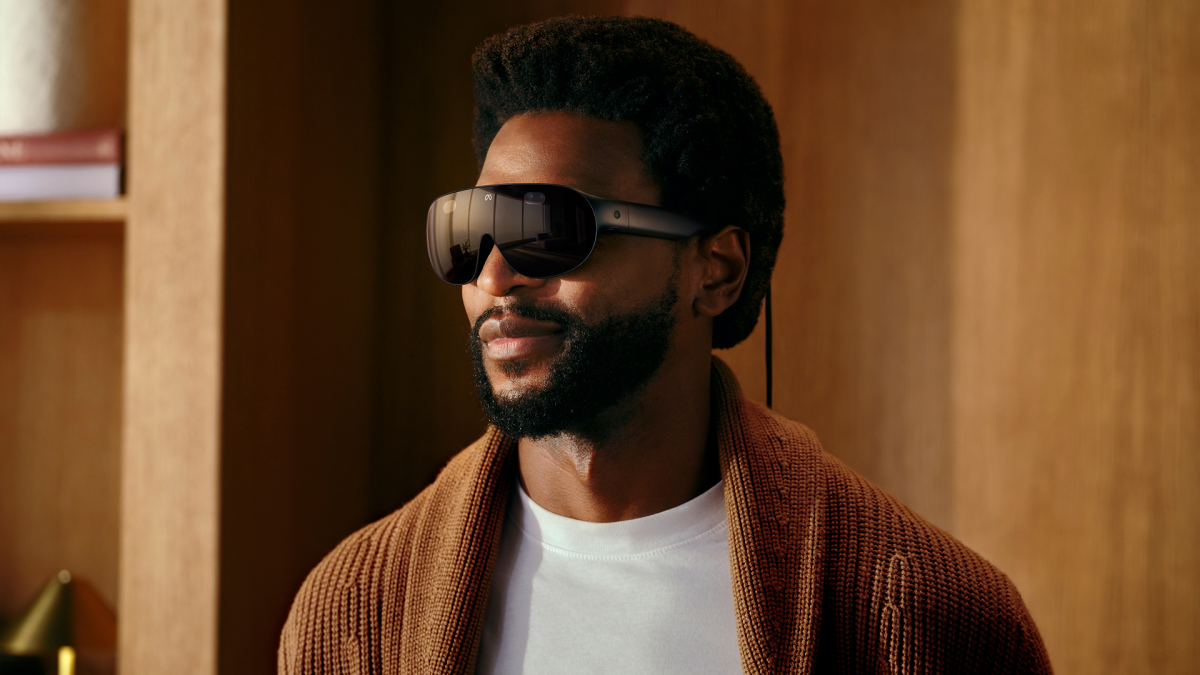
Meta Connect 2026: Muse Charm, $1,299 Meta VR Glasses, Ray-Ban Meta Gen 3 and Everything Zuckerberg Announced
Meta Connect 2026 was supposed to be a smart glasses show. It turned into something bigger. On the evening of September 23, Mark Zuckerberg walked on stage at Meta's Menlo Park campus and, over roughly an hour, laid out a hardware lineup that stretches from a $249 pair of everyday glasses all the way to a $1,299 VR headset that looks like oversized sunglasses. And then, right at the end, he pulled out a tiny keychain gadget called the Muse Charm.
If you missed the keynote, don't worry. Here's everything Meta announced, what it costs, when you can buy it, and whether any of it actually matters.
The Big Picture: Muse Is Now the Centre of Everything
Before we get to the gadgets, you need to understand the one idea that tied the whole keynote together: Muse, Meta's personal AI agent.
Zuckerberg was pretty candid about how Meta's thinking has changed. When the company started building glasses, it assumed the metaverse would arrive first and advanced AI would follow years later. That order got flipped. AI moved faster than anyone expected, so Meta reshuffled its priorities, and Muse is now the thing every device is built to serve.
Muse isn't just a chatbot that answers trivia. Meta pitches it as an agent that actually does stuff for you, like signing up for services, booking appointments and even making phone calls. It will roll out across Meta's entire glasses lineup.
The business model is interesting too. Zuckerberg said Meta will make Muse free for a very large number of tokens, and plans to earn money over time by taking a small cut when people use it to complete transactions. In plain English: if Muse books your dinner or buys your shoes, Meta wants a tiny slice. It's a bold bet, and it will live or die on how much people trust an AI to spend money on their behalf.
Muse Charm: The Surprise "One More Thing"
Every good keynote needs a curveball, and this was Meta's. The Muse Charm is a small, keychain-sized device built for one job: talking to your Muse agent without touching your phone.
Here's how it works. You press a fingerprint sensor on the edge, start speaking, and Muse responds. The Charm packs a small display, speakers and microphones, and runs Meta's real-time voice model. Zuckerberg described it as the quickest way to reach Muse for people who don't wear smart glasses, and a way to show the AI what's happening around you.
Now the honest part: this thing is not finished. Meta has only built a handful so far and is still settling on the final materials and internal layout. There's no price yet, and the target is to ship it around December, in time for the holidays.
My take? The Charm is the most interesting product Meta showed, and also the riskiest. We've seen dedicated AI gadgets flop before because they couldn't justify existing next to a smartphone. If Muse genuinely handles real tasks, a one-press keychain could make sense. If it doesn't, it's another drawer gadget.
Meta VR Glasses: Project Phoenix Finally Has a Name
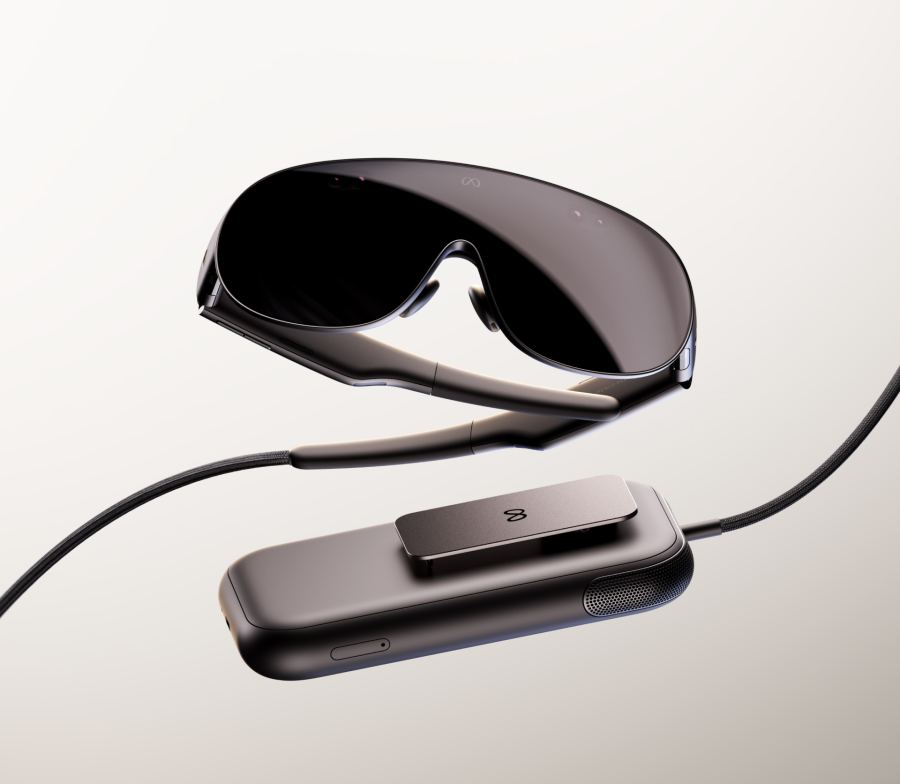
Meta VR Glasses (formerly Project Phoenix). Image: Meta
The headline hardware of Meta Connect 2026 is Meta VR Glasses, the device the rumour mill has been calling Project Phoenix for over a year. Zuckerberg said it's the product of more than a decade of VR work, and it shows.
The trick is a two-part design. The glasses themselves weigh about 100 grams, roughly a deck of cards, and handle the displays and sensors. All the heavy stuff (processor, battery, storage) lives in a separate compute puck of around 300 grams that clips to your pocket or bag and connects through an optical tether. Meta says that makes them about five times lighter than a Quest 3 on your face.
Meta VR Glasses Key Specs
- Price: $1,299.99 (US)
- Release: Spring 2027, no exact date yet
- Displays: Dual micro-OLED, 2412 x 2288 per eye, up to 120Hz, Dolby Vision
- Chip: Qualcomm Snapdragon Reality Elite, 12GB RAM, 128GB storage, microSD up to 1TB
- Battery: Up to 3 hours of continuous media playback, 45W fast charging
- Controls: Eyes, hands and voice; Touch Plus controllers sold separately
- Prescription: Lens inserts via Zenni Optical
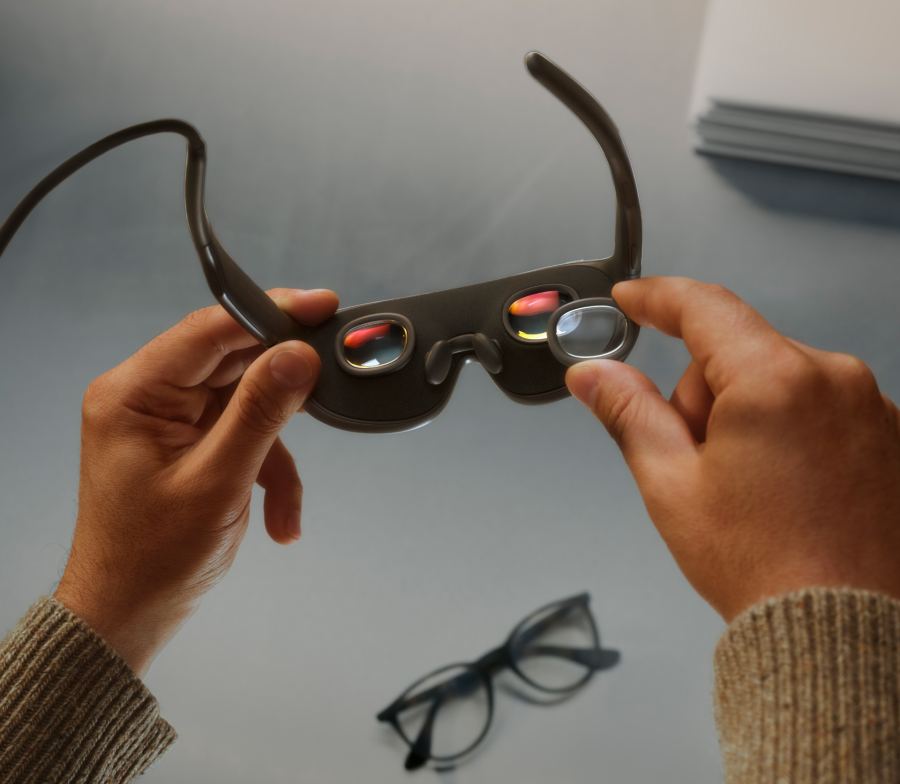
The lenses on Meta VR Glasses. Image: Meta
Meta is positioning these as three devices in one: a private cinema, a portable office and a gaming console. On the movie side, Meta says it's the first VR device with IMAX Enhanced certification, and Disney+ subscribers will be able to stream films in 3D starting in November in select countries. Streaming partners include Prime Video, YouTube, ESPN and others, with HBO Max, Peacock and Paramount+ opening up their 3D catalogues for the first time.
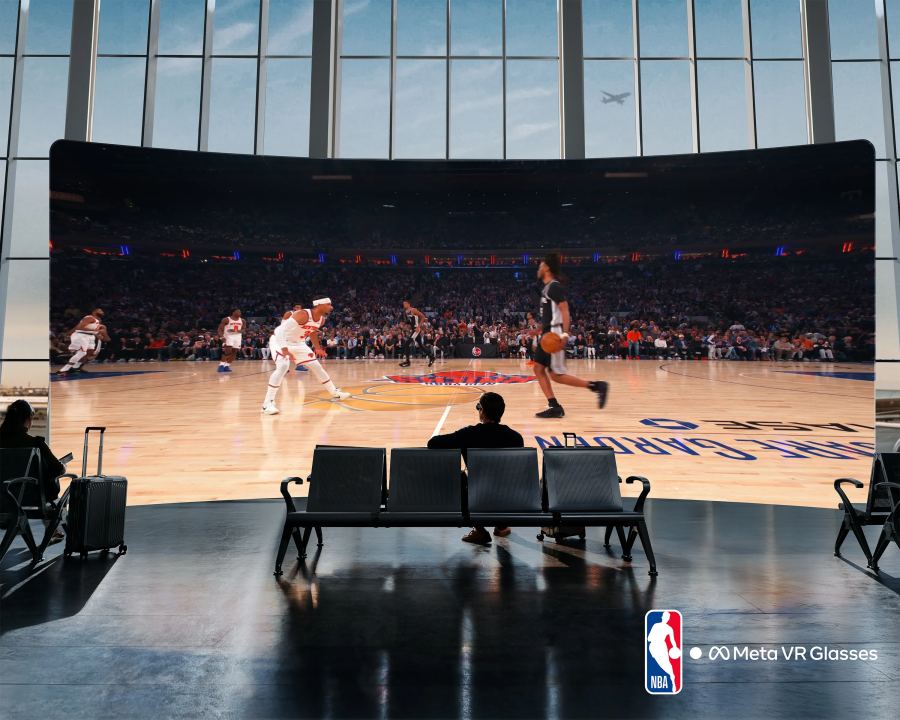
Immersive live sports is a big selling point. Image: Meta
For work, you get multiple virtual screens, desktop streaming from a Mac, PC or phone, and a DisplayPort input so you can plug straight into a laptop or console. Gamers get over 75 hand-tracked titles at launch plus Xbox Cloud Gaming.
Then there's hologram calling. Meta showed photorealistic, full-body holograms that mirror your real expressions during video calls, and it works across apps including WhatsApp and Zoom. Andrew "Boz" Bosworth even joked that Meta has finally solved the legs problem in VR. Fair enough, that one was earned.
Is $1,299 too much? It's well above what early reports suggested Meta was aiming for, but it's also a fraction of the Apple Vision Pro's price. The real question is whether people will accept a tethered puck and three hours of battery for something they wear on their face. We'll find out in spring.
Ray-Ban Meta Gen 3: The Safe, Solid Upgrade

Meta's expanded AI glasses lineup. Image: Meta
Meta's bestselling product got its expected refresh. Ray-Ban Meta Gen 3 starts at $449 and is on sale right now.
The changes are sensible rather than dramatic. The frames are slimmer, battery life goes up to nine hours (one hour more than Gen 2), and there's a new customisable action button that calls up Meta AI instantly. A new six-microphone array claims to cut over 90% of background noise, which should help a lot on busy streets. The camera stays at 12MP with 3K video, and later this year the glasses will be able to record video with Dolby Atmos spatial sound.
Style matters here too. Gen 3 comes in Aviator, Wayfarer and a new cat-eye frame called Zena, across 27 colour and lens combos, plus a limited-edition Aviator celebrating the frame's 90th anniversary.
Ray-Ban Meta Audio: Smart Glasses Without the Camera

Ray-Ban Meta Audio, Meta's first camera-free glasses. Image: Meta
This one quietly might be the smartest move of the night. Ray-Ban Meta Audio is Meta's first pair of AI glasses with no camera at all. That tackles one of the biggest complaints about smart glasses head-on: people around you don't love the idea of being recorded.
What you do get is open-ear audio for music, podcasts and calls, plus hands-free access to Meta's assistant. They weigh just 43 grams, run up to 12 hours on a charge, and the case adds another 48 hours. They come in two styles, Clubmaster and Burbank, with 23 colour and lens combinations.
Price is $349, pre-orders are open, and shipping starts October 13. If you mostly want music and calls without earbuds, this is the obvious pick.
Everything Else Meta Announced
- Meta Adventurer ($249): Meta's cheapest own-brand glasses yet, with a black frame, grey lenses and a plug-in case. On sale October 23.
- Meta Fury limited edition: Clear frame, mirrored lenses, sold only at Connect and Meta Lab stores at launch.
- Hearing assistance: An FDA-cleared feature for adults with perceived mild to moderate hearing loss, priced at $149.99 or included with a Meta One subscription, coming to the US later this year.
- Meta Ray-Ban Display updates: Now orderable online in the US at $799, launching in the UK and Canada, with EU availability at €899 from October 13. New features include cycling and transit navigation and holographic avatars on WhatsApp calls.
- 100+ styles: Meta says it will offer more than 100 glasses options across Ray-Ban, Oakley and Meta brands by the end of the year, plus new designs with Kylie Jenner and LISA.
- Beat Saber: The biggest update the game has ever received, along with a pile of new VR entertainment content.
Meta Connect 2026 Prices at a Glance (With Approx. INR)
- Meta VR Glasses: $1,299.99 (around ?1.25 lakh), spring 2027
- Meta Ray-Ban Display: $799 (around ?76,700), on sale in the US
- Ray-Ban Meta Gen 3: $449 (around ?43,100), available now
- Ray-Ban Meta Audio: $349 (around ?33,500), ships October 13
- Meta Adventurer: $249 (around ?23,900), ships October 23
- Hearing assistance feature: $149.99 (around ?14,400), US only
- Muse Charm: price not announced, targeting December
Note: rupee figures are straight currency conversions for reference. Meta has not announced India pricing or India launch dates for these products.
Final Thoughts: Meta Is Betting the House on Your Face
Step back and the strategy is clear. Meta wants a device for every budget and every comfort level, from a $249 pair of glasses to a $1,299 VR headset, and it wants Muse running on all of them. The camera-free Audio glasses show Meta is finally listening to privacy concerns. The VR Glasses show it's serious about taking on Apple. And the Muse Charm shows it's willing to try weird new form factors to get its AI into your life.
Wall Street seemed cautiously happy. Meta's stock closed at $744.10 on keynote day, and a couple of analysts raised their price targets shortly after.
The hardware looks good. The prices are mostly reasonable. But everything now hinges on one question: will people actually trust Muse to run parts of their lives? If the answer is yes, Connect 2026 will be remembered as the moment Meta's AI bet paid off. If not, it's a very nice collection of glasses.
Which Meta Connect 2026 launch are you most excited about: the Muse Charm, the VR Glasses, or the camera-free Ray-Bans? Drop your thoughts in the comments.
Comments
0