
The Orbital Off-Ramp: How SpaceX’s Starmind Authorization Forces a Rethink of AI’s Terrestrial Energy Ceiling
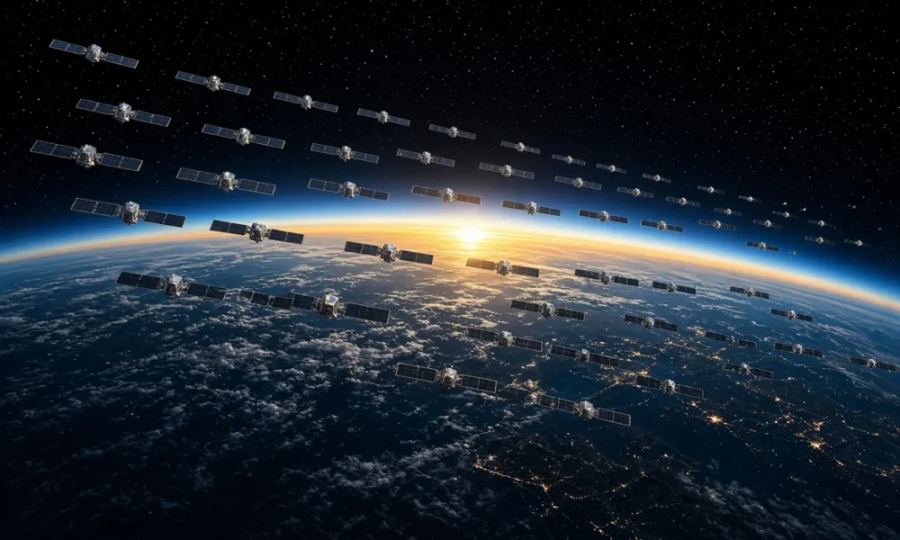
On November 25, 2026, the Federal Communications Commission granted SpaceX conditional authorization to deploy a constellation of up to one million Starmind satellites designed as orbital data centers. The decision marks the first U.S. regulatory approval for a system whose explicit purpose is to process artificial-intelligence workloads in space and return only the results to Earth. If fully realized, the network would multiply the number of active satellites in low Earth orbit by roughly fifty times relative to today’s total population.
The authorization arrives against a backdrop of mounting physical constraints on terrestrial AI infrastructure. Power grids in multiple regions are struggling to interconnect new data centers on the timelines demanded by laboratories and hyperscalers. Cooling systems consume large volumes of water, and community opposition to both energy draw and noise is slowing or canceling projects. SpaceX’s filing argued that continuous solar power and radiative cooling into vacuum could bypass those bottlenecks. The FCC’s order does not certify the economic or technical viability of that claim, but it does remove a major regulatory obstacle and establishes a multi-year deployment schedule against which progress can be measured.
What the Authorization Actually Permits
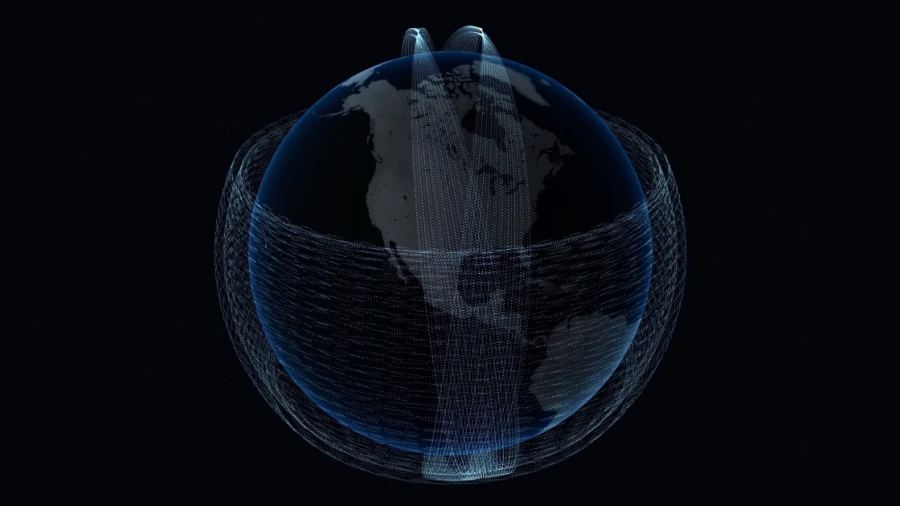
The order, DA 26-1273, covers radiofrequency communications for backup and emergency telemetry, tracking, and command. Primary data traffic is expected to travel over optical inter-satellite links, which fall outside the FCC’s spectrum jurisdiction. SpaceX may place satellites in orbital shells between approximately 500 km and 1,002 km altitude, using both 30-degree and sun-synchronous inclinations. The higher end of that range is deferred pending additional debris-mitigation information; satellites above 600 km cannot be deployed until the agency accepts a disposal plan.
Milestones are concrete. SpaceX must have one operational Starmind satellite on orbit by November 25, 2033. Ten percent of the constellation—100,000 satellites—must be operating by November 2035, half by November 2038, and the full million by November 2040. The fifteen-year license term begins only after the first satellite is certified in compliance. Petitions to deny from Amazon’s Project Kuiper, Viasat, and the American Astronomical Society were rejected. The Commission also dismissed broad environmental concerns, stating that launch emissions and certain re-entry effects lie outside its authority or remain speculative on the current record.
The Hardware and Architecture Behind the Numbers
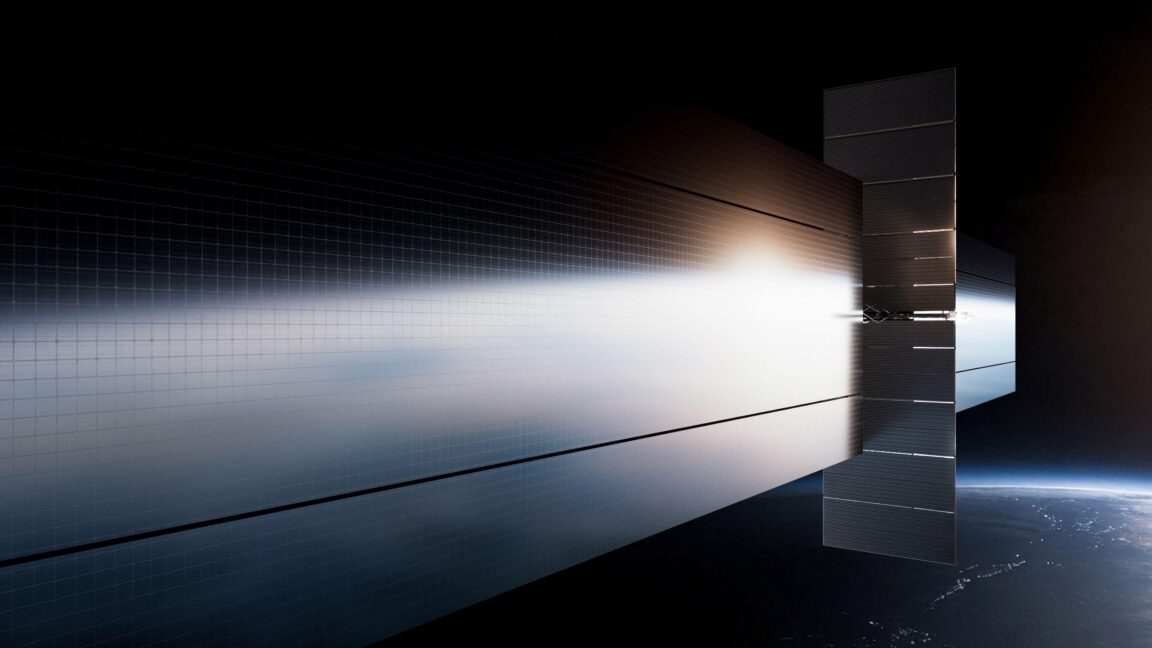
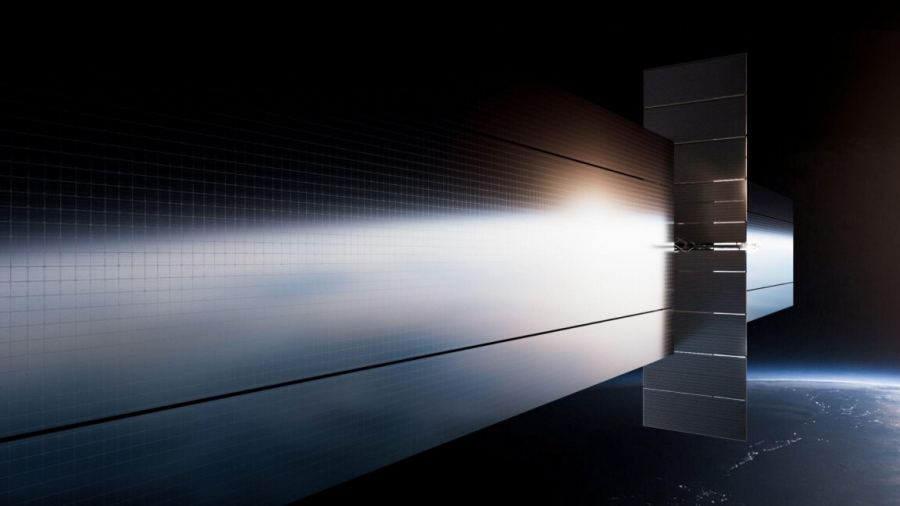
Public specifications for the first-generation AI1 satellite describe a vehicle with a 75-meter wingspan and roughly 30-meter deployed height. A 210 kW solar array feeds a compute payload rated at up to 250 kW peak and 175 kW average. Heat is rejected through a deployable liquid radiator of approximately 160 square meters. In August 2026 Nvidia announced that the internal system would be an optimized Vera Rubin (NVL72) configuration: 72 Rubin GPUs, 36 Vera CPUs, NVLink interconnect, and a BlueField-4 data-processing unit.
SpaceX has indicated that satellites will operate in tight clusters of roughly ten vehicles linked by high-bandwidth laser connections, each cluster functioning as a coherent compute unit of several megawatts. Results would then be relayed through the broader Starlink optical mesh to ground. The design is modular and described as chip-vendor agnostic, though the initial partnership with Nvidia is explicit. Elon Musk has publicly stated that first Starmind computers could launch in the third quarter of 2027, with volume production following.
These figures place a single AI1 roughly in the same power class as a modern terrestrial server rack, yet the constellation scale implies aggregate capacity measured in tens or hundreds of gigawatts if fully populated. Whether that capacity is economically competitive depends on launch cost, satellite lifetime, radiation tolerance, and the overhead of inter-satellite communication—variables that remain unproven at the proposed density.
Why the Energy and Cooling Argument Matters Now
Terrestrial data-center construction is increasingly gated by electrons and heat. In 2026 multiple large projects have been delayed or abandoned because grid interconnection queues stretch into the early 2030s. Anthropic’s roughly $3.4 billion commitment to heavy-duty generators, examined in TechMash coverage of the shift toward direct power control, illustrates how laboratories are now buying generation hardware rather than waiting for utilities. Water consumption for evaporative cooling has also become a political flashpoint in arid regions.
Orbital compute offers a different physical regime. Sun-synchronous orbits can keep arrays illuminated for the majority of each revolution. Radiative cooling into the cold sink of space eliminates the need for water or large mechanical chillers. The FCC order quotes SpaceX’s assertion that the approach can achieve “transformative cost and energy efficiency while significantly reducing the environmental impact associated with terrestrial data centers.” Independent analyses have long noted that the dominant costs may simply migrate to launch, manufacturing, and debris management rather than disappear.
Related TechMash reporting on Google’s Project Suncatcher has already documented the first data-center-class TPU generating an AI response from orbit in Tokens from the Thermosphere and the subsequent heavy-lift agreement with Blue Origin for constellation-scale missions in 2029. Those efforts remain at the prototype or single-digit satellite stage. Starmind’s authorization sets a regulatory ceiling three orders of magnitude higher and ties it to a U.S. company that already operates the largest existing constellation.
Conditions, Competition, and Remaining Uncertainties
The grant is not a blank check. Deployment above 600 km requires a further debris review. Alternative disposal methods (Earth disposal orbits or heliocentric orbits) were not waived. The radio authorization is limited to unprotected backup links and must not cause harmful interference. Astronomy groups continue to warn that a million additional satellites would complicate optical observations; the Commission ruled that such impacts fall outside its statutory review.
Competitors have their own orbital ambitions. Google’s Suncatcher roadmap, detailed in TechMash analysis of the Blue Origin pact, envisions clusters of TPU-equipped satellites. Other startups have announced smaller inference-focused constellations. Amazon’s Project Kuiper petition was denied, yet the company remains an active player in both broadband and potential compute services. The long regulatory runway—fourteen years to full deployment—gives all parties time to iterate, but it also means the first meaningful commercial capacity is unlikely before the late 2020s or early 2030s.
Launch economics remain the central dependency. SpaceX’s progress on fully reusable Starship, including the first orbital ship catch after fourteen orbits, is a prerequisite for the cadence required. Any sustained reduction in cost per kilogram would improve the business case; any prolonged delay would push the milestones into conflict with the license terms. Export-control rules that limit remote access to advanced U.S. chips, covered in TechMash reporting on the BIS remote-access rule, further shape where and for whom the resulting compute can be offered.
What to Watch Through 2027 and Beyond
Several near-term markers will clarify whether Starmind is an engineering program or a long-dated option. Confirmation of the first AI1 launch window, currently projected for 2027, is the most immediate. Details on radiation-hardening results, actual power and thermal performance in vacuum, and measured laser-link bandwidth between cluster members will determine whether the architecture can support production workloads. Progress on the debris plan needed for higher shells, and any early coordination agreements with other operators on conjunction screening, will indicate how crowded orbits are managed in practice.
On the commercial side, early customer contracts or internal xAI workloads running on the first operational satellites would signal real demand. Parallel developments in terrestrial power—new nuclear, advanced geothermal, or continued generator acquisitions—will show whether the industry treats orbital compute as a primary path or a hedge. International spectrum filings and competing constellation proposals from Europe or Asia could also appear once the U.S. precedent is established.
Conclusion: A Regulatory Floor for an Unproven Ceiling
The FCC’s authorization of one million Starmind satellites does not guarantee that orbital data centers will become a material fraction of global AI capacity. It does establish that U.S. regulators are willing to clear the spectrum and orbital path for a system whose stated purpose is to move compute off the planet. The energy and cooling constraints that motivated the filing remain acute on the ground; whether space offers a lower-total-cost alternative will be settled by flight hardware, launch rates, and measured performance rather than by regulatory language.
For the next several years the practical limits on AI scaling will continue to be set by grid interconnection queues, cooling technology, and the capital required to build terrestrial plants. Starmind supplies a parallel timeline and a different set of physical constraints. Tracking how quickly the first satellites move from rendering to orbit, and how their measured efficiency compares with the latest ground-based racks, will reveal whether the orbital off-ramp is a viable escape from the energy ceiling or simply another ambitious architecture that must still confront the same underlying physics.
Official details of the authorization appear in the Ars Technica report and the contemporaneous Reuters coverage. Related TechMash analysis of the broader orbital-compute trajectory includes the examination of Google’s heavy-lift agreement, the first on-orbit TPU response, Anthropic’s direct generator commitments, SpaceX’s ship-catch milestone, and the BIS remote-access rule that continues to shape where advanced compute may be accessed.
Comments
0